Mar 19, 2023(Bloomberg) –Here are some notable charts to monitor in commodities markets over the coming days.
Oil & Gas
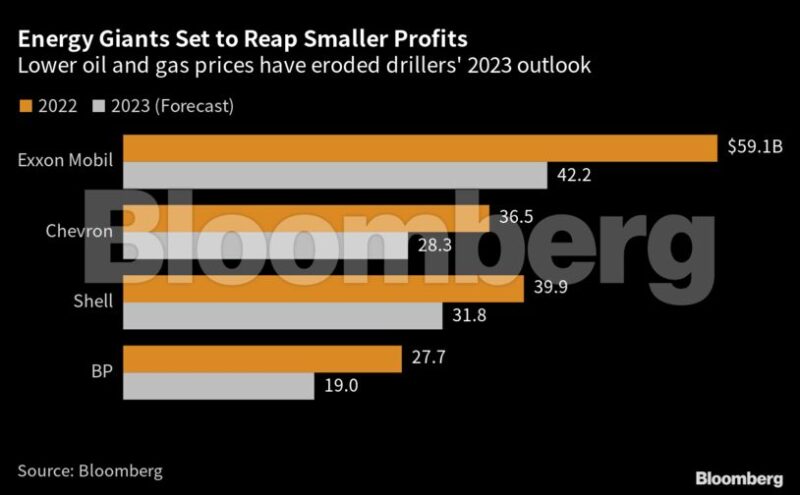
Oil is coming off its worst weekly rout since April 2020 as the turmoil in the banking sector fuels further concern that the global economy will tip into recession and hit demand, adding to a woeful first quarter for West Texas Intermediate and Brent futures. Both crude benchmarks are down at least 15% in 2023, while natural gas futures in the US and Europe have tumbled 48% and 44%, respectively. That spells trouble for the bottom lines of the world’s energy behemoths. Exxon Mobil Corp., Chevron Corp., Shell Plc and BP Plc all posted record profits in 2022, but lower prices for oil and gas dampen the chances of a repeat this year.
Shipping
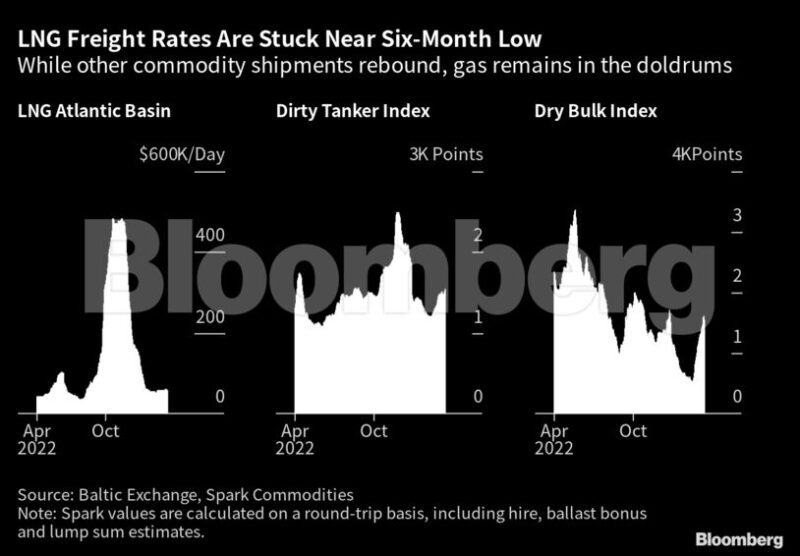
The volatility of natural gas is creating demand uncertainty for shippers. While vessel demand has rebounded for commodities including metals and oil, LNG freight rates are still stuck near a six-month low. Warmer weather is leaving ships aimless in the Atlantic Basin as Europe pulls fewer cargoes from the US. That’s a rapid change from a few months earlier, when freight rates hit record levels. Meanwhile, rates for bulk ships and crude tankers have surged after the Lunar New Year holidays in China.
Gold
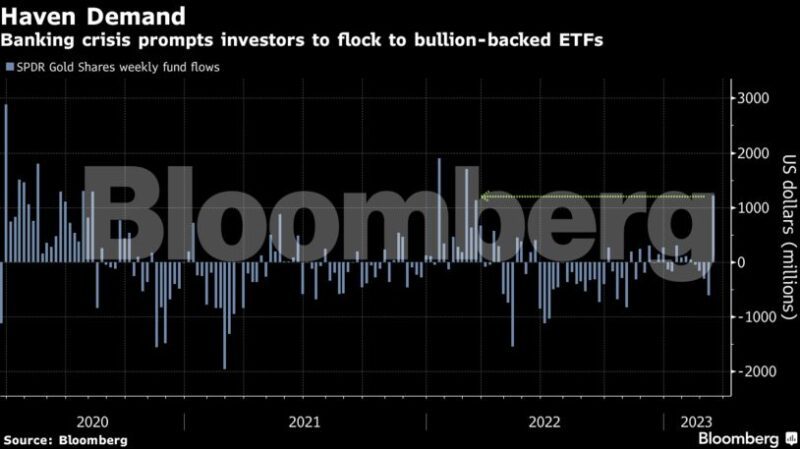
Holdings of bullion-backed exchange-traded funds posted their biggest weekly advance in more than a year last week amid the unfolding bank crisis while spot gold surged to $1,989.25 an ounce. The financial instability has dramatically shifted expectations for the rate-hike trajectory of the Federal Reserve, providing the perfect macro environment for the precious metal as investors seek safety in the haven asset. Focus will now turn to the US central bank’s March meeting, with most economists narrowly expecting policy makers to hike rates in an effort to tame high inflation, which could further bolster gold prices.
Soybeans
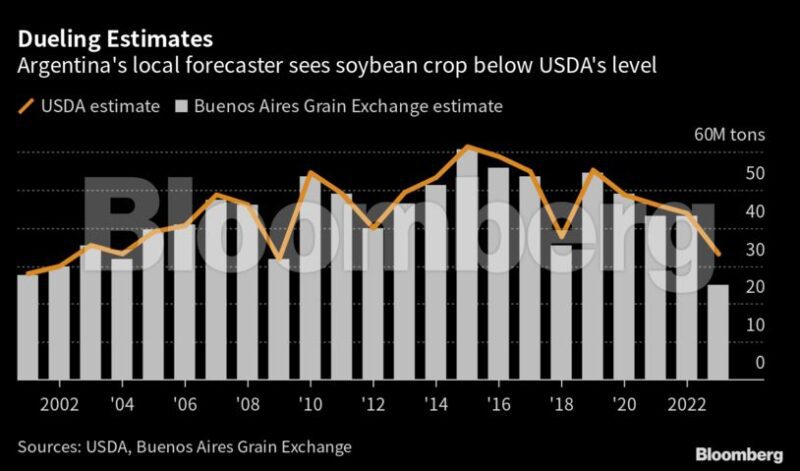
The Buenos Aires Grain Exchange, which last week slashed its soybean estimate by four million tons, will update its 2023 outlook on Thursday. The local forecaster’s current projection is eight million tons lower than the US Department of Agriculture’s estimate. It’s a stark difference, but the two agencies’ final figures have historically aligned. Argentina is the biggest global exporter of soy meal for livestock feed and soy oil for cooking and biofuels, so any more cuts risks further denting the global trade matrix.
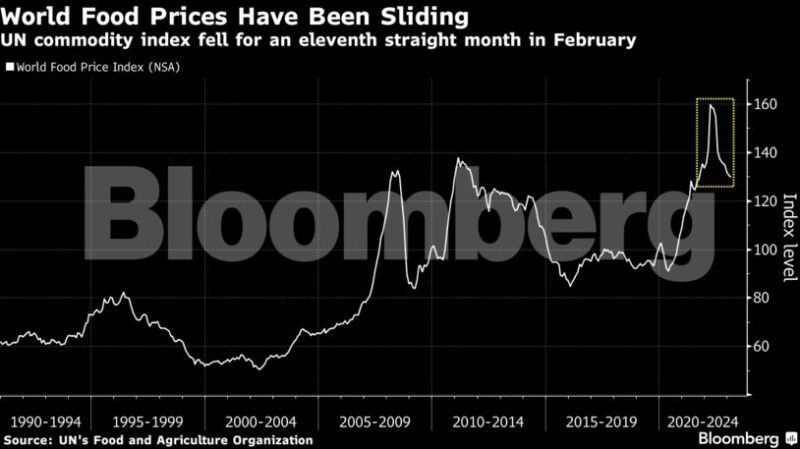
Keep an eye on food prices. While an agreement that safely allows Ukraine to export grains and other crops out of key Black Sea ports has been renewed, uncertainty lingers over the pact’s duration, casting a shadow over the future state of global supplies. That has the potential to add more pressure to food costs, which — while still elevated — have retreated since Russia’s invasion of Ukraine just over a year ago. The UN’s price index, which tracks five major exported food groups, is at the lowest level since September 2021 after surging to a record last year.
–With assistance from Gerson Freitas Jr., Ann Koh, Dominic Carey and Yvonne Yue Li.
The past fortnight has delivered a clear reminder that the industry’s regulatory problem is no longer a shortage of rules. It is the widening distance between what is agreed in London and Brussels and what can actually be demonstrated on deck, in the engine room and in a ship’s emissions data.
Middle East crude exports recently climbed to their highest levels since the start of the Iran war as more Gulf producers resume transit through the Strait of Hormuz – despite the continued threat of Iranian attacks. Yet oil prices remain stubbornly elevated, suggesting logistical problems are proving as disruptive as outright supply losses.
By Gleb Stolyarov MOSCOW, Sept 25 (Reuters) – Russia could quickly restart up to 80% of its grain terminal capacity in the Black Sea and Sea of Azov if diplomatic efforts to...
September 26, 2026
Total Views: 1241
Get The Industry’s Go-To News
Subscribe to gCaptain Daily and stay informed with the latest global maritime and offshore news
— just like 106,692 professionals
Secure Your Spot
on the gCaptain Crew
Stay informed with the latest maritime and offshore news, delivered daily straight to your inbox
— trusted by our 106,692 members
Your Gateway to the Maritime World!
Essential news coupled with the finest maritime content sourced from across the globe.

 Join The Club