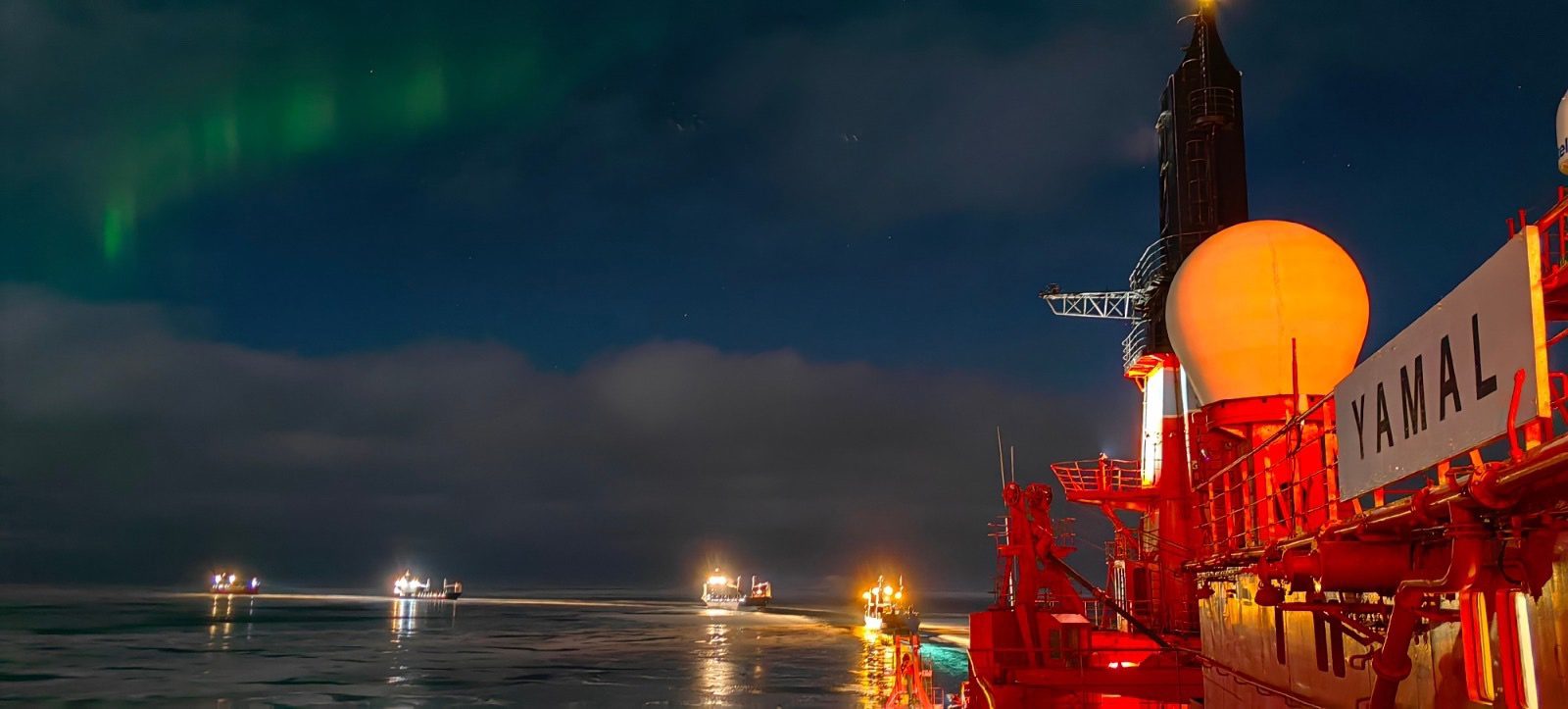
Cargo volumes rise as tanker, bulk carrier and container traffic expand, with 2026 transits potentially reaching 150.
The number of commercial transit voyages through Russia’s Northern Sea Route (NSR) surpassed the full-year 2025 total by the end of September, putting Arctic shipping on course for another record season.
The combined deadweight tonnage of vessels completing transits reached approximately 7.8 million tons, 26% higher than the 6.2 million tons recorded in 2025, according to CHNL’s analysis of AIS data from MarineTraffic by Kpler.
The center estimates that the final 2026 total could approach 150 transits and exceed 4.5 million tons of cargo. Those figures remain provisional: as of Sept. 30, another 45 potential voyages were either underway or within the NSR area and could still qualify as completed transits.
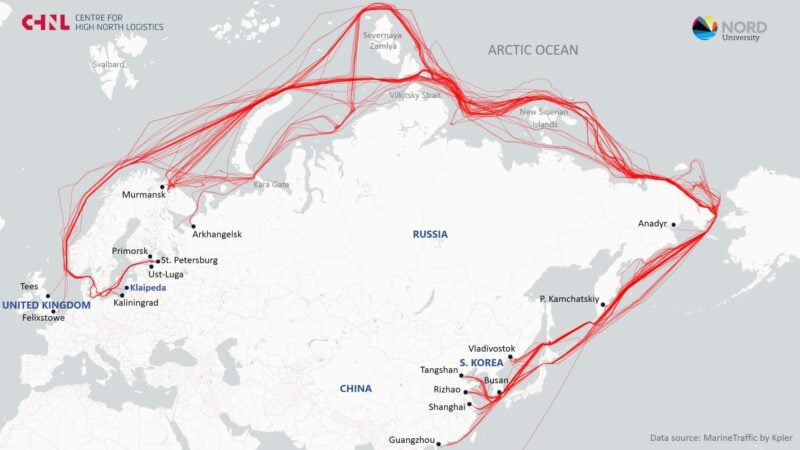
Map of all NSR Transit Voyages as of September 30, 2026. (Source: MarineTraffic by Kpler; analysis and visualization by CHNL)
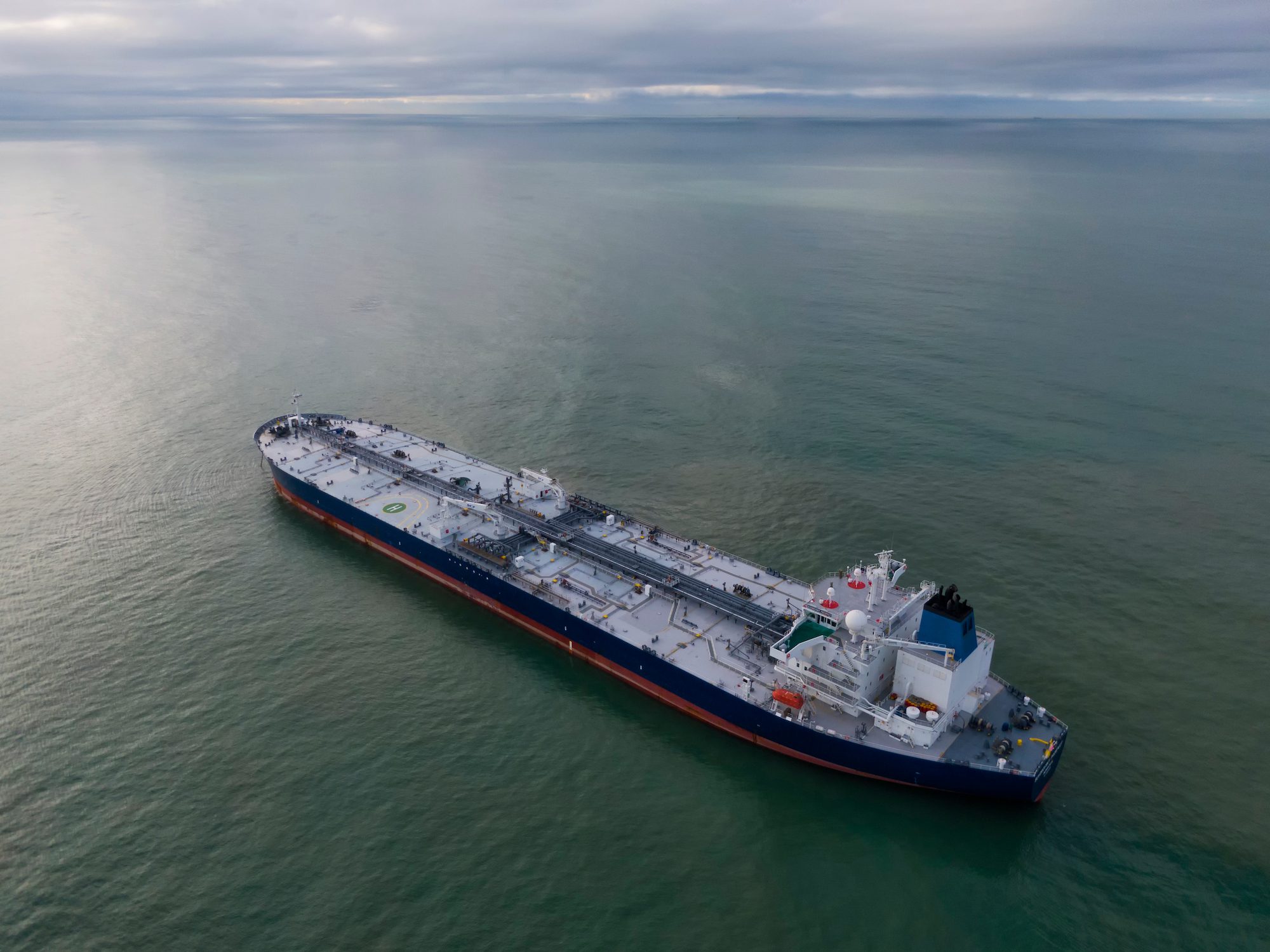
Tankers remained the largest cargo segment, with 22 eastbound voyages carrying an estimated 2.1 million tons, primarily crude oil. Murmansk was the main departure point, followed by Primorsk and Ust-Luga, highlighting the route’s role in moving Russian oil from Baltic ports toward Asian markets.
Bulk carriers also recorded substantial activity. Thirteen eastbound voyages carried an estimated 1.1 million tons of cargo, while 27 westbound voyages reflected a significant repositioning of vessels toward the Baltic, Murmansk and other western destinations. The pattern underscores how the NSR serves not only as a cargo corridor but also as a seasonal route for moving commercial tonnage between operating regions.
Container shipping offered another indication of the route’s evolving use. CHNL recorded 13 container ship transits by the end of September, including voyages between Asian and European ports that did not originate or terminate in Russia. Four international Asia-Europe transits had been completed, compared with just one during the entire 2025 season.
Among them, the container ships Panstar Acro and Dubai Tower reached the United Kingdom from South Korea and China, respectively, while Riyadh Mukaab sailed from China to Felixstowe. The bulk carrier Nan Xin 27 completed a voyage from China to Klaipeda, Lithuania. Although still a small share of total NSR traffic, these voyages demonstrate growing interest in using the Arctic as an alternative Asia-Europe corridor.
Ice conditions shaped the season’s development. During the first half of August, significant traffic diverted north of the Severnaya Zemlya archipelago, bypassing the conventional route through the Vilkitsky Strait. Conditions improved later in August, allowing traffic to return toward the traditional passage as open water expanded along the route. By early September, a more continuous open-water corridor had developed across much of the NSR.
The late-season conditions were more favorable for continued navigation than in 2024 and 2025, when ice formation ended the navigation period early. Open-water conditions persisted beyond Sept. 30 this year, although seasonal freeze-up was expected to progressively restrict vessels without ice-class capabilities from mid-October onward.
Six months into a war that sowed upheaval in the Persian Gulf, Qatar found itself stuck. By late August, even limited shipments from the gas heavyweight had all but stopped following a projectile attack on one of its tankers outside the Strait of Hormuz. Pressure was growing, not only from energy-starved clients but also from inside an economy built on regular deliveries.
Trafigura Group bought seven oil tankers from New York-listed SFL Corp., in the latest example of how trading houses and state energy companies are acquiring vessels to ship crude and products.
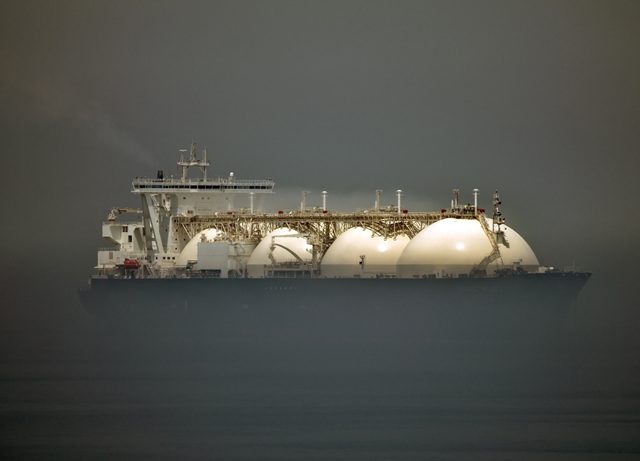
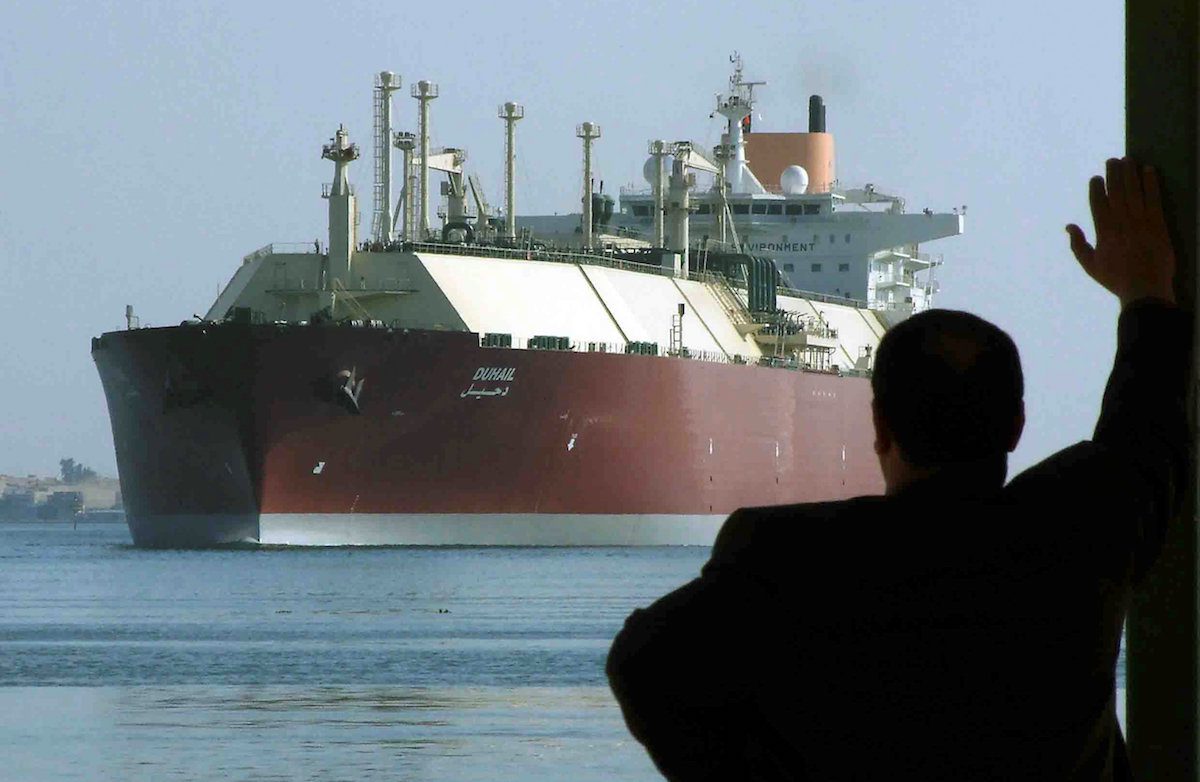
Qatar has amassed a fleet of empty liquefied natural gas tankers in the Persian Gulf, a sign that one of the world’s biggest exporters of the fuel may be preparing to boost shipments through the Strait of Hormuz.
October 7, 2026
Total Views: 2324
Get The Industry’s Go-To News
Subscribe to gCaptain Daily and stay informed with the latest global maritime and offshore news
— just like 106,657 professionals
Secure Your Spot
on the gCaptain Crew
Stay informed with the latest maritime and offshore news, delivered daily straight to your inbox
— trusted by our 106,657 members
Your Gateway to the Maritime World!
Essential news coupled with the finest maritime content sourced from across the globe.

 Join The Club