(Reuters) An Iranian cargo ship carrying aid and activists crossed into the Gulf of Aden on Sunday and will reach Yemen’s Hodaida port on May 21, Iranian media reported, in a challenge to Saudi-led naval forces controlling Yemeni waters.
A coalition of Arab countries led by Saudi Arabia has imposed searches on all ships trying to enter Yemen in a bid to prevent weapons being smuggled to the Iran-allied Houthi rebel group which controls much of the country, including Hodaida.
Iranian officials last week said they would not allow the Saudi-led forces to inspect the Iran Shahed, which is under military escort, and warned of war if the cargo ship was attacked.
“After entering the Gulf of Aden today… we expect to be in the confines of Hodaida port early on May 21,” the Iran Shahed’s captain, Massoud Ghazi Mirsaid, was quoted as saying by state news agency IRNA.
Iran says the ship is carrying food aid, medical volunteers and seven Western activists, one of whom was identified by the Tasnim news agency as Caleb Maupin, a native of Ohio who resides in New York and has campaigned against war and the U.S. financial system.
“If they prevent (the ship from docking), which is likely, this is a major human rights violation,” Tasnim quoted Maupin as saying in an interview on board the ship.
The presence of foreign activists has previously complicated plans to intercept ships carrying them. Israel faced criticism in 2010 when its forces raided a Gaza-bound flotilla, resulting in the deaths of nine Turkish activists on board. A 10th Turk died in May 2014 from wounds sustained in the incident.
Maupin also criticized a plea from his native United States that Iran redirect the ship to Djibouti, where the United Nations is coordinating relief efforts.
Reuters ship tracking data showed the Iran Shahed located off the coast of eastern Yemen at 1110 GMT, heading west towards the Bab el-Mandeb strait, one of the world’s busiest oil shipping routes.
Yemen’s Vice President Khaled Bahah said on Sunday his administration favored an extension of a five-day ceasefire expiring in the evening but this would depend on the situation on the ground.
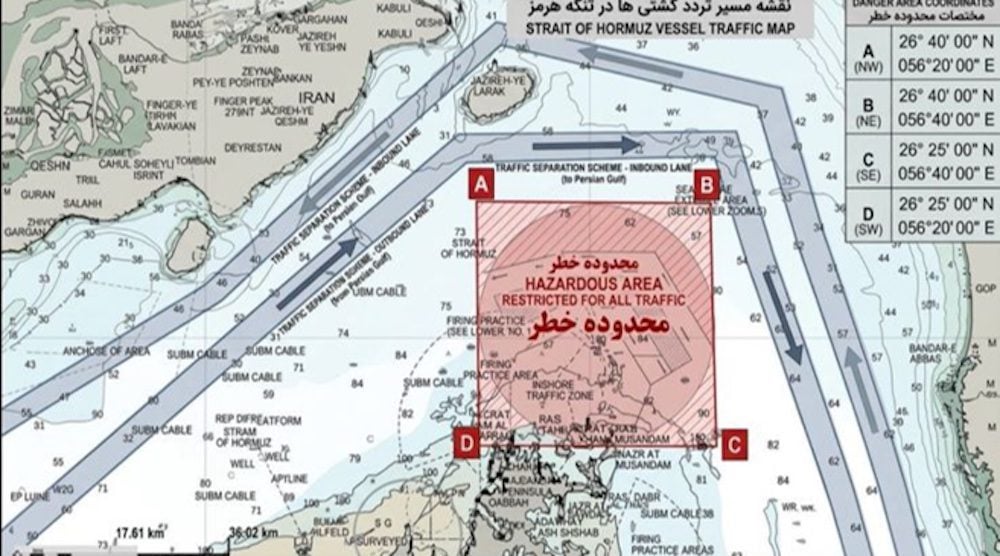
The Strait of Hormuz remained shut on Friday and Israel traded fire with Hezbollah in Lebanon, two disputes which the United States and Iran each described as violations of their ceasefire deal on the eve of their first peace talks of the war.
US President Donald Trump demanded Iran reopen the Strait of Hormuz while Israel and Hezbollah exchanged fire, complicating upcoming talks aimed at turning a fragile ceasefire into lasting peace.
U.S. President Donald Trump vowed to retain military assets in the Middle East until a peace deal with Iran is reached and warned of a major escalation in fighting if it failed to comply, as oil prices rose on concerns over supply and restrictions in the Strait of Hormuz.
April 9, 2026
Total Views: 1218
Get The Industry’s Go-To News
Subscribe to gCaptain Daily and stay informed with the latest global maritime and offshore news
— just like 107,215 professionals
Secure Your Spot
on the gCaptain Crew
Stay informed with the latest maritime and offshore news, delivered daily straight to your inbox
— trusted by our 107,215 members
Your Gateway to the Maritime World!
Essential news coupled with the finest maritime content sourced from across the globe.

 Join The Club