By Kanoko Matsuyama
Dec 7, 2025 (Bloomberg) –Chinese and Japanese ties, already frayed by Prime Minister Sanae Takaichi’s comments on Taiwan, came under further strain this weekend after a Chinese fighter aircraft trained fire-control radar on Japanese military jets for the first time.
The incident is set to further fuel tensions between the two nations sparked by the Japanese premier’s comments last month suggesting that Tokyo could deploy its military with other nations should China attack Taiwan.
The two countries gave conflicting accounts of events, with Tokyo claiming a Chinese fighter jet locked radar on its planes over international waters on Saturday, and Beijing accusing Japanese jets of disrupting its air training.
“This is extremely unfortunate. We strongly protested to China and demanded measures to prevent any recurrence,” Takaichi said in a TBS News broadcast on Sunday. “We will respond calmly and firmly.”
China’s foreign ministry accused Japan of leveling a false accusation and trying to “build up tension and mislead the international community.”
“China does not accept the so-called protest from the Japanese side and has rejected it on the spot and lodged counter-protests in Beijing and in Tokyo,” the ministry said in a statement.
Beijing has accused Takaichi of interfering in its internal affairs and issued economic and diplomatic reprisals, demanding that she retract the remark. The Japanese prime minister has refused to withdraw the comments, arguing that there is no change in Japan’s position, leaving the two sides locked in a diplomatic stalemate.
On Wednesday, Takaichi reiterated Japan’s long-held position that it understands and respects China’s view on Taiwan, a comment that some Chinese social media users saw as an attempt to walk back her recent remarks.
Read more: China Coast Guard Ship Formation Sails Through Japan-Administered Senkaku Islands
Japanese Defense Minister Shinjiro Koizumi told a press briefing in Tokyo on Sunday that a Chinese J-15 had intermittently aimed radar on two Japanese F-15 fighter jets over waters southeast of Japan’s Okinawa Prefecture.
The first instance of the Chinese aircraft locking radar on a Japanese F-15 took place over a period of three minutes just after 4:30 p.m. on Saturday, according to a ministry statement. The second occurred during a period of about 30 minutes around two hours later, targeting a different F-15, it said.
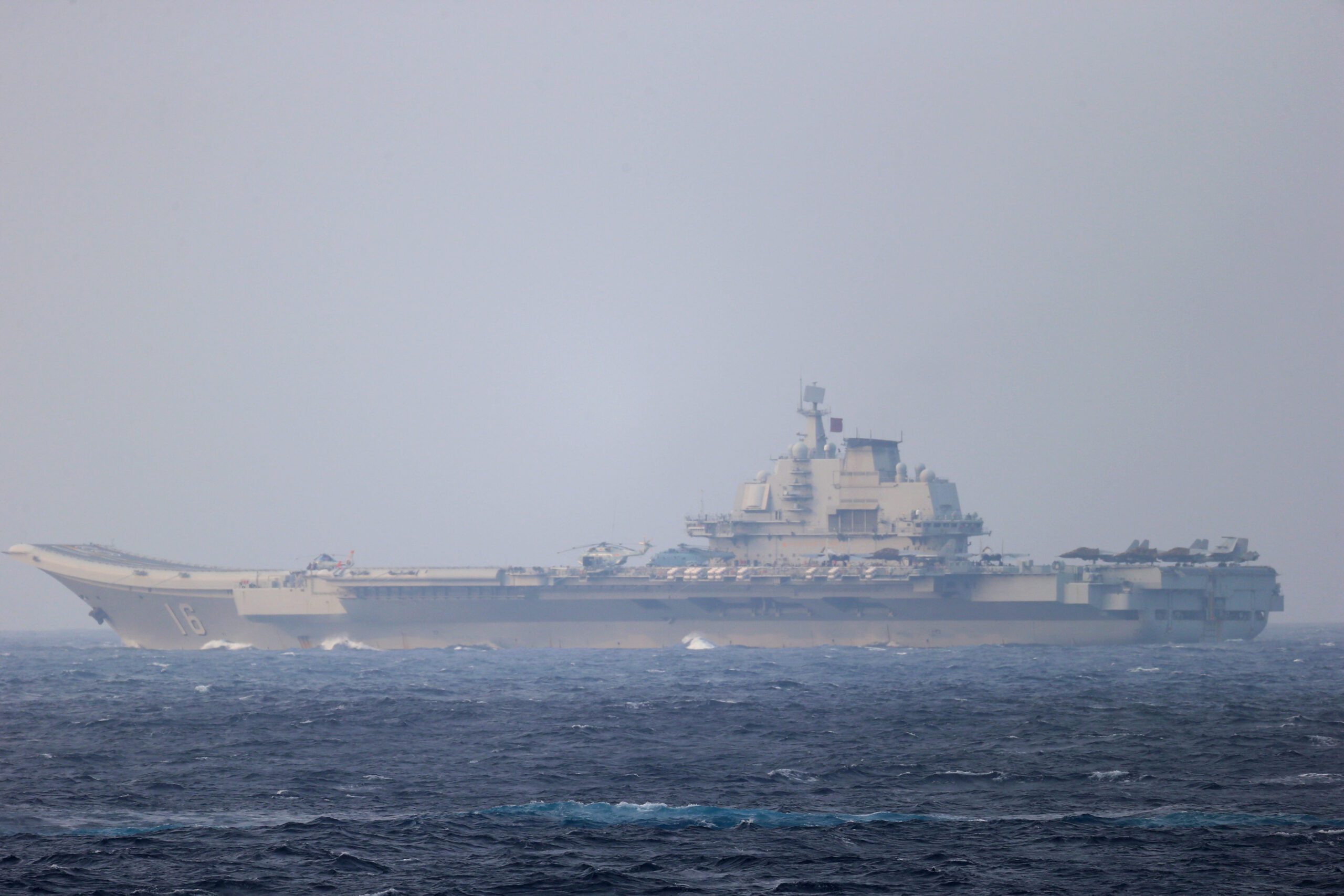
The F-15s had been scrambled to check that the Chinese aircraft launched from an aircraft carrier were not straying into Japanese airspace, according to the statement.
A Chinese navy spokesperson said in a statement on its official WeChat account that Japanese Self-Defense Force aircraft repeatedly approached and disrupted its fighter jet training, gravely endangering flight safety.
Australian Minister for Defence Richard Marles said at a meeting with Koizumi in Tokyo on Sunday that the events were “concerning.”
“We understand that there will be interactions between our respective defence forces and indeed the defence forces of China, but our absolute expectation is that those interactions are safe and are professional,” Marles said.
His Japanese counterpart reiterated the view that Japan would proceed firmly and calmly to ensure peace and stability in the region.
It is unclear if the Chinese move was an intentional action taken in the context of the current dispute or an unrelated incident. Still, there appears to be a precedent. In a previous spat between China and Japan over the sovereignty of uninhabited islands in the East China Sea, a Chinese ship locked its fire-control radar on a Japanese destroyer in January 2013.
Since Takaichi’s remarks on Taiwan on Nov. 7, China has advised its citizens against traveling to Japan, sent letters of protest to the United Nations and reached out to other countries to reaffirm support for its “One China” principle. US President Donald Trump spoke to both Chinese leader Xi Jinping and Japan’s Takaichi in separate calls in late November.
The Yomiuri newspaper reported Sunday that Japanese companies are facing delays in getting Chinese clearance to import minerals, including rare earths, citing several unidentified government officials.
Takaichi has so far shown no clear sign of taking retaliatory action against China. Takaichi and Foreign Minister Toshimitsu Motegi have repeatedly said that Tokyo’s position remains in line with a 1972 Sino-Japanese joint statement. The joint communique says that Japan understands and respects China’s view that Taiwan is an “inalienable part of its territory,” without specifically agreeing to the “One China” principle.
© 2025 Bloomberg L.P.

 Join The Club