By Ira Breskin
BRONX, NY — Vessel Construction Management practices received praise at the Shipbuilding in America conference here this week.
Vessel Construction Management (VCM) essentially outsources oversight of a ship’s entire construction process, from design to delivery, to a third party acting as the owner’s representative. The vessel construction manager takes charge of the entire project, from procuring materials to testing the vessel before delivery.
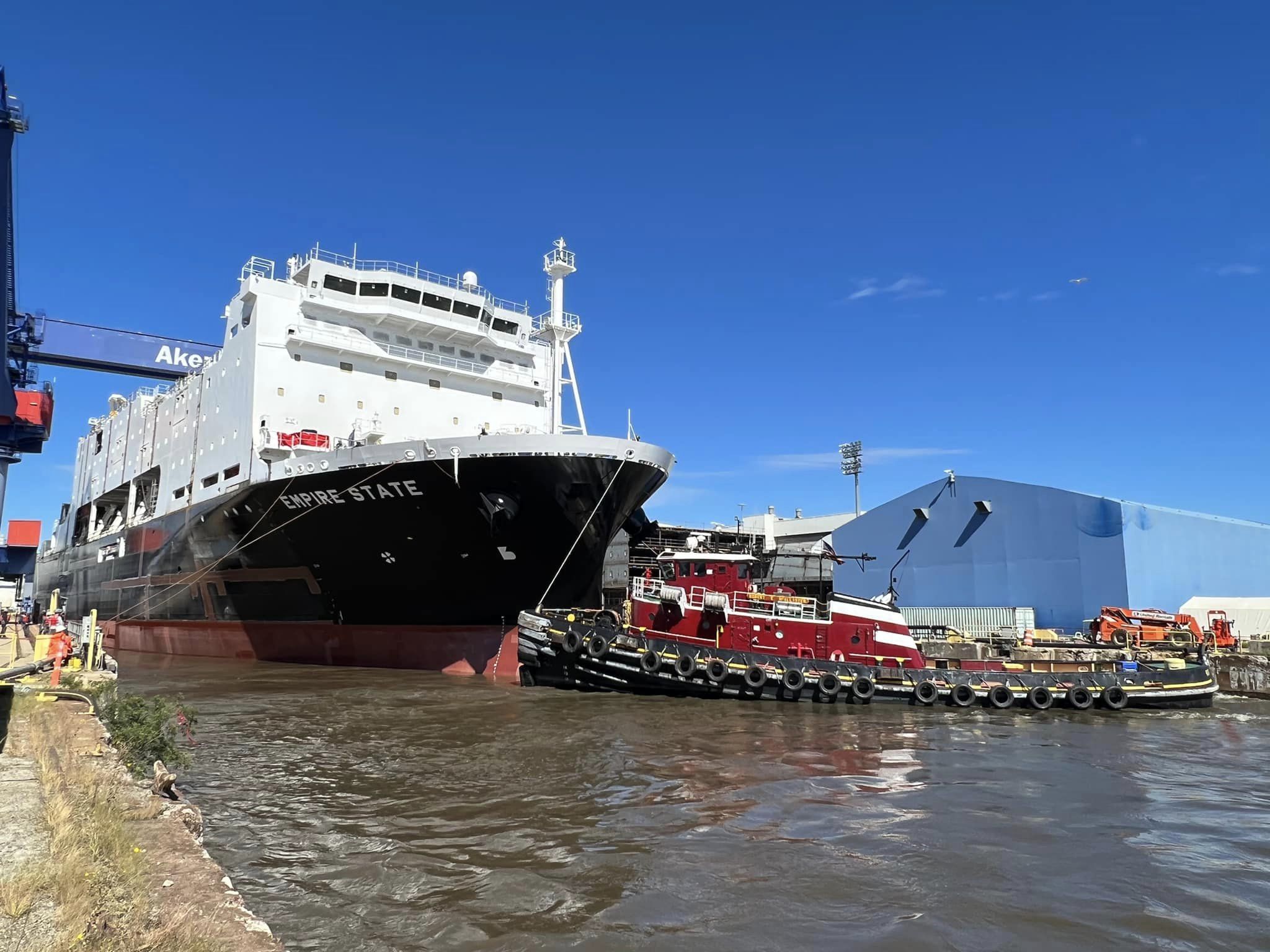
The Maritime Administration (MARAD) recently embraced VCM when procuring a new generation of training ships for five of the six state maritime academies. To date, MARAD contractor TOTE Services has delivered four of the five vessels.
“The goal is to deliver a newbuild ship on time and on budget by reducing direct government involvement with the yard and making the construction process more commercial than normal government procurement,” said Charlie Papavizas, an attorney with Winston Taylor in Washington, D.C.
The next challenge is to expand the use of VCM in commercial shipbuilding, said Chris Clark, vice president of new construction at TOTE Services, during the conference.
The conference was held earlier this week at the State University of New York Maritime College. Empire State VII, the school’s new training ship, was the first in the series to be delivered on time and within budget by TOTE, arriving in September 2023.
TOTE Services is also using VCM practices in two subsequent government projects: the construction of missile range instrumentation vessels and a new class of medium landing ships for the Navy.
Several ship operators and ship management companies offer VCM services, with the scope of those services depending on each firm’s expertise.
VCM relies on commercial shipbuilding best practices and commercial off-the-shelf (COTS) components rather than military-specification parts, both of which can reduce vessel costs and speed delivery.
Moreover, the use of VCM minimizes unnecessary design changes and the resulting change orders, which are often a source of costly contract disputes.

 Join The Club