The Maersk Group’s strategy to target growth markets aligns well with a recent UN report that found emerging economies now account for almost 30% of global GDP and 40% of trade.
The United Nations Conference on Trade and Development’s 2011 Review of Maritime Transport (UNCTAD) report found that developing countries’ GDP share in overall global economic output had reached 28% in 2010, up from 17% in 1980, and that their slice of world trade was 40%, up 30% on 2008.In 2012 the Maersk Group will execute plans laid out in 2011 by prioritising specific investments in promising markets, with Executive Board Members scheduled to visit their focus countries to build relations with officials and key partners and customers.”Hopefully by meeting relevant stakeholders, we can help open doors the local organisations might struggle to get through,” says Maersk Line CEO and member of the Executive Board Søren Skou, a priority sponsor for Vietnam and Indonesia.
Also high on the Group’s agenda is sharing knowledge across growth countries to ensure better processes in order to build up business at the local level.
“Many of the challenges in setting up operations in growth markets are similar from one country to the next, and it is important that we share best practices like, for example, cases where we have created Group synergies across business units,” Head of Group Strategy Søren Karas says.
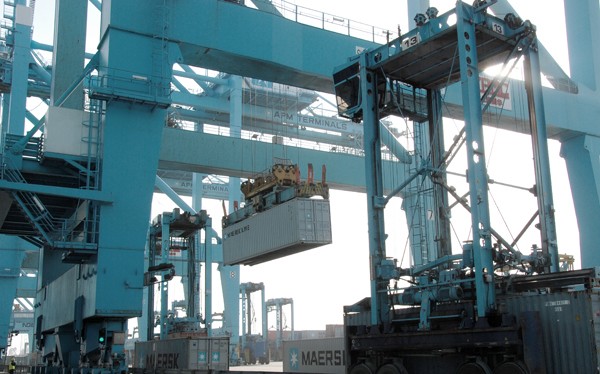
APM Terminals is one business that will share knowledge to improve operations across the 27 facilities it owns or controls (see the next edition of Maersk Post on February 6) and invest “aggressively” to keep up with the economic shift identified by the UNCTAD report.
“Aggressive infrastructure investment is required right now to keep up with the pace of that projected growth, “APM Terminals CEO Kim Fejfer said after a year in which he oversaw about USD 3 billion in new infrastructure development and facility expansion.
“What these figures and trends tell us, very emphatically, is that the future of the shipping industry is heavily weighted toward developing markets in Asia, Latin America, Africa and the Middle East, and to a certain extent Central Europe ”
UNCTAD found improved efficiency and reduced costs of modern port operations had helped increase global trade and overall economic output.
About half of APM Terminals’ current container volume is in facilities in economically emerging areas.
“Our capabilities within port development and operation can bring efficient port capacity to new markets benefiting customers, government authorities and communities” added Fejfer.
Global container shipping rates fell for a fourth consecutive week as the traditional pre-Lunar New Year cargo surge failed to materialize. Spot rates dropped across all major trade lanes, prompting carriers to announce an unusually large wave of blank sailings as uncertainty over demand and Suez Canal transits continues to cloud the market outlook.
Maersk slipped into a rare quarterly loss in its Ocean division as freight rates weakened and the container giant began a cautious return to Red Sea and Suez Canal transits. The setback underscores the financial strain facing carriers as overcapacity collides with the end of Cape of Good Hope diversions.
French carrier’s U-turn on Suez transits jolts shipper confidence and reopens questions about whether Red Sea stability is real—or just another false dawn. Just days after shipping giant Maersk announced...
January 20, 2026
Total Views: 2739
Get The Industry’s Go-To News
Subscribe to gCaptain Daily and stay informed with the latest global maritime and offshore news
— just like 107,452 professionals
Secure Your Spot
on the gCaptain Crew
Stay informed with the latest maritime and offshore news, delivered daily straight to your inbox
— trusted by our 107,452 members
Your Gateway to the Maritime World!
Essential news coupled with the finest maritime content sourced from across the globe.

 Join The Club