A Maersk-operated containership lost around 90 containers in heavy weather this week during an eastbound voyage in the North Pacific Ocean, the company has confirmed.
Some of the containers lost overboard contain dangerous goods such as lithium-ion batteries. About another 100 containers are collapsed or damaged on deck.
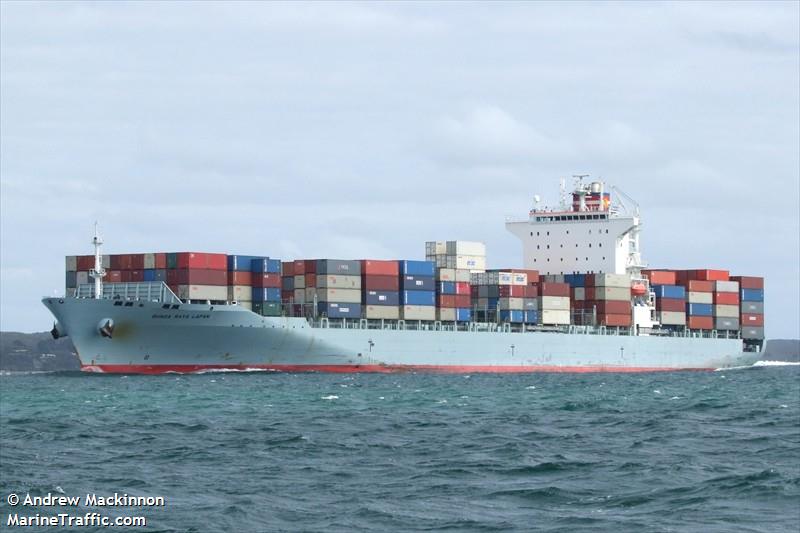
“We regret to confirm that the 4,578 TEU, Liberia-flagged vessel Dyros, chartered and operated by Maersk, lost around 90 containers in the North Pacific Ocean because of rough weather on 21 March 2022. Nine of these containers are labelled dangerous cargo and contained lithium-ion batteries packed with equipment,” Maersk said in a statement to gCaptain.
The cargo loss on board the M/V Dyros took place approximately 1,200 nautical miles from Japan as the ship was travelling from Yantian, China to Seattle, Washington, Maersk said.
Cargo consultancy WK Webster reported that, as of March 21st, the ship was southwest of the Fox Islands, Alaska with a scheduled arrival in Seattle on March 27th.
No injuries have been reported and the ship is continuing on its voyage.
“The ship is able to continue its voyage and is heading for safe port. Crew, vessel and operations safety are of highest importance, and we are working closely together with the ship managers and we view this as a very serious incident which will be investigated thoroughly with the aim of minimizing the risk of similar incidents in the future,” Maersk said.
The exact position of the cargo loss was not provided.
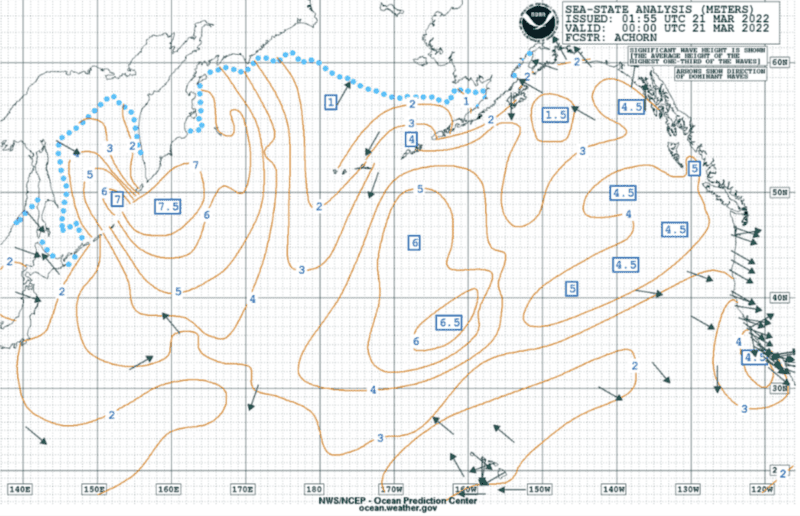
The NOAA Ocean Prediction Center’s sea-state analysis from March 21st shows significant wave heights of 4-6 meters:
Credit: Ocean Prediction Center
Maersk claimed one of the worst cargo losses of the 2020-2021 winter season when the Maersk Essen lost approximately 750 containers during a voyage from China to Los Angeles, California in January 2021. About a month later Maersk Eindhoven lost some 260 containers overboard after a loss of propulsion off the coast of Japan.
A new study from the Mærsk Mc-Kinney Møller Center for Zero Carbon Shipping finds that ethanol could become a practical alternative fuel for ships, particularly those already equipped with methanol-capable...
A.P. Moller-Maersk has bunkered one of its dual-fuel containerships with 100% U.S.-produced corn ethanol, marking what the company says is the first ship-to-ship commercial ethanol bunkering of a deep-sea container...
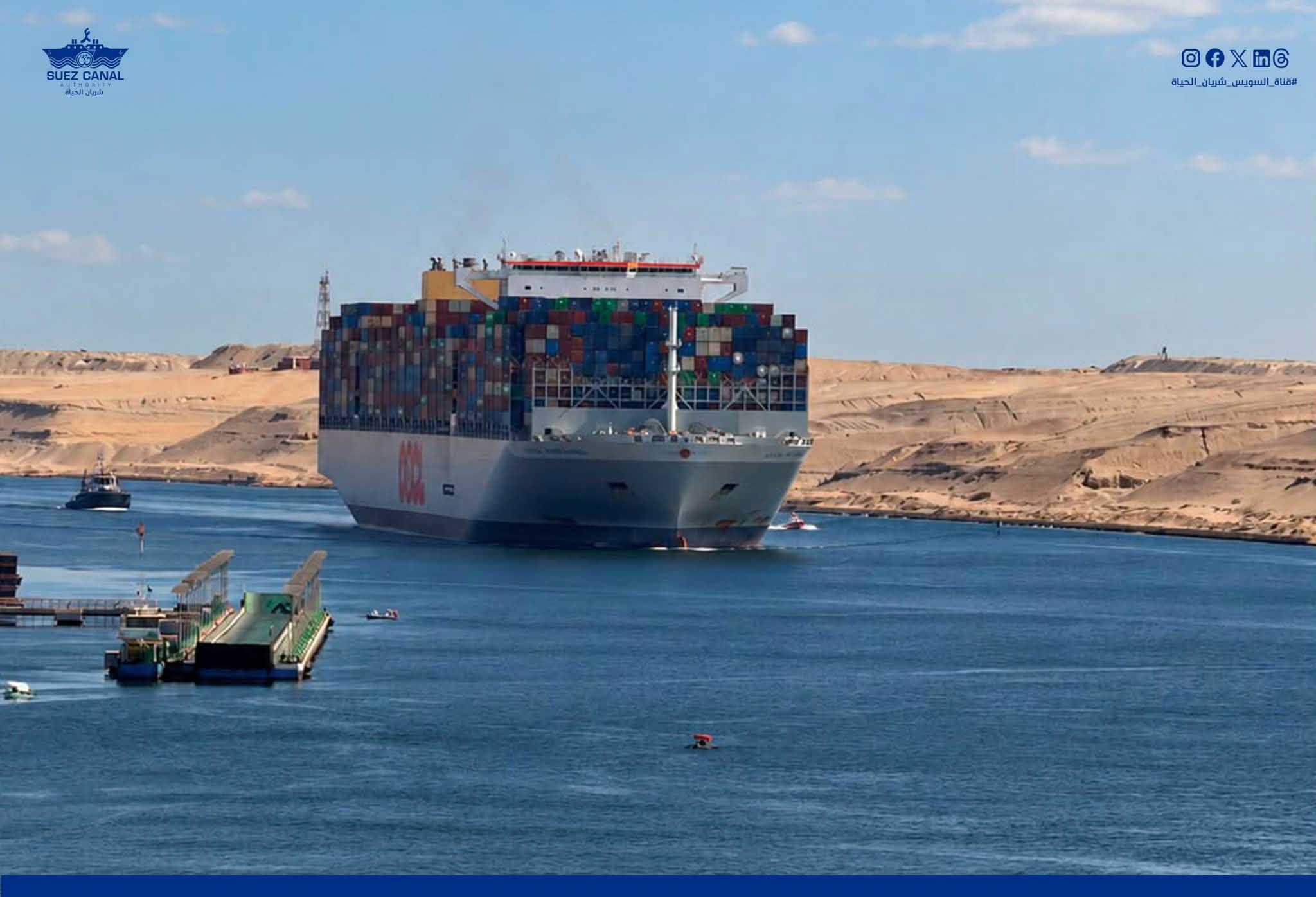
Container carriers are accelerating their return to the Suez Canal, with COSCO’s OOCL Portugal making a milestone transit even as Houthi advances around Bab el-Mandeb raise fresh security concerns.
September 16, 2026
Total Views: 3667
Get The Industry’s Go-To News
Subscribe to gCaptain Daily and stay informed with the latest global maritime and offshore news
— just like 106,746 professionals
Secure Your Spot
on the gCaptain Crew
Stay informed with the latest maritime and offshore news, delivered daily straight to your inbox
— trusted by our 106,746 members
Your Gateway to the Maritime World!
Essential news coupled with the finest maritime content sourced from across the globe.

 Join The Club