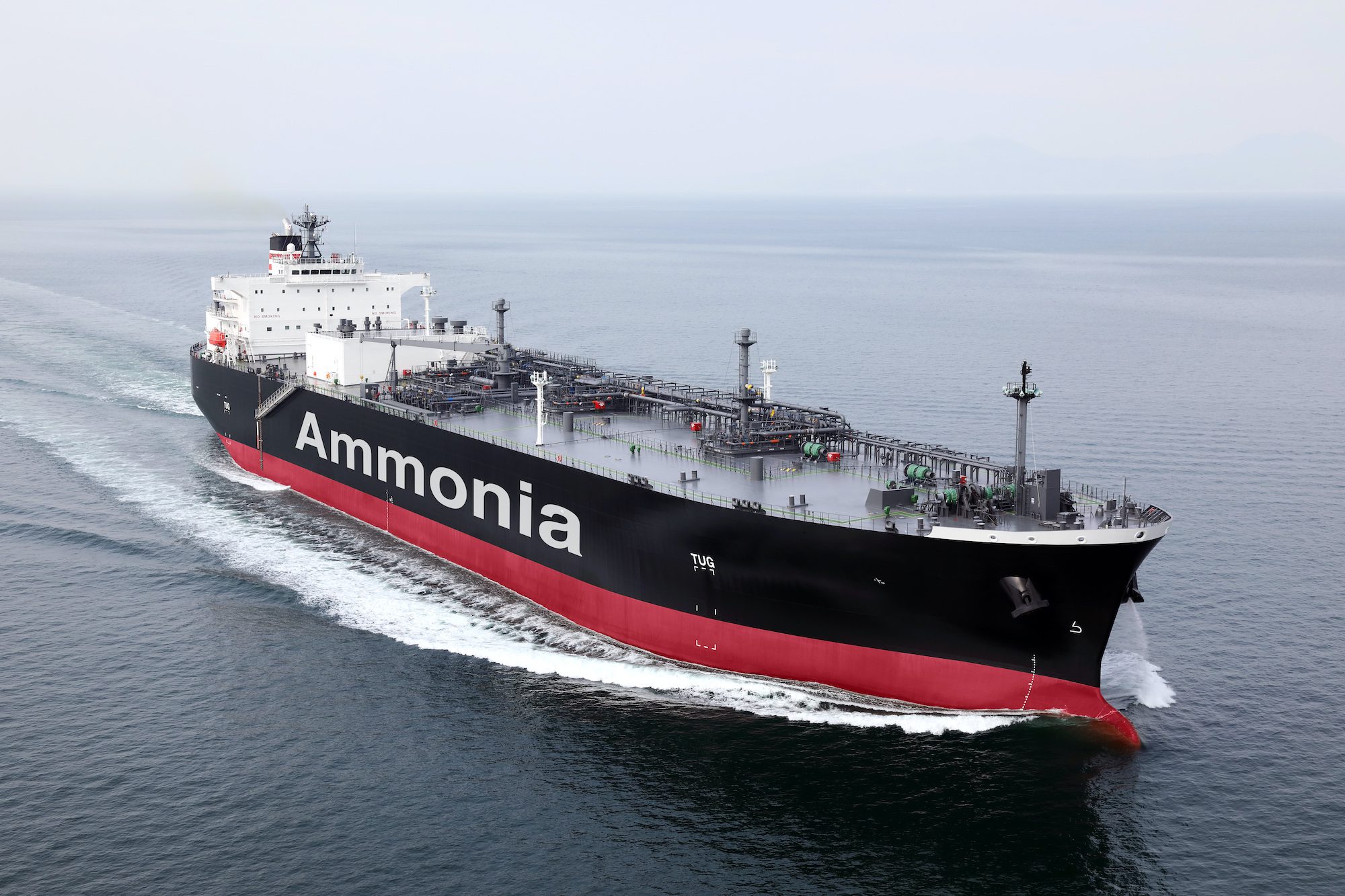
Japanese power company JERA Co. has entered into memorandums of understanding with shipping companies NYK and MOL on the large-volume transportation of ammonia fuel to be used for power generation.
The cooperation is related to the development of the Hekinan Thermal Power Plant, which is expected to start commercial operations later this decade.
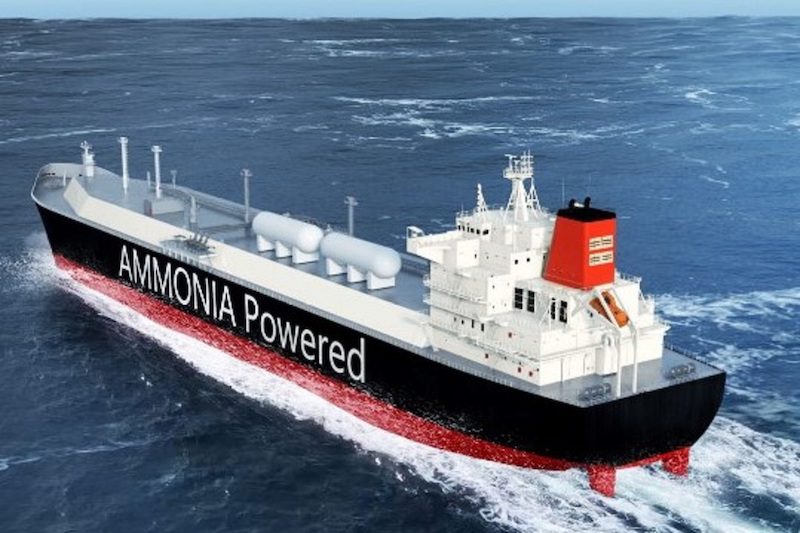
The MOUs with NYK and MOL cover the development of large-scale ammonia fuel carriers, building an ammonia fuel transportation and receiving system, and installing and operating ammonia-powered ship engines. The companies will also work with relevant parties to foster regulations regarding ammonia fuel.
JERA said the development of large-volume ammonia carriers and the construction of an ammonia fuel supply chain would be world firsts.
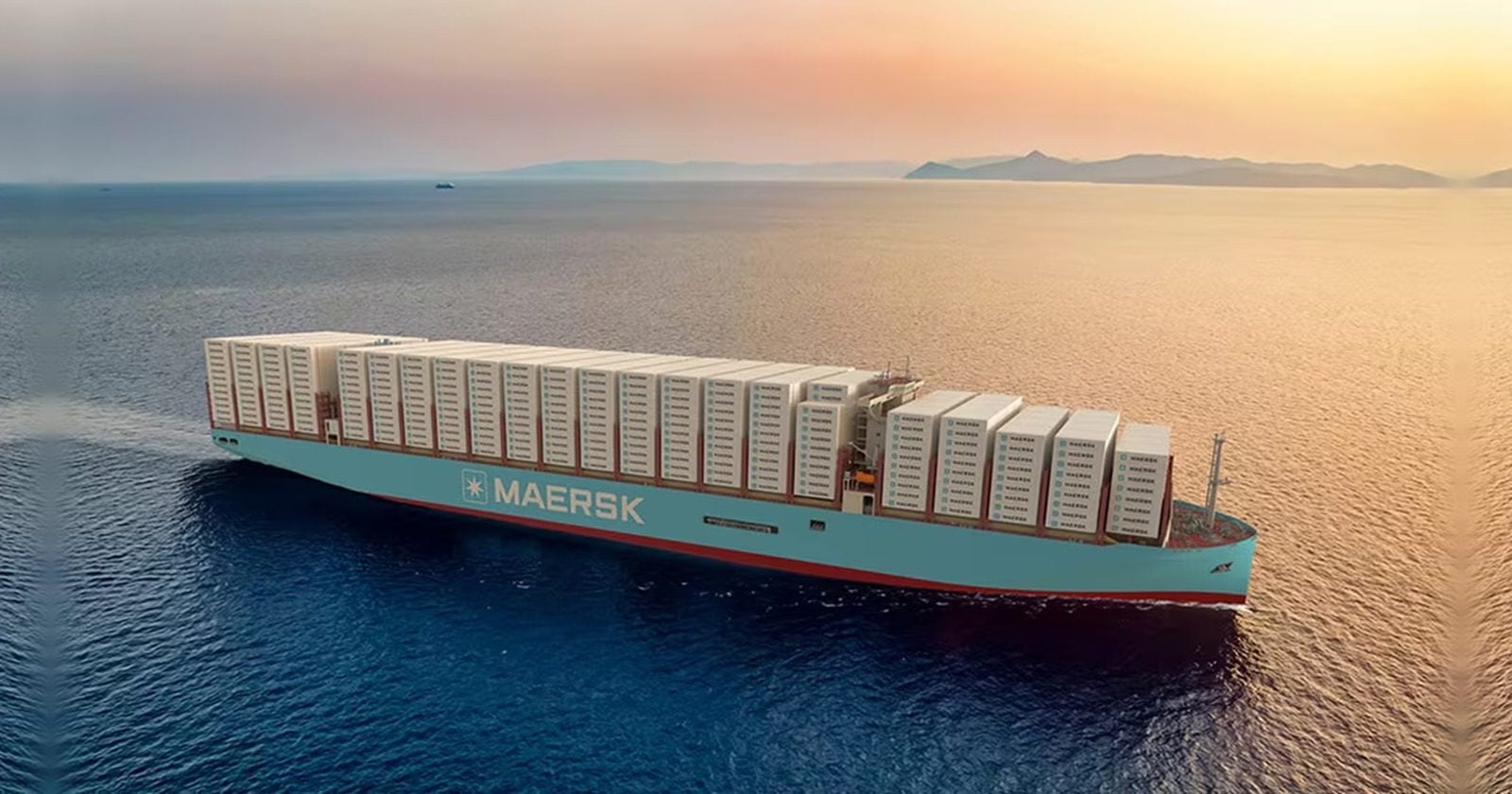
Illustration courtesy JERA/MOL
“With ammonia emerging as a next-generation clean energy source that does not emit carbon dioxide during combustion, large-scale demand for ammonia is expected in the future, particularly for co-firing and as a hydrogen carrier in coal-fired power plants,” MOL said in a statement.
Since February, JERA has been conducting an international competitive bidding process for ammonia fuel procurement, including an opportunity to participate in ammonia fuel production.
The latest session of the IMO’s Pollution Prevention and Response Sub-Committee didn’t deliver sweeping new rules, but beneath the technical drafting work, PPR 13 signaled a clear shift toward performance-based environmental oversight. From biofouling and Arctic black carbon to scrubber discharges and low-load engine certification, the focus is moving beyond installed equipment to how ships are actually operated, maintained, and managed over their full lifecycle.
A coalition of environmental and clean-shipping groups is urging the International Maritime Organization to block any move that would allow ammonia-fueled ships to discharge toxic waste at sea, warning that shipping’s push toward zero-emission fuels must not come at the expense of ocean health.
Maersk orders eight 18,600-TEU dual-fuel containerships for 2029-2030 delivery, choosing operational flexibility over megaship scale despite recording its first quarterly loss in years amid freight rate pressure and global overcapacity.
February 9, 2026
Total Views: 1711
Get The Industry’s Go-To News
Subscribe to gCaptain Daily and stay informed with the latest global maritime and offshore news
— just like 107,411 professionals
Secure Your Spot
on the gCaptain Crew
Stay informed with the latest maritime and offshore news, delivered daily straight to your inbox
— trusted by our 107,411 members
Your Gateway to the Maritime World!
Essential news coupled with the finest maritime content sourced from across the globe.

 Join The Club