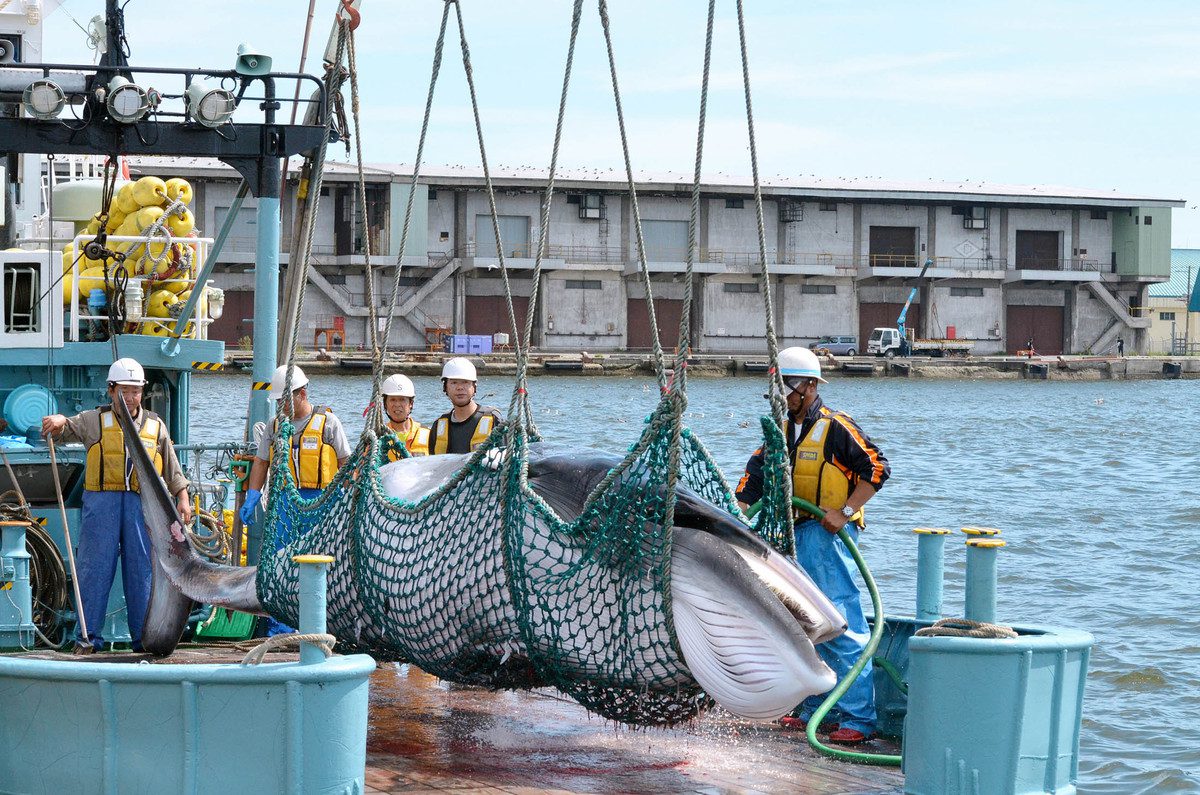
A common minke whale is unloaded at Kushiro port during a research whaling operation in Hokkaido in September. Photographer: The Asahi Shimbun via
by Lily Nonomiya (Bloomberg) Japan plans to renew its research hunt for whales in the Antarctic, ending an almost two-year hiatus prompted by an international court ruling that its killing of whales couldn’t be justified for scientific purposes.
The fleet will set out on Dec. 1 and seek to take 333 whales in a study set to last into early March, Japan’s Fisheries Agency said in a statement on its website. That would be about a third of the previous research whaling target of 1,000.
Decades of over-hunting left many whale populations endangered and triggered an international campaign to save the animals that culminated with the 1986 moratorium on commercial whaling. Since the ban, Japan has killed more than 10,000 whales by taking advantage of the treaty’s exception for scientific whaling. Conservationists call it a loophole and say the research could be accomplished by non-lethal means.
The United Nations International Court of Justice ordered Japan to stop its hunt in March 2014, and said that the country shouldn’t restart whaling unless it can prove the hunt is for scientific purposes and research can’t be done by non-lethal means. The International Whaling Commission in September passed a resolution to limit the use of the scientific-research exception to the international ban on whaling. The Japanese fisheries agencies said there would be a non-lethal component to the research.
‘Strongly Opposed’
Japan killed almost 95 percent of the 14,410 whales hunted for research since the moratorium, according to a lawsuit brought by Australia. In the 34 years prior to the moratorium, a total of 2,100 whales were killed for research, Australia said. Japan considers the hunting of whales part of its traditional lifestyle and has been able to keep its whaling fleet in working order through the research hunts.
Japan, Norway and Iceland have been among the biggest proponents of lifting the commercial moratorium to allow the hunting of healthy whale stocks.
Australia said it “strongly opposed” the Japanese decision and called the research program “unnecessary,” while New Zealand said it would seek an end to whaling off Antarctica.
“We do not accept in any way, shape or form the concept of killing whales for so-called ‘scientific research’,” Australian Environment Minister Greg Hunt said in an e-mailed statement on Nov. 28
New Zealand will consider “all options” to end to Southern Ocean whaling, Acting Minister of Foreign Affairs Todd McClay, said in a separate statement.
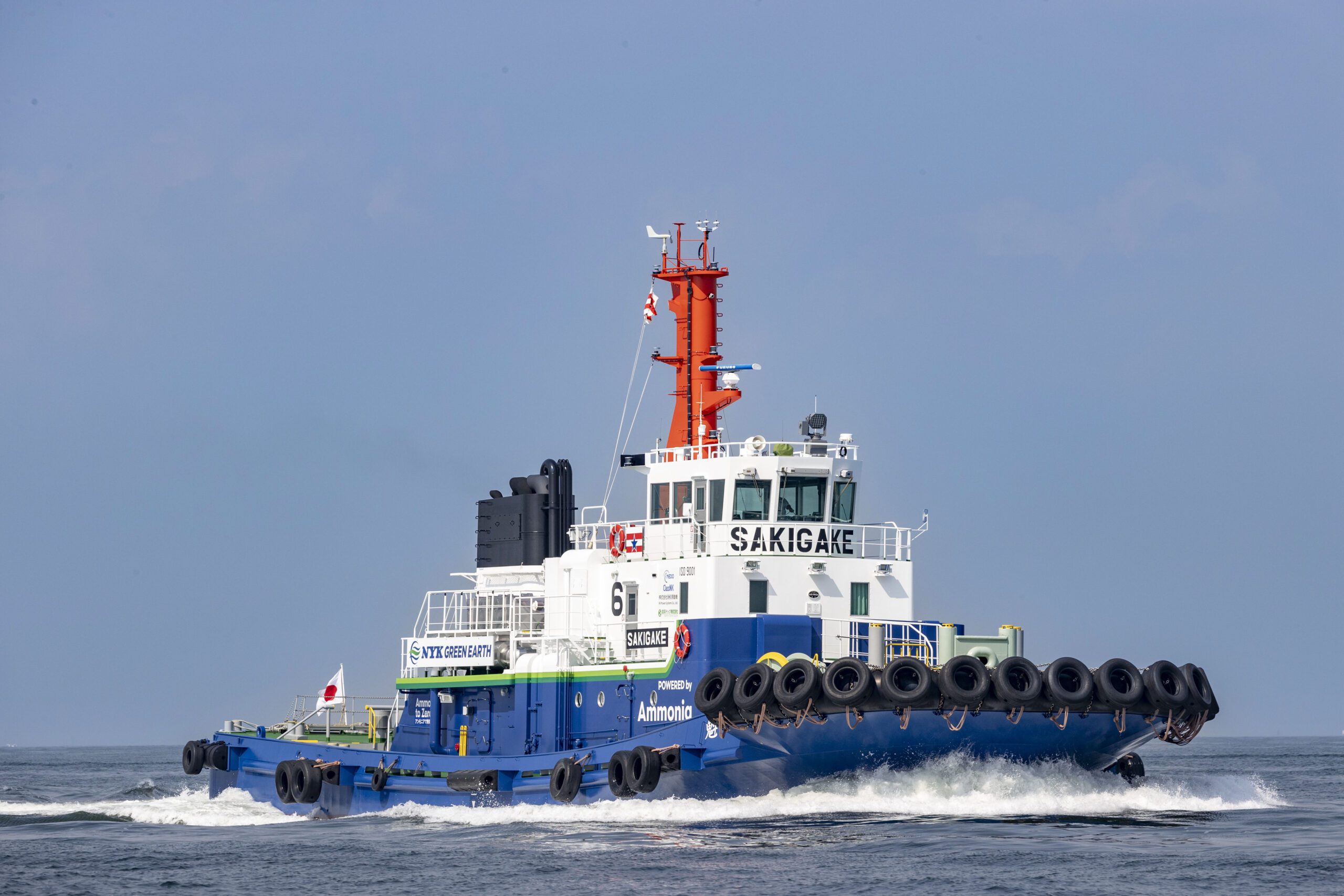
INYK and IHI Power Systems, in collaboration ClassNK, have completed the world’s first ammonia-fueled vessel for commercial use. The tugboat, named Sakigake, was unveiled on on Friday and is set...
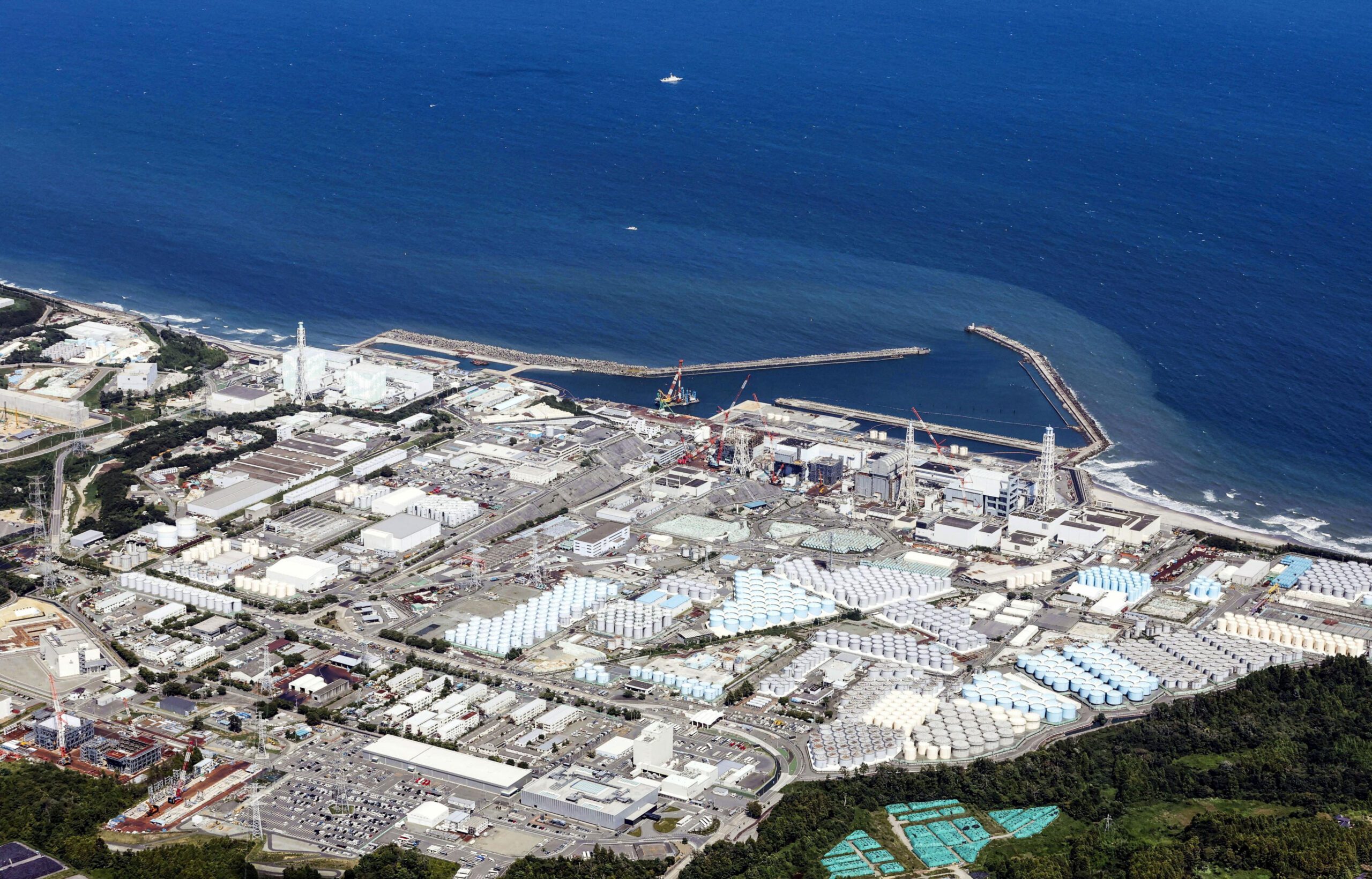
By Sakura Murakami TOKYO (Reuters) – Japan started releasing treated radioactive water from the wrecked Fukushima nuclear power plant into the Pacific Ocean on Thursday, a polarizing move that prompted China to announce an...
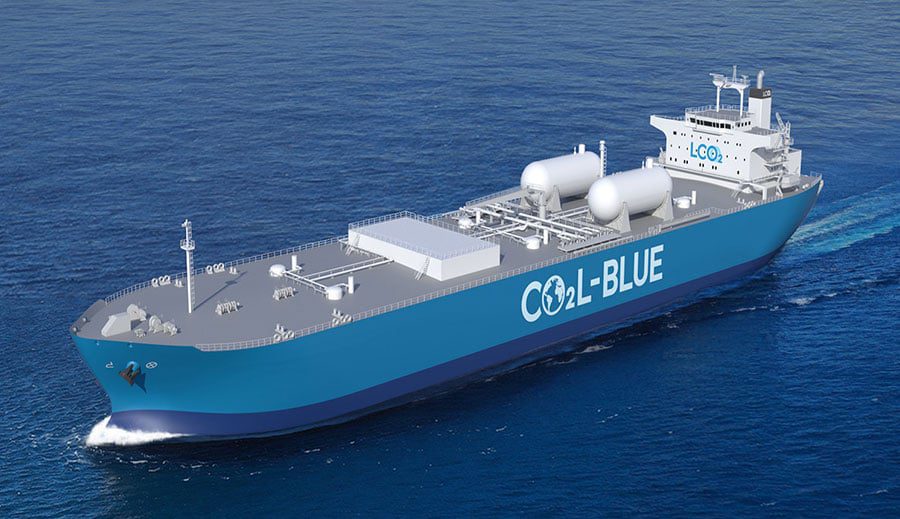
In response to the increasing demand for CO2 transportation resulting from the growth of carbon capture and storage (CCS) projects, a group of Japan’s shipbuilders has announced a new project...
May 22, 2023
Total Views: 2237
Get The Industry’s Go-To News
Subscribe to gCaptain Daily and stay informed with the latest global maritime and offshore news
— just like 107,116 professionals
Secure Your Spot
on the gCaptain Crew
Stay informed with the latest maritime and offshore news, delivered daily straight to your inbox
— trusted by our 107,116 members
Your Gateway to the Maritime World!
Essential news coupled with the finest maritime content sourced from across the globe.

 Join The Club