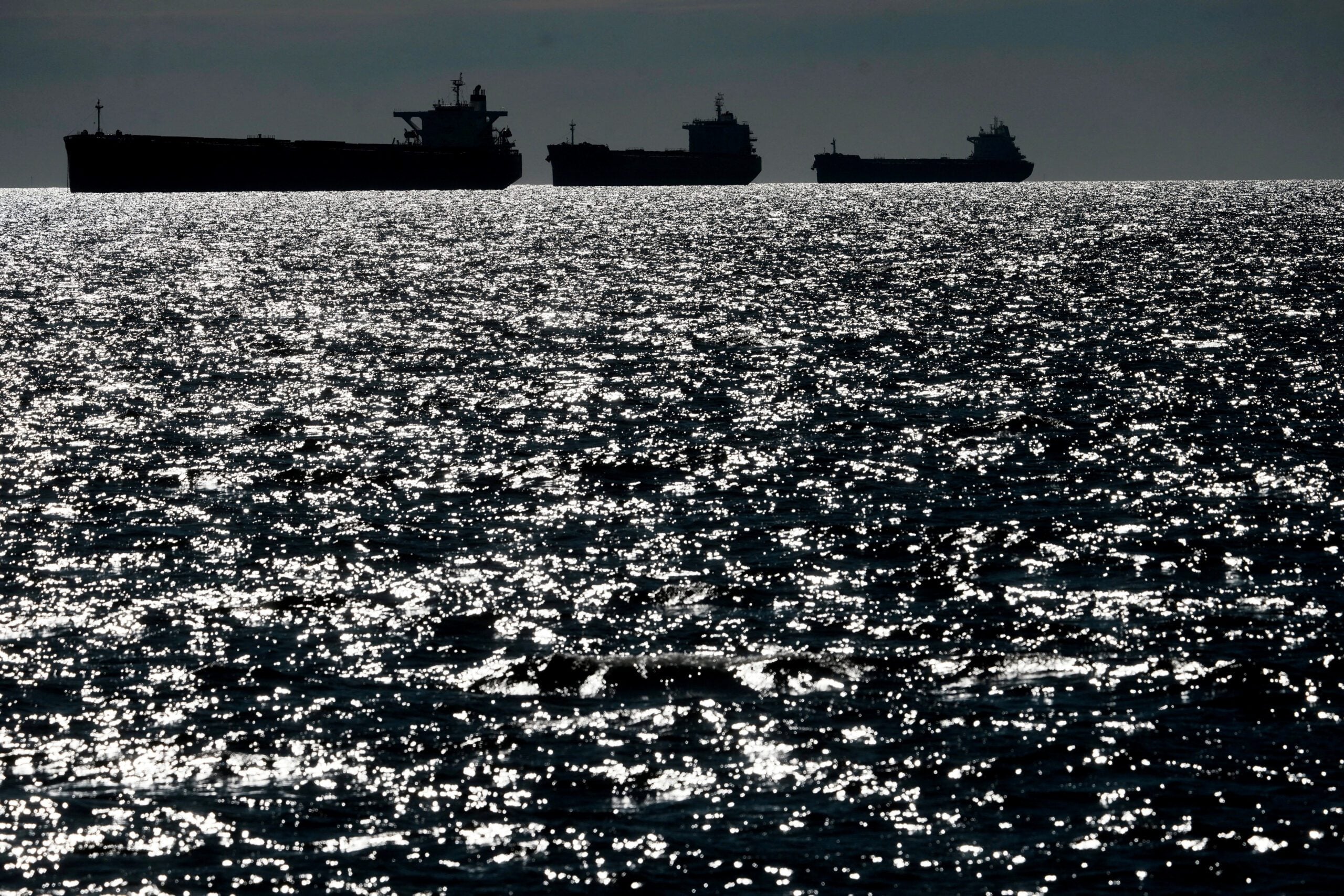
UPDATE:
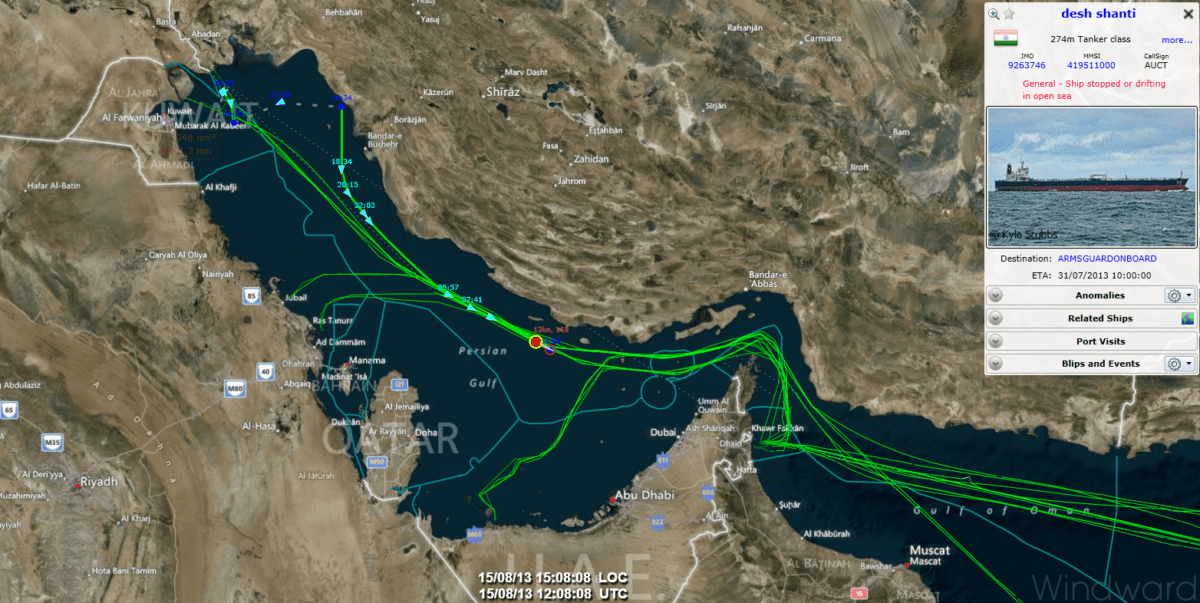
According to tracking data gathered by Windward Maritime Analytics Services Company, the Desh Shanti is underway again and steaming toward the Strait of Hormuz.
The green lines are the historical paths of the vessel. As the image shows, the Desh Shanti was in Basrah last week, then inside Iran, and now sailing east towards Hormoz at full speed (12kn), image via Windward, click for larger
By Nidhi Verma
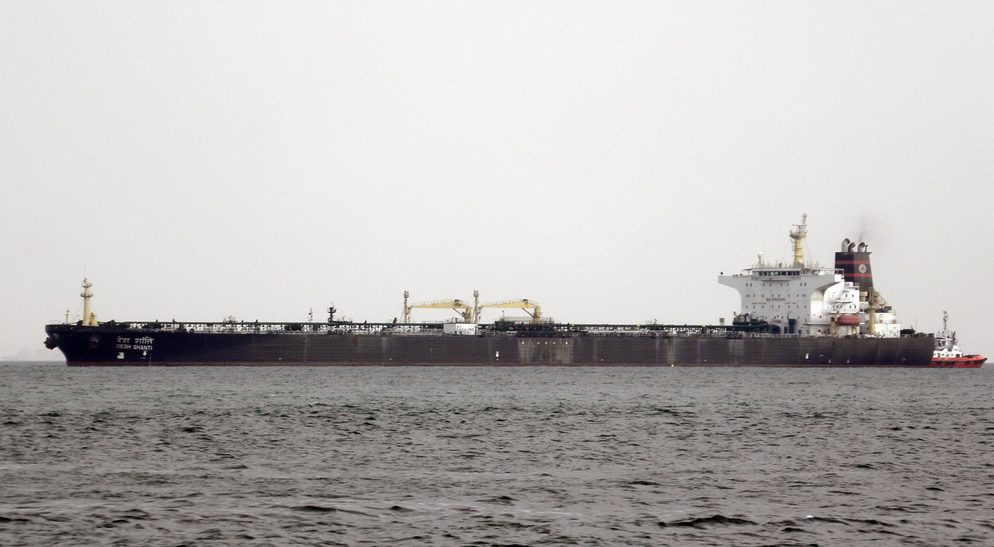
NEW DELHI, Aug 15 (Reuters) – An Indian ship carrying Iraqi crude has been detained by Iran in its territorial waters due to pollution concerns, the head of the refiner buying the oil and India’s shipping directorate said on Thursday.
The Desh Shanti was carrying 140,000 tonnes of Basrah crude from Iraq to India, a separate source at buyer Hindustan Petroleum Corp Ltd (HPCL) said.
Iraq was India’s biggest supplier of crude in June, pipping Saudi Arabia for the top slot with exports of 606,000 barrels per day (bpd). Exports from Iran, which used to be India’s second-biggest supplier, have dwindled because of western sanctions.
“It was a Shipping Corp of India (SCI) vessel carrying Iraqi crude for us … it was detained by Iran authorities to check pollution,” HPCL Chairman S. Roy Choudhury told Reuters.
The ship was stopped on Tuesday.
“SCI has informed us that it will be getting cleared today,” he added.
The head of India’s directorate general of shipping, Gautam Chatterjee, confirmed that the Iranian coast guard authorities had detained the ship, adding: “I have no information it has been released.”
The HPCL source said the Iranian coast guard suspected the vessel had spilled some oil and inspected it.
“They did not find anything. Now they have asked them to take the vessel to Bandar Abbas. After this we have been told there could be another inspection,” he added.
STILL IN GULF
Two sources at SCI said clarity on the vessel’s status would emerge on Friday.
“The vessel is still in the Persian Gulf. We will get to know if things are clear to us only when it reaches Fujairah,” one of the SCI sources said.
Any pollution damage claims would be handled by the tanker’s insurer, the Steamship Mutual protection and indemnity club.
Michael Hird, head of claims at Steamship Insurance Management Services in London, said: “We are certainly involved in the matter. We are not in a position to comment further. Hopefully it is straightforward.”
The HPCL source said SCI would arrange another ship if there were problems with this vessel for their consignment.
India, Asia’s third-largest economy, relies on imports for 80 percent of its crude consumption, and over 60 percent of its supplies come from Gulf countries.
Tensions between Iran and Iraq have always been high, spilling into outright war during the 1980s, but they are now focused on the battle for market share as Iran struggles with the impact of western sanctions on its sales.
The United States and European Union have made it increasingly difficult for Iran to sell oil by imposing sanctions on finance and insurance as they target funding for Tehran’s controversial nuclear programme.
Iran’s top clients – India, China, Japan and South Korea – have cut purchases to win exemptions from the sanctions.
India’s imports from Iran dropped to 140,800 bpd in June, the last month for which data is available.
HPCL and Mangalore Refinery and Petrochemicals halted Iranian oil purchases in April amid difficulties securing insurance for refineries processing the crude. That leaves private refiner Essar as Iran’s only Indian client.
MRPL may resume imports from Iran soon if New Delhi comes forward with funds to back domestic insurers for cover of refineries. (additional reporting by Keith Wallis in SINGAPORE; editing by Jane Baird)
U.S. forces destroyed an Iranian-affiliated dhow in the Gulf of Oman on October 6 after determining that the vessel was conducting surveillance and helping target American warships, U.S. Central Command...
The Houthis struck two airports in Saudi Arabia in the past two days, killing three people and injuring dozens as the Iran-backed militant group intensifies its attacks on the kingdom from Yemen.
The United States on Thursday imposed sanctions on 22 tankers and dozens of individuals and companies linked to Iran’s oil trade, expanding its campaign to cut off Tehran’s remaining petroleum...
October 8, 2026
Total Views: 832
Get The Industry’s Go-To News
Subscribe to gCaptain Daily and stay informed with the latest global maritime and offshore news
— just like 106,720 professionals
Secure Your Spot
on the gCaptain Crew
Stay informed with the latest maritime and offshore news, delivered daily straight to your inbox
— trusted by our 106,720 members
Your Gateway to the Maritime World!
Essential news coupled with the finest maritime content sourced from across the globe.

 Join The Club