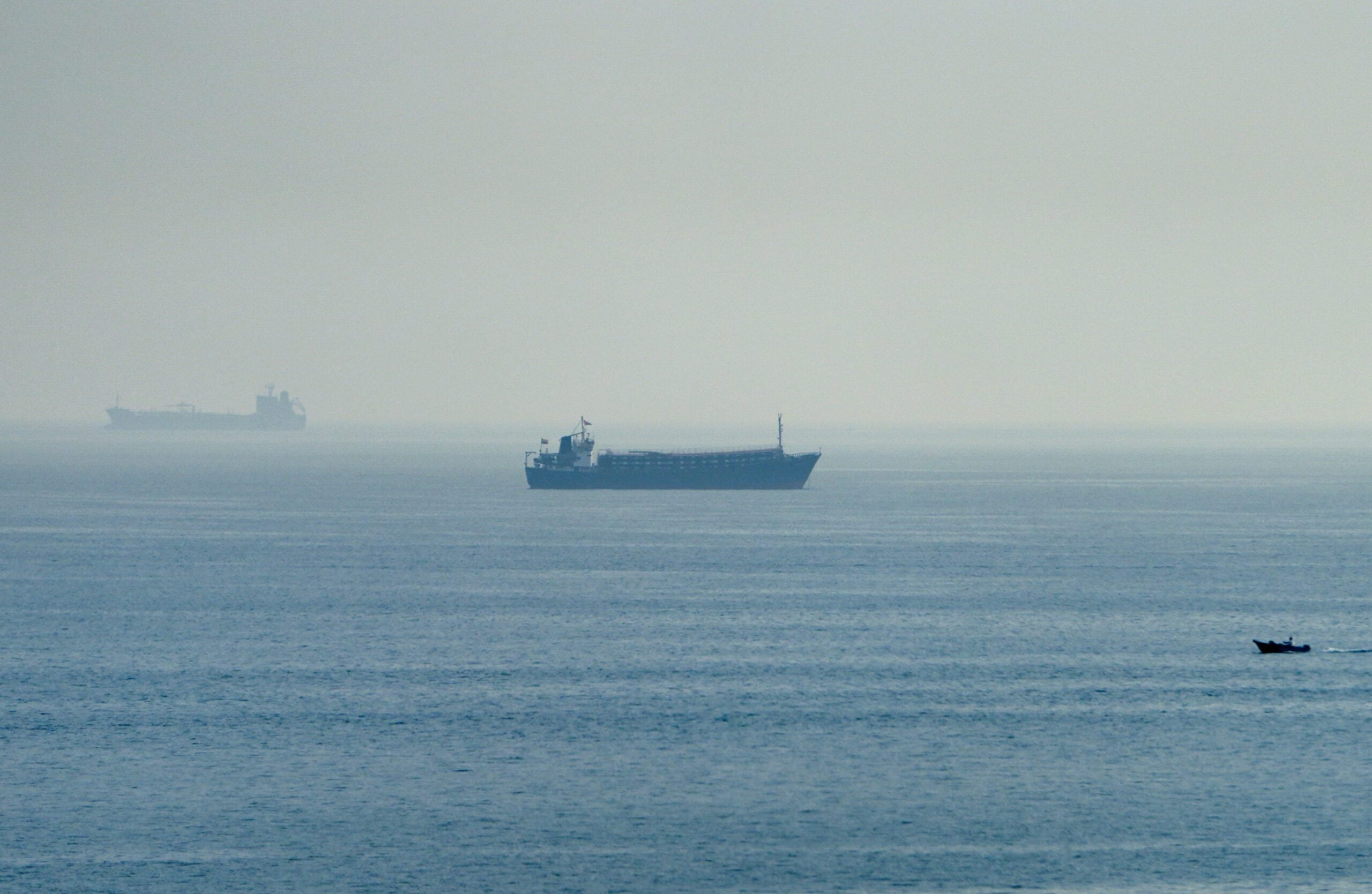
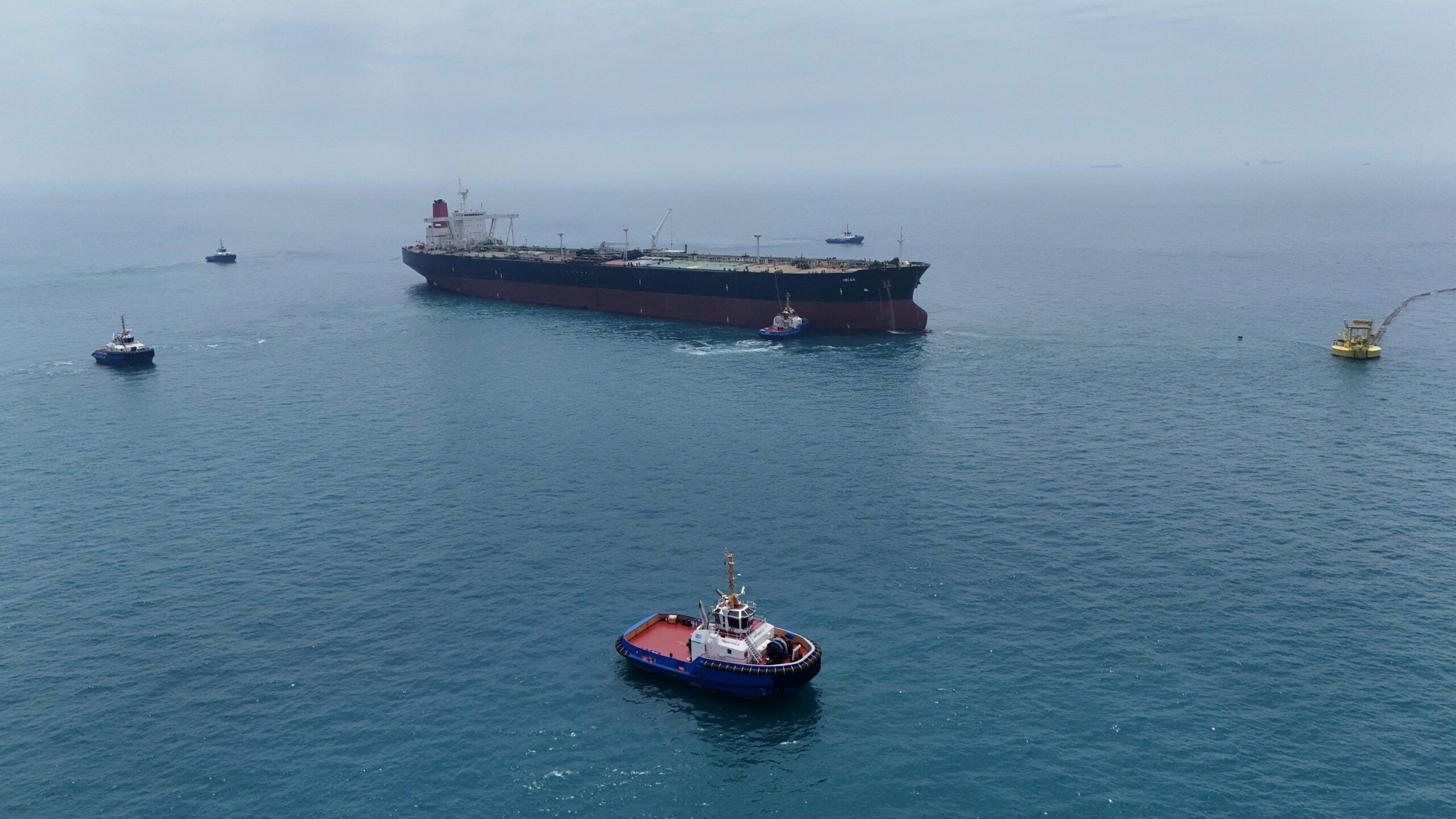
Iran’s Revolutionary Guards claimed Tuesday that a supertanker caught fire after striking a naval mine south of the Strait of Hormuz, adding to a series of similar claims that have yet to be independently substantiated.
The Islamic Revolutionary Guard Corps (IRGC) Navy said the tanker was violating Iranian transit regulations when it struck a mine, according to Reuters. In another statement carried by Iranian media Tuesday, the Guards said two tankers had been set ablaze and disabled by mines along a route south of the strait that Tehran considers unauthorized.
Neither statement identified the vessels or provided independently verifiable evidence of the reported strikes. The Guards also did not make clear when the two tankers were allegedly hit, leaving open whether the latest announcements describe new incidents or repeat earlier claims.
The reports follow several similar announcements in recent months, many involving unnamed tankers said to have exploded or caught fire while attempting to use shipping routes not authorized by Iran.
But assessments from the UK Maritime Trade Operations (UKMTO) and the Joint Maritime Information Center (JMIC) have repeatedly questioned those accounts.
In its latest advisory, issued October 18, JMIC directly addressed Iranian claims that two supertankers struck mines on October 17.
“On 17 Oct the IRGC Navy claimed that two supertankers had struck mines in the Strait of Hormuz; there is no substantiation to these claims,” the advisory stated.
The assessment, which covered developments through October 18, was issued before Tuesday’s latest statements.
A Pattern of Unverified Mine Claims
The October allegations are not isolated.
On July 18, the IRGC claimed two oil tankers exploded and caught fire after entering a minefield in the southern Strait of Hormuz. The Guards accused U.S. intelligence agencies of encouraging the vessels to use the route but did not identify either ship. U.S. Central Command rejected the account as false.
A similar claim followed on August 31, when Iranian state television reported that a supertanker had struck two naval mines, caught fire and come to a complete stop while attempting to use the southern passage.
CENTCOM issued an unusually direct denial.
“No ships have hit mines in the Strait of Hormuz,” the military command said, describing Iran’s announcement as an attempt to intimidate commercial shipping through disinformation.
Just two days later, on September 2, the IRGC claimed another two tankers had exploded after striking mines. Again, the ships were not identified.
The announcements continued in October. On October 10, Iranian authorities reported that a supertanker carrying approximately 2 million barrels of crude had struck a mine while using an unauthorized southern route. Two days later, the Guards described another incident involving a tanker reportedly carrying 750,000 barrels of crude, calling it a third mine strike.
None of those announcements established the identities of the vessels or provided independent confirmation of the cause of the reported explosions.
The clearest contradiction emerged last week following the sinking of the Singapore-flagged containership GFS Pride.
Iran claimed on October 14 that a containership had struck a naval mine while using an unauthorized route. The description appeared to correspond with GFS Pride, which was attacked on October 13, caught fire and subsequently sank.
But JMIC’s October 15 assessment identified the vessel as having been struck by an unknown projectile and explicitly stated that there was no substantiation for Iran’s mine claim.
CENTCOM went further, identifying an IRGC projectile as the cause of the attack and saying the containership sank while being towed toward shore.
All 21 crew members were safely evacuated. The ship’s sinking left containers and debris floating near the southern approaches to the strait.
Mine Threat Remains Real
The lack of confirmation for Iran’s recent mine-strike claims does not mean the waterway is free of mines.
In March, Reuters reported that Iran had deployed approximately a dozen naval mines in the strait, citing two sources familiar with the matter. U.S. forces subsequently carried out extensive mine-clearance operations.
In late August, President Donald Trump announced that mines had been cleared from the strait’s international shipping lanes, a claim reinforced by CENTCOM commander Adm. Brad Cooper, who said U.S. forces had cleared the internationally recognized traffic separation scheme.
However, the possibility of renewed mining remains a concern.
JMIC’s October 18 advisory maintains a SEVERE threat level for the Strait of Hormuz and specifically warns mariners to remain vigilant for attempted mining within and adjacent to the traffic separation scheme.
That assessment distinguishes a credible threat from a confirmed mine strike.
The same advisory documented 153 confirmed maritime security incidents across the wider region since March 1, including attacks involving unidentified projectiles, drones and small boats.
UKMTO recorded 12 attacks during the week covered by its October 16 overview. The latest reports include tanker attacks in the Arabian Gulf and a tug struck by two unknown projectiles near Khor Fakkan, UAE, on October 18.
The advisory also reported that traffic through Hormuz remained approximately 70% below prewar levels, with 254 vessel transits recorded during the week ending October 14.
Iran continues to insist that merchant vessels must follow routes authorized by Tehran, while the United States maintains that international shipping lanes are open and that neutral commercial vessels are entitled to transit.
For commercial shipping, the distinction between a confirmed mine strike and an unverified military claim is significant. A verified strike could indicate newly laid mines in waters U.S. forces previously declared clear, potentially requiring renewed clearance operations and changes to voyage planning.
For now, maritime security authorities continue to warn of an exceptionally dangerous operating environment, but their public reporting has not substantiated Iran’s latest claims that commercial tankers are being disabled by naval mines.

 Join The Club