Don’t Miss Your Daily Briefing for the Maritime Industry
Join the leading maritime news network
— trusted by our 106,969 members
040712-N-0119G-053
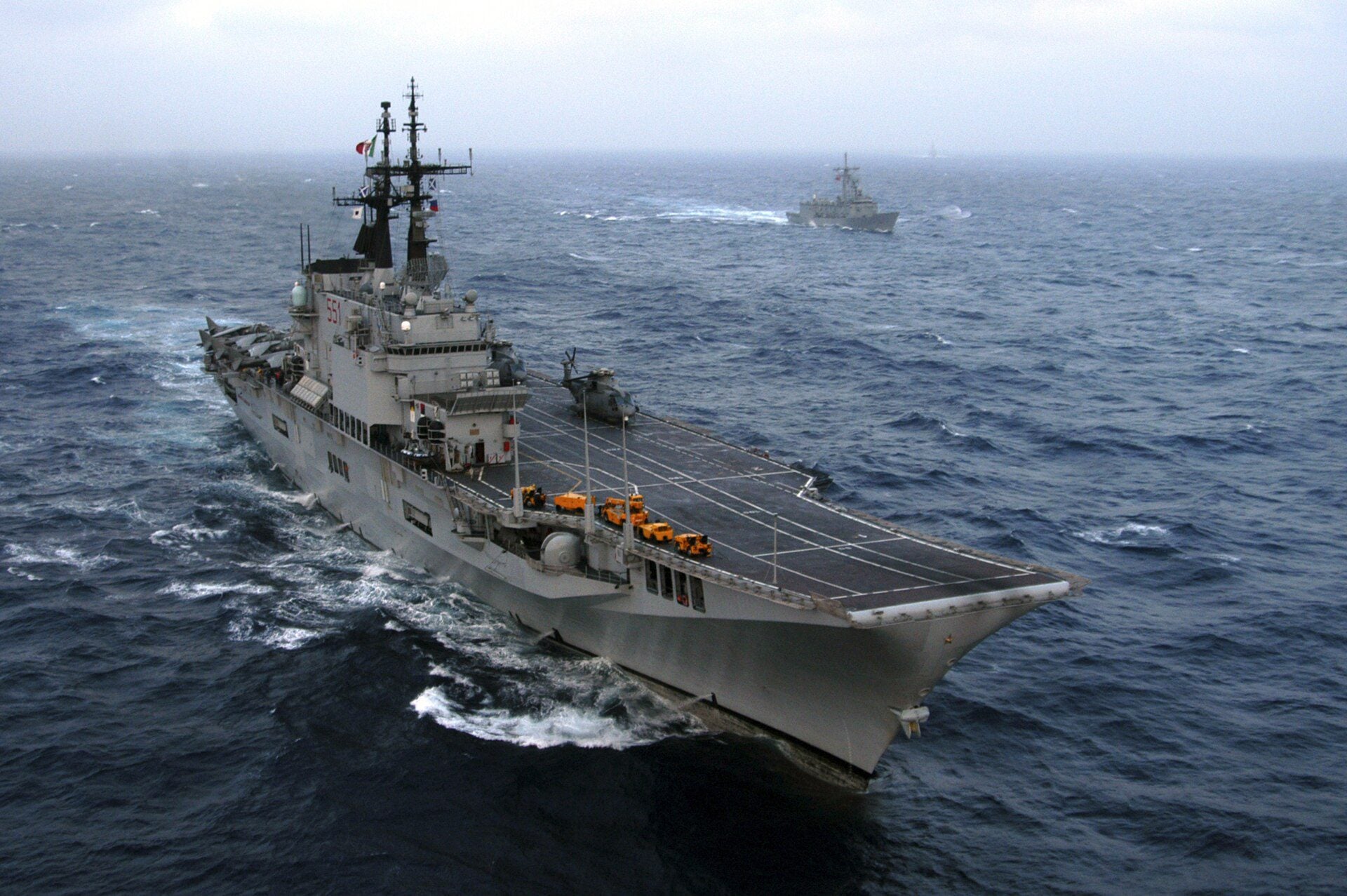
Atlantic Ocean (July 12, 2004) -- The Italian aircraft carrier ITS Guiseppe Garibaldi (C 551) and the Turkish frigate TCG Gediz (F 495) steam through the Atlantic Ocean while participating in Majestic Eagle 2004. Official U.S. Navy photo by Photographer's Mate Airman Rob Gaston. Image released by LT. K.R. Stephens, PAO-CVN-65.
Indonesia Got A Free Aircraft Carrier; Fixes Will Cost Millions
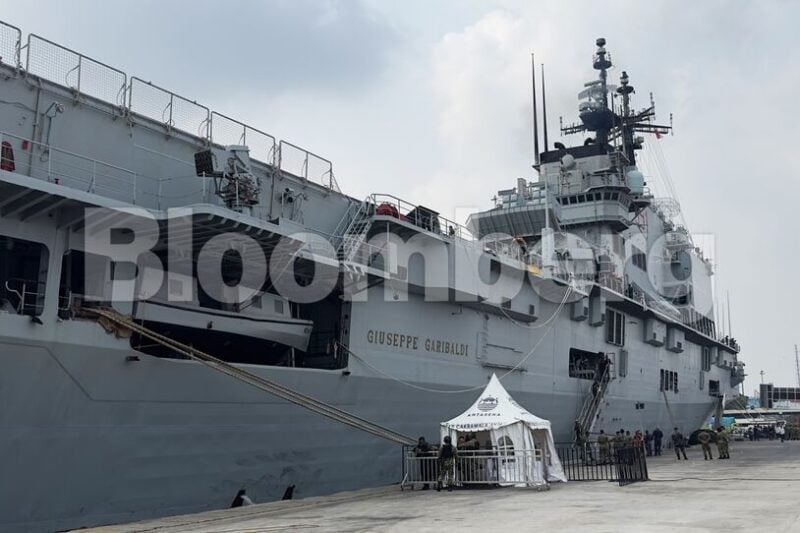
Sep 17, 2026 (Bloomberg) –A retired Italian aircraft carrier built to launch Harrier fighter jets arrived at Indonesia’s busiest port Friday with plans for a very different second act: fighting forest fires.
The 180-meter-long Giuseppe Garibaldi, which Italy is handing to Indonesia for free after about four decades in service, is set to become the nation’s first aircraft carrier and only the second such vessel in service with a Southeast Asian navy. With modifications planned to turn it into a floating base for helicopters and drones, it represents both a striking symbol of President Prabowo Subianto’s military modernization drive and a test of whether Jakarta can turn a vessel Italy retired as technically obsolete into a practical disaster-response tool.
The hull cost nothing, but making it useful may cost hundreds of millions of dollars at a time when the government is already belt-tightening.
The ship’s arrival in Jakarta after a nearly four-week voyage from Italy marks the latest turn in a varied career that has ranged from supporting military operations in Afghanistan and Libya to hosting Puccini’s “Madama Butterfly” on its flight deck. Its next act may be launching water-bombing missions toward smoke over Kalimantan.
The spectacle began before the carrier reached its berth at Tanjung Priok on Friday morning. After it entered Indonesian waters, two of Indonesia’s newest frigates escorted it toward Jakarta, joined by two Panther helicopters and two naval patrol aircraft. A military band greeted the ship with the Betawi tune Si Jali-Jali. After it docked, Defense Minister Sjafrie Sjamsoeddin and senior military officers went aboard for an inspection as strains of Bella Ciao and Despacito drifted across the pier.
From the outset, Indonesian officials have emphasized humanitarian and disaster-response missions, while leaving open a possible combat role. Prabowo said last week that the ship could host about 10 helicopters and drones used in disaster response, including firefighting. Blazes currently smoldering across parts of Kalimantan are some of Southeast Asia’s most severe in years, disrupting flights and drawing international assistance. The government has deployed more than 50 aircraft nationwide for water bombing, patrols and weather modification.
Joseph Kristanto, a research analyst with the Maritime Security Programme at the S. Rajaratnam School of International Studies in Singapore, said using the Garibaldi for firefighting is operationally plausible but will depend heavily on geography. It could provide a sizable mobile aviation base near coastal fires, but its advantage would diminish for blazes deep inland as helicopters burn more fuel flying between the ship and fire zone. He described it as a “complementary rather than universally superior alternative to land bases.”
The Garibaldi was gifted without offensive capability, traveling to Asia with only the systems needed for safety, habitability and propulsion retained.
For Italy, the transfer was an exercise in cost-cutting. Keeping the retired carrier cost about €5 million in 2025, while dismantling it was projected to cost at least €18.7 million. But what saved Italy money may become a much larger expense for Indonesia.
A government financing plan allows as much as $450 million in foreign borrowing for the carrier program and associated equipment. State news agency Antara has separately said retrofit and modernization costs could reach roughly $900 million, without identifying the source of its estimate. Officials haven’t disclosed the precise work required, its timetable or the final cost. The defense ministry didn’t respond to requests for comment.
The Navy has said it plans to send the carrier directly to Kalimantan after its welcoming ceremony, although the defense minister has said state-owned PT PAL will carry out modifications, leaving unclear what role the vessel can play before that work is completed.
Navy Chief Admiral Muhammad Ali said Friday that the planned retrofit would focus mainly on adapting the ship to Indonesia’s operational needs and tropical conditions. PT PAL will work with Fincantieri, while Leonardo and other Italian companies may also be involved, he said, without specifying a cost.
Humanitarian and disaster-response missions would take priority, though the vessel could also be used in combat, Ali said. In that role, it would need escort ships able to counter aircraft, submarines and surface vessels and conduct electronic warfare. The Navy hopes to keep the carrier in service for another 15 to 20 years and operate it from a permanent base being prepared in Lampung province, at the southern end of Sumatra.
Asked whether Indonesia would need destroyers to escort its new carrier in wartime, Ali said frigates could do the job. “Destroyers can come later,” he added.
Using a carrier for disaster response is unusual but has regional precedent: Thailand’s Chakri Naruebet, Southeast Asia’s only other aircraft carrier, was conceived partly for search-and-rescue and played a role in the response to the 2004 Indian Ocean tsunami.
The acquisition comes amid broader financial balancing. Investor concerns about fiscal discipline and policy predictability under Prabowo have added to pressure on the rupiah, alongside external headwinds, leaving it not far from a record low.
“The benefit of getting the ship for free at the outset doesn’t mean the project is free of fiscal consequences,” said Yusuf Rendy Manilet, strategic research manager at Jakarta-based think tank CORE Indonesia. “The key issue isn’t simply whether Indonesia should acquire the Garibaldi, but whether it can keep it operationally ready.”
For now, the carrier has considerable signaling value, with ownership a “badge of honor,” said Nicholas Lim, a senior fellow at the S. Rajaratnam School of International Studies and former Republic of Singapore Navy officer. For the foreseeable future, at least, it will mainly function as a helicopter carrier, he said, noting that restoring a meaningful fixed-wing combat role would take years and require new aircraft, pilot training, command systems and a doctrine for protecting the carrier with other warships.
Indonesia’s track record on major defense buys is mixed. While Jakarta has advanced deals for Rafale fighters, Scorpene submarines and Italian-built PPA warships, a major plan for secondhand Mirage fighters was scrapped over fiscal constraints, while a proposed purchase of 24 Boeing F-15EX jets stalled.
Italy sees the transfer as a chance for follow-on business, including six DRASS submarines valued at about €480 million, M-346 aircraft estimated at €600 million and three maritime-patrol aircraft worth roughly €450 million, Italian parliamentary papers show.
Some of those plans have since advanced. DRASS says it has a contract to supply six DGK submarines to Indonesia, while Jakarta has signed for 12 Leonardo M-346F Block 20 aircraft. There is no evidence those purchases were required in exchange for the carrier.
A formal handover and reflagging ceremony is planned for Sept. 24, before the vessel participates in military anniversary events in October. The Navy says it will be renamed KRI Sriwijaya, after the Sumatra-based maritime empire.
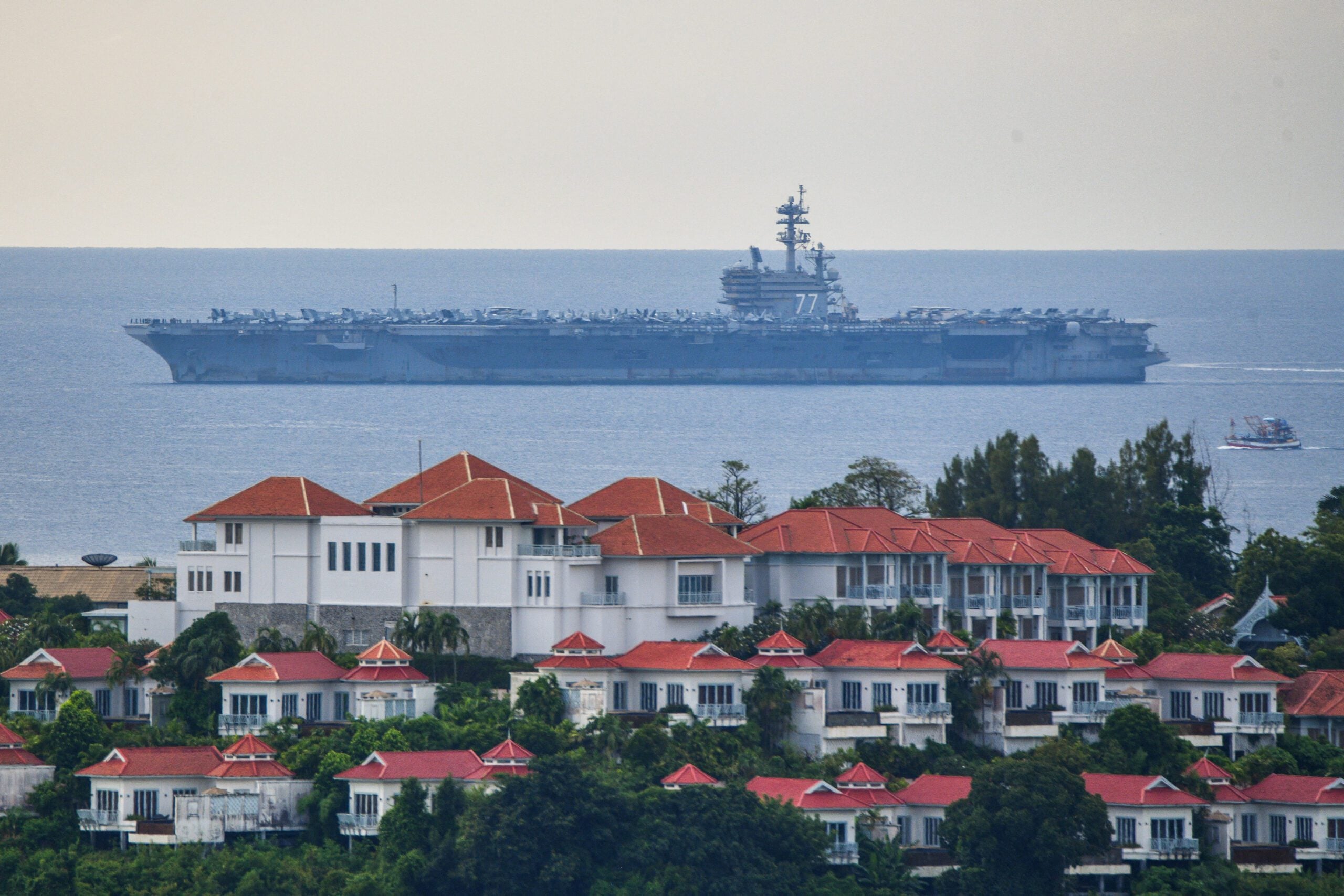
PHUKET, Thailand, Oct 4 (Reuters) – The US aircraft carrier George H.W. Bush arrived in Thailand’s resort island of Phuket on Sunday with about 4,800 personnel aboard for a rest-and-recreation break after...
By Tony Capaccio Oct 3, 2026 (Bloomberg) –The Pentagon is deploying an additional aircraft carrier and 10,000 sailors and Marines to the Persian Gulf, according to a US official, a move...
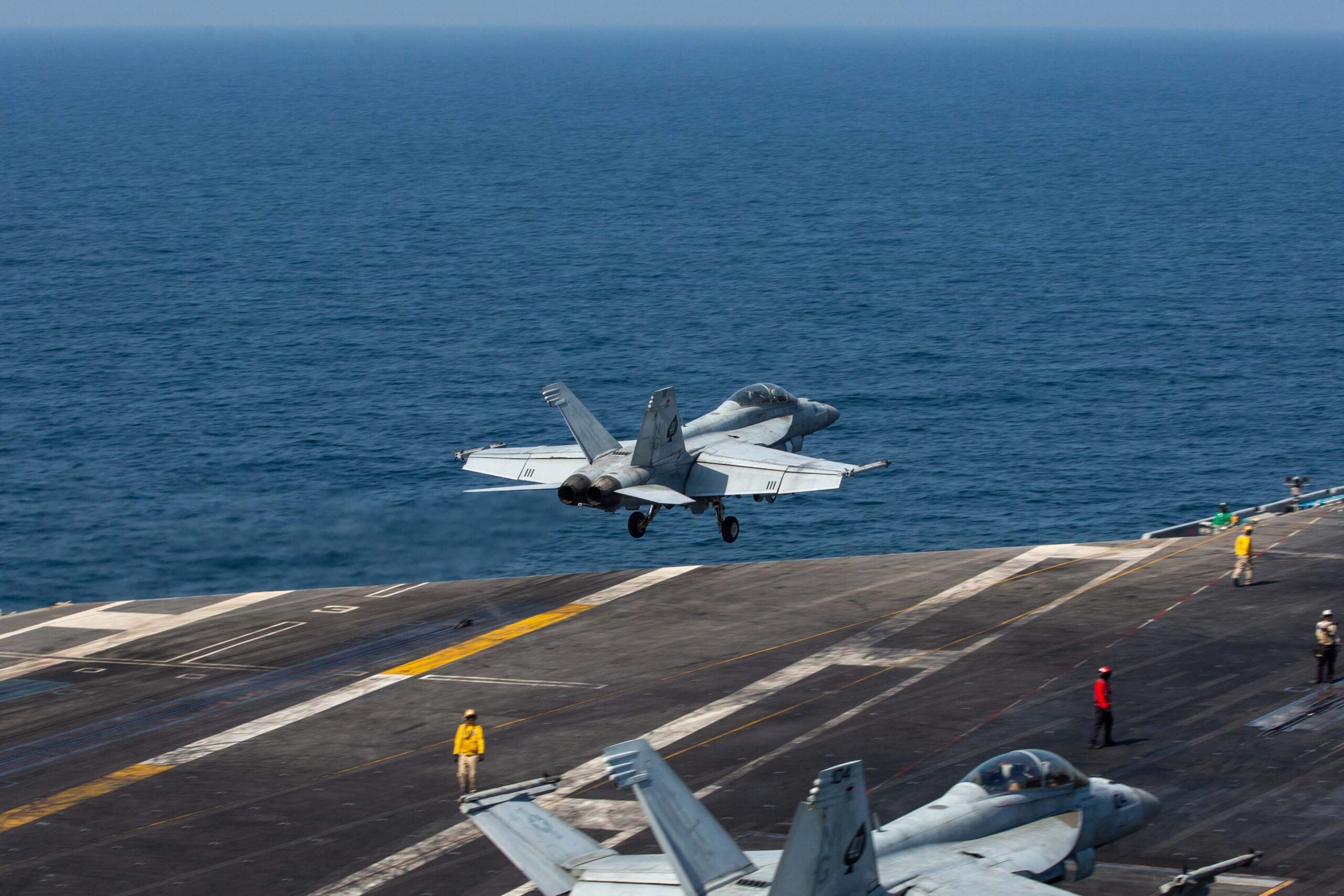
President Donald Trump ordered the Navy to return to using steam catapults to launch planes off of aircraft carriers, acting on a longtime complaint despite opposition from many naval officers.
August 13, 2026
Total Views: 5429
Get The Industry’s Go-To News
Subscribe to gCaptain Daily and stay informed with the latest global maritime and offshore news
— just like 106,969 professionals
Secure Your Spot
on the gCaptain Crew
Stay informed with the latest maritime and offshore news, delivered daily straight to your inbox
— trusted by our 106,969 members
Your Gateway to the Maritime World!
Essential news coupled with the finest maritime content sourced from across the globe.

 Join The Club