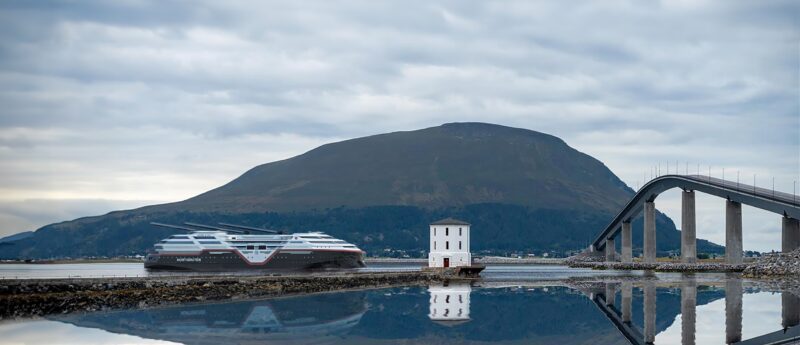
Norwegian cruise ship company Hurtigruten has released updated plans for its groundbreaking Sea Zero project, a zero-emission cruise ship scheduled to debut in 2030.
The ship, currently in the research and development phase, aims to revolutionize the cruising industry by sailing emission-free during normal operation while reducing energy consumption by 40-50%.
The project, initially announced in October 2022, has made significant progress. A second version of renderings, developed in collaboration with Norwegian maritime industry partners, showcases advanced features designed to minimize environmental impact.
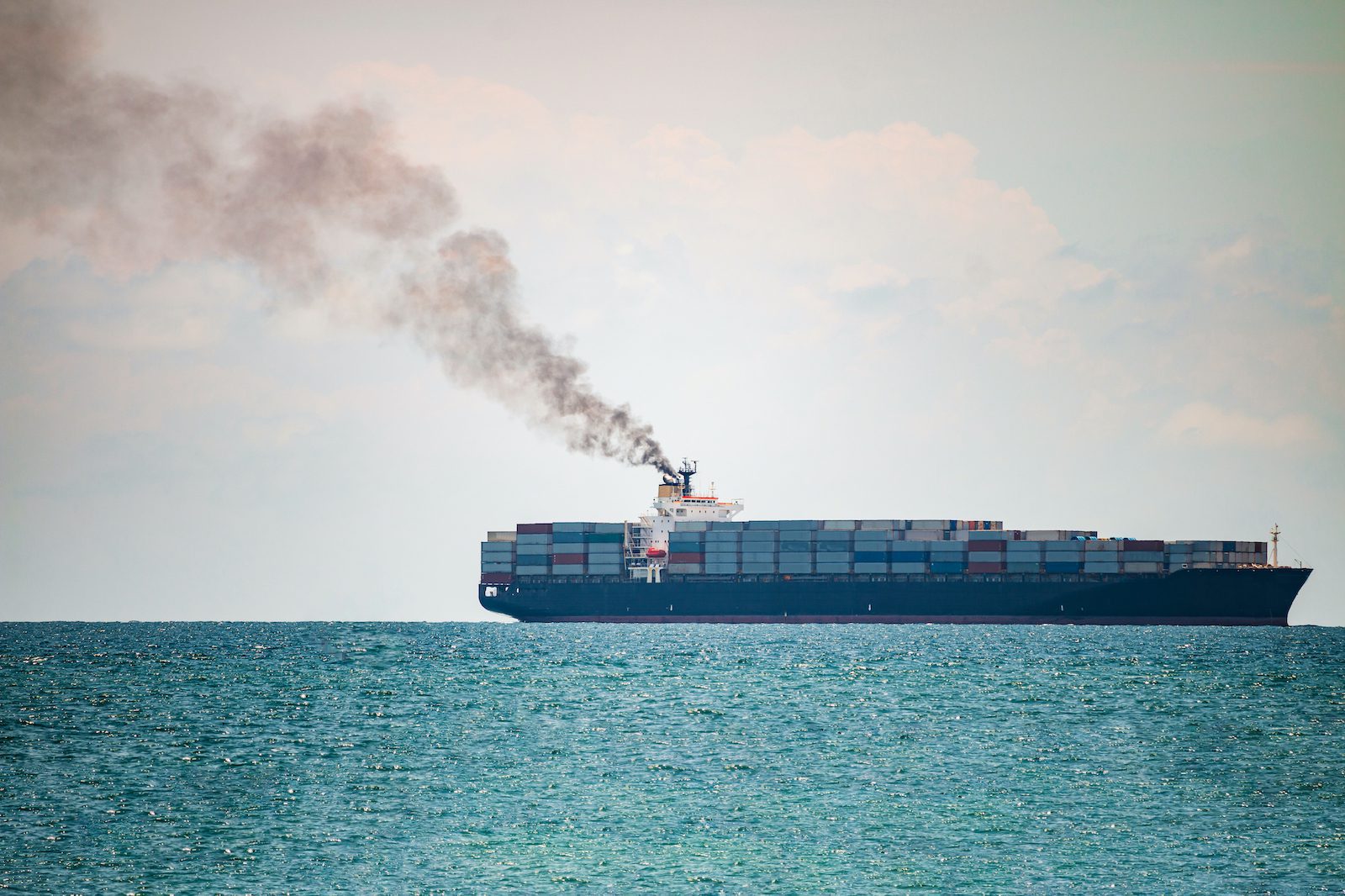
“The cruising industry is a significant polluter, and it is crucial that we now take major steps to reduce emissions. Our goal is to have an emission-free ship in operation by around 2030,” said Hurtigruten CEO Hedda Felin.
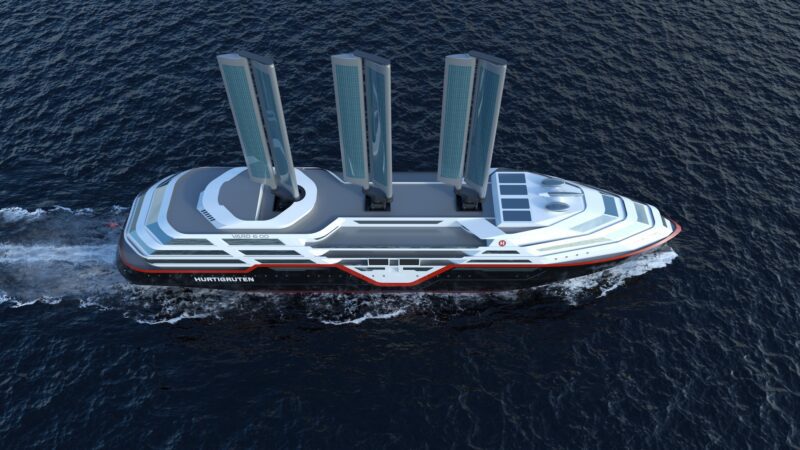
The Sea Zero design features aimed at reducing energy consumption and environmental impact. At its core are large batteries with a capacity of around 60 megawatt-hours, serving as the primary energy source, and contra-rotating propellers as the main propulsion.
Titling Sails
Image courtesy Hurtigruten
The ship also incorporates retractable sails from that could potentially cut energy use by 10%, while solar panels contribute an additional 2-3% in energy savings. Hurtigruten is considering retractable sails developed by French-based OceanWings, which are already in use on the cargo ship Canopée. The technology will allow the ships to reach areas where a lack of overhead clearance may be an issue.
“We still see significant energy savings from having retractable sails with solar panels, but this requires thorough studies, including model tests to be conducted in the coming months. We have also changed the sail type to a more mature design already in use on cargo ships,” said Hurtigruten Chief Operating Officer Gerry Larsson-Fedde.
Air Lubrication
Image courtesy Hurtigruten
To further enhance efficiency, the hull employs air lubrication technology, providing 5-10% energy savings. Lastly, the ship features “smart cabins” that empower guests to control and monitor their energy usage, promoting awareness and conservation efforts throughout the journey.
“The central part of the project is to reduce energy consumption. The goal is to use significantly less energy than today’s ships, which requires innovative solutions,” said Larsson-Fedde.
Carnival Corporation reported record third-quarter revenue and net income on Tuesday as strong cruise demand and lower-than-expected operating costs helped offset a sharp increase in fuel expenses. The cruise giant...
OSLO, Sept 4 (Reuters) – Norway will provide necessary assistance to Russians in the Arctic Svalbard islands following the arrest of a ship transporting passengers and supplies to the archipelago, the Nordic...
September 5, 2026
Total Views: 11575
Get The Industry’s Go-To News
Subscribe to gCaptain Daily and stay informed with the latest global maritime and offshore news
— just like 106,875 professionals
Secure Your Spot
on the gCaptain Crew
Stay informed with the latest maritime and offshore news, delivered daily straight to your inbox
— trusted by our 106,875 members
Your Gateway to the Maritime World!
Essential news coupled with the finest maritime content sourced from across the globe.

 Join The Club