As the reports of a deal between the US and Iran are top headlines, again, shipowners will be looking at the financial implications and alternatives if Iran’s plan to charge ships for passing through the Strait of Hormuz becomes a negotiating footnote in the deal.
Paul Morgan (gCaptain) – The numbers tell an interesting story: at the fee levels already reported, it is already cheaper to send a supertanker around the bottom of Africa.
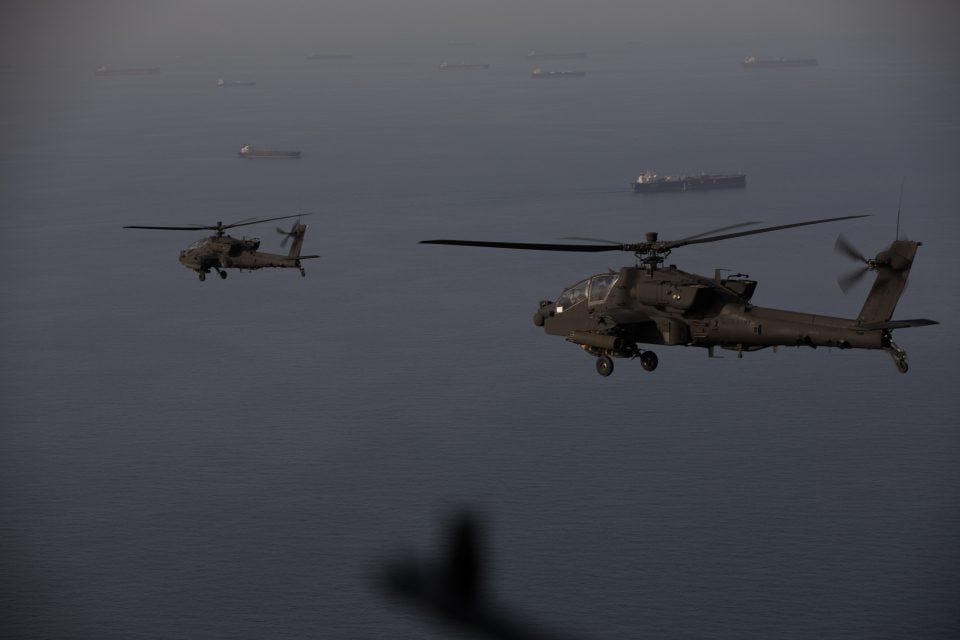
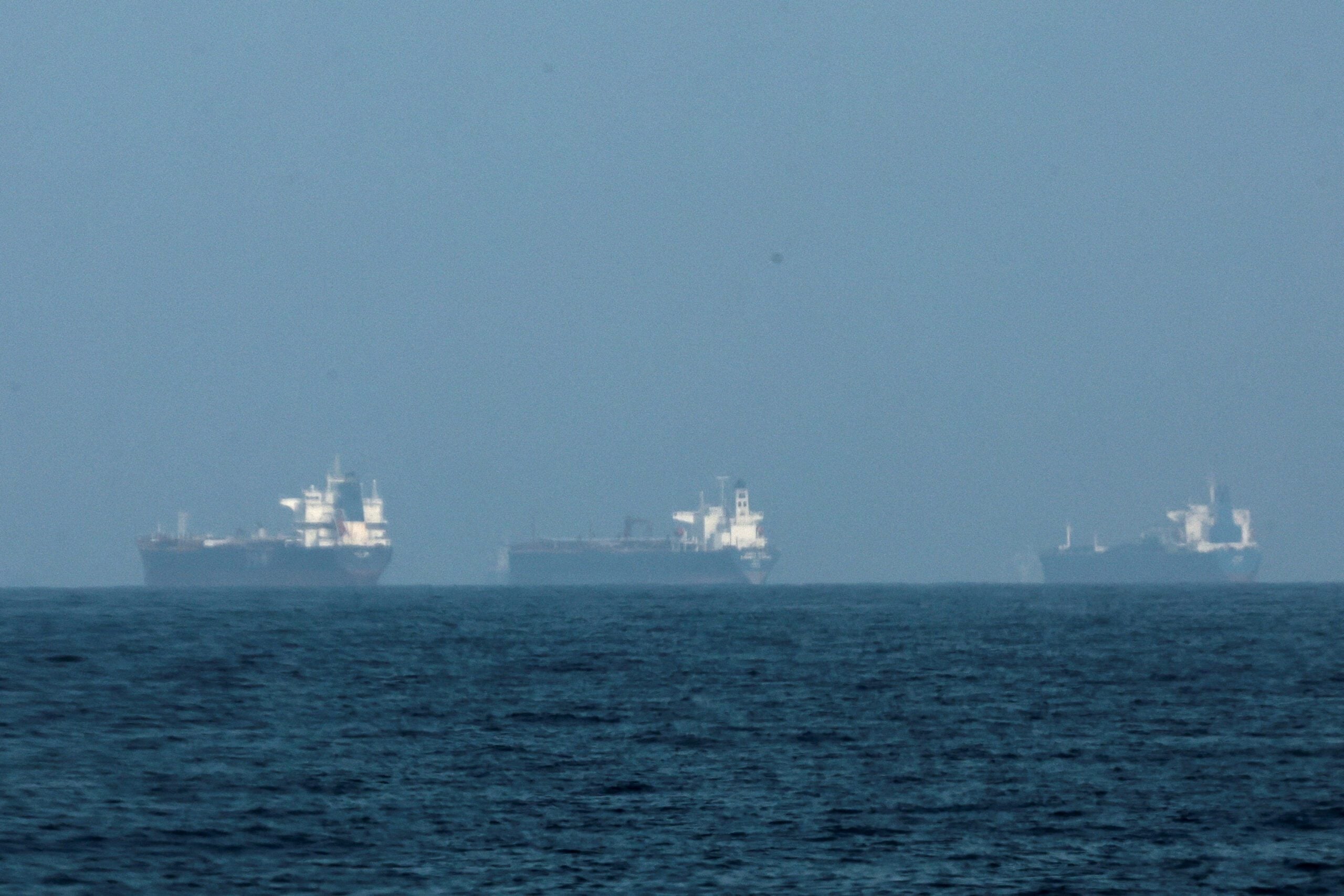
On 28 February 2026, US and Israeli airstrikes against Iran triggered what the maritime industry had long classified as its most extreme tail risk: the closure of the Strait of Hormuz. Within 24 hours, traffic through the world’s most important oil corridor fell by 80%. Within 72 hours, most of the world’s shipping insurers had cancelled war risk cover for the entire Persian Gulf. Within a week, some 750 vessels were stranded on either side of the strait, carrying an estimated $15.3 billion of oil and gas, and 11,000 seafarers were trapped in a war zone with no clear exit date.
Four months on, a framework peace agreement, the Islamabad Declaration, is reported to have been signed and is due for formal ratification in Geneva on 19 June 2026. The strait is expected to reopen within 30 days. But embedded in the reported framework is a provision that could shape the commercial calculus of Gulf shipping for years: Iran and Oman are expected to jointly define the future administration of maritime services in the strait. Tehran has signaled that it intends to play a much larger role in managing transit, potentially including fees or service charges that shipowners may find difficult to ignore.
Iranian officials have made little secret of their ambitions. “War has costs,” one member of Iran’s parliamentary infrastructure commission said in March 2026. “Naturally we must take transit fees from ships passing through the Strait of Hormuz.” At least two vessels paid sums in the region of $2 million per transit during the conflict period, according to Lloyd’s List and Bloomberg. The fees were described, on reflection, as charges for specialised navigational, security and environmental services. The Persian Gulf Strait Authority, a new Iranian body created during the crisis, began requiring vessels to obtain prior permits before transiting. Ships without permits were turned back.
Five Gulf Cooperation Council states immediately filed a formal notification with the International Maritime Organisation warning shipping companies not to comply. The legal basis for Iran’s position is, at best, contested: under UNCLOS, the international law of the sea, a coastal state may charge for specific services actually rendered to a vessel, but may not levy a general toll for the right of transit passage through an international strait. That principle is clear in theory. In practice, enforcement requires the kind of military pressure that the Islamabad Declaration has explicitly traded away in exchange for a ceasefire.
The insurance numbers tell the real story. Before the crisis, an additional war risk premium for a Gulf tanker voyage ran at approximately 0.1% of hull and machinery value, a cost so modest it barely registered in voyage economics. By mid-March 2026, that figure had reached 2.5% of hull value per seven-day period. Some stranded tankers paid up to 10% of hull value for a single transit. Lloyd’s List reported indicative quotes of $10 million to $14 million in war risk cover for a five-year-old VLCC with US commercial connections seeking to exit the Gulf at the height of the crisis.
Most of the world’s P&I clubs, the mutual insurers that cover third-party liabilities for approximately 90% of the global merchant fleet, cancelled war risk extensions within 72 hours of the conflict beginning. JPMorgan estimated that roughly 329 vessels in the Persian Gulf required hull, liability and pollution coverage, representing approximately $352 billion in insurance exposure that the private market had stopped providing. The US International Development Finance Corporation stepped into the gap with a $20 billion maritime reinsurance plan, with Chubb as lead partner. The fact that a government backstop of that scale was necessary illustrates how complete the private market withdrawal had been.
Even at the post-ceasefire rate of approximately 1% of hull value per voyage, the war risk premium on a modern VLCC with an insured value of $110 million amounts to $1.1 million per transit. Before the crisis, the same premium cost approximately $110,000 to $165,000. That repricing is not temporary: the Lloyd’s Joint War Committee has expanded its high-risk designation to cover the entire Persian Gulf, a classification that historically takes years to unwind.
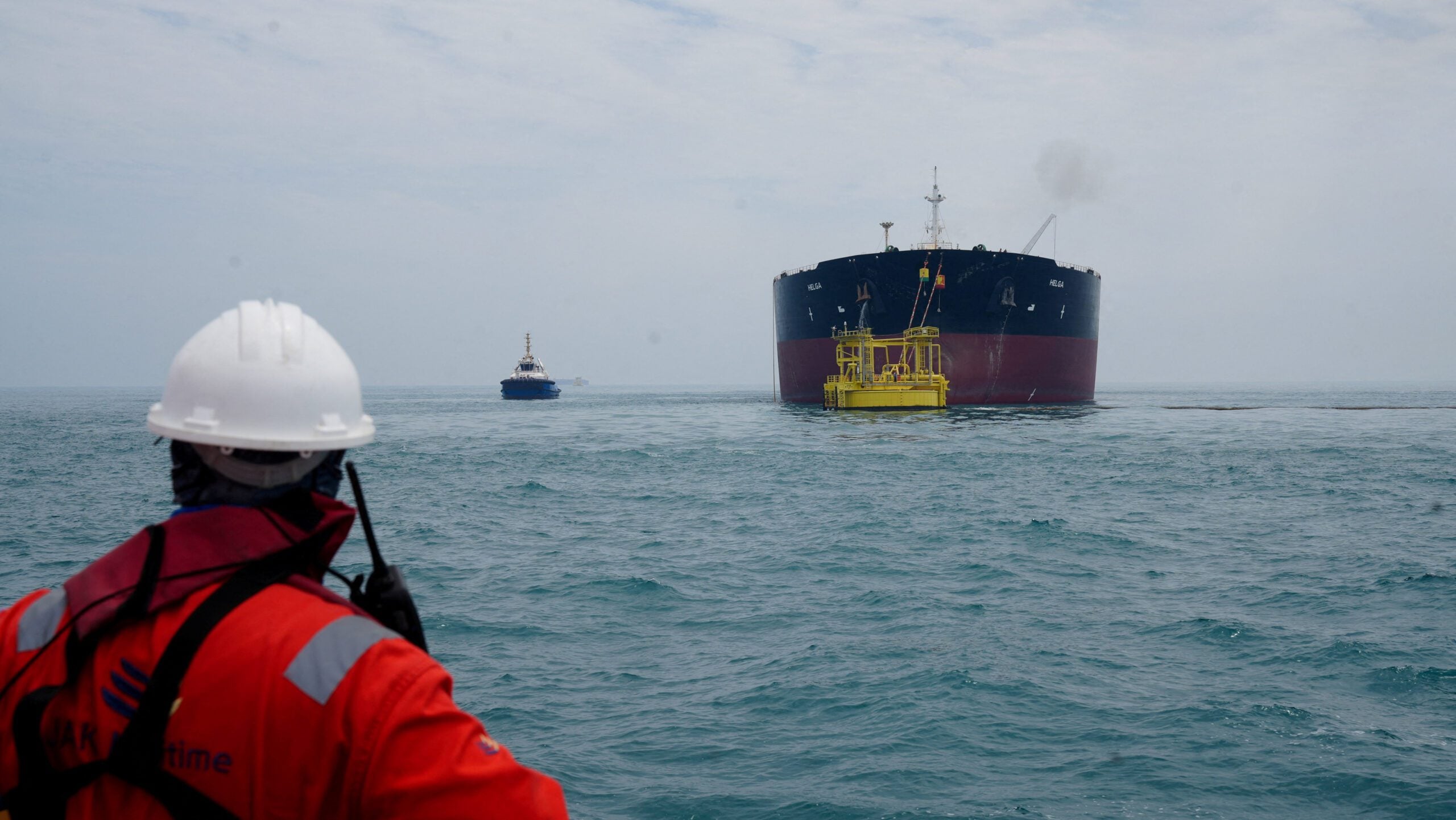
Now add the Iranian service fee, and the arithmetic becomes stark. A VLCC carries approximately 2 million barrels of crude. The ad hoc wartime fee of $2 million per vessel translates to $1.00 per barrel of cargo carried. At that level, combined with the war risk premium now embedded in Gulf trading, the economics of routing a supertanker around the Cape of Good Hope instead begins to look attractive, despite adding 12 to 18 days to a Gulf-Europe voyage and approximately $1 million to $2 million in additional fuel and hire costs.
It is essential to understand what the Cape comparison actually measures. The Cape of Good Hope is not an alternative to the Strait of Hormuz for Gulf-loading vessels: every tanker departing Ras Tanura, Qatari LNG terminals or Jebel Ali must pass through the strait regardless. What the Cape avoids is the second risk gate, the Houthi-threatened Bab el-Mandeb and the Suez Canal.
A vessel heading for northern Europe faces both exposures in sequence, Hormuz on departure and the Red Sea on the northbound leg, and the decision is whether to compound those risks or divert around Africa before the Red Sea section. For most operators, that calculus is already settled in favour of the Cape.
The maths is unforgiving. For a VLCC on a Gulf-to-Europe voyage, the combined burden of the post-ceasefire Hormuz war risk premium, the Red Sea war risk premium and the Suez Canal toll already totals approximately $1.6 million to $1.8 million, before any Iranian service fee is included. The Cape diversion costs approximately $1.0 million to $1.4 million in additional fuel and hire. Even at zero Iranian fee, the Cape route is already competitive. At any positive fee above approximately $200,000 to $300,000, it is cheaper.
The practical magic number, the Iranian fee level at which avoidance becomes the rational commercial default, is therefore not the headline $2 million figure. It is approximately $0.50 to $1.00 per barrel for tanker traffic, equivalent to $1 million to $2 million per VLCC voyage, and approximately $50 to $100 per TEU for container vessels calling at Gulf ports. Below those thresholds, the fee is absorbable as a surcharge, provided sanctions clearance and insurance cover can be obtained. Above them, avoidance becomes the rational default for owners and charterers who have alternative sourcing options. The fee Iran has already been charging on an ad hoc basis is more than double the upper end of that range.
But the raw cost comparison, compelling as it is, understates the damage. The Iranian fee is not just expensive. It is the wrong kind of expensive. Shipping companies can manage high costs when those costs are predictable, transparent and insurable. What the Iranian mechanism creates is something very different: a politically arbitrary charge attached to a contested legal basis, imposed by a state whose domestic political stability cannot be guaranteed, and carrying the shadow of US and EU sanctions exposure for any owner who pays it.
A Suez Canal toll is a commercial charge levied by a recognised state authority under a transparent, non-discriminatory tariff schedule with a 70-year track record. An Iranian Hormuz service fee will be treated by P&I clubs, hull underwriters, banks and sanctions compliance lawyers as a geopolitical risk premium dressed in the language of navigation services. The questions it generates, whether paying the fee creates sanctions exposure under US secondary sanctions law, and whether the peace framework constitutes a General Licence or merely a political understanding, do not have clean answers. In shipping, an unanswered legal question is often as commercially paralysing as a definitive prohibition.
The calculus is no less compelling for the container and general cargo trades. All four of the world’s largest container lines, Maersk, MSC, CMA CGM and Hapag-Lloyd, suspended Hormuz transit as of early March 2026, and the Cape of Good Hope has been the default routing for Asia-Europe services since the Houthi campaign rendered the Red Sea commercially untenable in late 2023.
The numbers explain why. The Cape route adds approximately 10 to 14 days and 3,500 nautical miles to a standard Shanghai-Rotterdam voyage, pushing bunker consumption up by 30% to 40% per round trip and adding approximately $1.2 million to $1.8 million in fuel costs alone for a Panamax-scale container vessel. On a per-container basis, that translates to a Cape diversion premium of approximately $100 to $180 per TEU in additional fuel and operating cost, before any surcharges are applied.
War-risk cargo insurance endorsements for Red Sea transits, which had settled at around $50 to $100 per TEU by early 2026 before the Hormuz crisis renewed the disruption, add a further layer. The Drewry World Container Index had Shanghai-Rotterdam at $3,180 per FEU for the week ending 17 April 2026, with the Cape-routing cost premium now embedded in both contract and spot pricing.
Asia-Europe rates as a whole are running 25% to 40% above pre-crisis levels, with an estimated 5% to 7% of global container fleet capacity absorbed by the longer Cape routing, equivalent to removing 1.3 million to 1.8 million TEU of effective market capacity. For general cargo operators and freight forwarders, the consequences cascade through the supply chain: longer port-to-port transit times of 34 to 38 days versus the 22 to 24 days achievable via Suez mean tighter inventory buffers, extended letters of credit, higher working capital requirements and compressed delivery windows.
US retailers such as Walmart, Target and Amazon carry 60 to 90-day inventory buffers, and consumer-visible price increases flowing from the combined Hormuz and Red Sea disruption were already beginning to appear in May and June 2026. The structural conclusion for container and general cargo shipping is the same as for the tanker sector, only more entrenched: the Cape route is no longer a crisis response. It is the timetable
MOL, one of the world’s largest shipping groups, has already stated publicly that its vessels will not resume normal Hormuz transit until the US-Iran deal is material and safety is demonstrated in practice on the water, not merely promised in a diplomatic communiqué. CMA CGM, with 11 vessels stranded in the Gulf during the crisis, has signalled it will not assume a return to pre-conflict conditions even once the strait formally reopens. These are not small, risk-averse operators making marginal calls. They are among the most sophisticated maritime enterprises in the world, and their caution reflects a genuine assessment that the legal and political environment around Hormuz remains unstable.
The Houthi dimension compounds the problem further. The Red Sea campaign, which began in November 2023, has no diplomatic resolution track, no military solution that has proved durable, and its own informal toll system. A UN source cited in a Maplecroft analysis reported the Houthis may be collecting up to $180 million per month in transit fees of their own. Industry consensus is that Red Sea diversions will continue through at least 2027. Container traffic through the Bab el-Mandeb stands at 28 daily transits against more than 70 before the Gaza conflict began. Asia-Europe freight rates, which averaged $1,287 per FEU in 2023, had already risen to $4,588 per FEU by mid-2024 from the Houthi diversion alone, before the Hormuz crisis added a further shock.
The Islamabad Declaration, whether by design or diplomatic imprecision, has handed Iran something of enduring strategic value: the internationally acknowledged right to administer, and implicitly to charge for, passage through a corridor carrying a fifth of the world’s oil trade. That is a form of sovereign leverage that no subsequent negotiation will easily remove. The question is not whether Iran will use it, but at what price and under what political conditions.
The Strait of Hormuz will reopen. Traffic will resume. But the era in which a Gulf voyage was simply a matter of loading cargo, paying a canal toll, and making your ETA is over. For the foreseeable future, Gulf fixtures, charter negotiations and insurance renewals are likely to carry an additional line item that did not exist before February 2026: the cost of geopolitical uncertainty, expressed in dollars per barrel.
The Strait of Hormuz may reopen, but restoring the confidence that once underpinned global trade through the region could prove far more difficult than reopening the waterway itself.
Editorial Standards · Corrections · About gCaptain

 Join The Club