German container shipping giant Hapag-Lloyd reported a sharp increase in third-quarter earnings as higher freight rates more than offset rising operating costs tied to the Middle East conflict and widespread port congestion.
The Hamburg-based carrier reported Thursday that third-quarter net profit jumped to $999 million, up from $172 million a year earlier, while earnings before interest, taxes, depreciation and amortization (EBITDA) nearly doubled to $1.73 billion.
Revenue climbed 26% to $6.88 billion, driven largely by stronger freight rates and high vessel utilization across its global container network.
The company’s average freight rate increased 28% to $1,808 per twenty-foot equivalent unit (TEU), compared with $1,413 in the third quarter of 2025. Transport volumes remained essentially flat at 3.38 million TEU, reflecting continued operational disruptions and capacity constraints.
Hapag-Lloyd said the Middle East conflict and congestion at major ports continued to push up operating costs, but higher rates and efficiency improvements more than offset those pressures.
“We delivered a strong third quarter, driven by significantly higher spot rates, robust demand and high capacity utilization,” said CEO Rolf Habben Jansen.
Operating profit (EBIT) surged to $1.09 billion from $228 million a year earlier.
The strong results prompted Hapag-Lloyd to raise its full-year earnings guidance for the third time this year. The company now expects EBITDA of $4.6 billion to $5.0 billion, up from its previous forecast of $3.9 billion to $4.4 billion.
Its operating profit forecast was also raised to between $2.0 billion and $2.4 billion, compared with an earlier range of $1.25 billion to $1.75 billion.
Red Sea Services Gradually Return
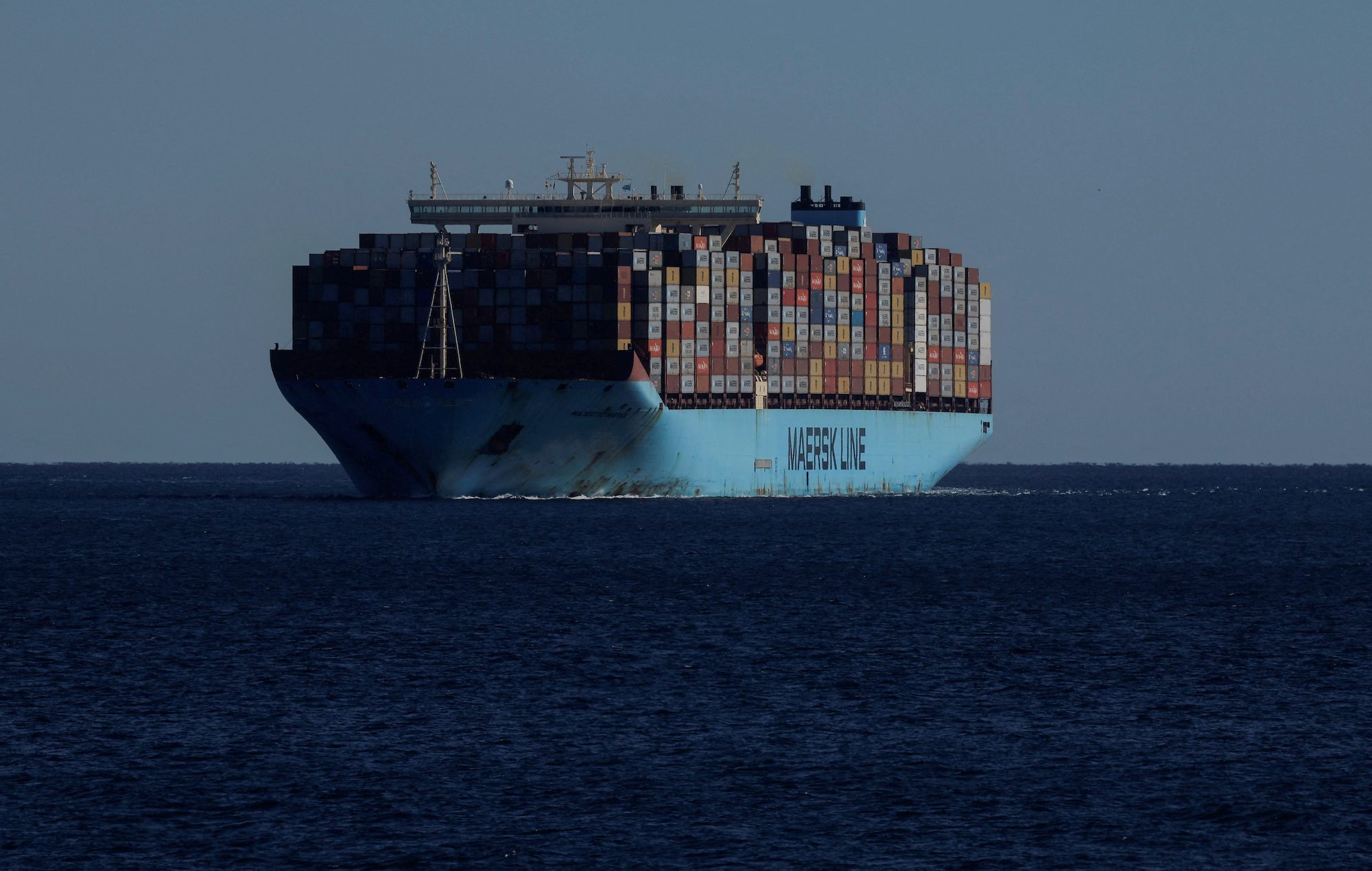
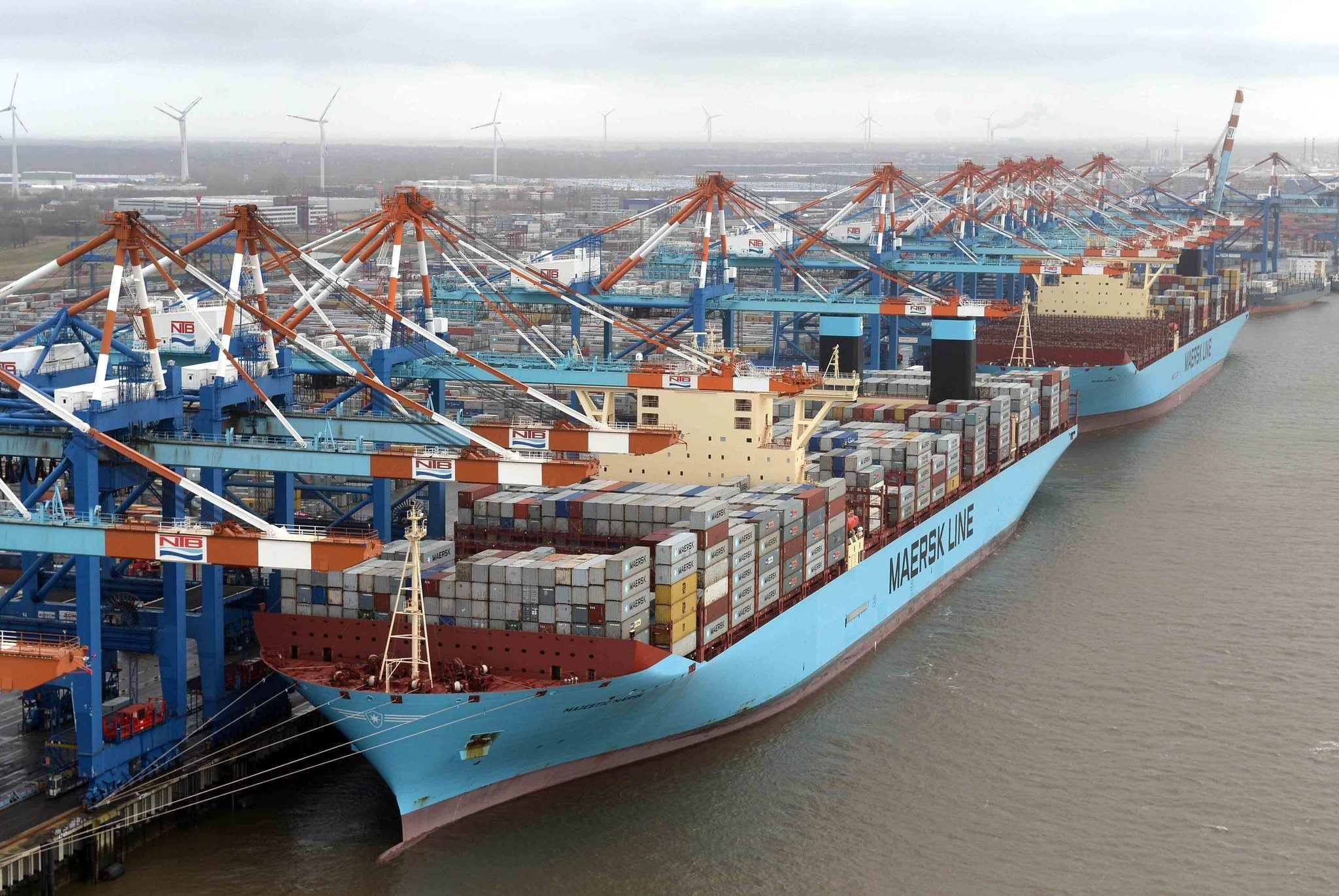
The earnings announcement comes as Hapag-Lloyd and its Gemini Cooperation partner Maersk continue gradually restoring container services through the Red Sea and Suez Canal after extended diversions around Africa.
In its third-quarter investor presentation, Hapag-Lloyd highlighted the phased return to the shorter Suez route, which it said would reduce transit times, improve Mediterranean connectivity and strengthen schedule reliability.
The carrier identified several Asia-Europe services now routed through Suez, including five Far East–South Europe services, one Far East–North Europe service and two India–Europe connections. Other northern European services continue to use the Cape of Good Hope route.
Earlier this month, Maersk and Hapag-Lloyd announced that their joint ME1 India–Europe service, known as IOS at Hapag-Lloyd, would switch from the Cape of Good Hope to the Suez Canal. The first westbound departure was scheduled from Salalah on November 4, with the first eastbound departure from Tangier scheduled for November 12–13.
The partners have emphasized that further routing decisions remain dependent on security conditions in the Red Sea.
The return to Suez could have broader implications for global container shipping capacity. Shorter voyages reduce the number of vessels needed to maintain regular services, potentially releasing capacity that had been tied up in longer diversions around southern Africa.
For now, however, Hapag-Lloyd continues to benefit from tight capacity and elevated freight rates.
Terminals Business Expands
Hapag-Lloyd’s terminal operations also contributed to the improved results.
Revenue from its Terminal & Infrastructure segment rose to $197 million from $131 million a year earlier, supported by investments in terminal capacity and improved performance in Latin America and India.
The segment’s EBITDA increased to $56 million from $30 million.
Despite the strong third quarter, Hapag-Lloyd’s net profit for the first nine months of 2026 was $827 million, down from $946 million in the same period last year, reflecting weaker profitability earlier in the year.
The carrier said fourth-quarter performance was developing better than previously expected, supported by continued strong spot freight rates.
Still, Hapag-Lloyd cautioned that freight-rate volatility and persistent geopolitical risks leave considerable uncertainty surrounding its full-year outlook.

 Join The Club