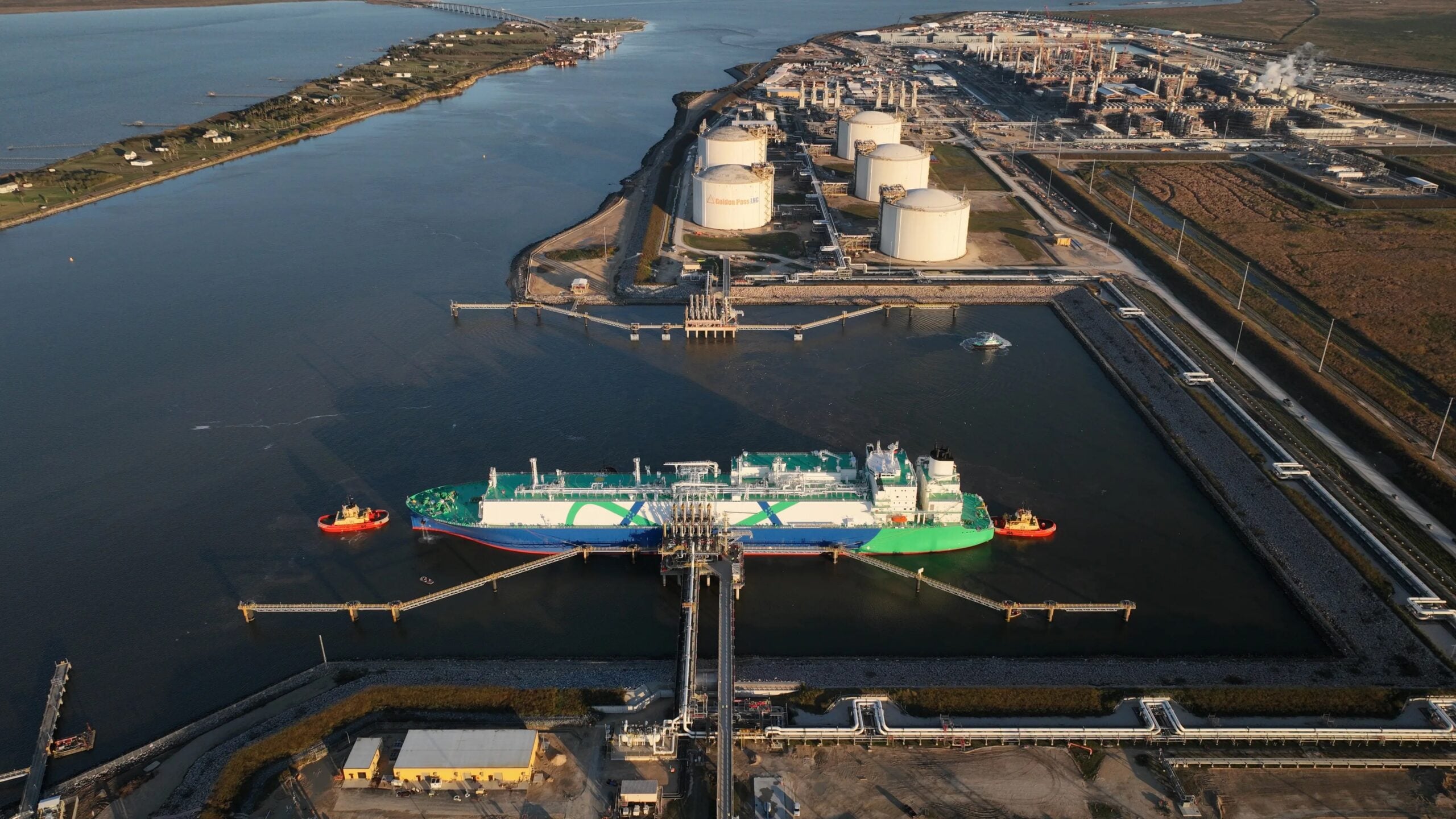
Golden Pass LNG has produced its first liquefied natural gas from Train 1 at its Sabine Pass export terminal in Texas, marking a major milestone for QatarEnergy’s largest investment in the United States and one of the most significant LNG projects under development globally.
The achievement brings online the first of three liquefaction trains that will make up the 18 million tonnes per annum (mtpa) export facility, setting the stage for first cargoes expected in the second quarter of 2026.
Golden Pass, a joint venture between QatarEnergy (70%) and ExxonMobil (30%), said first LNG reflects years of planning, engineering, construction, and commissioning—and signals the transition into sustained liquefaction operations and full commercial ramp-up.
“First LNG is of particular importance for one of the largest single investment decisions in U.S. LNG history,” said Saad Sherida Al-Kaabi, Qatar’s Minister of State for Energy Affairs and CEO of QatarEnergy. “The operational phase and market entry of Golden Pass LNG will come at an important time when global energy security ranks very high on energy agendas worldwide.”
The project, sanctioned with a more than $10 billion final investment decision in 2019, is a cornerstone of QatarEnergy’s broader international expansion strategy, including a previously announced $20 billion investment push into the U.S. energy sector.
“We are now seeing the first fruits of this far-sighted strategy,” Al-Kaabi added, noting the project will support global energy security and expand access to cleaner energy.
The startup comes as shipping through the Strait of Hormuz remains severely constrained following weeks of escalating conflict, disrupting flows through one of the world’s most important energy chokepoints. The narrow waterway typically carries a significant share of global LNG exports—much of it from Qatar—linking Gulf producers to key markets in Asia and Europe.
At the same time, regional instability has strained both shipping and supply, tightening LNG markets and forcing buyers to seek alternative sources of gas.
QatarEnergy’s Ras Laffan Industrial City—the world’s largest LNG export hub—has already suffered extensive damage from missile strikes, with the company warning repairs could take up to five years and sideline roughly 17% of Qatar’s LNG export capacity.
Against that backdrop, Golden Pass offers LNG supply that does not depend on transit through the Persian Gulf.
By anchoring part of QatarEnergy’s export capacity on the U.S. Gulf Coast, the project effectively diversifies supply routes at a moment when traditional Gulf shipping lanes are under pressure. Cargoes from Sabine Pass can reach global markets without transiting Hormuz, providing a more flexible and secure option for importers navigating heightened geopolitical risk.
Golden Pass now moves into the final stretch toward commercial operations, with exports expected to begin in the coming months—just as global markets are searching for reliable supply amid ongoing disruption.
Editorial Standards · Corrections · About gCaptain

 Join The Club