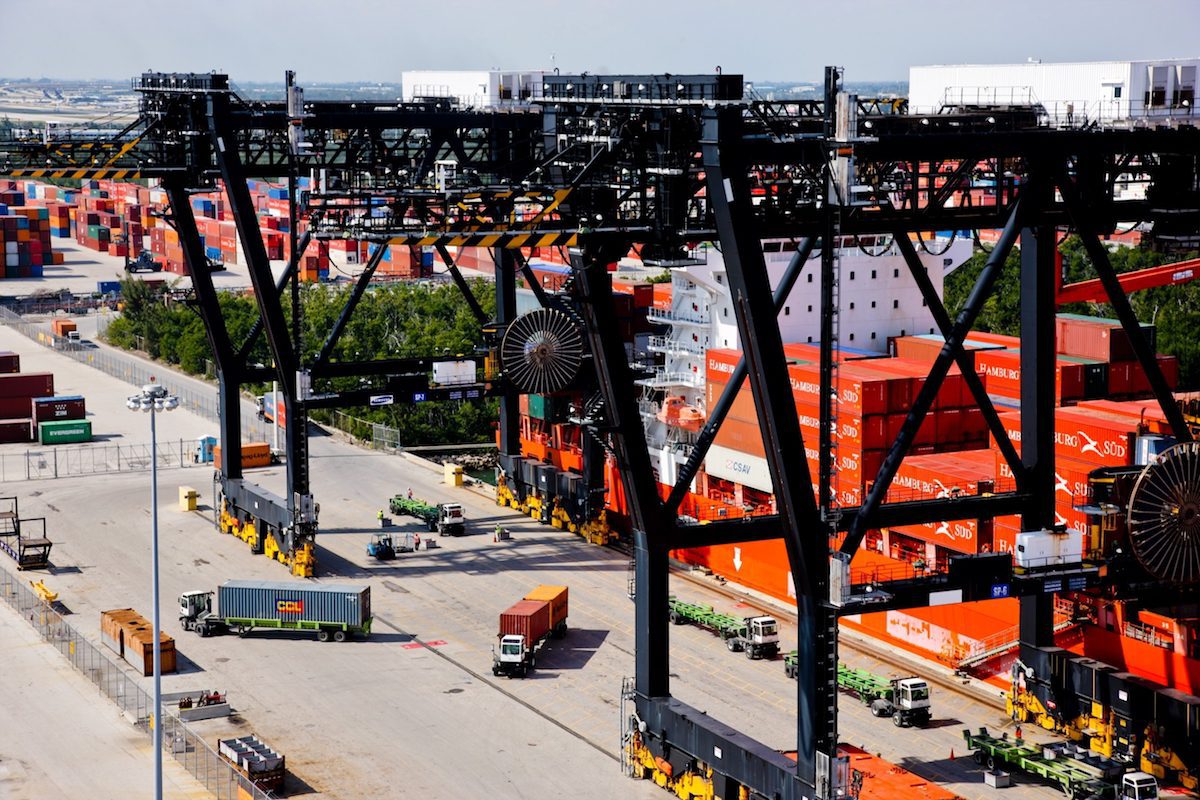
File photo: Port Everglades
 MIAMI, Jan 27 (Reuters) – Two Florida ports have canceled plans to sign cooperation pacts with Communist-ruled Cuba after state Governor Rick Scott threatened to cancel their funding if they did business with the “Cuban dictatorship.”
The news comes as Cuba watchers are looking closely for signs of how the United States’ fragile detente with Cuba will fare under President Donald Trump.
Trump has threatened to scrap moves to normalize relations, one of former President Barack Obama’s signature foreign policy initiatives, if he doesn’t get “a better deal.”
“Disappointed some (Florida ports) would enter into any agreement with Cuban dictatorship,” Scott wrote on Twitter on Wednesday. “I will recommend restricting state funds for ports that work with Cuba in my budget.
Port authorities along the U.S. Southern coast are strong proponents of increased trade and travel with Cuba, and some have expressed interest in using Mariel, located on the northwest coast of the Caribbean island, as a transshipment hub.
The Ports of Everglades and Palm Beach had been planning to sign agreements with Cuba during the visit of a Cuban trade delegation this week but said they decided to withdraw the deals.
Port of Everglades spokeswoman Ellen Kennedy said this move would not impact trade with Cuba, which was conducted by tenants rather than the ports themselves.
One of Port Everglades’ tenants, Crowley Maritime Corporation, has been exporting U.S.-made goods including poultry and medicine to Cuba since obtaining a license to do so from the Office of Foreign Asset Control in late 2001.
On Tuesday, Crowley also imported two containers of charcoal from Cuba, the first direct legal import from Cuba to the United States in more than half a century.
Kennedy said the memorandum of understanding had been designed to be a “good will gesture” to form a strong alliance with Cuban ports.
Cuba and the United States have restored diplomatic ties and signed various cooperation agreements since Obama agreed with Cuban President Raul Castro in December 2014 to work to normalize relations.
Obama, a Democrat, used executive orders to circumvent the longstanding U.S. trade embargo on Cuba and ease some restrictions on travel and business. The embargo can only be lifted by the U.S. Congress, which is controlled by Republicans.
Trump, who can reverse Obama’s executive orders, has threatened to end the detente if Cuba does not make further political and other concessions, although he has not specified what these should be. (Reporting by Zachary Fagenson in Miami; Writing by Sarah Marsh in Havana; Editing by Sandra Maler)
(c) Copyright Thomson Reuters 2017.
Updated: January 30, 2017 (Originally published January 27, 2017)
Editorial Standards · Corrections · About gCaptain
This article contains reporting from Reuters, published under license.

 Join The Club