By The Loadstar team
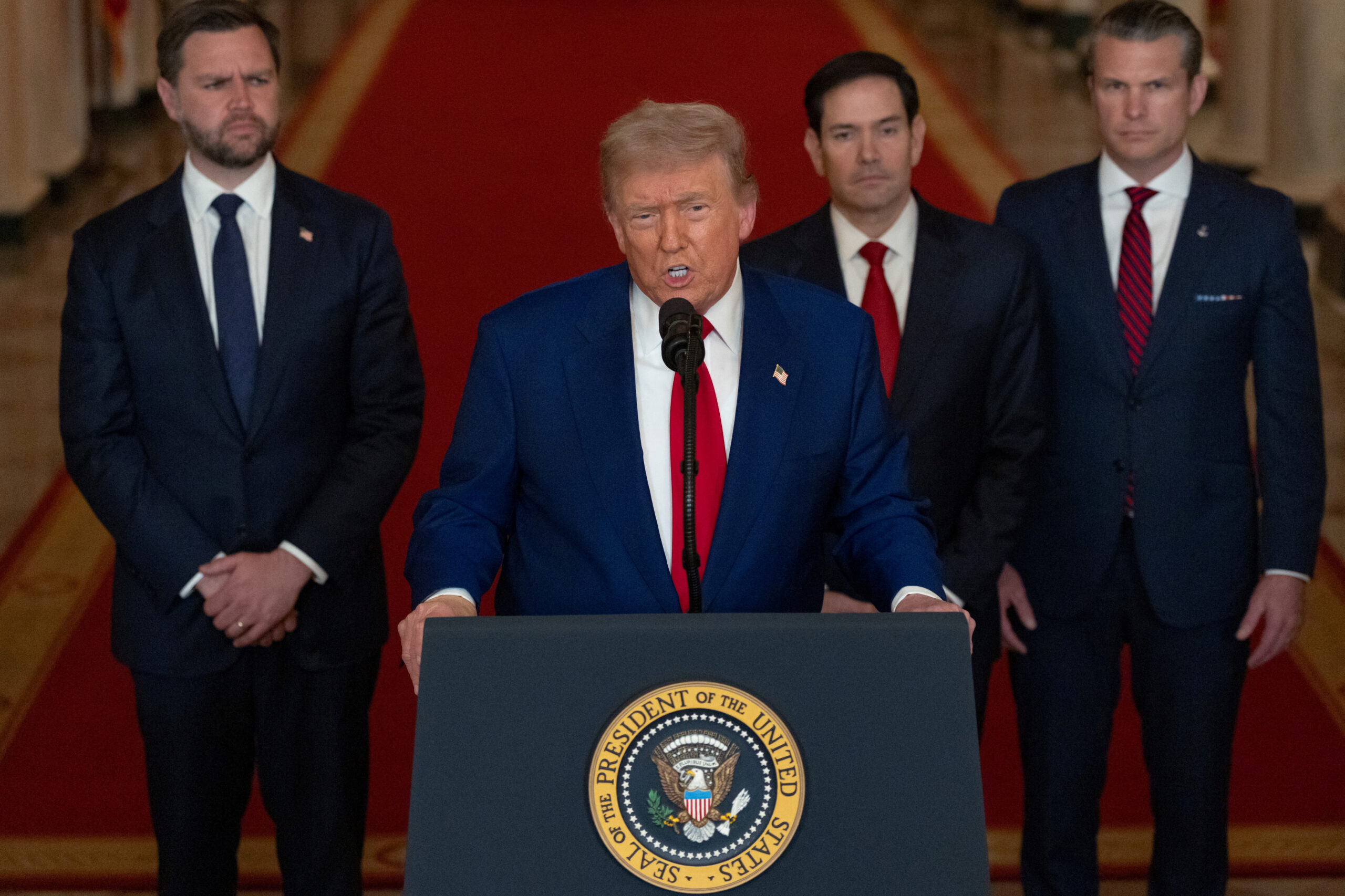
The White House’s 13 February Maritime Action Plan (MAP) sets out an ambitious strategy: to rebuild US shipbuilding and reduce dependence on foreign-built and foreign-flagged vessels
For international shipping lines, the document contains several proposals that could materially affect operating costs, cargo allocation, port routing, and long-term market access.
Here is a breakdown of the measures most likely to affect global carriers first.
A universal fee on foreign-built vessels
The MAP calls for a “universal infrastructure or security fee” on all foreign-built commercial vessels calling at US ports, assessed based on the weight of imported cargo.
Illustrative figures in the document suggest:
$0.01 per kg would raise $66bn over 10 years
$0.25 per kg would raise $1.5trn over 10 years
No rate has been fixed.
Nearly the entire global container fleet is foreign-built. In practice, this would function as:
1) a de facto surcharge on most international liner operators;
2) a potential pass-through cost to shippers;
3) a possible distortion between US-built niche operators and global carriers.
At higher illustrative levels (eg @ $0.25/kg), this would dwarf current port fees and materially alter trade economics.
Even at $0.01/kg, the sums become significant on large-volume Asia–US services.
Tightening cargo preference rules
The MAP proposes:
1) increasing the percentage of US government cargo that must move on US-flagged vessels;
2) creating a new United States Maritime Preference Requirement (USMPR) for high-volume exporting economies to transport an increasing share of US-bound containerised cargo on qualifying US vessels.
If implemented, this could:
1) redirect some cargo away from global liner networks;
2) strengthen US-flag operators backed by subsidy;
3) introduce quota-like dynamics into certain tradelanes.
For carriers heavily exposed to US government-linked exports or strategic cargo, this could reduce addressable volumes.
Land port maintenance tax
To prevent cargo diversion via Canada or Mexico, the MAP proposes a 0.125% tax on goods entering through land ports, mirroring the existing Harbor Maintenance Fee.
This is designed to stop shippers avoiding maritime-related charges by routing via:
1) Vancouver–rail;
2) Lazaro Cardenas–truck/rail;
3) Canadian east coast intermodal.
If both sea and land entries face aligned charges, routing flexibility narrows.
For carriers competing with intermodal cross-border strategies, this reduces arbitrage options.
Strategic commercial fleet (SCF)
The plan proposes creating a Strategic Commercial Fleet (SCF) of internationally trading US-built, US-flagged vessels, supported financially for both construction and operation.
This is effectively a subsidy to US carriers, backed by construction and operating support and designed to complement existing Maritime Security Program fleets.
While the scale is undefined, this could introduce state-supported competition in certain trades.
Potential trade measures linked to China
The MAP references action taken under the Section 301 investigation into China’s maritime, logistics, and shipbuilding dominance.
Although currently suspended, the framework exists for:
1) service fees on foreign-built vehicle carriers;
2) restrictions on certain maritime transport services.
The MAP signals continued willingness to use trade enforcement tools in shipping.
Arctic and autonomous priorities
The plan prioritises:
1) Arctic route development;
2) ice-breaking capability expansion;
3) robotic and autonomous maritime systems.
While less immediate for liner trades, this suggests a long-term industrial policy aimed at reshaping parts of the fleet and route network.
Timings
Importantly, however, none of the new fees are in force; legislative action would be required, and no effective dates are specified.
The administration intends to send a legislative package after the FY2027 budget process, which implies medium- to long-term implementation, rather than immediate tariff-style activation.
International carriers serving the US will need to monitor:
1) legislative movement on the Maritime Security Trust Fund;
2) draft language on the foreign-built vessel fee;
3) cargo preference expansion details;
4) any revival of Section 301 maritime measures.
The Loadstar is known at the highest levels of logistics and supply chain management as one of the best sources of influential analysis and commentary.
Editorial Standards · Corrections · About gCaptain

 Join The Club