The European Union paid an estimated €8.7 billion for liquefied natural gas from Russia’s Yamal project in the first 10 months of 2026, exceeding the estimated total for all of 2025, as the countdown to a ban on Russian LNG imports enters its final weeks.
EU ports received 12.89 million tonnes across 177 cargoes between January and October, up 6.3% from the same period last year, according to an analysis by environmental group Urgewald using Kpler shipping data. Europe accounted for 81% of Yamal’s recorded deliveries, underscoring the project’s continued dependence on the market it is about to lose.
The estimated bill is around 21% higher than the €7.2 billion calculated for all of 2025. The figures are indicative estimates based on monthly benchmark gas prices and delivered volumes, rather than verified contract payments.
But the more immediate challenge for Yamal LNG, operated by Russian producer Novatek, is logistical. The EU ban on Russian LNG imports under eligible existing long-term contracts takes effect on January 1, forcing the project to redirect cargoes toward Asia just as winter ice makes eastbound navigation along the Northern Sea Route increasingly difficult.
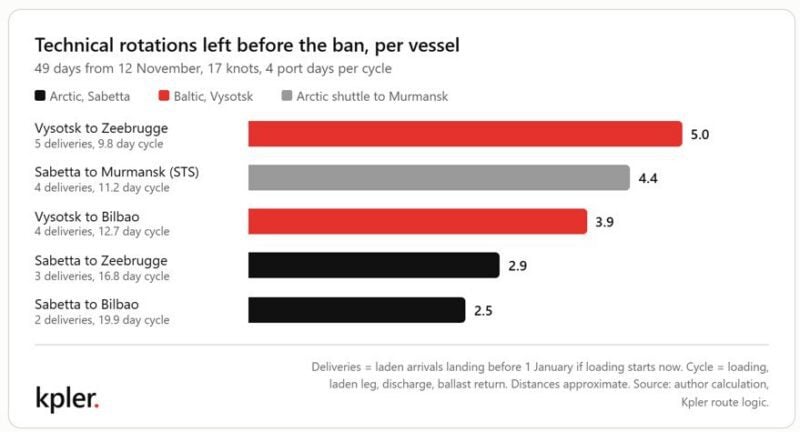
A Kpler analysis by principal commodity shipping analyst Igor Gavri? suggests there is still room for several additional European deliveries before the deadline. Based on vessel positions, historical movements, port restrictions and assumed sailing speeds, a tanker loading at Sabetta could theoretically complete around three additional deliveries to Zeebrugge before January 1. With transshipment to a conventional LNG carrier near Murmansk an Arc7 vessel could complete 4-5 additional deliveries. Russia has assembled a growing fleet of aging LNG vessels ahead of the ban.
Kpler’s accompanying rotation model assumes 17 knots and four days in port per cycle. The analysis identifies plant output, rather than tanker availability, as the principal constraint on additional shipments.
Yamal LNG rotations left before EU import ban takes effect. Source: Igor Gavri?/Kpler
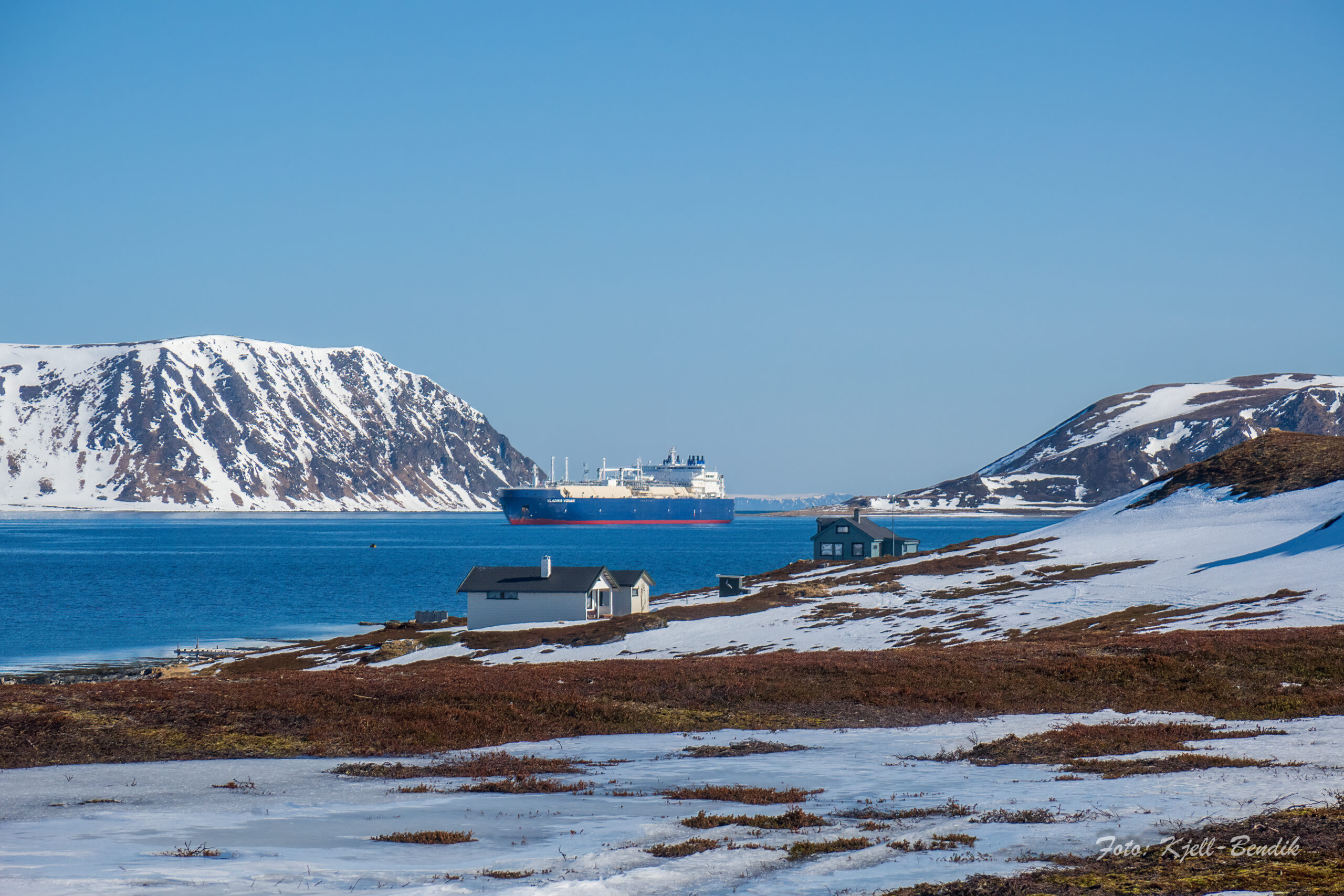
The deadline will produce a sharp change in a shipping system built around relatively short European voyages. Yamal depends on 14 specialized Arc7 ice-class LNG carriers, which can operate in Arctic waters and return quickly from nearby European terminals. During winter, conventional LNG carriers cannot reach Sabetta, while direct eastbound voyages to Asia become considerably more demanding.
Since 2018, only 11 Arc7 cargoes have traveled east through the Northern Sea Route between November and May, Urgewald said.
The nuclear-powered icebreaker Chukotka, the fourth serial Project 22220 vessel, is scheduled to enter service early next year, bringing Russia’s operational nuclear icebreaker fleet to nine. One likely operating model for Novatek and state-owned Atomflot is to use nuclear icebreakers to escort convoys of multiple Arc7 LNG carriers, improving the efficiency of scarce icebreaking capacity.
The transition to year-round eastbound NSR deliveries is far from guaranteed. Russia previously targeted year-round eastbound navigation for 2024 but failed to establish regular service. March and April remain particularly difficult, and a single additional icebreaker alone will not resolve constraints involving convoy speeds and icebreaker redundancy.
October deliveries to Europe totaled 705,591 tonnes across 10 cargoes, worth an estimated €839 million. France received seven shipments, while Spain and the Netherlands received two and one, respectively.
The January ban will not necessarily stop Yamal LNG exports, but it will remove the project’s most convenient winter market. European firms will be permitted to continue transporting and selling Yamal products outside of the EU. An earlier proposed complete ban on providing services to the Russian LNG sector was subsequently weakened by the EU.
The German government will go ahead with a planned 24-terawatt-hour crisis gas reserve to be funded by user surcharges, the economy ministry said, following criticism over missed storage targets for the winter heating season this year.
Polish energy company Orlen SA terminated one of its long-term liquefied natural gas contracts with QatarEnergy, citing the export giant’s inability to deliver as the conflict in the Middle East disrupts shipments.
Liquefied natural gas loadings onto tankers from Qatar have picked up over the past few weeks, suggesting the major exporter is seeking to get more cargoes to the global market despite ongoing disruptions in the Strait of Hormuz.
November 10, 2026
Total Views: 327
Get The Industry’s Go-To News
Subscribe to gCaptain Daily and stay informed with the latest global maritime and offshore news
— just like 106,075 professionals
Secure Your Spot
on the gCaptain Crew
Stay informed with the latest maritime and offshore news, delivered daily straight to your inbox
— trusted by our 106,075 members
Your Gateway to the Maritime World!
Essential news coupled with the finest maritime content sourced from across the globe.

 Join The Club