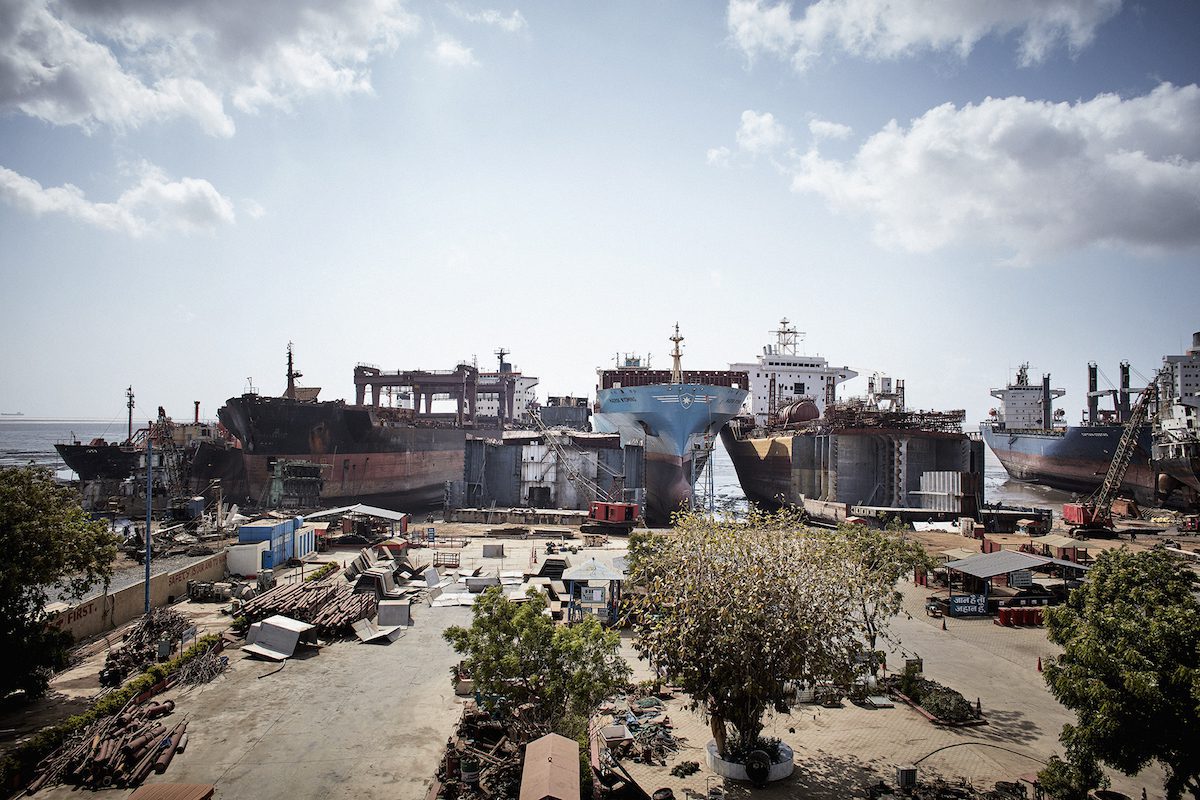
FILE PHOTO: Ships are seen at a Hong Kong Convention-approved ship recycling facility in Alang, India. Photo credit: Maersk
(Drewry) – Recovery in the crude tanker shipping market is not expected until 2020 as weak trade growth and a bloated orderbook limit any rate recovery. But the timing of any market upturn will be heavily influenced by the level of scrapping, according to the latest edition of the Tanker Forecaster, published by global shipping consultancy Drewry.
The ongoing overcapacity in the tanker market is expected to persist further in 2017 because of a sharp increase in deliveries. Although tonnage deliveries are projected to decline after 2017, given a weak demand outlook hope of recovery will hinge on the extent of scrapping activity, which will be influenced by forthcoming IMO regulations on ballast water treatment.
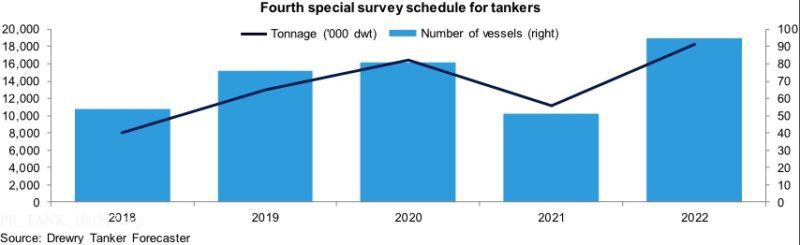
Scrapping activity has not increased so far, but Drewry expects it to gather momentum towards the end of 2017, once the new ballast water convention is implemented. Since some owners might bring special surveys forward, the real impact of this IMO regulation will not be seen until 2018. In the existing fleet, there are about 20 mdwt of vessel capacity aged 19 years or more, for which the fifth special survey is due during 2017-22. Drewry assumes that all of these vessels will be scrapped during 2017-22, as unattractive freight rates, poor employability and the additional cost associated with complying with the forthcoming IMO regulations will force owners to scrap them.
Additionally, there are about 367 vessels (of 67 mdwt), for which the fourth special survey is due during 2017-22. As these vessels are currently in the age range of 14-19 years, owners will have to decide whether to scrap them before they are due for their next survey as the owners will have to incur the additional cost of fitting ballast water treatment systems (BWTS) as well as scrubbers required to comply with IMO regulations on sulphur limits.
If we assume that about a third of these vessels are demolished during the forecast period 2017-22, the recovery in tanker freight rates will not start until after 2019. However, the extent of actual demolitions will be a crucial factor for deciding how quickly the market recovers.
“We expect the market to start a gradual recovery from 2020. For any recovery before 2020, demolitions need to be strong enough to keep fleet growth slower than demand growth,” said Rajesh Verma, Drewry’s lead analyst for tanker shipping.
© Copyright 2016 | Drewry Shipping Consultants Limited. All Rights Reserved.

 Join The Club