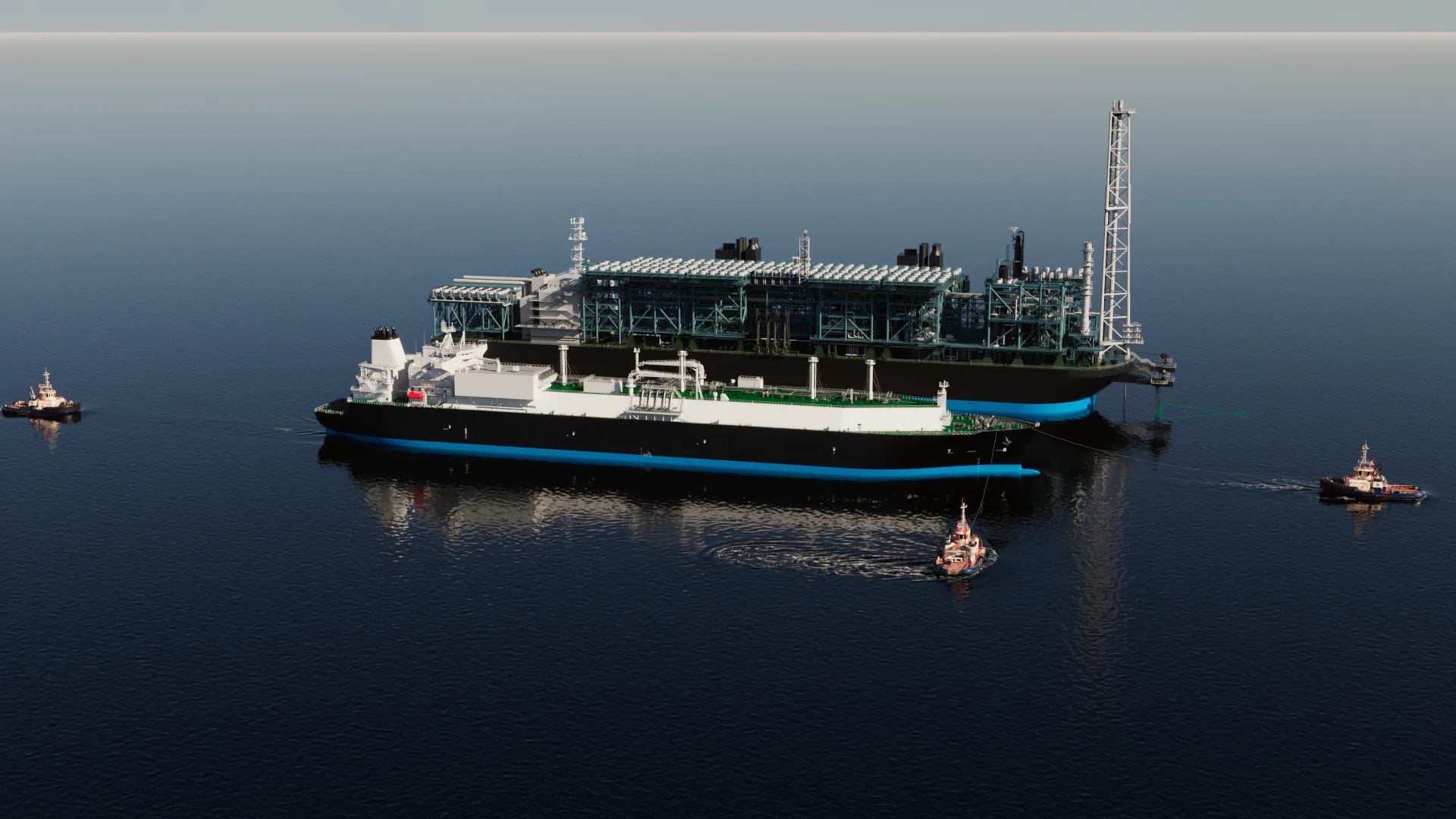
Backed by BlackRock’s GIP, MOL and Vitol, the Louisiana offshore project would become America’s first floating LNG export facility and the world’s largest FLNG development.
Delfin Midstream has reached a major milestone in the development of America’s first offshore LNG export terminal, announcing a final investment decision (FID) for the first floating liquefied natural gas (FLNG) vessel planned for deployment off the Louisiana coast.
The company said Wednesday that Delfin FLNG 1 will have an export capacity of 4.4 million tonnes per year, making it not only the first floating LNG export facility in U.S. waters but also the largest FLNG project of its kind globally.
The decision unlocks approximately $5 billion of investment for the project’s first phase and comes just over a year after federal regulators cleared the way for development.
A consortium led by Global Infrastructure Partners (GIP), now part of BlackRock, has agreed to invest in the project alongside existing Delfin investors including Mitsui O.S.K. Lines (MOL), Vitol, and Diameter Capital Partners.
“Securing FID for our first FLNG vessel is a groundbreaking milestone not only for Delfin, but also for global energy security,” Delfin CEO Dudley Poston said. He added that the project would support U.S. energy exports while advancing what he described as American “energy and maritime dominance.”
The announcement marks a major step forward for a project that has been more than a decade in the making.
In March 2025, the U.S. Maritime Administration granted Delfin LNG a deepwater port license for what became the first offshore LNG export terminal approved in U.S. history. The project, located roughly 40 miles offshore Louisiana, received authorization to utilize up to three FLNG vessels with a combined export capacity of 13.2 million tonnes annually.
Unlike traditional shore-based export terminals, Delfin’s development relies on floating liquefaction vessels connected to existing offshore pipeline infrastructure, reducing the need for extensive new onshore construction.
The first vessel is backed by long-term LNG sales agreements with several major energy companies, including Vitol, Expand Energy, Centrica, and Gunvor, according to Delfin. The company also said it has executed construction contracts with Samsung Heavy Industries and Black & Veatch.
MOL President and CEO Jotaro Tamura said the Japanese shipping giant intends to leverage its offshore and floating facility expertise to support the project.
Vitol’s Americas chief executive Ben Marshall described the investment as an opportunity to deliver “reliable, cost-competitive American energy to global markets.”
Delfin expects the first FLNG vessel to begin LNG production in 2030 and said it will continue advancing plans for second and third floating liquefaction vessels over the coming year.

 Join The Club