The U.S. Coast Guard secured nearly $25 billion in supplemental funding in fiscal year 2025—the largest single investment in the Service’s history—but a new report from the Government Accountability Office finds the agency is still grappling with deep workforce shortages and persistent equipment problems that continue to limit its operational effectiveness.
In testimony published February 3 ahead of a House Homeland Security subcommittee hearing, GAO warned that critical gaps remain in staffing, maintenance, and acquisition management—raising concerns about the Coast Guard’s ability to carry out its expanding maritime security mission.
The workforce shortfall is particularly acute. Despite stepped-up recruiting efforts, the Coast Guard ended fiscal year 2024 roughly 2,600 enlisted personnel short of its target force, an 8.5 percent gap. GAO said the service lacks confidence that it has “the right mix of deployable specialized forces personnel” in the units tasked with countering maritime threats.
Equipment readiness tells a similar story. Mission availability for Medium Endurance Cutters declined steadily from fiscal year 2020 through 2024, driven in part by mounting maintenance challenges. The drop comes as U.S. officials continue to flag transnational criminal organizations and domestic threats as major risks to public safety and national security at sea.
Major acquisition programs also remain under strain, despite the influx of funding. GAO warned that the Offshore Patrol Cutter program—a top Coast Guard priority—is likely to face further delays and cost overruns due to outdated cost estimates and an incomplete ship design. Overall, the service’s roughly $40 billion portfolio of vessel and aircraft modernization programs continues to suffer from what GAO described as “persistent and longstanding challenges.”
When the funding was announced last summer, Coast Guard Acting Commandant Adm. Kevin Lunday framed it as a turning point. “This historic investment marks a new era for the Coast Guard,” Lunday said. “It reflects the strong support of the American people and empowers us to restore our Service and prepare for the challenges of today and tomorrow.”
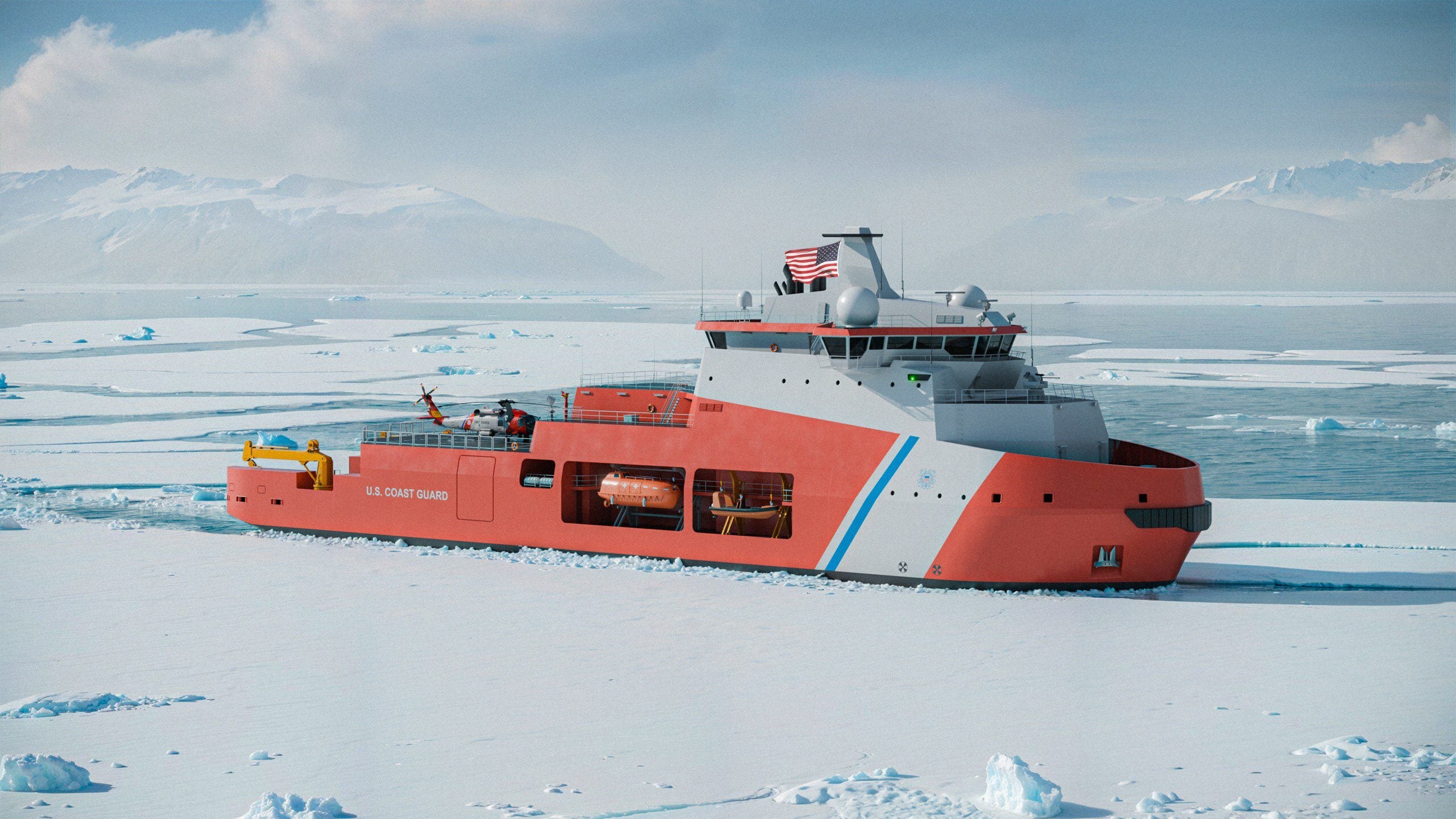
The money is slated to fund a sweeping modernization effort, including an estimated 17 new icebreakers, 21 new cutters, more than 40 helicopters, and six C-130J aircraft, along with upgrades to shore infrastructure and maritime surveillance systems. Key allocations include $4.4 billion for shore facilities and training, $4.3 billion for Polar Security Cutters, $4.3 billion for nine Offshore Patrol Cutters, and $2.3 billion for MH-60 helicopters.
Still, GAO made 26 recommendations aimed at addressing staffing shortages, readiness issues, and acquisition risks. As of January 2026, only four had been fully implemented. Among the most pressing unresolved items: developing a comprehensive workforce retention plan and stabilizing ship designs before committing to further construction.
The findings land at a pivotal moment for the U.S. Coast Guard, whose mission set has expanded well beyond traditional roles. GAO described the service as “the Nation’s leading drug interdiction and maritime border security force,” with the new investments intended to support Force Design 2028—a long-term effort to modernize operations and capabilities.
But GAO’s message was clear: money alone won’t fix the problem. Without sustained progress on workforce planning, maintenance discipline, and acquisition management, the Coast Guard risks wasting a historic funding windfall while continuing to fall short of its growing maritime security demands.
GAO said it will continue monitoring the Coast Guard’s progress as it works through the remaining recommendations.
Editorial Standards · Corrections · About gCaptain

 Join The Club