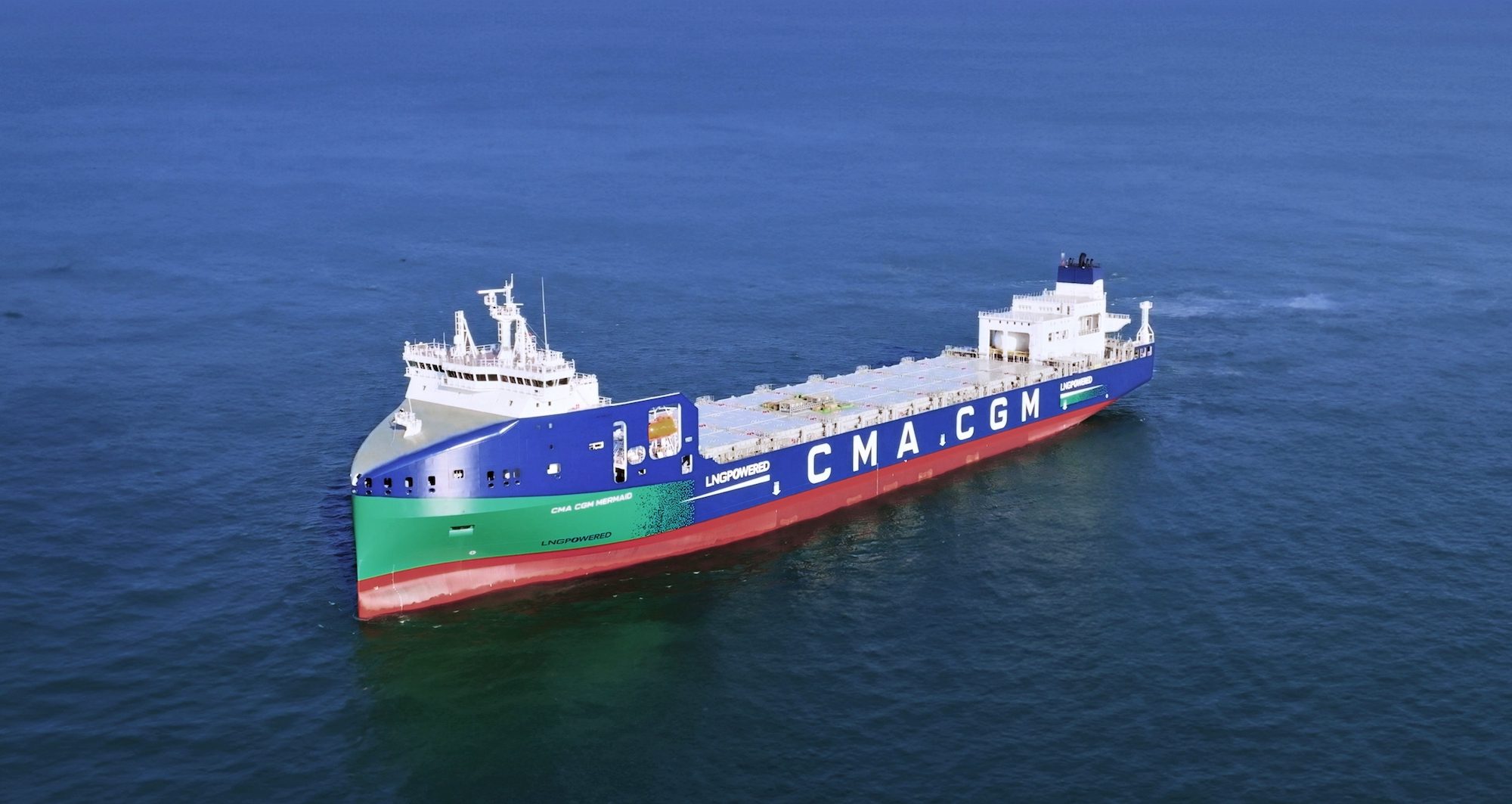
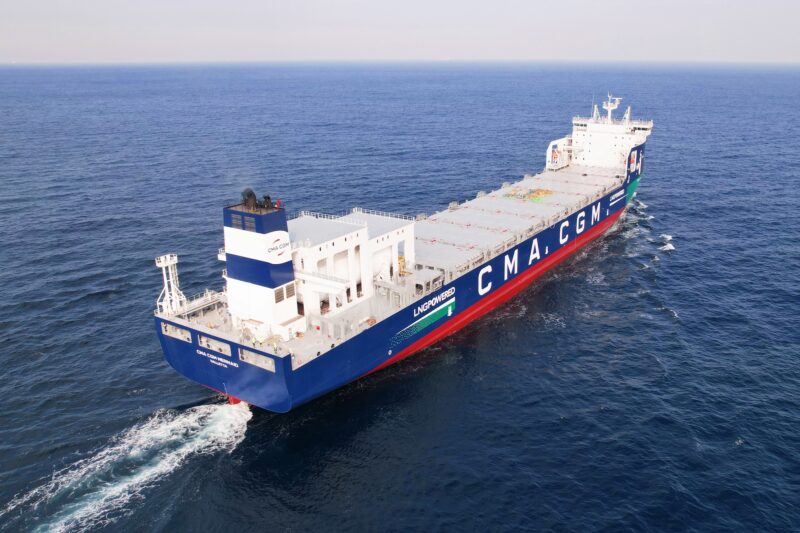
French shipping group CMA CGM has taken delivery of the CMA CGM Mermaid, the first in a series of ten 2,000 TEU container ships powered by Liquefied Natural Gas (LNG) and slated for deployment in the Mediterranean and Northern Europe.
The innovative design of these new vessels aims to enhance energy efficiency and environmental performance. The addition of these ships to CMA CGM’s existing fleet of approximately 620 vessels, including over 30 powered by alternative fuel such as LNG.
The CMA CGM Mermaid and its sister ships are expected to emit 20% less CO2 compared to similar-sized ships powered by conventional fuels. This initiative is part of CMA CGM’s fleet renewal program, in which the group has invested over $15 billion helping to bring it closer to achieving its goal of Net Zero Carbon emissions by 2050.
CMA CGM Mermaid. Photo courtesy CMA CGM
The new generation of containerships, designed in collaboration with Chantiers de l’Atlantique, Odense Marine Technique (OMT), and Hyundai Mipo Dockyard (HMD), also introduces a novel approach to naval architecture. The design includes a gas chain and storage tank with a total capacity of 1,053 m3, developed in partnership with GTT, a French company specializing in technologies for the maritime transport and storage of LNG.
The ships are also the first in the CMA CGM fleet with superstructures at the front, providing better aerodynamic performance and higher loading capacity. An innovative straight bow with an integrated bow bulb further enhances hydrodynamic performance, reducing fuel consumption by 15% per trip.
By using LNG as a marine fuel, ships can significantly reduces sulfur oxide, nitrogen oxide, and fine particle emissions. They are also designed to carry biogas and can be converted to e-methane, further reducing CO2 emissions.
The ten new container ships, scheduled for delivery between February 2024 and January 2025, will primarily transport goods over short distances in Northern Europe and the Mediterranean, providing a more energy-efficient alternative to road transport in these regions.
Container freight spot rates on the major trades saw limited movement this week as supply chains in China slowly began to restart following the new year holiday.
Drewry World Container Index reveals global container shipping rates fell 1% to $1,899 per 40-foot container this week, marking the seventh consecutive weekly decline as the traditional pre-Lunar New Year...
Global container shipping rates extended their decline for a sixth consecutive week, dropping 1% to $1,919 per 40-foot container as the traditional pre-Lunar New Year cargo rush continues to disappoint...
February 19, 2026
Total Views: 610
Get The Industry’s Go-To News
Subscribe to gCaptain Daily and stay informed with the latest global maritime and offshore news
— just like 107,044 professionals
Secure Your Spot
on the gCaptain Crew
Stay informed with the latest maritime and offshore news, delivered daily straight to your inbox
— trusted by our 107,044 members
Your Gateway to the Maritime World!
Essential news coupled with the finest maritime content sourced from across the globe.

 Join The Club