Canada’s largest West Coast ports are positioning themselves for a bigger role in the country’s push to diversify trade away from the United States, with a new study highlighting the scale of cargo already moving through British Columbia’s Pacific gateways.
The ports of Vancouver, Prince Rupert and Nanaimo handled a record 200 million metric tonnes of cargo in 2025 valued at $409 billion, according to an economic impact study released Wednesday.
Together, the ports moved nearly $270 billion of Canada’s trade with overseas partners, representing almost half of the country’s trade outside North America.
The findings come as Canada looks to double exports to non-U.S. markets over the next decade, putting greater emphasis on Pacific trade routes and access to fast-growing Indo-Pacific economies.
“West coast ports like Vancouver have an outsized role to play as Canada looks to double exports to non-U.S. markets over the next 10 years in support of a thriving national economy,” said Peter Xotta, president and CEO of the Vancouver Fraser Port Authority.
The three ports move a broad mix of Canadian exports, including energy products, grain, potash, forestry products and critical minerals, alongside containerized cargo and imports ranging from vehicles and manufacturing components to consumer goods.
Their location gives Canada direct access to Indo-Pacific markets that are projected to account for half of global GDP by 2040, while rail and highway connections link the ports with producers and consumers across the country.
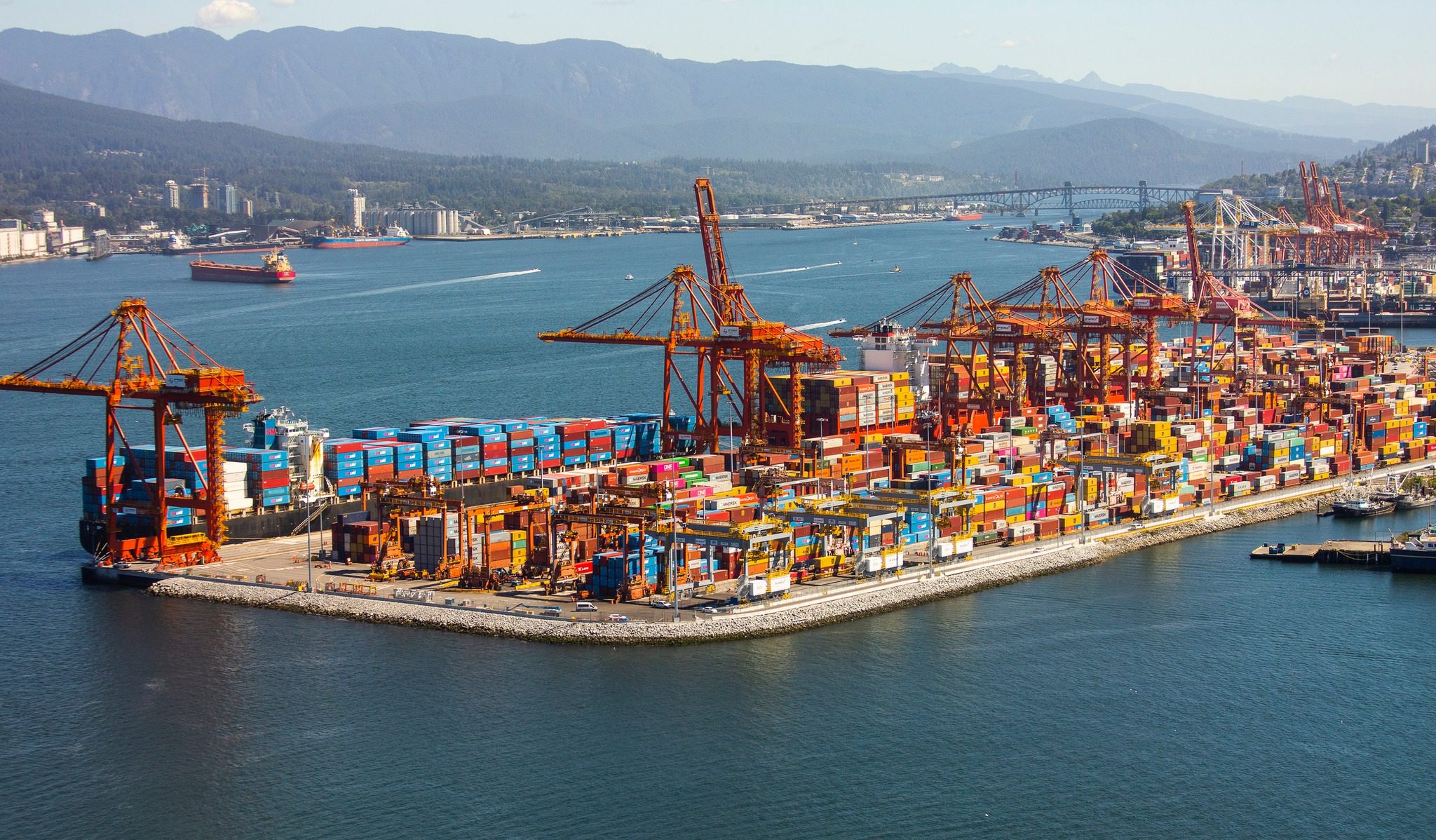
Vancouver, Canada’s largest port, operates across 29 major deep-water terminals handling containers, autos, bulk and breakbulk cargo. The port is also preparing for the proposed Roberts Bank Terminal 2 project, which would add significant container capacity on Canada’s West Coast.
Prince Rupert, meanwhile, has about $3 billion in projects underway as it expands its role as a northern Pacific gateway.
Port of Prince Rupert President and CEO Kurt Slocombe pointed to several projects intended to increase capacity and diversify cargo flows, including the CANXPORT and LinX logistics developments, the Ridley Island Energy Export Facility and additional marine berth and rail infrastructure.
“The Port of Prince Rupert will continue to be a key gateway to support Canada’s goal of doubling non-US exports,” Slocombe said.
Nanaimo is also seeking a larger role in Canada’s Pacific trade network. Located about 30 nautical miles from Vancouver, the port operates three deep-water terminals serving container, auto, bulk, breakbulk, cruise and logistics operations.
“As Canada looks to strengthen its trade corridors and expand access to global markets, strategic investments in infrastructure, industrial development and transportation connectivity will be essential,” said Nanaimo Port Authority President and CEO Ian Marr.
The report also underscored the broader economic footprint of the three gateways and their associated supply chains.
Together, they supported an estimated 152,100 jobs across Canada in 2025, including about 61,000 direct jobs ranging from longshore workers and train engineers to truck drivers and administrative staff. Those jobs generated about $13 billion in annual wages and contributed nearly $25 billion to Canadian GDP.
The study comes as Canada’s trading relationship with the United States faces renewed uncertainty, adding urgency to Ottawa’s longstanding effort to expand trade with markets beyond its largest trading partner.
Canada and the United States had been negotiating a broader trade agreement this summer, but talks were suspended last week after the two governments failed to bridge remaining differences. The breakdown has been followed by another round of tariffs and planned Canadian retaliation, further highlighting Canada’s exposure to the U.S. market.
For Canada’s West Coast ports, that push could translate into considerably more cargo moving across Pacific trade lanes.
“Canada’s West Coast ports are a strategic national asset, connecting Canadian businesses to global markets and supporting thousands of family-sustaining jobs,” said Mike Leonard, president and CEO of the BC Maritime Employers Association. “As global trade evolves, a stable, reliable waterfront and resilient national supply chains will be essential to unlocking new economic growth, diversifying trade and keeping Canada competitive.”
The Economic Impact of West Coast Ports study was prepared by InterVISTAS for the Vancouver, Prince Rupert and Nanaimo port authorities, the BC Maritime Employers Association and the BC Marine Terminal Operators Association.

 Join The Club