
 Join The Club



News
How the Houthis are Helping Iran Turn Saudi Arabia Into a Pressure Point
The Houthi attacks on Saudi Arabia are about more than Yemen.
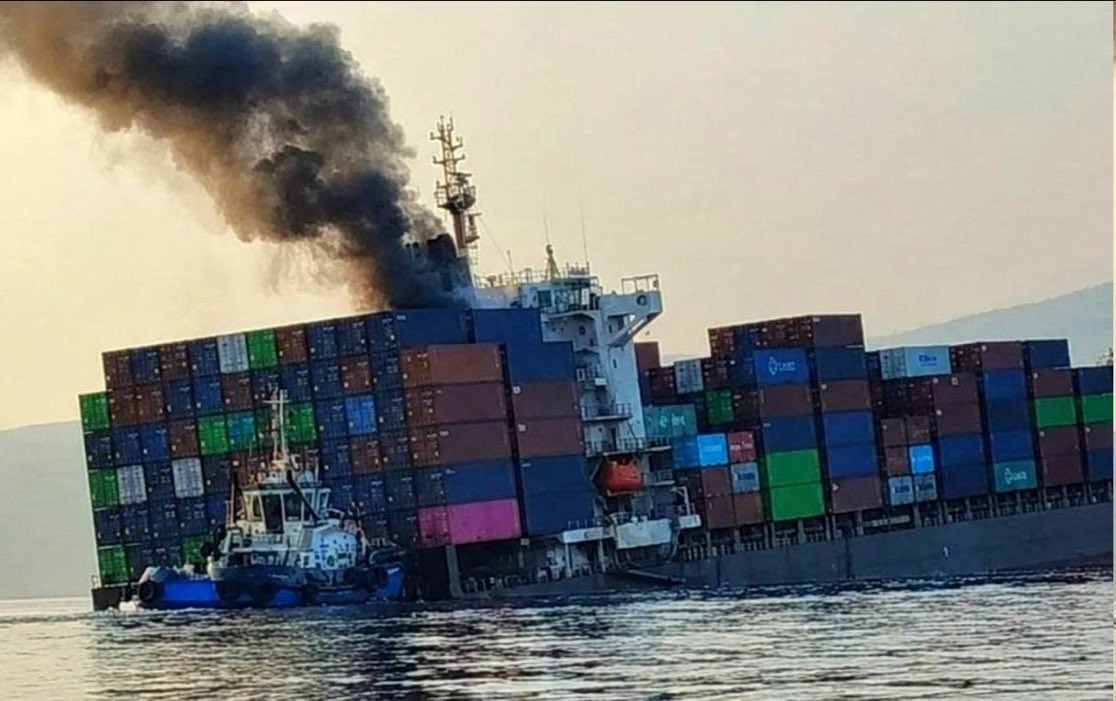
An image purportedly shows the Singapore-flagged container ship GFS PRIDE listing heavily and emitting thick black smoke following an attack in the Strait of Hormuz on October 13, 2026. The vessel subsequently sank, with all 21 crew members safely evacuated. The image has not been independently verified.
U.S. Central Command says the United States and its regional partners control the Strait of Hormuz, citing more than 40 commercial ships moving through the waterway in the past 24 hours, even as maritime security officials warn that attacks on merchant vessels are increasing and the threat to shipping remains severe.
The statement Thursday came as the Joint Maritime Information Center (JMIC) released a new assessment documenting a series of attacks on commercial shipping, including the sinking of a containership, and warning that further strikes remain highly likely.
“The United States and regional partners control the strait as commercial vessels continue to transit despite unwarranted IRGC aggression,” CENTCOM said in a statement rejecting three Iranian claims.
But the military’s assertion of control comes against a markedly different picture of commercial shipping conditions. Traffic remains far below prewar levels, vessels continue to face attacks along established transit routes, and Iran is still attempting to influence how ships move through the strait.
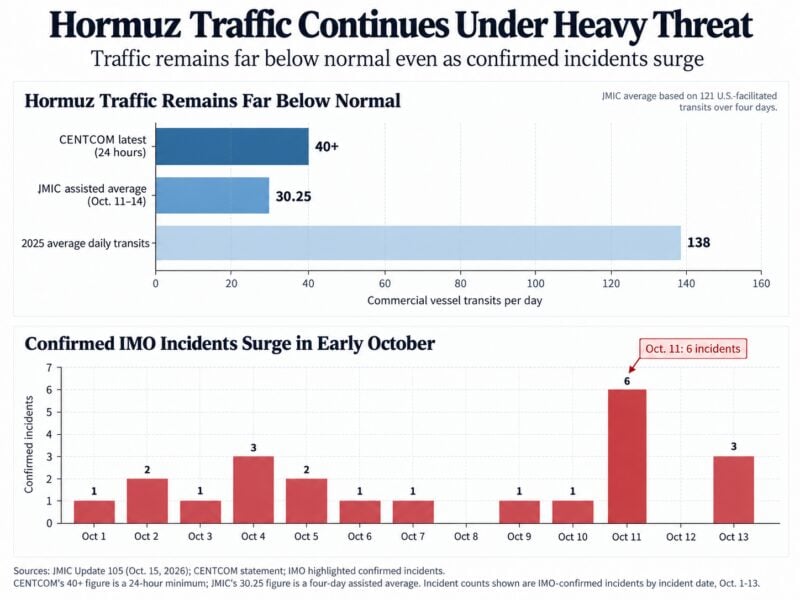
According to JMIC’s October 15 advisory, U.S.-facilitated traffic totaled 121 vessel transits between October 11 and 14, an average of approximately 30 ships per day. That compares with a historical average of roughly 138 daily transits in 2025, before the war.
CENTCOM’s latest figure of more than 40 ships covers a different 24-hour period and may indicate an increase in traffic. Still, the four-day JMIC average represents only about 22% of the prewar benchmark.
Independent commercial tracking continues to show substantially fewer transits than U.S. military-assisted figures. JMIC reported single-digit daily movements in its separate tracking data, although the two sources use different methodologies and do not measure the same categories of traffic.
The distinction matters because while ships are continuing to pass through Hormuz, the volume of traffic remains a fraction of normal levels.
JMIC maintained its threat assessment for the Strait of Hormuz at SEVERE, warning that deliberate hostile action against commercial vessels remains highly likely.
The latest advisory documented eight projectile attacks in the strait on October 11 and 13, involving four tankers and four containerships. A separate attack on the products tanker PETRO DOLPHIN near Sohar, Oman, left two crew members missing.
The most serious recent incident involved the Singapore-flagged GFS PRIDE, which was struck by a projectile on October 13, caught fire and subsequently sank on October 14. All 21 crew members were safely evacuated.
CENTCOM rejected an Iranian Revolutionary Guard Corps (IRGC) claim that the vessel had struck a naval mine while traveling along an unauthorized route.
“The civilian container ship M/V GFS Pride was hit by an IRGC projectile,” CENTCOM said, adding that the vessel sank while being towed to shore.
The military also maintained that the strait’s primary shipping routes remain clear of mines.
JMIC separately said there was no evidence supporting Iran’s claim that a mine caused the sinking. However, the advisory continued to warn mariners about potential mining activity within and around the established traffic separation scheme.
It also warned of a continuing threat from IRGC surveillance, drone overflights, radio hailing and attempts to direct merchant ships toward the northern Iranian-controlled route.
Vessels using the southern Omani corridor remain exposed to attacks, while those broadcasting their positions through the Automatic Identification System (AIS) face an elevated targeting risk, according to JMIC.
The organization also cautioned mariners about floating containers and debris near the wreck of GFS PRIDE.
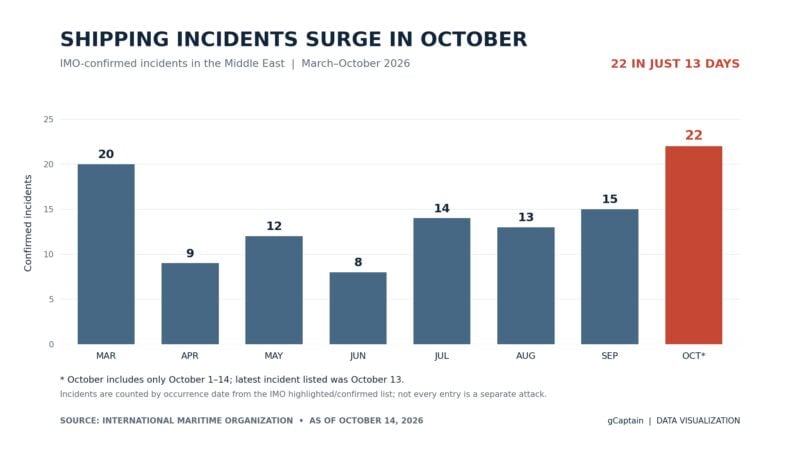
The latest attacks are part of a broader escalation that began before October. JMIC now counts 149 confirmed vessel incidents across the region since March 1, including nine newly documented incidents in its latest reporting period.
The International Maritime Organization separately lists 113 highlighted confirmed incidents and 24 seafarer fatalities as of October 14. The two organizations maintain different incident datasets and their totals are not directly comparable.
Meanwhile, large numbers of commercial vessels remain at anchor throughout the region. JMIC reported approximately 180 vessels near Fujairah and Khor Fakkan, another 178 between Dubai, Jebel Ali and Ras Al Khaimah, and 74 around Musandam and Sohar as of October 15.
The security situation is further complicated by the continuing U.S. naval blockade of Iranian ports.
According to the latest figures cited by JMIC, U.S. forces had redirected 135 commercial vessels and disabled four during blockade enforcement operations as of October 10-11. Neutral shipping remains permitted to transit, although vessels can expect military hailing, monitoring and possible inspections.
The latest JMIC advisory also warned that ships using either the northern Iranian-controlled route or the southern Omani corridor should expect continued security risks and reduced traffic.
That leaves a significant gap between the military’s claim of control and the conditions facing commercial operators.
U.S. forces are facilitating vessel movements through the strait, and commercial ships continue to transit. But attacks have continued despite the military presence, and shipping volumes remain well below their prewar levels.
For shipowners, charterers and crews, the remaining question is whether the United States can provide enough security for normal commercial operations to resume, rather than simply keeping the waterway open to traffic willing to accept the risks.

Sign up for gCaptain’s newsletter and never miss an update
Essential maritime and offshore news, insights, and updates delivered daily straight to your inbox
The Houthi attacks on Saudi Arabia are about more than Yemen.
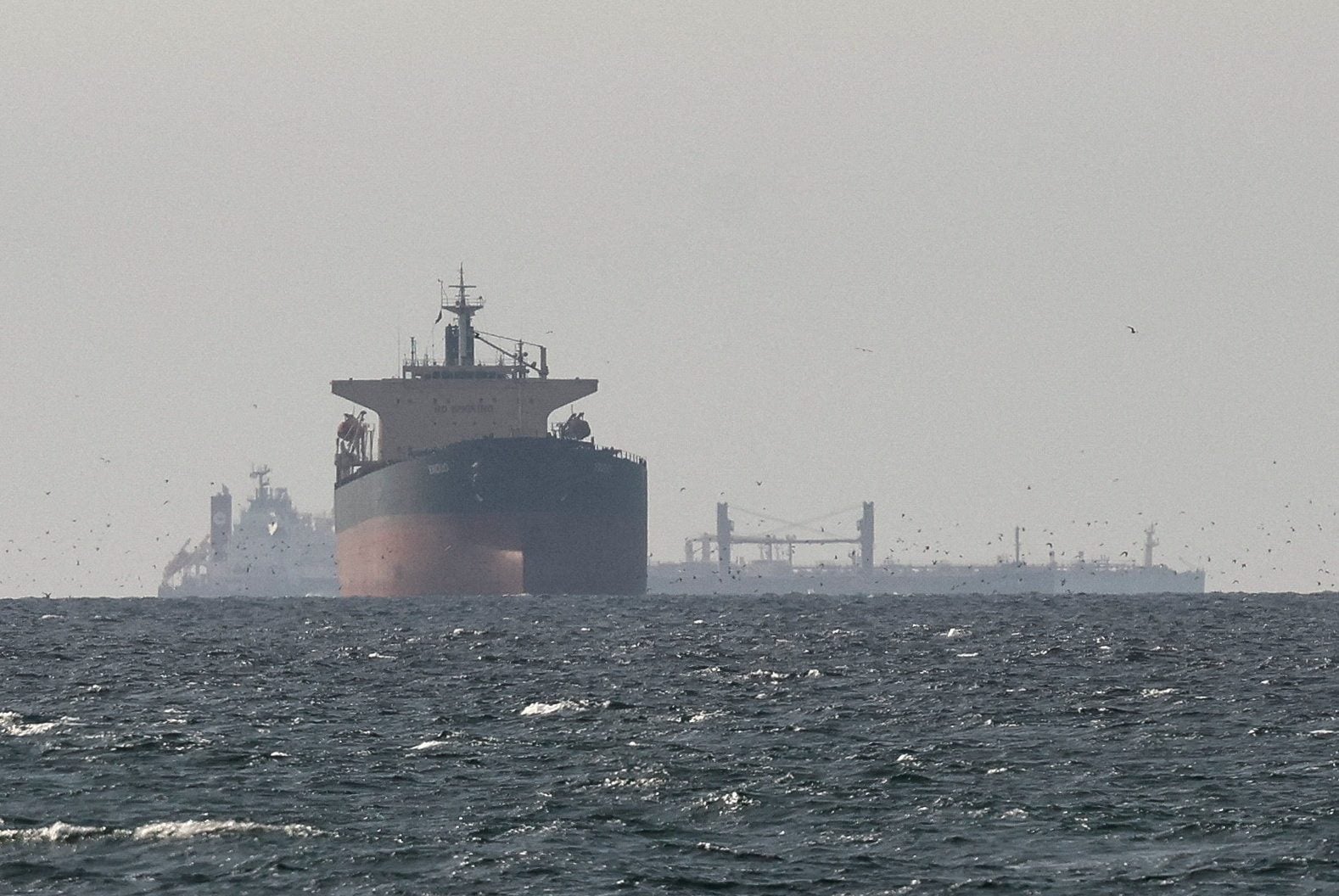
When the oil supertanker Esteem Explorer sails from the United States to Japan in late November, loaded with about 2 million barrels of crude, the journey will cost $81 million. The same journey would have cost $9.1 million last year, on average.
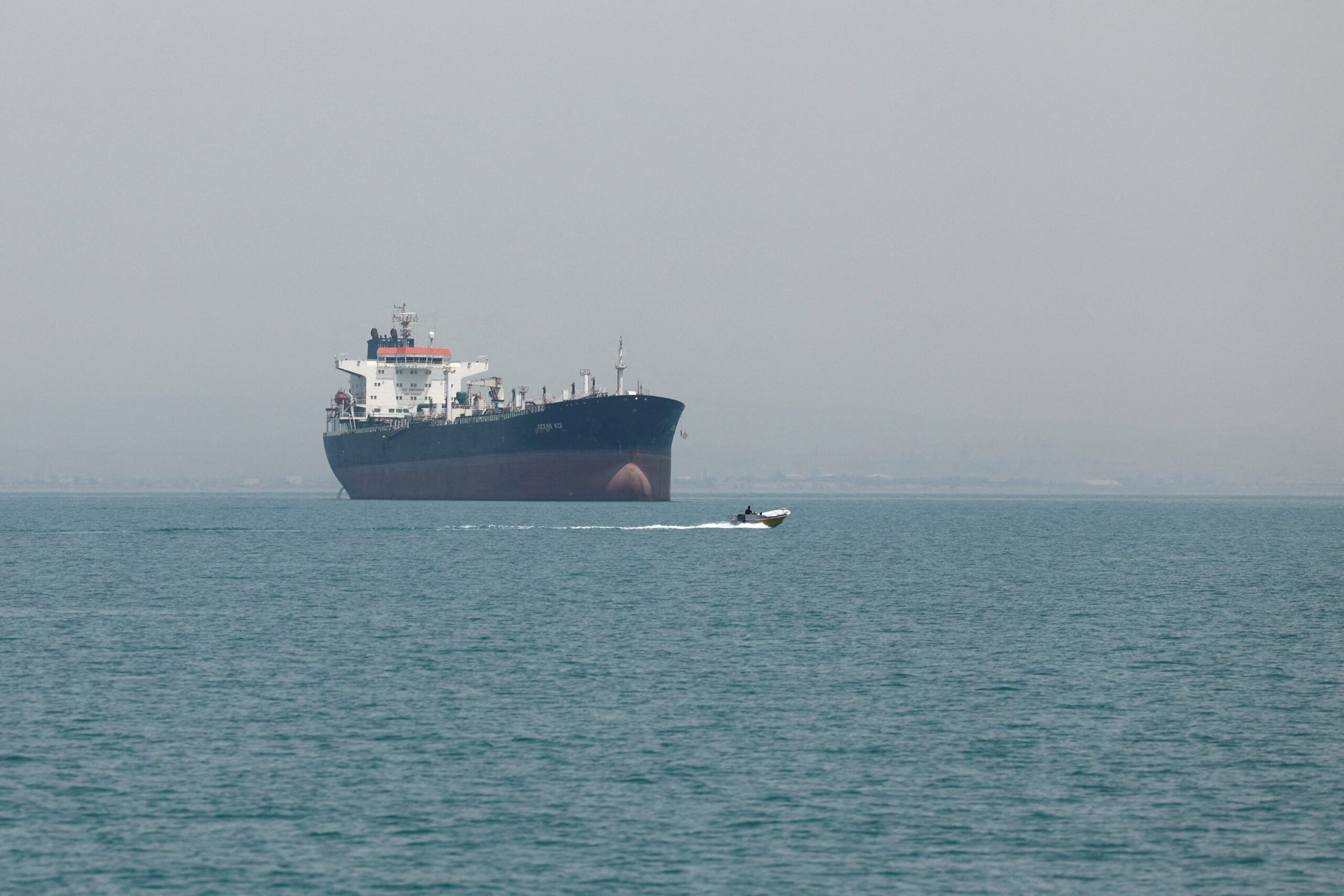
Shipowners are facing an increasingly fragmented fuel market as disruptions triggered by the Middle East conflict raise concerns about the availability and quality of supply.
Subscribe to gCaptain Daily and stay informed with the latest global maritime and offshore news



Essential news coupled with the finest maritime content sourced from across the globe.
Sign Up