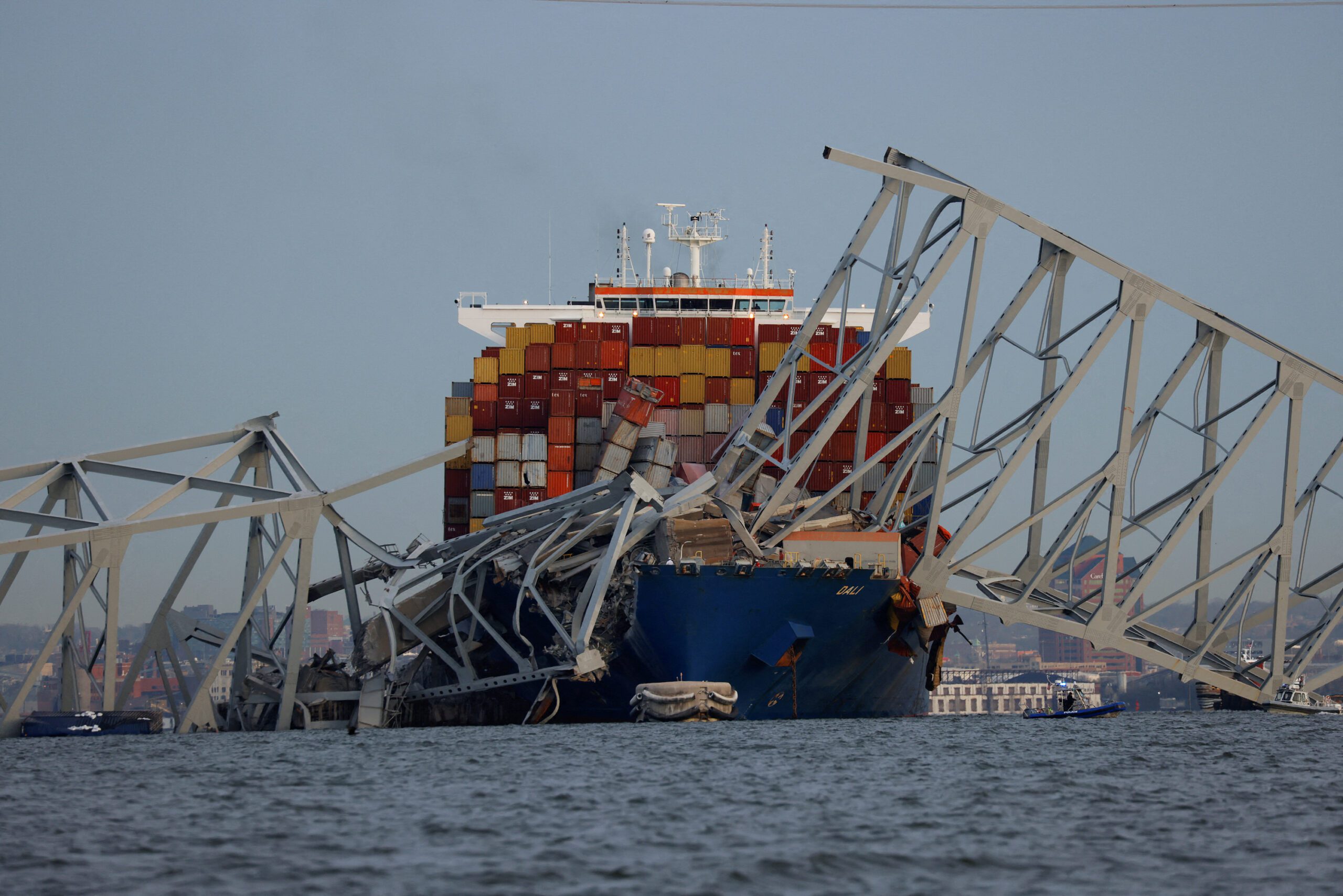
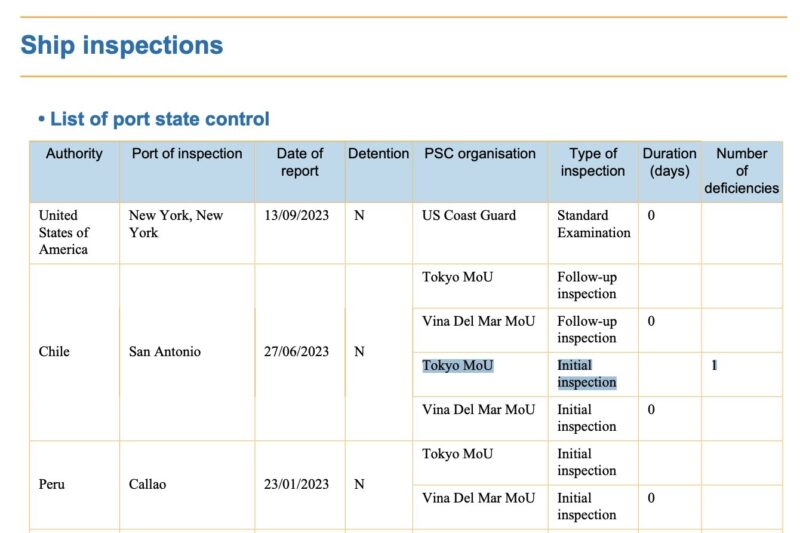
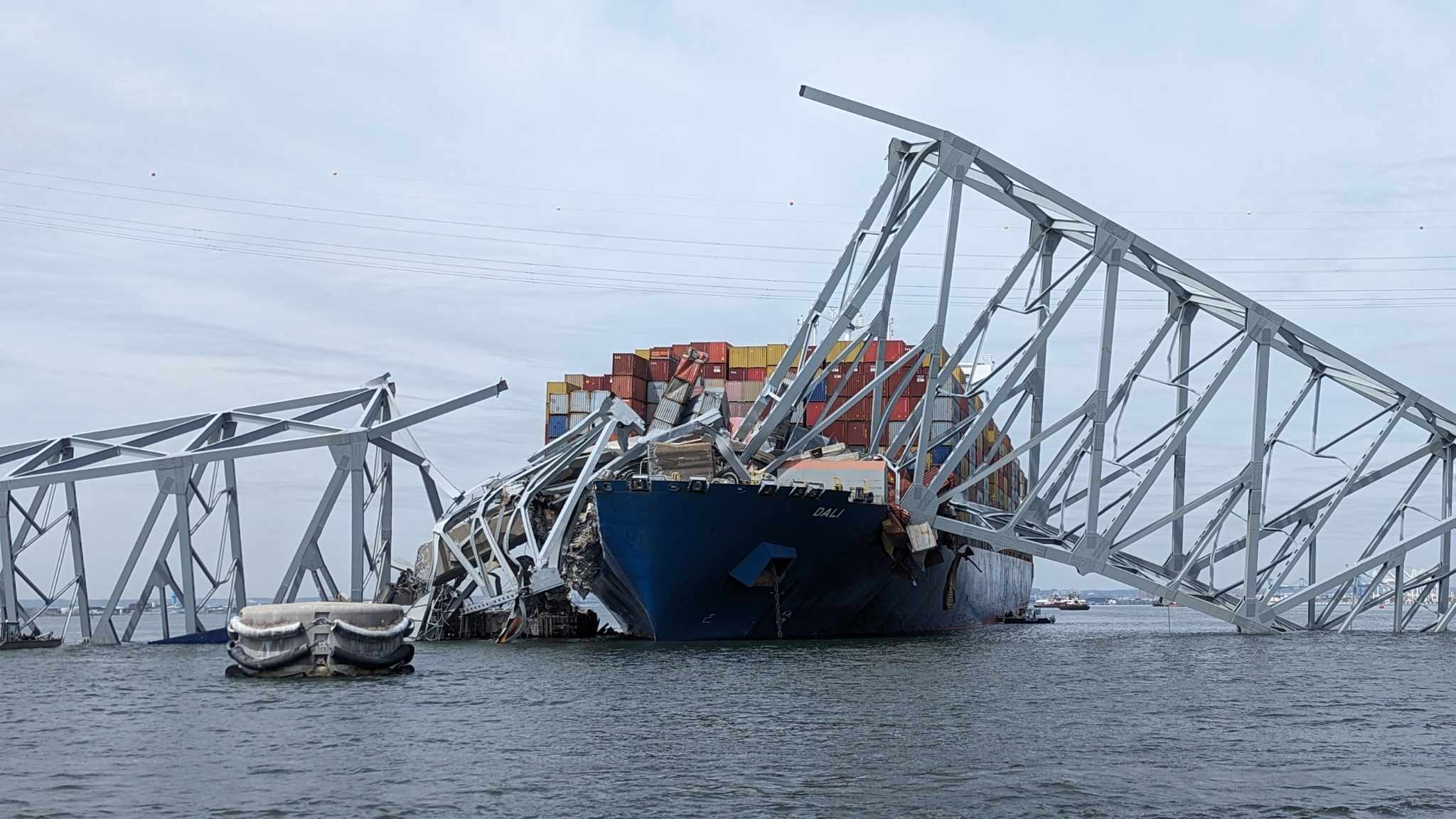
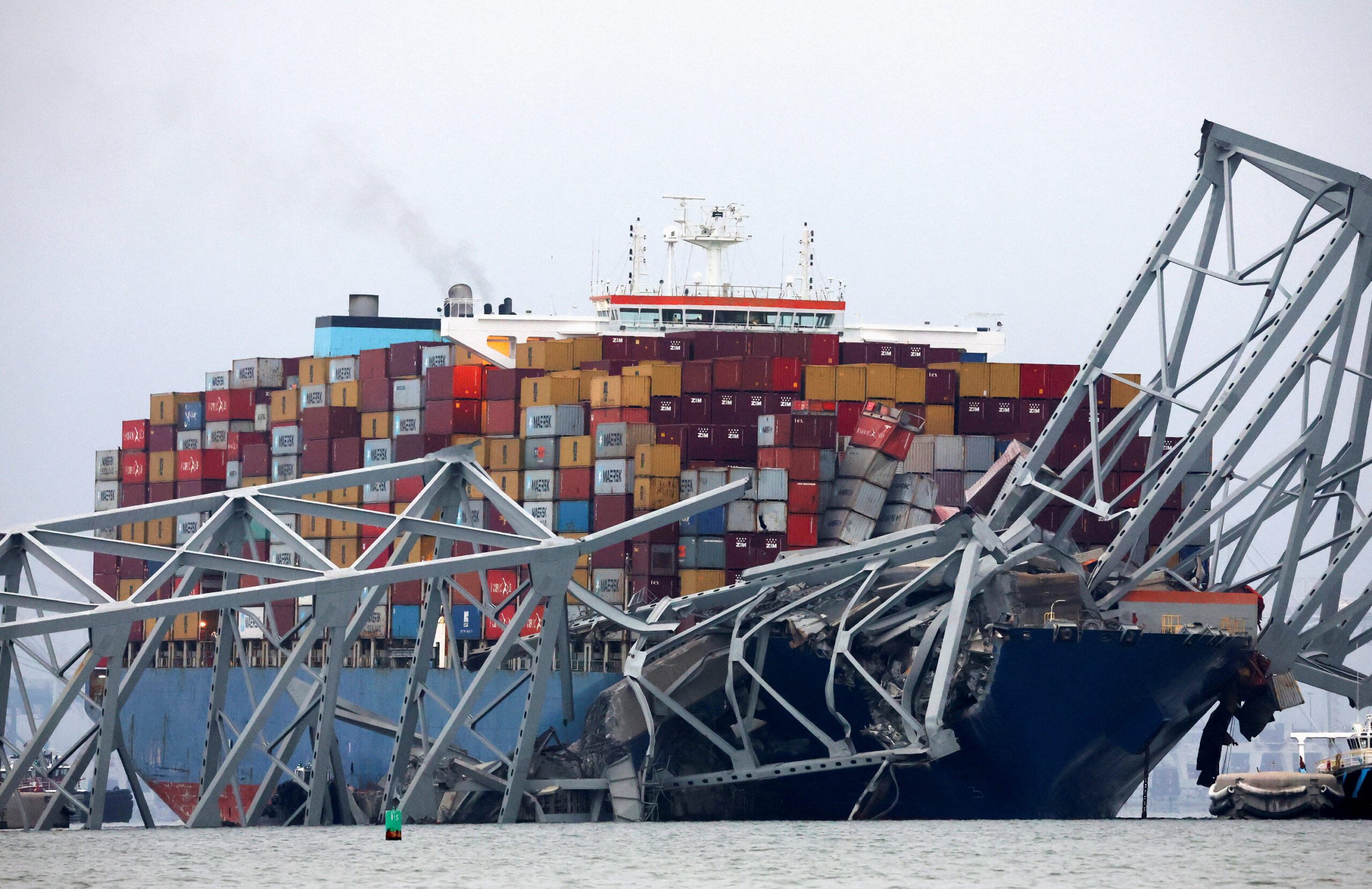
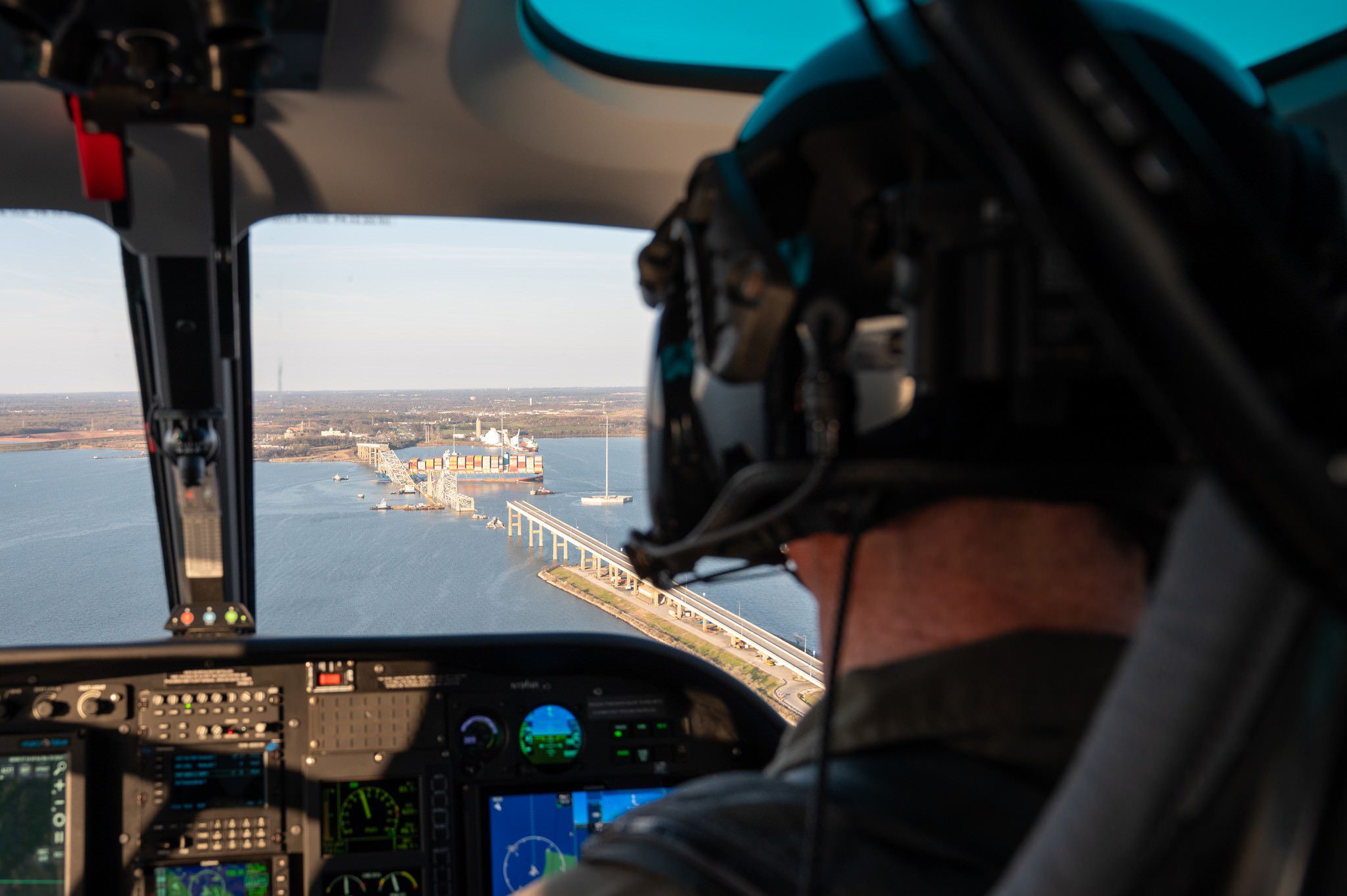
According to records from the public ship safety database Equasis, MV Dali – the ship that collided with Baltimore’s Francis Scott Key Bridge this morning – was cited by port state officials in San Antonio, Chile, on June 27 for a deficiency related to “propulsion and auxiliary machinery.”
According to the report, the deficiency was described in detail as issues with “gauges, thermometers, etc.” but there was no detention resulting from this single detected deficiency. Three months later the ship was subject to a follow-up inspection by the United States Coast Guard in New York but no deficiencies were recorded.
A few minor deficiencies is not uncommon for a ship like the Dali however, the recent incident in Baltimore has brought this previous citation back into focus, suggesting the possibility of a recurring issue with the vessel’s propulsion system.
Equasis.org database of ship inspections for the containership Dali
The U.S. National Transportation Safety Board (NTSB) is leading an investigation into the crash, with particular attention likely to be paid to the previously detected propulsion deficiency. NTSB Chairwoman Jennifer Homendy mentioned that the investigation would leverage on-board voice recorders and examine the vessel’s operating history, among other aspects. Notably, Homendy highlighted the cooperation with Singaporean authorities, reflecting the international dimension of maritime safety and regulation.
The NTSB investigation will likely take a year to complete and maritime experts expect a public hearing will be scheduled sooner. Details of the inspection in Chile will likely be presented at the hearing. There will also likely be questions about the effectiveness of USCG follow-up inspections considering the serious budget and manning problems the Coast Guard currently faces.
According to Clarksons, the M/V Dali is owned by a subsidiary of the Japanese Mitsui & Co, Grace Ocean of Singapore, and operated by Synergy Marine on behalf of Maersk. The incident not only underscores the importance of rigorous maintenance and oversight of maritime vessels but also highlights the potential consequences of operational failures. With cargo from Maersk on board, the implications of the incident extend beyond maritime safety, touching on issues of supply chain reliability and the responsibilities of chartering companies.
As the investigation proceeds, the maritime industry and regulatory bodies will be keenly awaiting insights that could prevent such incidents in the future, ensuring the safety of maritime operations and infrastructure. This incident serves as a stark reminder of the critical need for stringent operational standards and the continuous monitoring of vessel integrity to safeguard against unforeseen accidents.
Dali shipbuilder HD Hyundai Heavy Industries says changes made after delivery bypassed critical redundancies, triggering the second blackout that left the ship without propulsion or steering in the critical moments...
The U.S. Justice Department filed a civil lawsuit on Wednesday against the owner and operator of the containership that destroyed the Francis Scott Key Bridge in Baltimore, seeking more than...
by John Konrad (gCaptain) The Unified Command started clearing debris from the Francis Scott Key Bridge collapse today. They did not specify when they will resume the salvage operation for...
March 30, 2024
Total Views: 8618
Get The Industry’s Go-To News
Subscribe to gCaptain Daily and stay informed with the latest global maritime and offshore news
— just like 107,352 professionals
Secure Your Spot
on the gCaptain Crew
Stay informed with the latest maritime and offshore news, delivered daily straight to your inbox
— trusted by our 107,352 members
Your Gateway to the Maritime World!
Essential news coupled with the finest maritime content sourced from across the globe.

 Join The Club