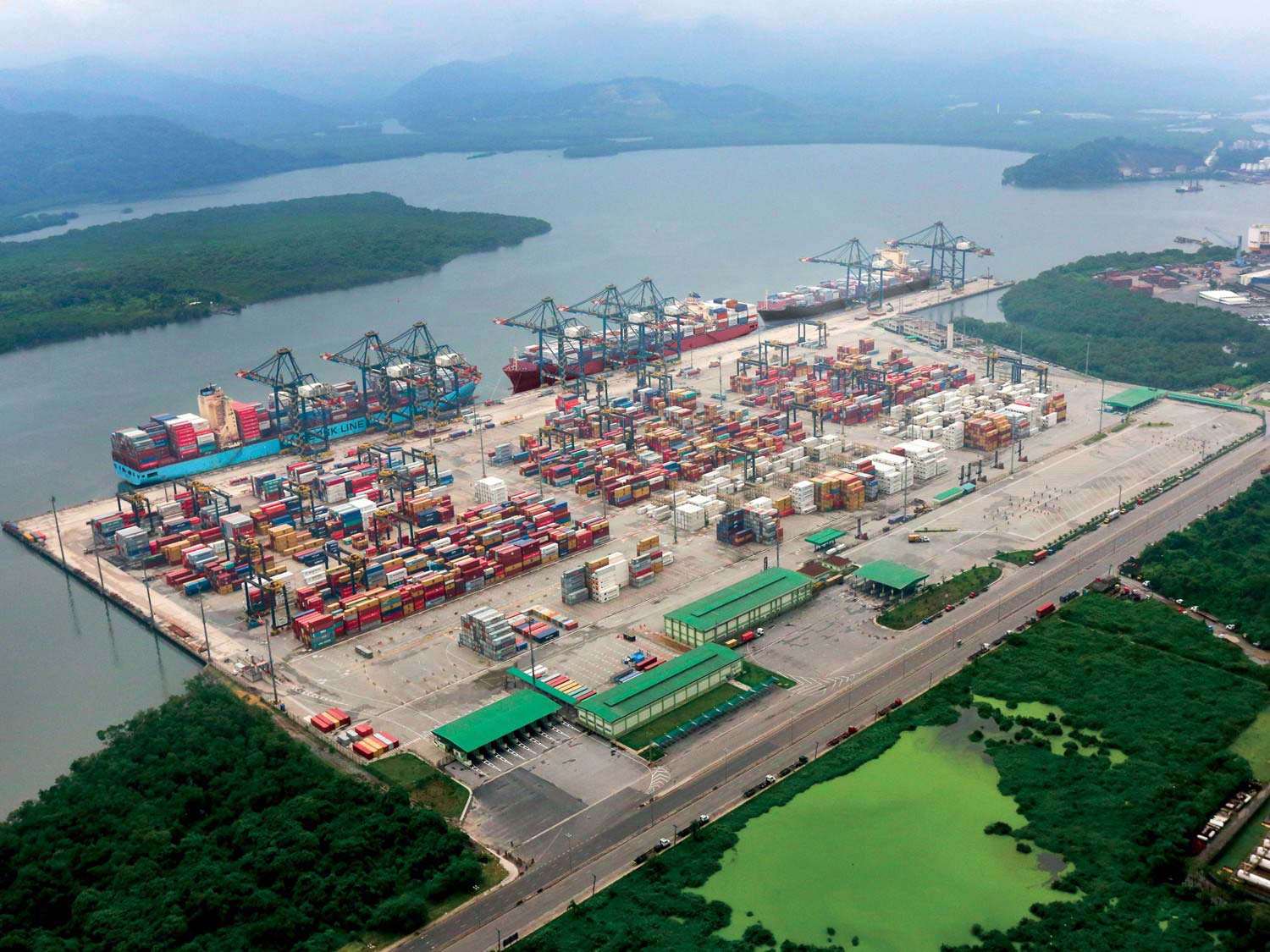
Brazil’s Federal Court of Accounts has approved a contentious two-phase auction model for Tecon Santos 10, the country’s largest planned container terminal, in a decision that prioritizes regulatory autonomy while addressing competition concerns in the port sector.
The tribunal concluded its judgment Monday with a 6-to-3 vote in favor of preserving the National Agency for Waterway Transportation’s authority to structure the bidding process, while recommending stricter measures to limit consolidation by major shipping lines.
At the heart of the debate was whether the court should intervene in regulatory decisions or defer to the transportation agency’s technical expertise. Reviewing Minister Bruno Dantas articulated the prevailing view, arguing that “simply disagreeing with the regulatory merit does not constitute illegality.”
The decision allows the auction to proceed with incumbent operators barred from the first phase, though they may participate in a second round if no valid proposals emerge from new entrants. The court went further, recommending that the restriction specifically target shipowners rather than all incumbent operators, aiming to prevent vertical integration that could stifle competition.
The decision is a setback for existing terminal operators such as Maersk’s APM Terminals, Mediterranean Shipping Company (MSC)’s TIL, and CMA CGM. Maersk has argued that Brazil has significant potential to consolidate hub ports, which could triple container transshipment and reduce maritime transport costs by approximately 13% by 2030.
Minister Augusto Nardes highlighted the urgency of the competition issue, noting that Santos suffers from vertical integration where shipping companies control terminals. He described the two-phase model as “the most appropriate and balanced solution for the public interest,” adding that post-auction remedies like divestment are “fragile, slow, and difficult to monitor.”
The terminal represents a massive infrastructure investment exceeding 5 billion reais (USD 2.76 billion), with expectations to expand Santos’ container-handling capacity by up to 50 percent. Technical assessments classified the container market as “highly concentrated,” with problems including port call omissions that jumped from 2 percent to 21 percent at one major terminal.
TCU President Minister Vital do Rêgo underscored the court’s limited role in the process. “I emphasize that the role of the Federal Court of Accounts should be to ensure that the bidding process is conducted with transparency and integrity, bringing opportunities for improvement without compromising the autonomy of the regulatory agency,” he stated.
The ruling also mandates construction of an internal railway yard with minimum throughput capacity of 900 TEUs per day and recommends evaluating an increase to the minimum concession fee, currently set at zero.
The terminal is considered critical to avoiding port capacity bottlenecks by 2028 as Brazil’s trade and logistics needs continue growing.
Editorial Standards · Corrections · About gCaptain

 Join The Club