Don’t Miss Your Daily Briefing for the Maritime Industry
Join the leading maritime news network
— trusted by our 106,495 members
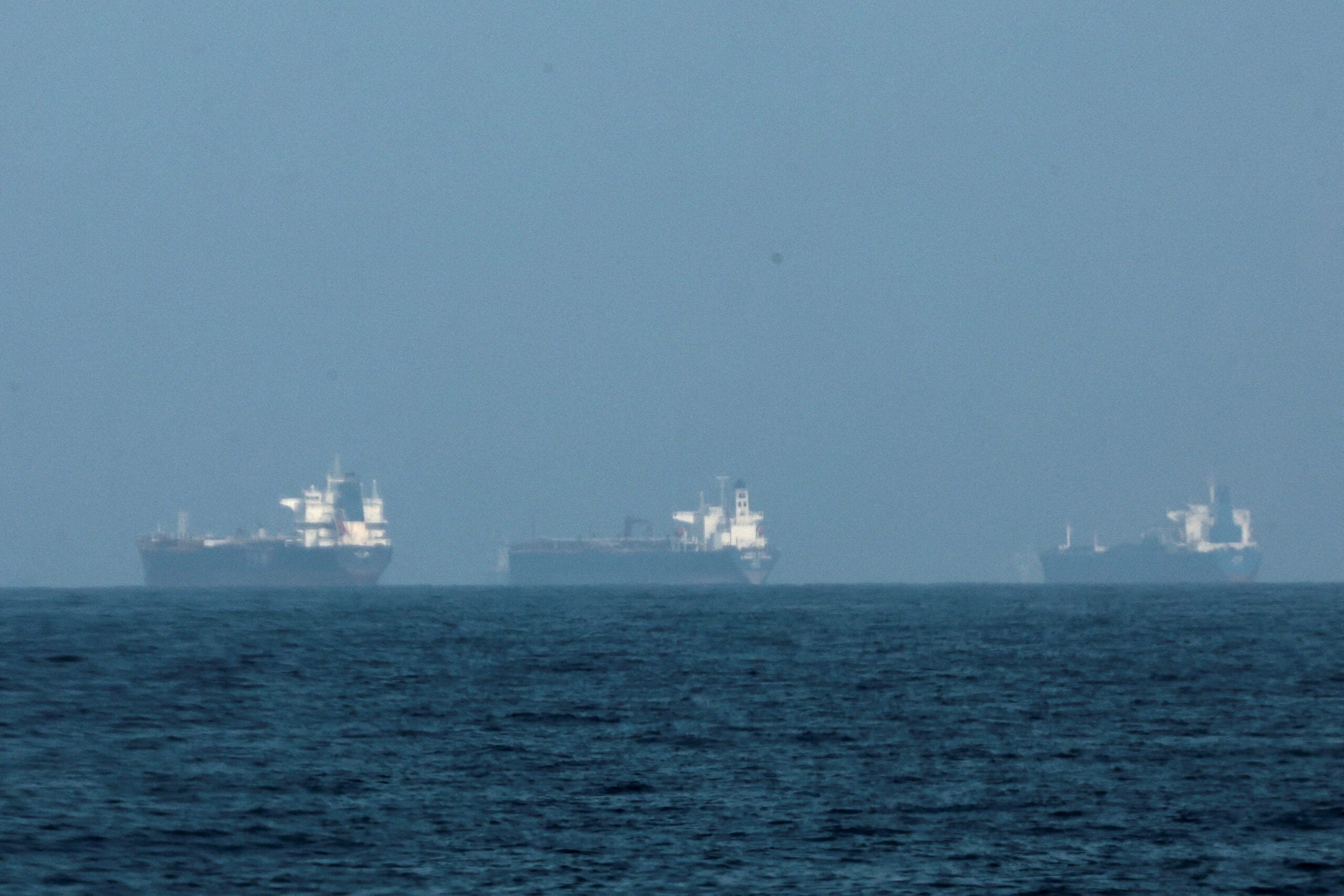
Tankers are seen off the coast of the Fujairah, as Iran vows to close the Strait of Hormuz, amid the U.S.-Israel conflict with Iran, in Fujairah, United Arab Emirates, March 3, 2026. REUTERS/Amr Alfiky
Ship Tracking Suggests Iran May Be Verifying Ships Before Allowing Hormuz Exit
AIS tracking shows multiple vessels passing between Iran’s Larak and Qeshm islands before exiting the Gulf, suggesting ships may be undergoing verification before transiting the Strait of Hormuz.
By Paul Morgan (gCaptain) – Unusual vessel movements through the Strait of Hormuz are raising new questions across the shipping industry about whether Iran has begun informally screening ships before allowing them to exit the Persian Gulf.
Analysis of AIS vessel-tracking data by maritime risk consultancy EOS Risk Group suggests that several ships successfully leaving the Gulf in recent days have followed an unusual route between Iran’s Larak and Qeshm islands—a corridor that could effectively function as a verification checkpoint before vessels are allowed to continue into the Gulf of Oman.
The pattern comes as commercial shipping traffic through the strait remains drastically reduced following a series of missile, drone, and explosive-boat attacks on merchant vessels across the region.
First Non-Iranian Tanker Observed Transiting With AIS Active
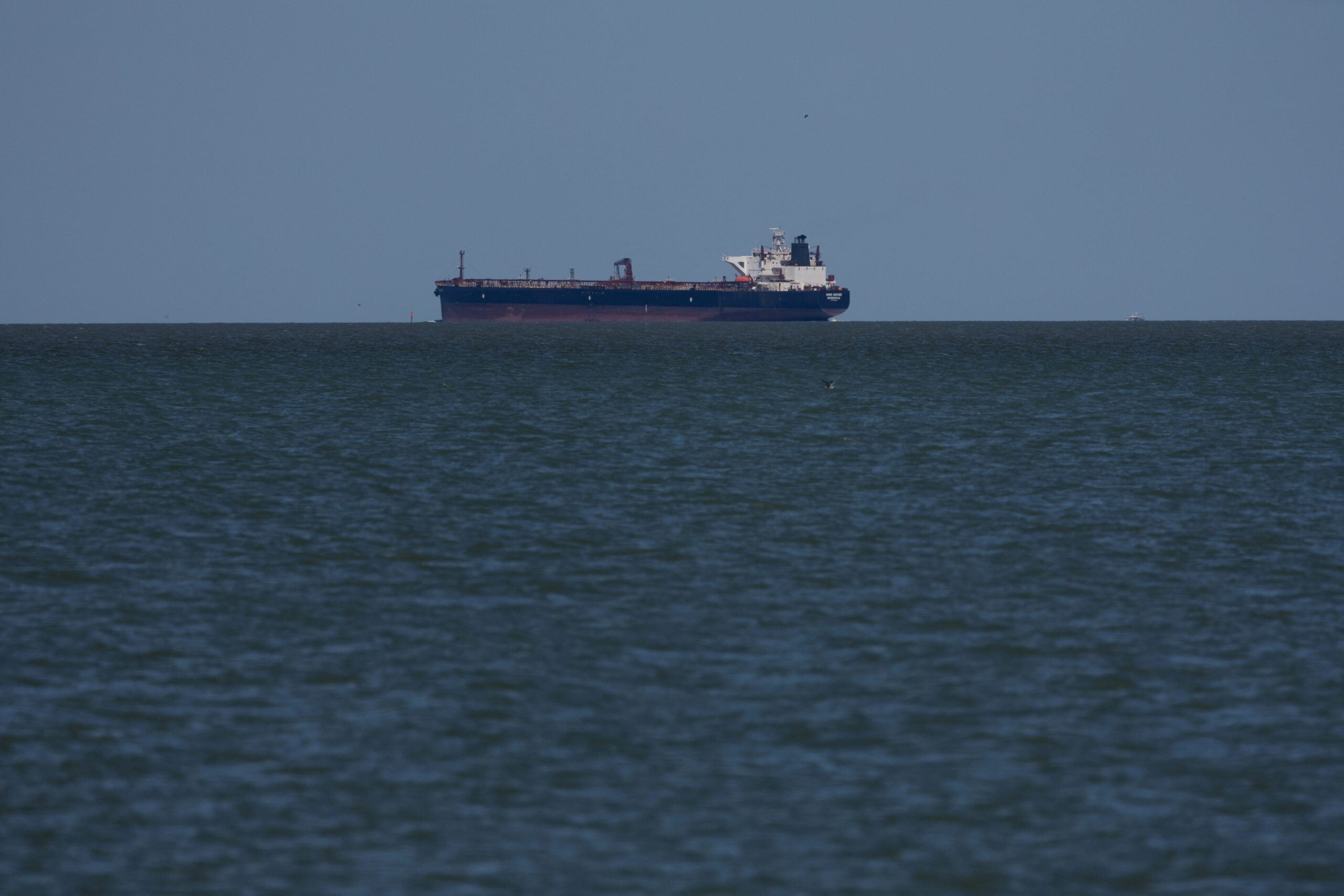
One of the most closely watched transits involved the Pakistan-flagged Aframax tanker Karachi, which was carrying Abu Dhabi’s Das crude.
According to MarineTraffic tracking data, the 237-meter tanker entered Iran’s Exclusive Economic Zone on March 15 at 11:33 UTC, crossed the strait at 14:43 UTC, and later emerged into the Gulf of Oman traveling at approximately 9.6 knots.
The transit drew particular attention because the vessel broadcast AIS signals continuously during the passage, making it the first non-Iranian cargo tanker observed completing the crossing with AIS active since the maritime crisis intensified.
AIS Data Points to Possible Verification Route
Martin Kelly, Head of Advisory at EOS Risk Group, told gCaptain the tanker’s routing may indicate that Iran is informally verifying vessels before allowing them to leave the Gulf.
“We could be seeing the start of a verification process by Iran whereby ships must be approved to transit via the Strait of Hormuz by calling between Larak and Qeshm,” Kelly said.
First non Iranian cargo through Hormuz
As the US Iran conflict enters its third week, vessel tracking data suggests limited movement is cautiously resuming through the Strait of Hormuz. The Aframax Karachi, carrying Abu Dhabi’s Das #crude, became the first non Iranian cargo to… pic.twitter.com/COx2MBDMTT
According to Kelly’s analysis of AIS data, the tanker Karachi passed directly between the two Iranian islands during its outbound transit.
“During Pakistan-flagged tanker Karachi’s outbound transit, the vessel transited between Larak and Qeshm, which is obviously not the advised route if trying to exit the Gulf without permission,” he said.
Multiple Vessels Now Showing the Same Pattern
Kelly said the tanker’s route does not appear to be an isolated case. AIS tracks reviewed by EOS Risk Group show several additional vessels following the same corridor before exiting the strait, including the bulk carriers Anthea (Marshall Islands flag), Lacon (Liberia flag), and the MDL Kamran (Panama flag).
Each vessel appears to divert north toward the Iranian islands before turning south again and continuing into the Gulf of Oman.
“Fourth vessel—this is enough for a trend,” Kelly later added. “Vessels are getting approval to exit the Gulf via the Larak-Qeshm channel, likely for verification of ownership, destination and cargo.”
AIS tracks of bulk carriers Lacon, MDL Kamran, and Anthea show vessels diverting toward Iranian waters and passing between Larak and Qeshm islands before exiting the Strait of Hormuz—supporting analysis by EOS Risk Group that ships may be undergoing verification before being allowed to leave the Persian Gulf. Source: EOS Risk Group analysis.
Under normal circumstances vessels exiting the Persian Gulf typically remain closer to the southern side of the traffic separation scheme near Oman, minimizing exposure to Iranian territorial waters.
The AIS tracks instead show ships moving toward the Iranian side of the strait before continuing outbound, suggesting the routing may be deliberate.
U.S. Advisory Warns Iran May Attempt to Contact Ships
A new advisory from the U.S. Maritime Administration (MARAD) warns that Iranian forces may attempt to contact ships via VHF radio or email, instructing them to alter course, divert into Iranian waters, or provide detailed voyage information. According to MARAD, U.S.-flagged vessels should ignore such instructions and continue their transit if safe to do so, as complying could increase the risk of being targeted.
U.S. officials caution that these communications may be used by Iranian forces to verify vessel identity, cargo, ownership, or destination—or potentially improve targeting accuracy for missile or drone strikes.
Ships encountering such communications are urged to immediately report the incident to U.S. Naval Forces Central Command’s Naval Cooperation and Guidance for Shipping (NCAGS) and maintain close coordination with coalition maritime security forces operating in the region.
Strait Remains Far From Normal
Despite the handful of successful transits, overall shipping activity through the Strait of Hormuz remains sharply reduced.
Many tankers are still waiting outside the Gulf or delaying voyages entirely as war-risk insurance premiums surge and shipowners remain reluctant to risk vessels and crews in the conflict zone.
If a broad agreement reopening the strait had been reached, analysts would expect to see a rapid increase in tanker traffic.
Instead, the emerging pattern suggests that only a small number of vessels are transiting—possibly after coordination or verification—while most international shipping remains sidelined.
A Strait That Is Technically Open
Iranian officials have repeatedly stated that the Strait of Hormuz remains open to international shipping while also indicating that vessels may need to coordinate with Iranian naval forces while transiting the area.
For shipowners and charterers, that distinction matters.
A strait governed purely by international maritime law offers predictable access. But a strait where passage may depend on informal approvals, diplomatic contacts, or operational coordination with regional authorities represents a very different operating environment.
If the routing pattern identified by EOS Risk Group continues, it could indicate that the Strait of Hormuz has effectively shifted from an open commercial corridor to a selectively managed maritime gateway—where access may depend as much on politics and verification as on navigation.
The United States has imposed a new round of sanctions targeting a law firm, shipping agents and nine vessels accused of helping Iran move oil and other commodities through international...
By Julian Lee (Bloomberg) — Oil shipments from the Middle East are showing little sign of buckling in the face of Iran’s more frequent and damaging attacks on merchant ships in the...
The cost of shipping crude oil from the Middle East Gulf to Asia has surged to more than $37 per barrel, over five times prewar levels, as an increasingly complex...
22 hours ago
Total Views: 500
Get The Industry’s Go-To News
Subscribe to gCaptain Daily and stay informed with the latest global maritime and offshore news
— just like 106,495 professionals
Secure Your Spot
on the gCaptain Crew
Stay informed with the latest maritime and offshore news, delivered daily straight to your inbox
— trusted by our 106,495 members
Your Gateway to the Maritime World!
Essential news coupled with the finest maritime content sourced from across the globe.

 Join The Club