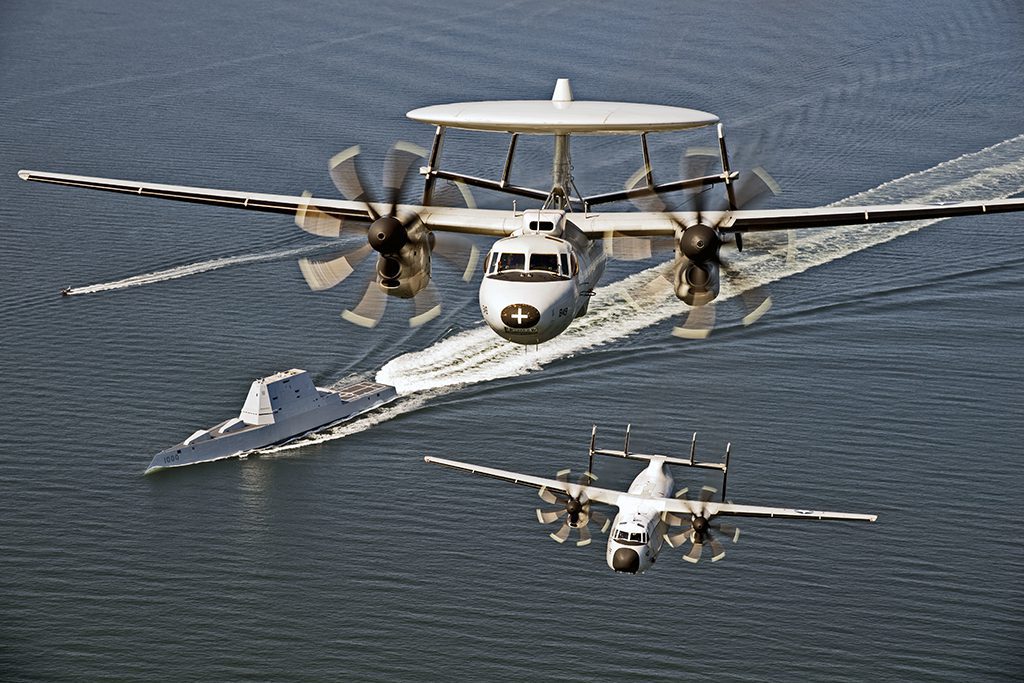
(Oct. 17, 2016) An E-2D Hawkeye and a C-2A Greyhound over USS Zumwalt (DDG 1000) as the ship travels to its new home port of San Diego, California. U.S. Navy photo by Erik Hildebrandt
By Katie Lange – The US Navy’s newest technologically advanced destroyer, the USS Zumwalt, is the talk of the town throughout the Defense Department. It’s the first ship to be commissioned in the DDG 1000 class of next-generation multi-mission surface combatants tailored for land attack and shore dominance.
I was lucky enough to get a tour of the ship right before its commissioning during Maryland Fleet Week. Aside from the tech advances (which the crew wasn’t allowed to talk about, naturally), here are eight interesting facts I learned about it:
8) The ship’s commander is Capt. James Kirk. Seriously.
Baltimore (Oct. 13, 2016) Capt. James A. Kirk, commanding officer of future USS Zumwalt (DDG 1000) Photo by Navy Petty Officer Jesse Hyatt
Anyone who knows anything about “Star Trek” just giggled right now.
Yes, the Zumwalt’s captain has the same name as that of the sci-fi show’s illustrious starship, the USS Enterprise. Except the Zumwalt’s captain is James A. Kirk, not James T. Kirk, and he was named after his grandfather – not William Shatner’s character.
“Unfortunately, I came out after the TV show started, so people can accuse my parents of being Trekkies,” Kirk joked. “But they tell me no – it was all about my grandfather.”
7) The ship produces enough power to run a small city.
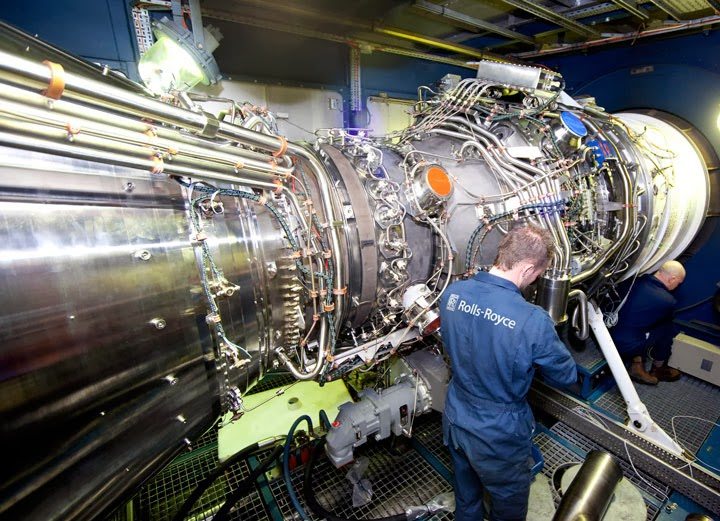
36MW Rolls-Royce MT30 gas turbine engine, found on board DDG 1000
“I have in excess of 78 megawatts of power that I get to choose what I do with,” said Lt. Cmdr. Nate Chase, the Zumwalt’s chief engineer. He said that’s really what is going to provide opportunity for future weapons and sensor development.
“On an Arleigh Burke [class destroyer], you have nine megawatts of electrical power, and you have dedicated gas-turbine engines for propulsion, but that’s all they’re good for. You can’t harness any of that potential,” Chase said. “On here, with the two main turbine generators and your two auxiliary turbine generators, the commanding officer can decide what his priority is for that power – is it propulsion or a gun system or radar or the sonar system? So, you can reallocate the assets of the power where you need it depending on the mission you’re being dealt.”
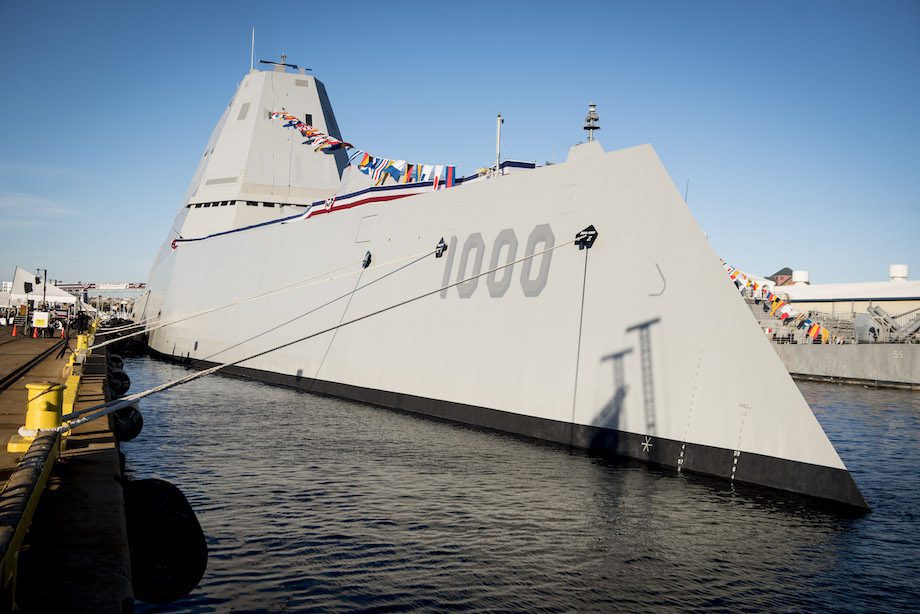
6) Its physical shape is part of what makes it stealth.
The fact that the Zumwalt has a lot fewer things top-side helps make it harder to detect than most ships.
The Zumwalt has 1/50th of the radar cross-section of an Arleigh-Burke-class destroyer, meaning the blip it produces on a radar screen is 50 times smaller. Considering the Zumwalt is 1.5 times bigger than an Arleigh-Burke, that’s pretty substantial.
5) It has a much smaller crew than other ships.
While most Navy destroyers have about 300-350 sailors aboard, this one has 147. Chase said the change has been a bit of an adjustment.
“From the most senior leadership to the most junior sailor, working with a smaller crew, working in closer quarters, it’s become a pretty close family,” he said. “It’s hard not to when you’re experiencing everything together.”
4) Fewer crew members equals a lot more automation.
The computer architecture on the ship is very complex and sophisticated, so the crew is interacting with a lot of new technology.
“For example, we have over 35,000 signals that are being taken, processed and displayed on the ship. That’s about five to 10 times other classes of ships,” Kirk said. “There’s a lot less interface with manual valves.”
3) Every sailor on the ship is in a state room.
When you cut the number of crew members in half, what do you get? More space.
“Unlike a ship that has a 40-, 60- or 80-sailor bunk room, every sailor on this ship is in a state room,” Kirk said. “When they wake up, they wake up to only one or two alarm clocks, not four or 50. And then they have their own facilities in that state room to take care and prepare for the day.”
2) It’s a pretty smooth ride.
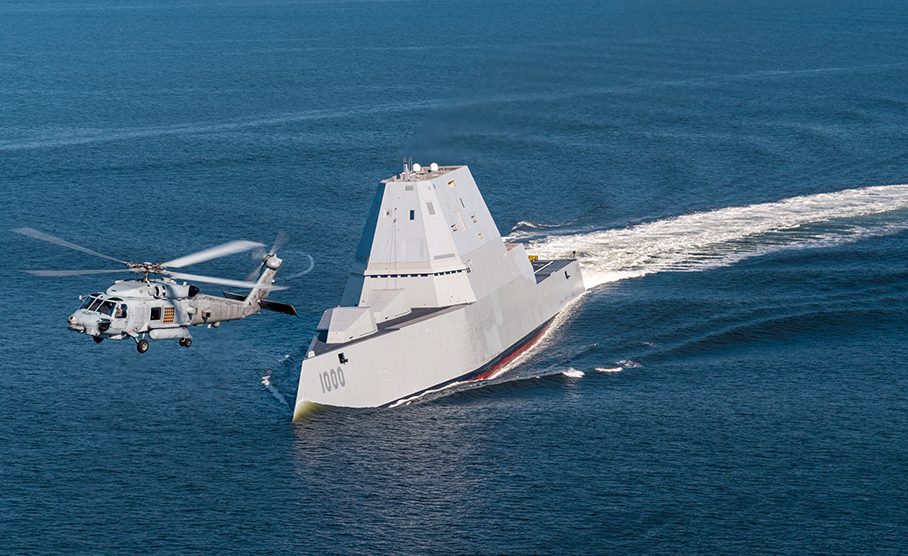
The Zumwalt has a tumblehome hull, meaning its sides slope inward above the waterline, so it cuts easily through big waves, making for a much smoother ride than other ships. Chase said there’s no listing back and forth, especially in heavy seas.
“This blows the [Arleigh] Burke out of the water,” he said.
“It rides marvelously,” Kirk said of the 15,500-ton destroyer. “I would say it feels like a really souped-up sport utility vehicle. … It’s like a very big SUV that’s made to go very fast.”
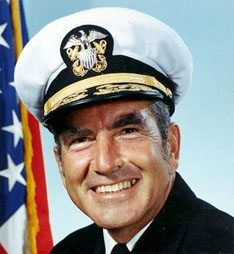
2) The destroyer is named for Adm. Elmo Zumwalt Jr.
Admiral Elmo Zumwalt Jr. was a wartime legend, having served in World War II and Korea before becoming the commander of all naval forces during the Vietnam War.
“He was a great man who reformed the Navy to make it a more just institution,” Kirk said.
His 37-year career was very impressive. You can read more about it here.
Iranian missiles struck the U.S. Navy's Fifth Fleet headquarters in Bahrain on Saturday after the U.S. and Israel launched a major attack on Iran, triggering retaliatory strikes across the Middle East and forcing American military families into shelters.
RTX Corp. secured a multi-year Pentagon deal to dramatically increase production of Tomahawk Anti-Ship cruise missiles and SM-6 interceptors, weeks after President Trump criticized the defense contractor as "least responsive" to military needs.
The future USS John F. Kennedy (CVN-79) departed Newport News Shipbuilding for first sea trials, marking a milestone for the $13.2 billion Ford-class carrier. Delivery remains uncertain between March-July 2027.
February 3, 2026
Total Views: 1528
Get The Industry’s Go-To News
Subscribe to gCaptain Daily and stay informed with the latest global maritime and offshore news
— just like 107,414 professionals
Secure Your Spot
on the gCaptain Crew
Stay informed with the latest maritime and offshore news, delivered daily straight to your inbox
— trusted by our 107,414 members
Your Gateway to the Maritime World!
Essential news coupled with the finest maritime content sourced from across the globe.

 Join The Club