Don’t Miss Your Daily Briefing for the Maritime Industry
Join the leading maritime news network
— trusted by our 107,344 members
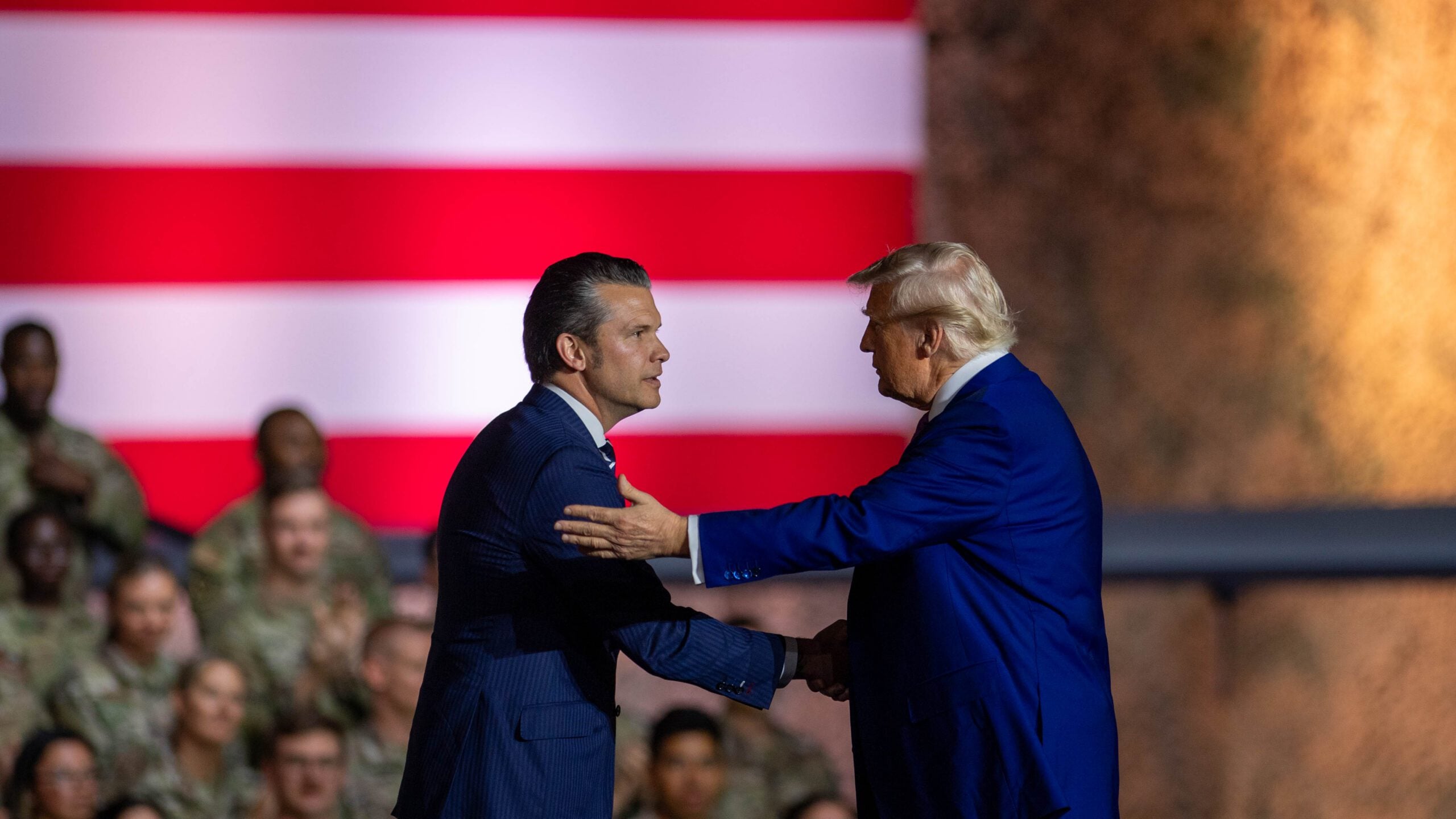
President Donald J. Trump, right, greets U.S. Secretary of Defense Pete Hegseth during an engagement with U.S. Forces within the U.S. Central Command area of responsibility, May 15, 2025. Trump visited with troops during his trip to the Middle East, which included stops in Saudi Arabia, Qatar and the United Arab Emirates. (U.S. Air Force photo by J.D. Strong II)
Trump’s 2027 War Department Budget Plan Could Exceed $1.5 Trillion
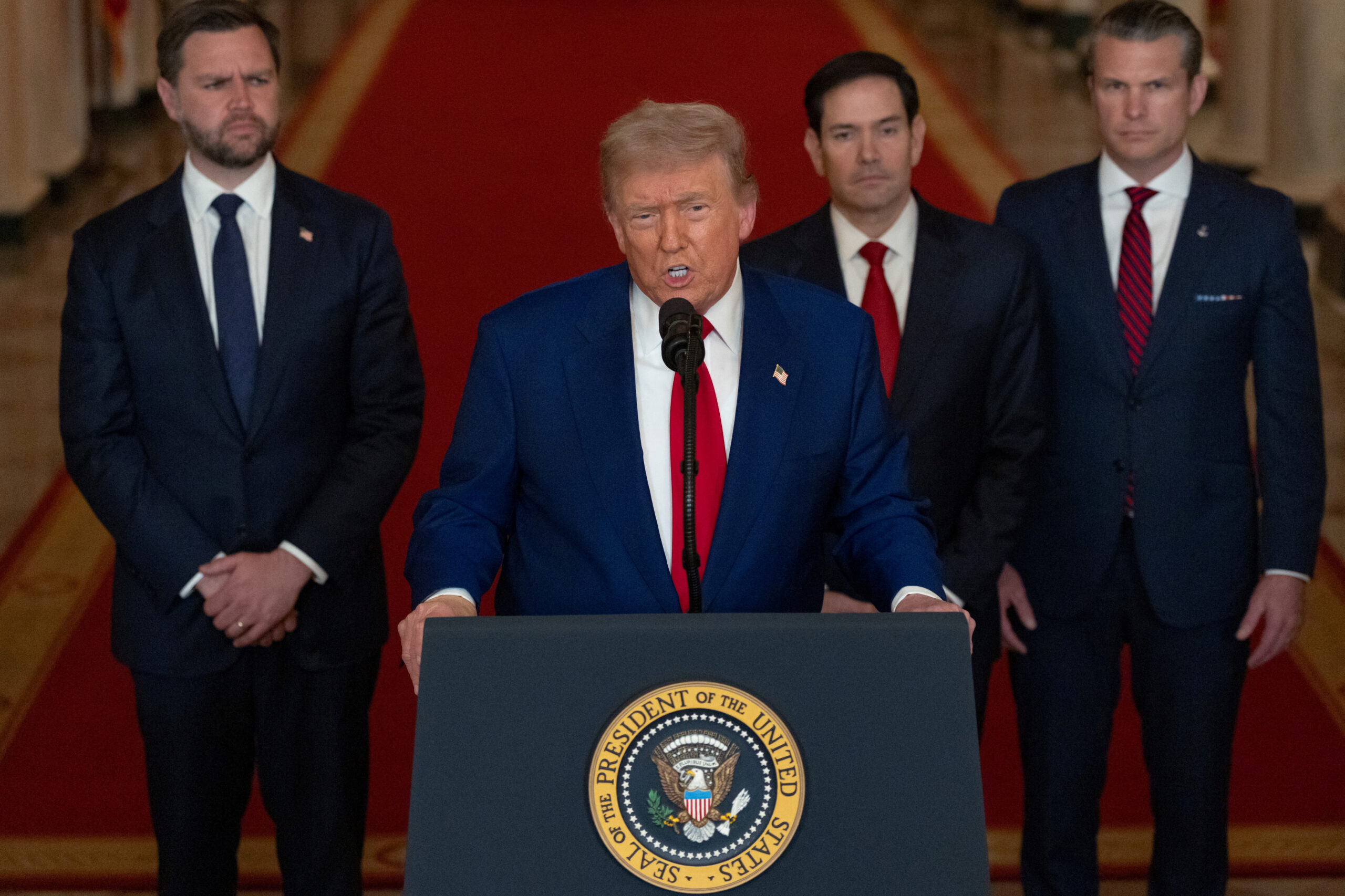
By Erik Wasson and Gregory Korte (Bloomberg) President Donald Trump is preparing to release a fiscal year 2027 budget plan on Friday that will frame his party’s midterm election message around a massive defense buildup, partially paid for by cuts to domestic agencies.
A governing vision that directs tax dollars to the Pentagon amid an unpopular Iran war represents a political risk for the White House, especially against a backdrop of spiking gasoline prices. Trump could also face resistance from within his own party over envisioned cuts to health and science agencies that Congress rejected last year on a bipartisan basis.
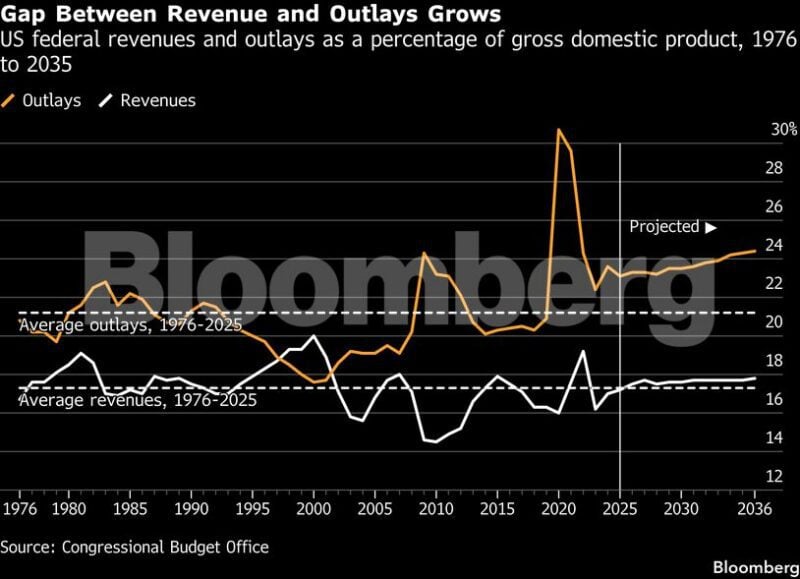
But the budget won’t address entitlement programs like Social Security and Medicare, which remain popular across party lines but are mostly responsible for driving up future spending levels, according to a person familiar with the plans. As a result, the 2027 proposal is not expected to include 10-year deficit projections, meaning the White House won’t offer a full picture of how it projects the president’s policies adding to future deficits.
Once a proclaimed budget hawk — he said in 2016 that he thought he could balance the budget in five years — Trump ended his first term with $7.8 trillion in added debt.
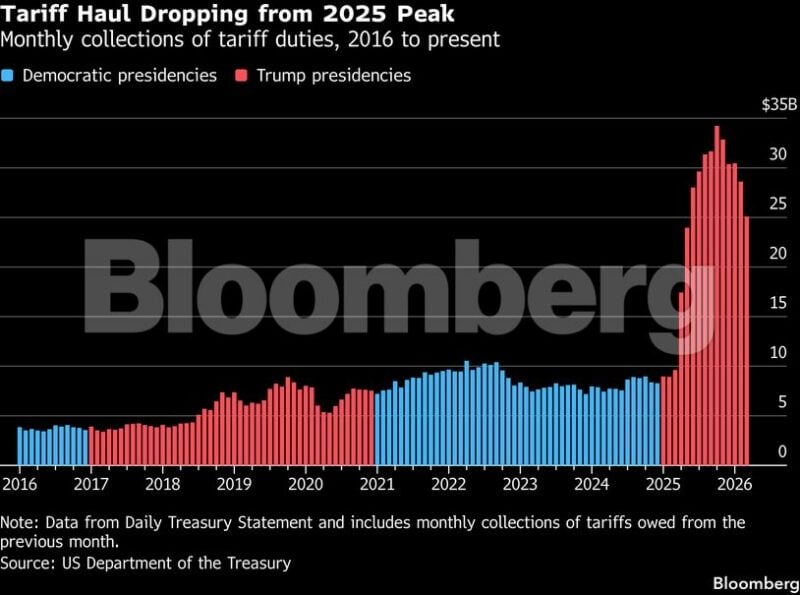
Trump made good on many of his campaign promises in last year’s tax package he called the “One Big, Beautiful Bill.” The administration has said the $4 trillion cost of the tax cuts would be fully paid for by revenue from additional tariffs over 10 years — before the Supreme Court struck down his emergency powers to levy most of them. Trump has already started moving to replace those tariffs with alternatives, though the process is more complicated — as is his idea of giving taxpayers $2,000 rebates, which would need congressional approval.
Democrats have made affordability the watchword of their campaign to retake one or both houses of Congress in November, and are likely to use Trump’s budget proposal to highlight Republican cuts to health and safety net programs.
Here are the major items to look out for:
Deficits and Debt
The fiscal 2027 budget will be more complete than the president’s 2026 proposal — a so-called “skinny budget” that gives an abbreviated plan for a president’s first year in office. But without addressing mandatory spending, the budget won’t give a full picture of future deficits.
The budget will also likely provide economic numbers that predate the war in Iran. Still, investors in US Treasuries will be looking to the budget for clues about the sustainability of US public debt could cause long-term Treasury yields to rise.
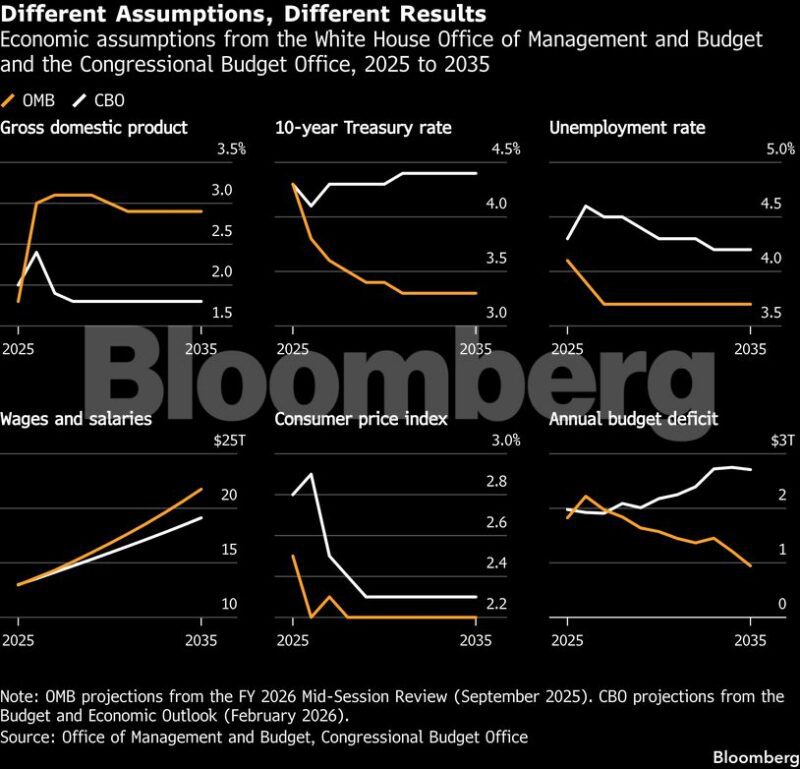
Projections released by the White House last September estimated that Trump’s tax and spending policies would halve the projected deficit over the next 10 years. But that number relied on tariff revenues that the Supreme Court decision upended, as well as lower interest rates and higher growth than many economists now expect.
Deficit and updated underlying economic projections will come later this year in a mid-session review document, according to an administration official. The mandatory spending is being left out because Congress is actively engaged in a new budget reconciliation process about mandatory changes, the official said.
Defense Spending
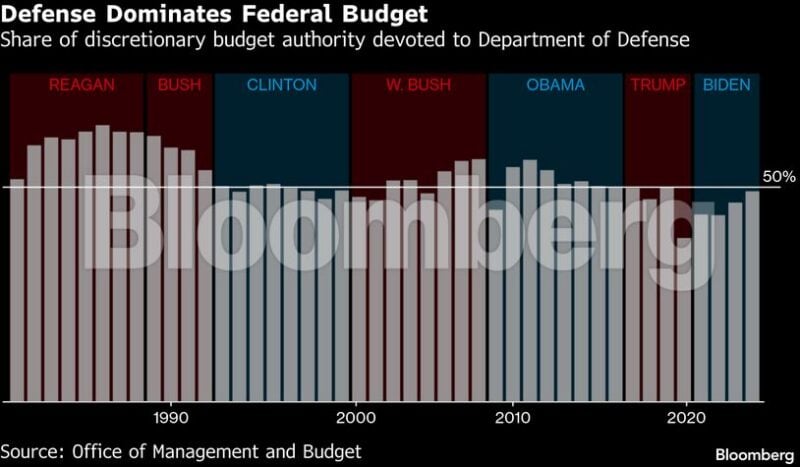
Trump has said he will be seeking to boost defense spending to $1.5 trillion from less than $1 trillion in the current fiscal year. The details of how this massive increase will be spent are yet unknown.
Last year’s budget relied on a one-time boost to defense spending, using a legislative process known as reconciliation to pass $113 billion in new spending along party lines — on top of a bipartisan baseline of $848 billion.
Now the administration is looking for a much larger baseline increase in the defense budget. Trump hasn’t made clear whether the $1.5 trillion figure is just for the Pentagon operating budget, or also includes other defense line-items like military construction and nuclear weapon spending by the Energy Department. Nor has the administration detailed whether the increased spending would continue in 2028 and beyond.
There are also unresolved issues for the current fiscal year. The Pentagon has sent a $200 billion request for immediate spending to the White House to pay for the war against Iran. The White House budget office is evaluating that proposal, which Trump has not yet proposed to Congress.
Economic Projections
Any economic assumptions in the president’s budget proposal are likely to be outdated before they’re even published.
The five-week-old war in Iran has spiked the price of crude oil, increased inflation forecasts and tempered expectations for the Federal Reserve to further cut interest rates in the near term.
Economists surveyed by Bloomberg in March lifted their inflation targets this year while trimming growth outlooks. The personal consumption expenditures price index, the Federal Reserve’s preferred inflation gauge, is now expected to rise 3.1% on average this year, up from 2.6% in a February survey conducted before the war began. Gross domestic product is projected to expand 2.3% on average, down from 2.5%.
White House economic forecasts are historically rosy. That’s why Congress created the nonpartisan Congressional Budget Office in the same law that governs the president’s annual budget submission. The CBO projects GDP growth of 2.2% for 2026. Still, buyers of US Treasuries will be watching closely to see how the White House is thinking about these key metrics.
Tariff Rebates
The government has collected about $150 billion in tariffs that must be returned to taxpayers after the Supreme Court struck down some of Trump’s tariffs. The importers who paid those levies are first in line, but Trump has also proposed one-time $2,000 rebates to individual taxpayers as a “tariff dividend.”
Such a maneuver could be popular in a midterm election year — but might still face opposition in Congress.
Even using the streamlined budget reconciliation process, the proposal would require near unanimous support from House Republicans, who have a tiny 217-to-214 majority. Deficit hawks in the party have already voiced opposition to the idea. House Budget Committee Chairman Jodey Arrington told the administration last year that he would prefer any tariff revenue be used to reduce the deficit rather than for rebate checks. Senate Majority Leader John Thune has voiced skepticism as well.
DOGE Cuts
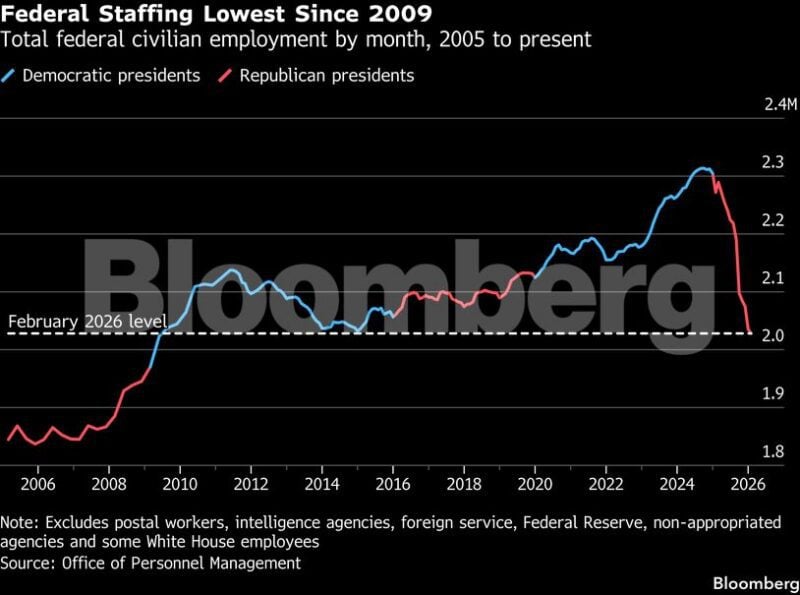
Trump returned to office last year with ambitious plans to shrink the size and scope of the federal government. With the help of Tesla CEO Elon Musk and his Department of Government Efficiency, the Trump administration has cut the federal civilian headcount by more than 12% compared to President Joe Biden’s final month in office.
But Congress has largely rebuffed efforts to make those cuts permanent through legislation. While rescinding previously authorized spending to the US Agency for International Development, Congress rejected proposals to cut domestic health and social safety net programs.
Election-year politics make further cuts more difficult. As the regular appropriations process has broken down, Congress increasingly relies on end-of-year stopgap bills that continue spending at current levels in order to avoid a government shutdown. For most of the government, agencies are funded through Sept. 30. Attempts to force deep cuts could risk a shutdown just one month before midterm elections.
But Republicans hold a wild card. The same reconciliation rules used to pass Trump’s 2025 tax package could be used to push through long-term funding for the Department of Homeland Security — now held up by the longest partial government shutdown in history — as well as offsetting cuts proposed by Trump. Such a move would bypass what would otherwise be a certain Democratic filibuster in the Senate, but require near unanimous agreement among fractured Republicans in the House.
(Updates with details on lack of mandatory spending proposals and deficit projections beginning in third paragraph)
The Western allies trying to negotiate a way to protect the Strait of Hormuz for energy shipping face a stark reality: a similar effort in the Red Sea that started years earlier cost billions of dollars and ultimately failed against Yemen's Houthis.
Iranian missiles struck the U.S. Navy's Fifth Fleet headquarters in Bahrain on Saturday after the U.S. and Israel launched a major attack on Iran, triggering retaliatory strikes across the Middle East and forcing American military families into shelters.
America builds under 1% of commercial ships. The White House Maritime Action Plan bets on vessel fees, a trust fund, and zones, but Congress is the clock.By Captain John Konrad...
February 13, 2026
Total Views: 10075
Get The Industry’s Go-To News
Subscribe to gCaptain Daily and stay informed with the latest global maritime and offshore news
— just like 107,344 professionals
Secure Your Spot
on the gCaptain Crew
Stay informed with the latest maritime and offshore news, delivered daily straight to your inbox
— trusted by our 107,344 members
Your Gateway to the Maritime World!
Essential news coupled with the finest maritime content sourced from across the globe.

 Join The Club