July 25th, 2008 ·


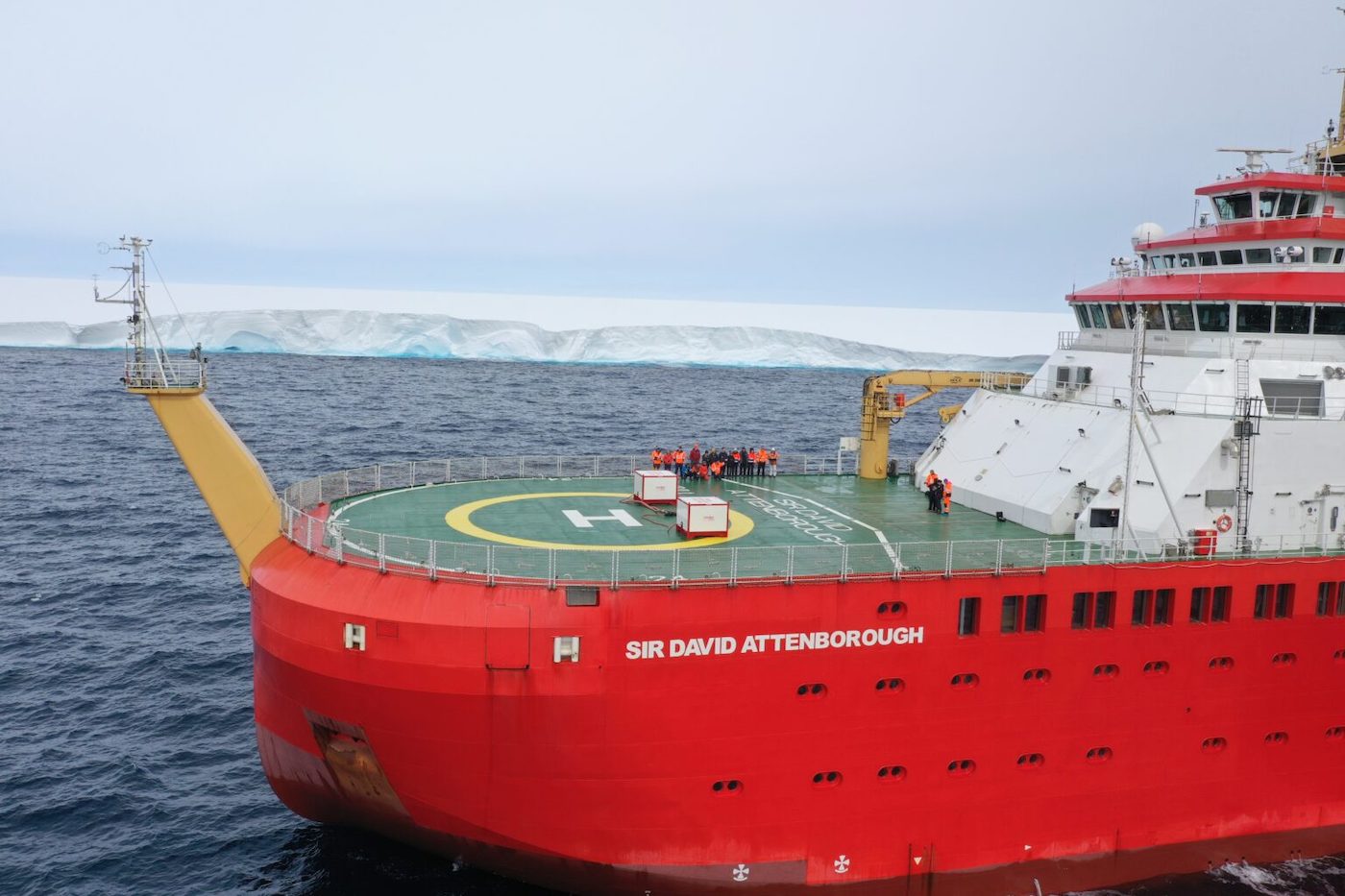
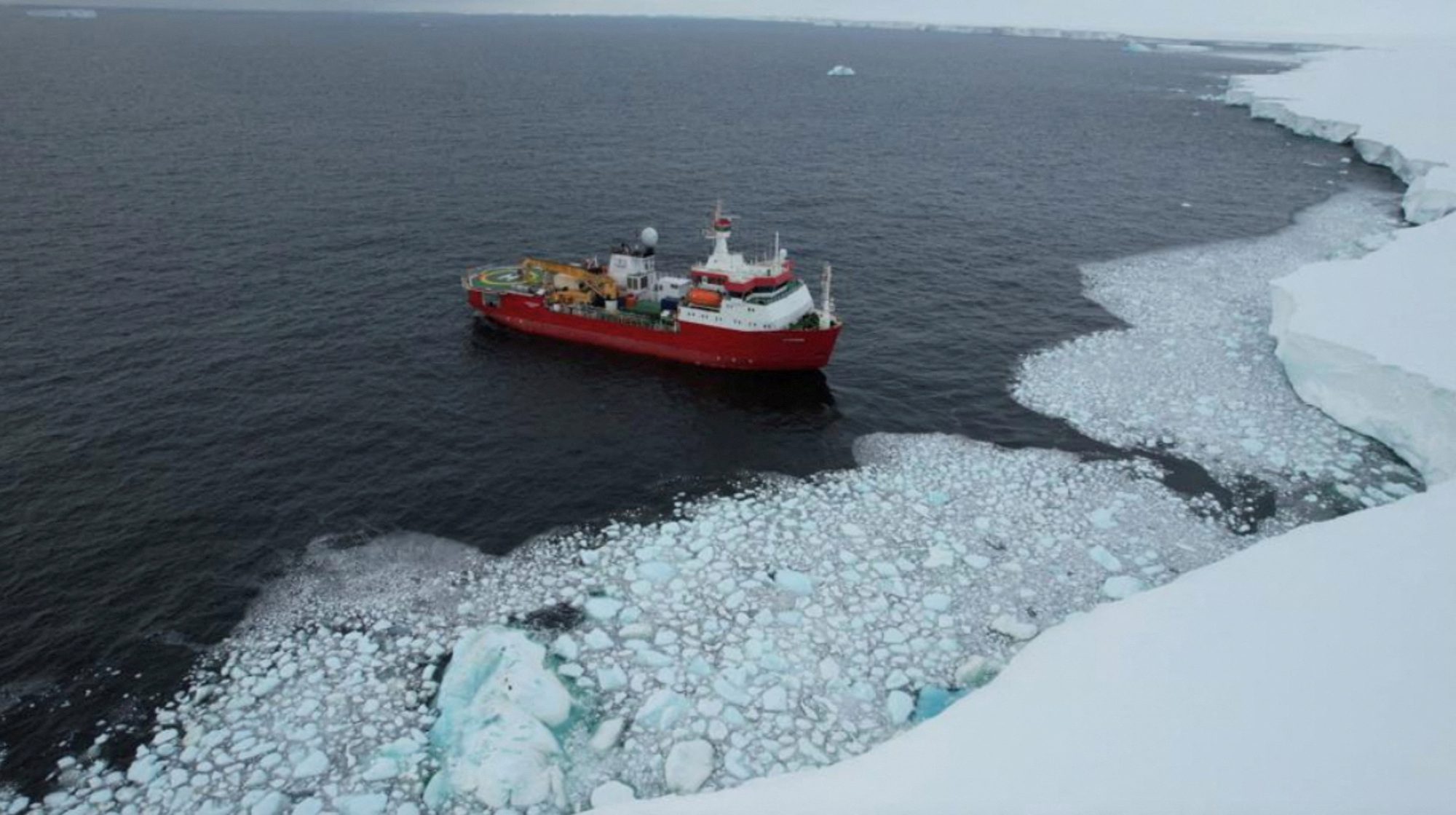
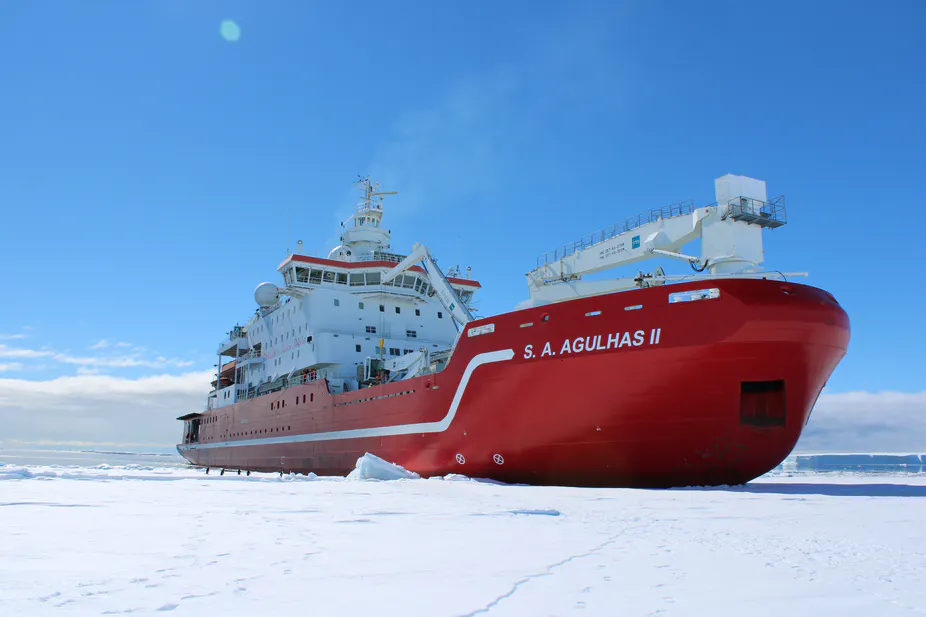
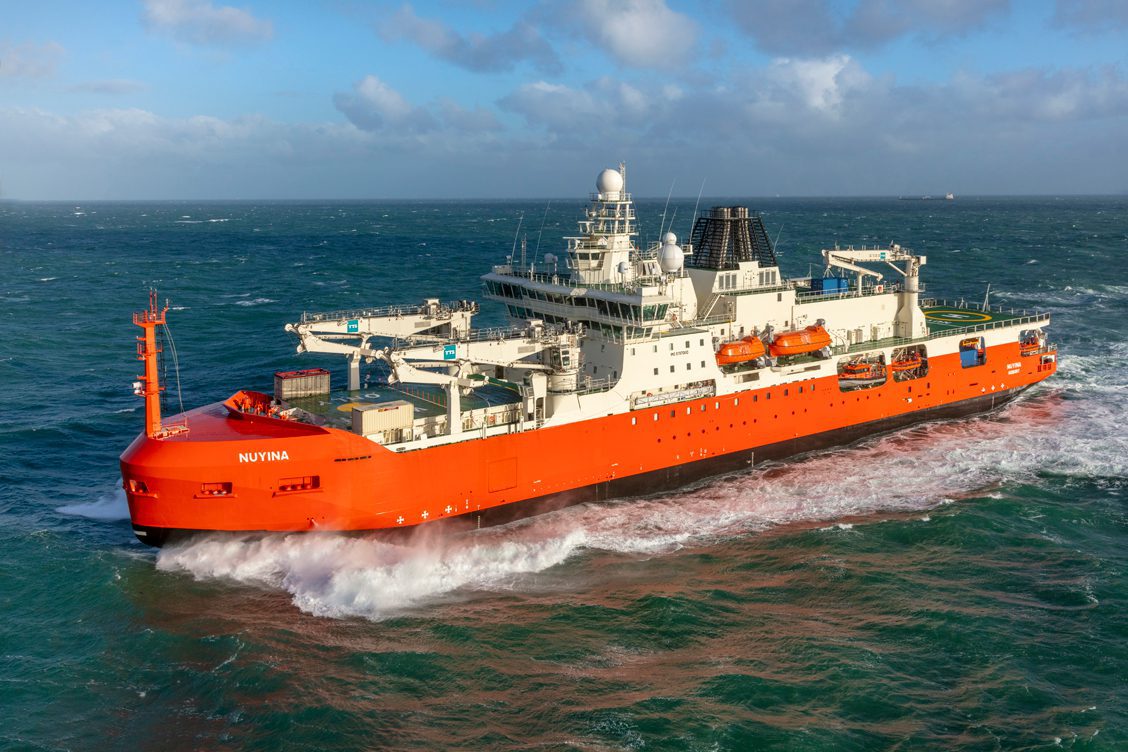
The most technologically advanced drillship in the world is not on lovaton in the gulf of mexico or in a Korean shipyard. Actually it’s not even built yet. Meet the Aurora Borealis, a dynamically positioned, drillship/icebreaker, arctic research vessel designed for the European Union. The official website tells us;
The Research Icebreaker AURORA BOREALIS will be the most advanced Polar Research Vessel in the world with a multi-functional role of drilling in deep ocean basins and supporting climate/environmental research for the next 40 years.
The new technological features will include azimuth propulsion systems, satellite navigation, ice-management support, deep-sea drilling under a closed sea-ice cover and the deployment and operation of Remotely Operated Vehicles (ROV) and Autonomous Underwater Vehicles (AUV) from one of the two moon-pools.
The unique feature of the vessel is the drilling rig, which will enable sampling of the ocean floor down to 5000 m water depth and with 1000 m penetration into the seafloor at the most inhospitable places on earth. The drilling capability will be deployed in both polar regions and AURORA BOREALIS will be the only vessel worldwide to undertake this type of scientific investigation.
Technical Details:
• Powerful icebreaker with ca. 55 MW (diesel-electric)
• Highest classification for icebreakers
• Twin hull
• Two moon pools 7 x 7 m each
• Dynamic Positioning System
• Deep-sea drilling under a closed sea-ice cover
• Drilling rig: max. 5,000 m water depth and 1,000 m core
• Riserless drilling technology
• Modularized mobile laboratory systems - mission specific laboratories
Length over all ca. 180 m | Beam ca. 40 m | Personnel (crew + scientists) 120 | Expedition duration 60 days.

For more information on the Aurora Borealis visit the official website HERE or download the presentation HERE. For the oceanography geeks a more detailed study can be found HERE.
UPDATE: The BBC has just run an excellent article on this vessel which can be found HERE.

Note: This article was originally posted in Jan 08
Tags: · arctic, arctic research, Aurora Borealis, awi, Drillship, eu, european union, Icebreaker, ocean, oceanography, Research Vessel
May 13th, 2008 ·

Photo of the research boat Russell W. Peterson takes on water about 14 miles off the coast of Rehoboth Beach, Del., Monday, May 12, 2008. Video of this incident can be found HERE.
Via H&K Law
Tags: · incident photos, Photo, Research Vessel
April 2nd, 2008 ·
(Ed. note: Thanks to colleague and regular gCaptain commenter, Capt. Jack Richards pointing me to information on Argo.)

Brief History of Argo
The name Argo was chosen to emphasize the strong complementary relationship of the global float array with the Jason satellite altimeter mission. In Greek mythology Jason sailed in a ship called “Argo” to capture the golden fleece.
 |
| An Argo float being deployed from a research ship. |
Together the Argo and Jason data sets will be assimilated into computer models developed by project GODAE (Global Ocean Data Assimilation Experiment) that will allow a test of our ability to forecast ocean climate. For the first time, the physical state of the upper ocean is being systematically measured and the data assimilated in near real-time into computer models. Argo builds on other upper-ocean ocean observing networks, extending their coverage in space an time, their depth range and accuracy, and enhancing them through the addition of salinity and velocity measurements. Argo is not confined to major shipping routes which can vary with season as the other upper-ocean observing networks are. Instead, the global array of 3,000 floats will be distributed roughly every 3 degrees (300km).
 |
 |
Comprised of three subsystems:
- Hydraulics: control buoyancy adjustment via an inflatable external bladder, so the float can surface and dive.
- Microprocessors: deal with function control and scheduling.
- Data transmission system: controls communication with satellite.
Approx. Weight: 25 Kg
Max. operating depth: 2000m
Crush depth: 2600m |
The three float models in use are the PROVOR built by MARTEC in France in close collaboration with IFREMER, the APEX float produced by Webb Research Corporation, USA and the SOLO float designed and built by Scripps Institution of Oceanography, USA.
You can find more details at Argo’s website, here.
Related Seattle Times article, here.
___________________________
This post was written by Richard Rodriguez, Rescue Tug Captain, and US Coast Guard approved instructor for License Training. You can read more of his articles at the BitterEnd of the net.
Tags: · argo, cli, Environment, jason, oceanography, Research Vessel
November 28th, 2007 ·

At times commercial interests and biological research align with stunning results. Today we look at projects underway that utilize technology employed by the oil exploration vessels to explore earth’s last frontier; the oceans.
Serpent Project is a collaboration between offshore industry companies and deep sea science interests. They tell us;
Working closely with key players in the oil and gas industry, the “Scientific and Environmental ROV Partnership using Existing iNdustrial Technology” project aims to make cutting-edge ROV technology and data more accessible to the world’s science community, share knowledge and progress deep-sea research. The program interacts with science and conservation groups globally to transparently communicate the project to the public, increasing the awareness of our fragile marine resources.
You can browse the entire video archive but Transocean, an oil exploration and drilling company, leads the way with 673 fascinating files. CLICK HERE for the files.

The offshore industry is not alone in their quest to document unusual marine species, the U.S. Coast Guard also contributes assets to exploratory efforts. Here are a few photos from the Census of Marine Life;
 |
 |
 |
 |
|
|
 |
 |
The comb jelly Aulacoctena sp., collected by means of a remotely operated vehicle in the deep Arctic Canada Basin. Image by Kevin Raskoff, NOAA. Download full version. |
 |
Clione limacina, a pelagic snail. This specimen was collected from the deep Arctic Canada Basin with an ROV. Image by Kevin Raskoff, NOAA. Download full version. |
|
|
 |
 |
 |
 |
 |
 |
 |
|
 |
 |
A jelly fish of the genus Crossota, collected from the deep Arctic Canada Basin with an ROV. Image by Kevin Raskoff, NOAA. Download full version. |
 |
Sea cucumbers such as this specimen dominated the fauna at the sea floor at several stations during the Hidden Ocean expedition. Image by Bodil Bluhm and Katrin Iken, NOAA. Download full version |
|
|
You may find related images by visiting the group’s Marine Life Project Map

Finally BostonCaptain.com brings us the most interesting image of the month, an amazing video of a whale saying hello to an ROV team. The dive was performed by a Canyon Offshore vessel while inspecting subsea equipment in the Gulf of Mexico for the oil and gas industry. You can imagine their surprise when the visitor arrived.

Whale Greets ROV Crew [0:53m]:
Play Now |
Play in Popup |
Download
Tags: · Interesting, Offshore, Research Vessel, Video
November 12th, 2007 ·
NOAA’s (National Oceanic and Atmospheric Administration) Boulder campus will celebrate and commemorate the agency’s 200-year legacy in science with a dedication ceremony, public activities, and teacher training from 9:30 a.m. to 3:30 p.m., Friday, Nov. 9. All activities will take place at the agency’s David Skaggs Research Center at 325 Broadway. NOAA is hosting the public event as part of a year-long celebration to commemorate its 200 years of science, service and stewardship to the nation. Boulder mayor Mark Ruzzin and other local leaders will participate in the event.
Thanks to Robin Storm’s blog for the find.
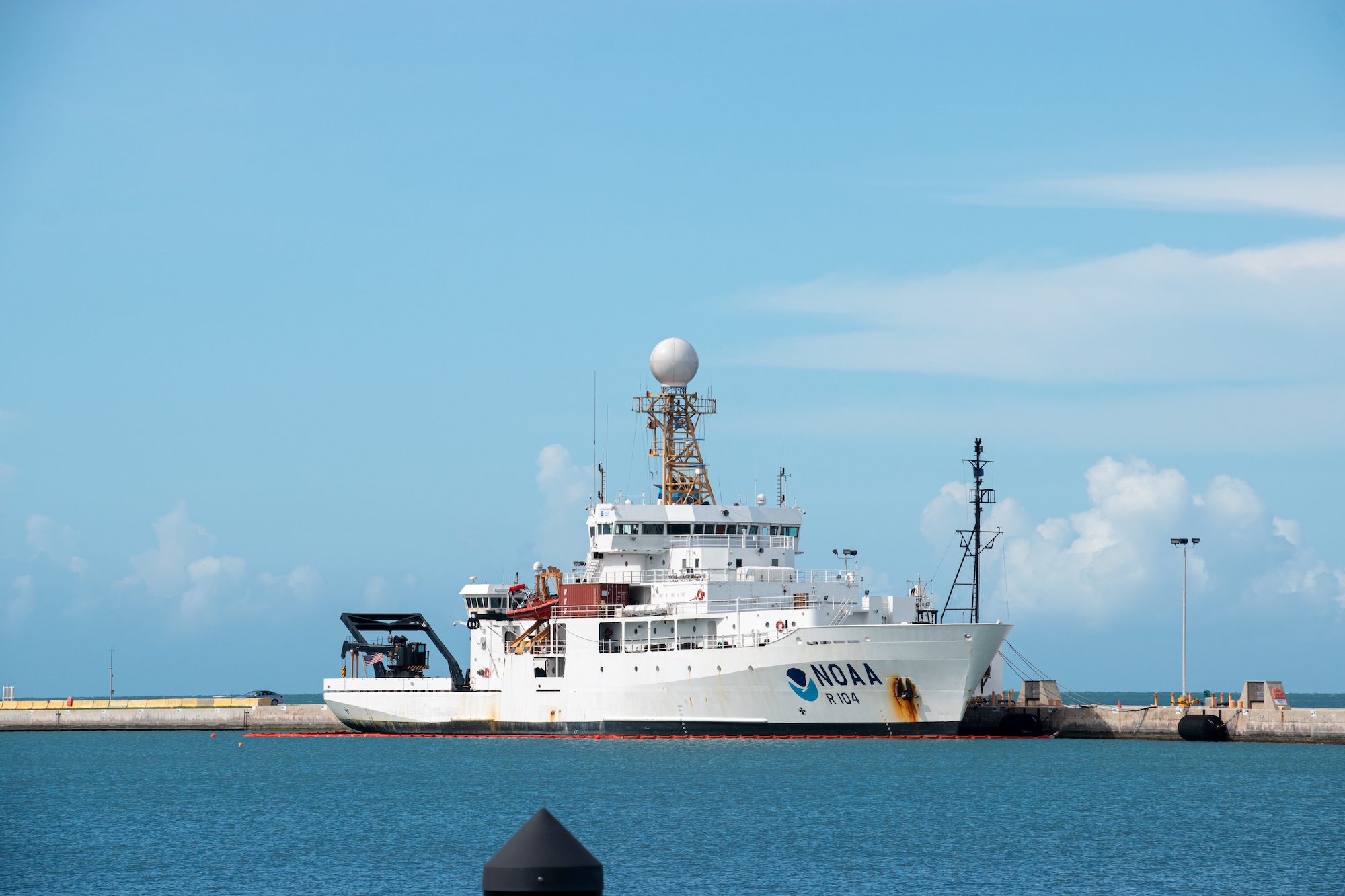
Tags: · noaa, noaa_ship, Research Vessel, ship, Weather