gCaptain.com

A Blog About Ships

Fastream Offshore Leaderboard


Wireless Developments Circa 1917

September 24th, 2008 · Comments

Undersea Cable Map WWI

Bearings, “A Geographer’s Blog” from Berkley, has a new series on Radio’s Rise During World War I. The series includes the history of undersea cables and the ships that pioneered the development of Marconi’s invention. All those history buffs out their should check out the rest of the site as well.

Also check out;

CommentsTags: · , ,

The Filipino Monkey Strikes Again (and again and again…)

January 13th, 2008 · Comments

Map of The Straight Of Hormuz So I’m watching CNN and I do a double take after the reporter (in a completely straight face) says “The harassing radio communications that ignighted the Navy’s close call with Iranian gunboats may have instead been initiated by a locally known heckler known as ‘The Filipino Monkey‘ ”

WHAT?! First of all any seaman, military or commercial, can tell you their is no heckler know as the “Filipino Monkey“. Rather it’s a phrase that’s been uttered by thousands of mariners for decades. This harassing radio call with racial origins is made over the radio when a sailor hears the distinct accent of a Filipino mariner on the VHF radio. Why is it said? Mostly out of boredom but also for the simple reason that it is sure to get a heated response.

It also happens to be the bane of every Watch Officer’s existence; a joke that is no longer funny but refuses to die. Tim’s Times gave us the details behind this heckle back in September:

The two tone alarm has gone again and this time it’s a pan pan from La Coruna Radio, other side of the Bay of Biscay. You wouldn’t mind so much if it was just the official users of VHF and MF radio that you had to contend with, but oh no there is every manner of animal sound, and jungle noise on the VHF from people who should not be on the radio, let alone a ship. One moron was calling out, “Gorilla from Manila, and Filipino monkey” my watchman who is from Manila laughed and said that it is often Indian’s who call this out to provoke a response from Filipinos, who say “Indian I can’t see you but I can smell you”. So childish and these guys are in charge of ships, frightening, and these days it is all being recorded, so you must be dealing with stupidity, says a lot for the profession….

Boing Boing tells us;

Indeed, the voice in the audio sounds different from the one belonging to an Iranian officer shown speaking to the cruiser Port Royal over a radio from a small open boat in the video released by Iranian authorities. He is shown in a radio exchange at one point asking the U.S. warship to change from the common bridge-to-bridge channel 16 to another channel, perhaps to speak to the Navy without being interrupted…

“For 25 years there’s been this mythical guy out there who, hour after hour, shouts obscenities and threats,” he said. “He could be tied up pierside somewhere or he could be on the bridge of a merchant ship.”

And the Monkey has stamina.

“He used to go all night long. The guy is crazy,” he said. “But who knows how many Filipino Monkeys there are? Could it have been a spurious transmission? Absolutely.”

Initially I was shocked that a Navy ship, or any ship, could not have known the taunt was a joke. This is seamanship 101. I clearly remember having the taunt whispered in my ear by an upperclassmen during my plebe year that the Naval Academy and by the time I received my officers license I had heard it hundreds of time. How could the officers of the cruiser Port Royal not know this was a common joke? I’m admitting still confused but after hearing the audio file I must say it doesn’t sound like the typical ‘Filipino Monkey’ taunt.

I’ll give the last comment to the cruise ship captain quoted by the Navy Times since it’s both accurate and contains good advice to mariners:

“It was just a gut feeling, something the merchants did. Guys would get bored, one guy hears it, comes back a year later and does it for himself,”

The former skipper noted that he warned his crew about hecklers when preparing to transit Hormuz. “I tell them they’ll hear things on there that will be insulting,” he said. “You tell your people that you’ll hear things that are strange, insulting, aggravating, but you need to maintain a professional posture.”

A civilian mariner with experience in that region said the Filipino Monkey phenomenon is worldwide, and has been going on for years.

“They come on and say ‘Filipino Monkey’ in a strange voice. They might say it two or three times. You’re standing watch on bridge and you’re monitoring Channel 16 and all of a sudden it comes over the radio. It can happen anytime. It’s been a joke out there for years.”

While it happens all over the world, it’s more likely to occur around the Strait of Hormuz because there is so much shipping traffic, he said.

You can watch the Iranian video at EagleSpeak.

-John

 
icon for podpress  Online Video: Play Now | Play in Popup | Download

CommentsTags: · , , , , , , , ,

AIS as a DSC Transceiver

January 5th, 2008 · Comments

Kurt Schwehr, UNH Professor and author of Kurt’s weblog point us to this quick tip;

Fred Pot pointed me to the ability of an AIS device to assist in making a VHF DSC call. Nice!

6.10 Making a DSC Call (In map mode)

To make a DSC call, the unit must be connected to a SimNet compatible

DSC VHF radio.

.

In Display Mode highlight a vessel icon then press and hold the

HOME/DSC key, the AI50 will format a Routine Individual DSC call.  A

"Creating DSC Call" window opens showing the MMSI number and name of

the vessel you intend to call.

.

If this is correct and you wish to continue, press Ret MENU or > to

send the call. The "Routine DSC Call" window opens confirming that the

call has been created and sent to the VHF radio.

Read the full post HERE.

CommentsTags: · , , , , ,

Collision Avoidance Tip - Call his boss!

December 18th, 2007 · Comments

navy ship collision course

It’s the classic scenario from the Academy… You are the stand on vessel with no room to maneuver and a zero CPA contact is bearing down on you. You try the radio but no answer… what do you do next?

This post doesn’t answer the question but gives you other options not available when you were at the academy.

Use your AIS & VHF DSC:

  1. Head to the AIS and get the contact’s MMSI number & name
  2. Enter the number into your VHF DSC controller
  3. Select a working frequency.
  4. Hit send then start hailing on the working channel

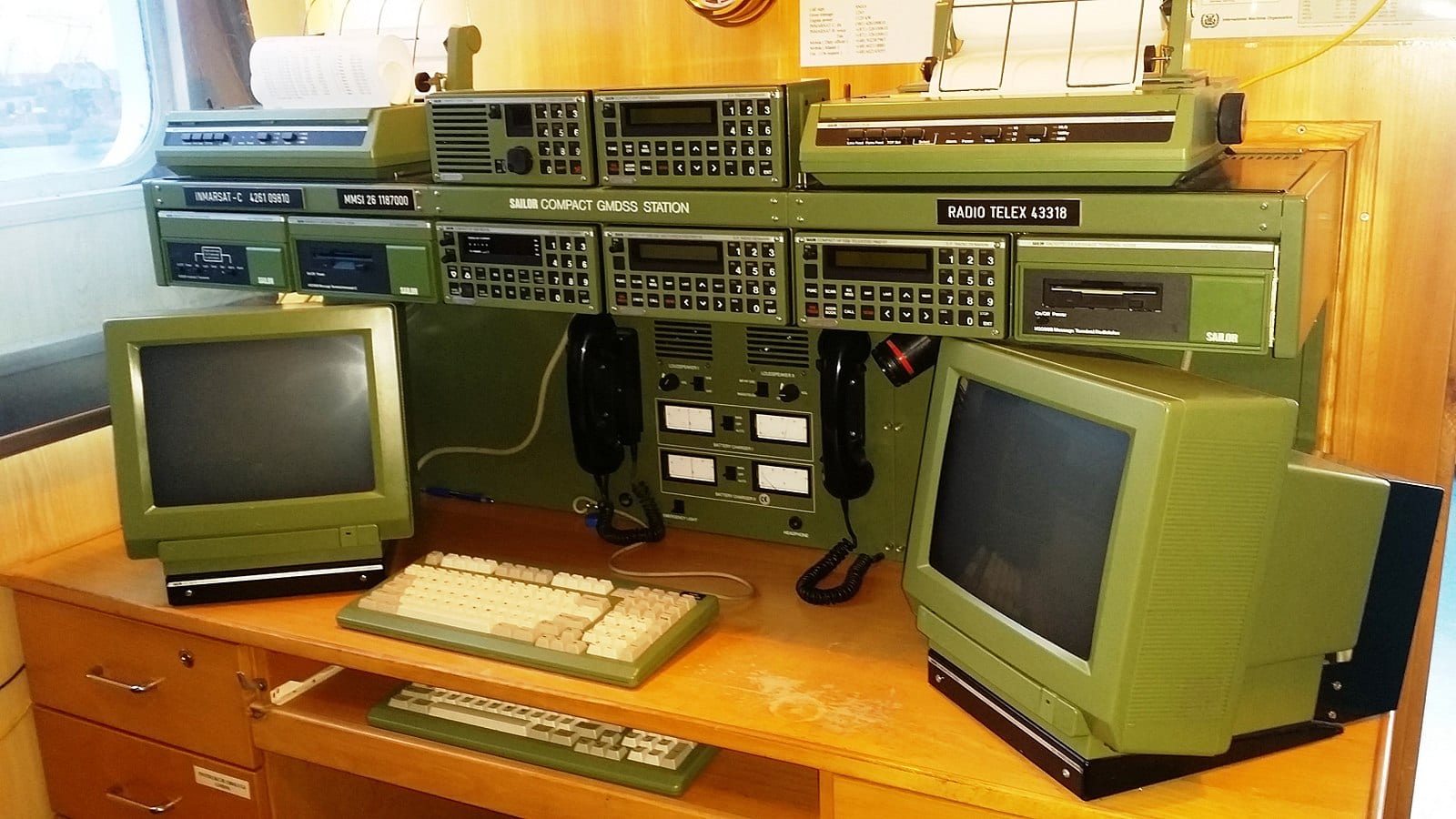
What happens next is the GMDSS alarm will go off and his VHF will change to a working frequency. If he was away from the bridge he’ll have to return to silence the alarm at which point he hears your hail.

What if the alarm doesn’t wake him or he has it disabled?

CALL HIS BOSS

  1. Get his name from the AIS.
  2. Look him up in your ITU pub.
  3. Find his INMARSAT-B number and call him.

Why does this work? As it was explained to me “Most captains have an INMARSAT-B extension in their office, most captains spend most of their time in their office. Most of the time the captain will answer the phone and rectify the problem post-haste.” …smile

CommentsTags: · , , , ,

Maritime Podcast - Episode 02

December 13th, 2007 · Comments

Here’s episode 02 of Messing About In Ships, your new maritime podcast.

This week’s topics include;

Subscribe via iTunes or right click.. saves as -> direct link

 
icon for podpress  Messing About In Ships - A Maritime Podcast: Play Now | Play in Popup | Download

CommentsTags: · , , , , , , , , , ,

Big Announcement… gCaptain’s First Podcast

December 8th, 2007 · Comments

Messing About In Ships - Cover Art

We are thrilled to announce a new endeavor from the editors of gCaptain and leadership gurus at Sea Fever Consulting

A Maritime podcast; Messing About In Ships.

Starting today, gCaptain’s own Captain John Konrad and our friend Peter Mello of Sea-Fever.org will be producing a weekly podcast about all things related to ships. Many of you may be familiar with Kenneth Graham’s 1908 classic children’s book, The Wind in the Willows in which Ratty declares to Mole:

“There is nothing - absolutely nothing - half so much worth doing as simply messing about in boats

Well, we may have grown up a bit but we still agree with Ratty; only now we mess about in slightly larger and more complicated vessels.

Each week we’ll explore stories that appear in gCaptain’s great Discoverer news section of their website. We also will select a blog or podcast for a weekly feature we call New Media Port of Call. We have plans to interview maritime professionals, authors, educators, regulators and others about issues that affect the maritime industry today and into the future. Finally, each episode will close with a selection music from the Podsafe Music Network for your enjoyment.

What we are most excited about is you taking an active role in shaping this project. We have set up a Messing About In Ships blog where the show notes and links from each episode will appear and we encourage you to comment there. Also consider recording a short audio comment, attach it as an MP3 file to an email and send it to podcast@messingaboutinships.com and we will find a way to integrate it into the program.

Subscribe via iTunes

Subscribe to Podcast
You can also add Messing About In Ships to:

Visit MessingAroundInShips.com for show notes and more details.

 
icon for podpress  Messing About In Ships Episode 01: Play Now | Play in Popup | Download

CommentsTags: · , , , , , , , , ,


Comments


Popular Topics


Sponsors


Maritime and Offshore Recruitment

Spurs

Mariner Taxes Logo

Mariner Taxes


The New Hawsepipe


The Maritime Executive Magazine


Your Ad Here


Authors


Follow Us


Categories


Recent Posts


Popular

Shipping Archives

Read A Random Story