Cosco Busan Pilot’s Medical Records Questioned

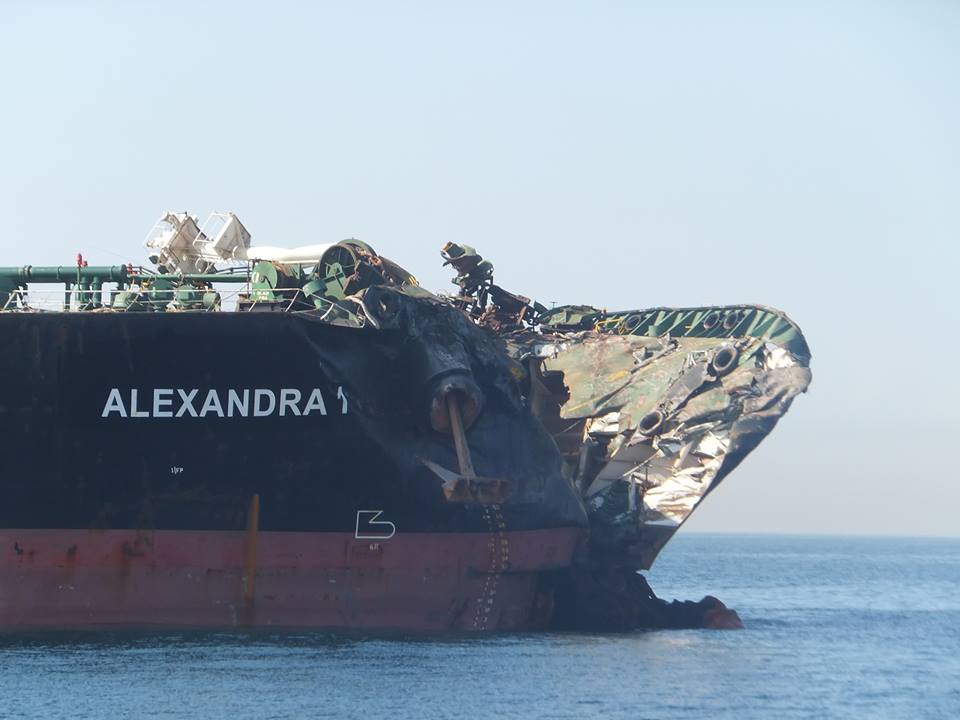
Cosco Busan DamageCosco Busan Photo by Noah Berger/Associated PressOctober 15th 2003 the Staten Island ferry crashed into a concrete pier killing eleven people and leaving 71 injured. It was later determined that the captain lost consciousness while at the ship’s controls. He had taken the painkillers Tramadol and Tylenol PM, both of which can cause drowsiness as a side effect. Since that time the United States Coast Guard has put increased scrutiny on the medical records of all licensed mariners, a review process that could get more stringent as details emerge regarding medication taken by the Cosco Busan’s pilot.The Associated Press tells us:

The ship pilot who was at the helm when a freighter spilled 58,000 gallons of fuel into San Francisco Bay in November suffers from a sleep disorder and was on prescription medication to ward off drowsiness, people close to the investigation told The Associated Press.Investigators want to know whether the disorder — or even the medication itself — contributed to the accident.Federal officials and others, speaking on condition of anonymity, said John Cota has sleep apnea, a breathing condition that can disrupt sleep all night long and leave sufferers severely fatigued during the day. Sleep apnea is blamed for countless auto accidents every year in which drivers nodded off at the wheel.Cota, 59, was also said to be taking a sleep-apnea drug whose known side effects include impaired judgment.Prescription drugs are “certainly a part of our investigation,” said G. Ross Wheatley, chief of investigations for the Coast Guard’s San Francisco sector.The disclosure has raised questions among members of Congress about the Coast Guard’s licensing practices and whether Cota should have been deemed fit for a job in which he was responsible for guiding giant cargo ships in and out of port and through the dangerous waters of the bay.Under Coast Guard policy, a sleep disorder can be grounds for disqualification, but is not automatically so. Continue Reading…

Those with medical concerns at sea should also check Global Rescue’s Medical Extraction Insurance for Mariners

Tags: · , , , , , , , , , ,


Chief Engineer Convicted in Pollution Case

In the latest criminal proceedings related to Marine Pollution and the use of “Magic Pipes” the Chief Engineer aboard an American-flagged car-carrier ship was convicted of one count of conspiracy and two counts of making false statements. Marine Link has the report:

At trial, it was proven that the M/V Tanabata had a removable bypass pipe or “magic pipe” that was used to discharge oily waste without the use of an oily-water separator, a required pollution control devise. Ship’s Oily Water SeparatorThe discharges were, however, falsely recorded as having been processed through the separator in the ship’s oil record book, a required log regularly inspected by the U.S. Coast Guard. An engineer testified that the defendant referred to the bypass pipe as the “illegal pipe.” It was also shown during trial that the pipe was hidden when the ship was in port so that it would not be discovered by the Coast Guard.

Sentencing has been set for Jan. 10, 2008, before Judge William N. Nickerson. Humphries faces a maximum of five years in prison and a $250,000 fine for each count.

The M/V Tanabata was operated by Pacific Gulf Marine, Inc. (PGM). PGM pleaded guilty and was sentenced on Jan. 27, 2007, to charges of making illegal discharges of oil-contaminated waste from each of four ships managed by the company. After learning of the investigation, PGM conducted and voluntarily disclosed the results of an internal investigation and cooperated with investigators and prosecutors. PGM was sentenced to pay a $1 million criminal fine and $500,000 in community service payments and to serve three years probation under the terms of an Environmental Compliance Program subject to court approval.

Continue Reading for the full article

Looking for Chief Engineer Jobs.

Tags: · , , , , , , , , , , ,