Streamers towed behind a seismic survey vessel are fairly vulnerable when deployed, and extremely costly to replace when damaged or destroyed by vessel traffic.
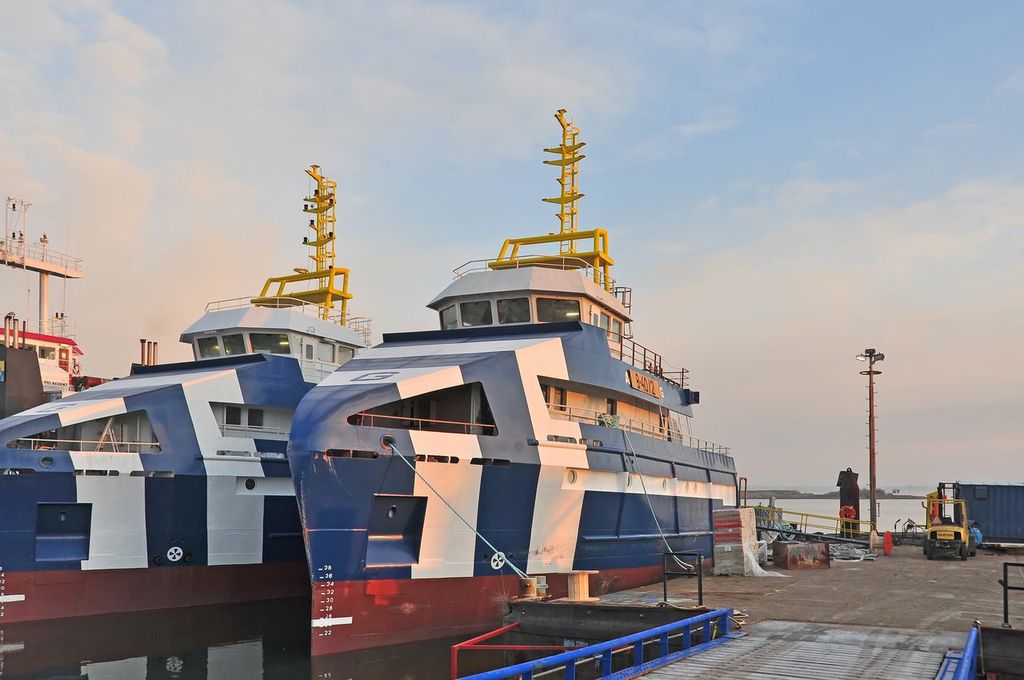
To help mitigate this issue, Damen Shipyards has built a pair of purpose-built “chaser” vessels to accompany seismic survey fleets ensuring that other shipping, mainly fishing vessels, will keep their distance from survey vessels engaged in offshore exploration.
The delivery of the ‘Aquarius-G’ and her sister ship ‘Astra-G’ to offshore services company Rederij Groen (Scheveningen, the Netherlands) marks the first time that such vessels have been purpose-built for such a task. “Indeed, all our other SRS Chaser vessels so far involve converted fishing trawlers,” notes Henk Groen, director and proprietor of offshore company Rederij Groen. “Having designed them to our specific needs right from the drawing board, significantly enhances the vessels’ deployability and performance. Their sharply reduced sway and manoeuvrability are just two examples,” adds Mr. Groen.
The vessels were designed by Saltwater Engineering in close cooperation with both Rederij Groen and Maaskant Shipyards Stellendam. Both Seismic Research Support Vessels were constructed by Maaskant Shipyards Stellendam, part of Damen Shipyards Group.
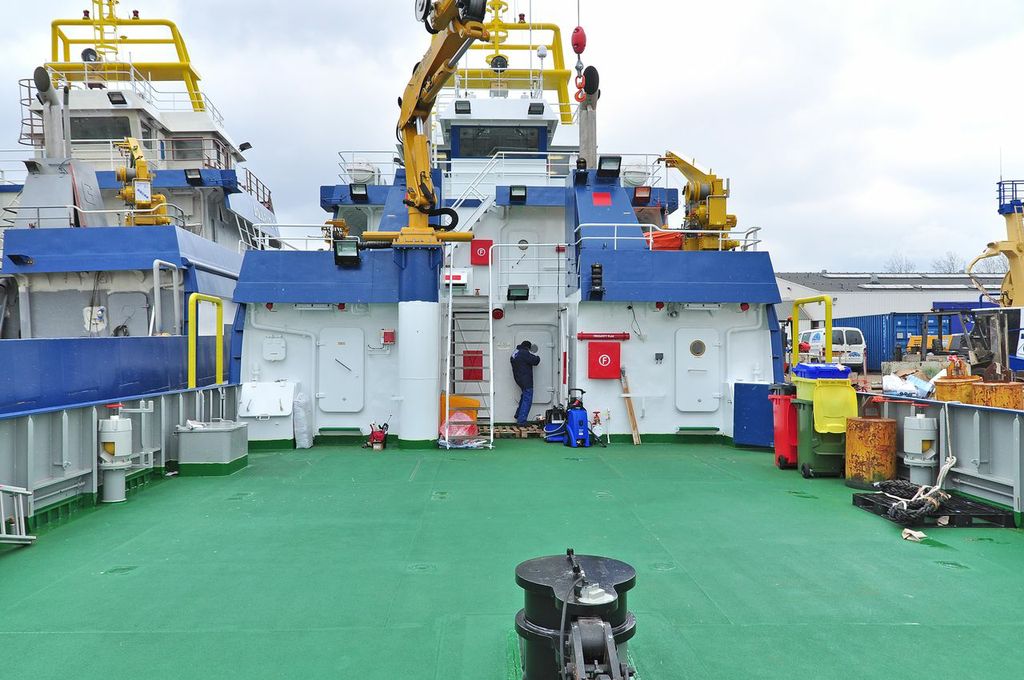
Aft deck on the Astra G, image: Damen
Dead slow
A further key activity for the Seismic Research Support (SRS) vessels are the alongside operations, featuring a variety of services to the seismic survey mothership. Whilst sailing alongside, such assistance includes the board-to-board transhipment of goods and equipment. The two new SRS vessels have a 2-tonne at a 10.5-metre reach deck crane. The 105 m of free space at the aft deck provides sufficient storage capacity to include several ISO maritime containers. An aggregate 16 cubic metres of temperature controlled cells cater for other auxiliary services.
As a significant improvement, the two purpose-built Chasers feature superior nautical capabilities over the converted fishing trawlers. Their sharply lesser sway benefits both the alongside operations and the crew’s comfort.
“Seismic research is done at a sailing speed not exceeding four knots. At such low speeds, the ship needs to be both stable and maintain good manoeuvrability”, Henk Groen says. SRS vessels also measure sea current near offshore rigs to ensure a safe close passage for the seismic survey ship. “So keeping lane at very low speeds is vital for this precise work.” All of this is being put into practice as the ´Astra-G´ is currently working at its first assignment in the Barentz Sea.
The two vessels measure 40-meters in length over all, 9.30 meters in width, 3.30 metres draft, with accommodation for a complement of fourteen. Top speed is 14 knots.
Austal Limited has secured a A$4 billion (USD $2.82 billion) contract from the Commonwealth of Australia to build eight 100-meter Landing Craft Heavy vessels, marking one of the largest naval shipbuilding...
Damen Shipyards, Windcat, and CMB.TECH have unveiled the first of six cutting-edge Commissioning Service Operation Vessels (CSOVs). The landmark launch, which took place on October 12th at Ha Long Shipyard...
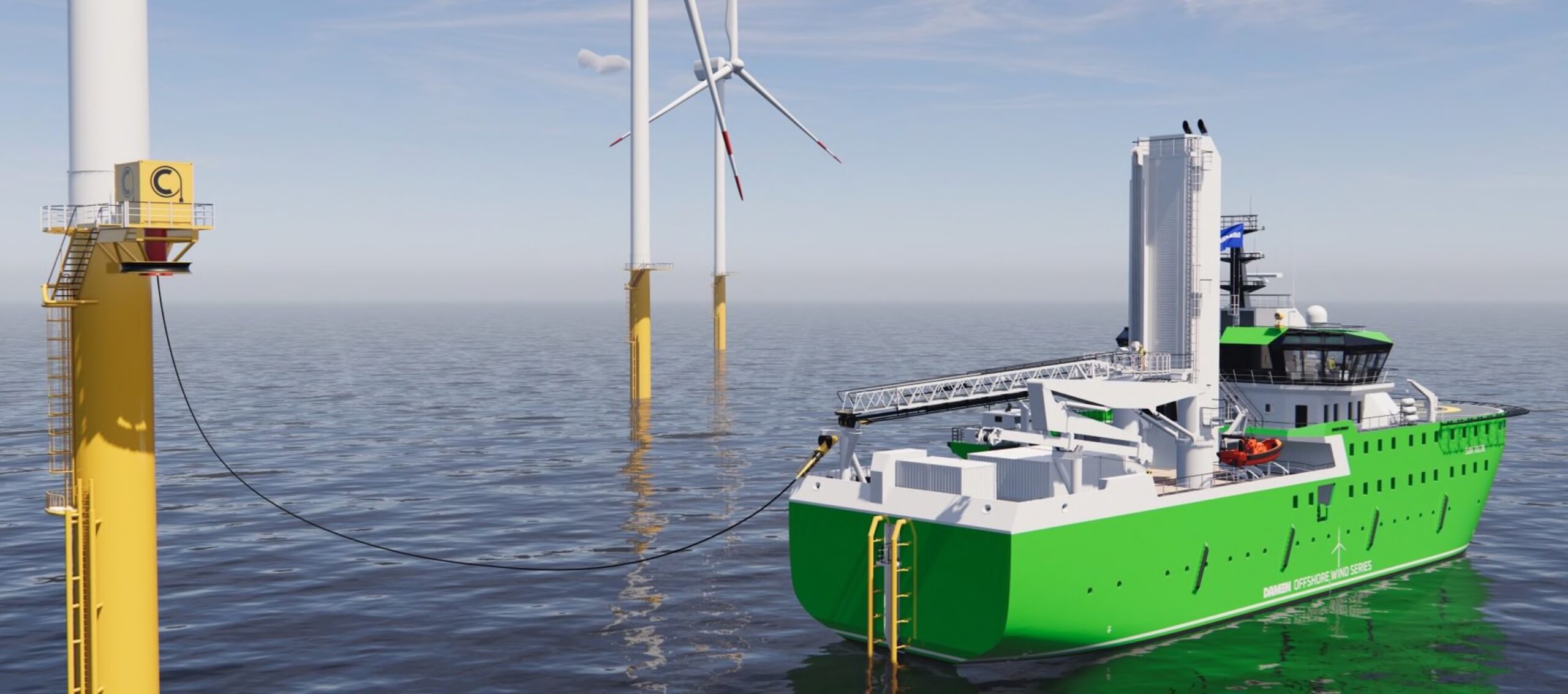
Damen Shipyards Group has unveiled a fully electric Service Operations Vessel (SOV) equipped with offshore charging capabilities, harnessing electricity provided directly from offshore wind farms. Damen said the vessel, measuring...
November 29, 2023
Total Views: 1310
Get The Industry’s Go-To News
Subscribe to gCaptain Daily and stay informed with the latest global maritime and offshore news
— just like 107,411 professionals
Secure Your Spot
on the gCaptain Crew
Stay informed with the latest maritime and offshore news, delivered daily straight to your inbox
— trusted by our 107,411 members
Your Gateway to the Maritime World!
Essential news coupled with the finest maritime content sourced from across the globe.

 Join The Club