By Sabrina Brigance, CMIP
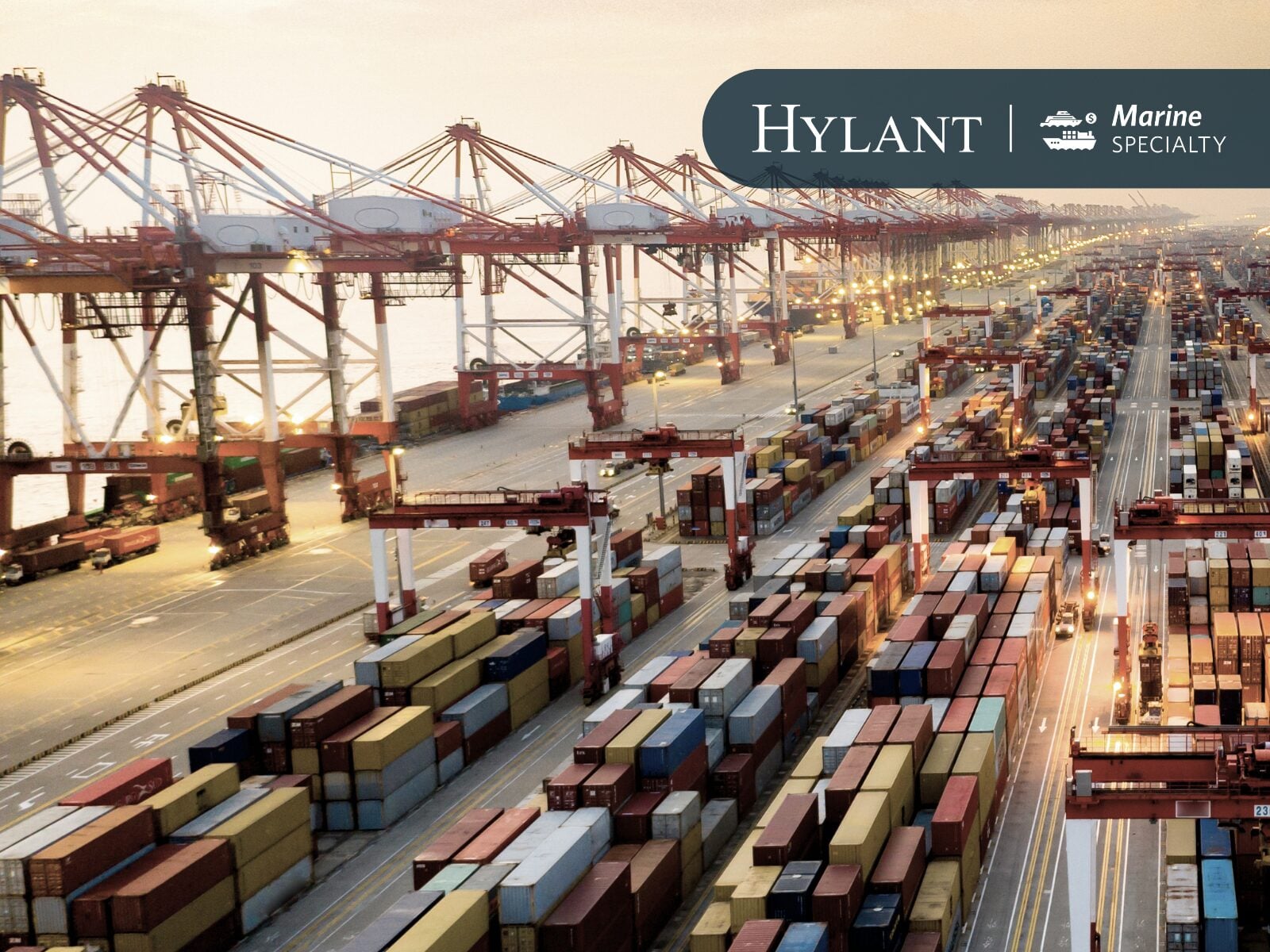
America’s maritime infrastructure sector is entering one of its largest investment cycles in decades. Ports are expanding terminals, shipyards are modernizing dry docks, and waterfront facilities are being reshaped to support alternative fuels, electrification, and offshore energy development. Public and private capital continue to flow into the sector as operators race to improve capacity, resiliency, and supply chain efficiency.
Unlike traditional construction projects, maritime infrastructure operates in active environments. Facilities often remain open while construction crews work alongside vessel traffic, cargo operations, production schedules, and critical infrastructure systems.
As a result of these environments, project owners face a new challenge: identifying and managing the hidden risks that can significantly impact cost, schedule, operations, and long-term insurability. In many cases, the most significant impacts do not come from the project itself. They come from risks that were never fully understood before construction began.
Consider the ramifications of these five hidden risks.
Hidden Risk #1: What’s Beneath the Surface?
Some of the most severe losses begin below the waterline long before visible construction issues emerge.
Subsurface conditions remain one of the industry’s most underestimated exposures. Dredging, pile driving, berth expansion, and quay wall improvements frequently uncover unstable soils, undocumented obstructions, abandoned infrastructure, or contaminated sediments that were not identified during preliminary engineering reviews.
Older shipyards, terminals, and industrial waterfronts often carry decades of environmental legacy from petroleum storage, heavy industrial activity, chemical handling, and historical disposal practices.
Once construction disturbs those materials, project timelines and liability assumptions can change immediately.
Environmental remediation costs can escalate rapidly, particularly when multiple stakeholders become involved across state and federal jurisdictions. Responsibility is not always clear, especially at redeveloped brownfield sites or former military and industrial facilities.
For many owners, the question is simple: Do you know what’s under the soil and below the waterline?
The answer can dramatically alter project economics.
Hidden Risk #2: Climate Resilience Is Becoming an Insurance Issue
Climate exposure is reshaping how insurers, lenders, and investors evaluate maritime infrastructure.
Waterfront projects are increasingly scrutinized for flood exposure, storm surge vulnerability, drainage capacity, corrosion management, and long-term operational continuity.
Underwriters today place greater emphasis on:
- Flood modeling
- Secondary catastrophe exposure
- Backup utility dependencies
- Equipment elevation
- Business continuity planning
Resilience is no longer just an engineering objective.
It is becoming a key factor in long-term insurability and access to capital.
A facility may satisfy today’s engineering standards while still facing future challenges securing insurance capacity, favorable deductibles, or financing flexibility if adaptation planning does not evolve alongside changing environmental conditions.
Hidden Risk #3: Operational Technology Creates New Vulnerabilities
Modern ports, terminals, and shipyards rely heavily on interconnected operational technology systems. Cargo handling equipment, fueling operations, access controls, vessel traffic management systems, utilities, and facility operations are increasingly linked through integrated technology platforms.
The issue extends well beyond data privacy.
During construction, modernization, and commissioning projects, new equipment, software integrations, and third-party access can create vulnerabilities that disrupt cargo movement, production schedules, and facility operations. A cyber event affecting operational systems can disable fueling operations, interrupt vessel coordination, halt cargo movement, or significantly reduce terminal throughput.
The challenge is that these systems do not operate independently. As maritime infrastructure becomes more connected, operational disruptions can spread well beyond the original point of failure.
Hidden Risk #4: Delays Often Cost More Than Physical Damage
Marine infrastructure projects depend on a complex network of contractors, utilities, transportation systems, equipment suppliers, regulators, and specialized labor. A delay involving a crane manufacturer, a dredging contractor, a permitting revision, a utility connection, or a critical piece of equipment can significantly alter project economics.
In many cases, delay-related losses exceed the physical damage itself. Examples, including revenue interruption, financing costs, concession agreement penalties, cargo diversion, and operational backlog, can quickly compound across interconnected transportation systems.
Marine infrastructure projects also rely on highly specialized contractors with limited global capacity. That scarcity can turn even relatively small disruptions into significant financial events.
Hidden Risk #5: The Insurance Program May Not Respond as Expected
Many organizations assume their insurance program automatically adapts to changing project conditions. In reality, coverage gaps often emerge when projects become most complex. For example:
- Builders’ risk policies may protect physical construction but not fully address operational disruption.
- Contractors’ pollution liability policies may respond differently depending on whether contamination is newly released or historically present.
Testing and commissioning phases often create uncertainty about which policy applies to a loss. Assets may no longer qualify as construction work but may not yet have transitioned into operational coverage. And, by the time coverage questions arise, the project is usually already behind schedule and over budget, and under pressure from lenders, contractors, and regulators. This is often when the largest financial losses occur.
The challenge is not necessarily a lack of insurance. The challenge is ensuring insurance, contracts, engineering assumptions, and operational realities align before construction begins.
A Better Approach to Risk
The most successful maritime infrastructure projects do not view risk management as a separate workstream. Rather, they integrate engineering, environmental planning, contract review, operational continuity, and insurance strategy from the earliest stages of development.
That coordination matters.
Contract language often determines how losses unfold as much as policy language itself. Indemnification provisions, additional insured requirements, subcontractor obligations, and jurisdictional issues under admiralty law can materially impact recovery following a major loss.
Final Thoughts
The maritime industry has traditionally measured project success through construction milestones, budget performance, and delivery schedules. While those metrics still matter, the next generation of maritime infrastructure projects will also be judged by their ability to remain operational, resilient, financeable, and insurable long after construction is complete.
As investment continues flowing into ports, terminals, shipyards, and coastal energy infrastructure, the industry’s next challenge will not be whether projects can be built. It will be whether they can withstand the hidden risks that emerge once construction begins.
Visit Hylant.com to learn more.

 Join The Club