The U.S. Navy has awarded defense technology company Saronic a $392 million production contract for autonomous maritime vessels, with nearly $200 million immediately put on contract, marking what Secretary of the Navy John Phelan called a new standard for rapid defense procurement.
The announcement, made at the Reagan National Defense Forum, highlighted an unprecedented timeline from prototype to production in less than 12 months—a stark departure from traditional defense acquisition cycles that often stretch across years or decades.
“The Navy isn’t admiring problems from the sidelines, we’re moving at war-footing speed. With Saronic, we went from prototype to production in under a year. That’s rapid innovation, real competition, and combat power in sailors’ and marines’ hands, not on PowerPoints,” Phelan stated.
The contract centers on Saronic’s Corsair platform, which the company transitioned from prototype to fielded capability in high-rate production within the accelerated timeframe. Corsair is a modular 24-foot Autonomous Surface Vessel (ASV) capable of carrying approximately 1,000 pounds over 1,000 nautical miles, and a top speed of 35+ knots. Corsair can support a wide range of strategic blue-water operations—from maritime domain awareness to kinetic and non-kinetic strike capabilities—extending naval power while keeping sailors out of harm’s way, according to Saronic’s website.
The autonomous vessels are designed to form part of what Phelan described as a “hybrid manned–unmanned Fleet,” built through open competition and real hardware delivery rather than traditional slide presentations.
Saronic attributed its rapid delivery capability to significant investment in its own production infrastructure. The company announced last week a $300 million expansion of its Franklin, Louisiana shipyard, which will add more than 300,000 square feet of production capacity and create 1,500 new jobs in partnership with state and local officials.
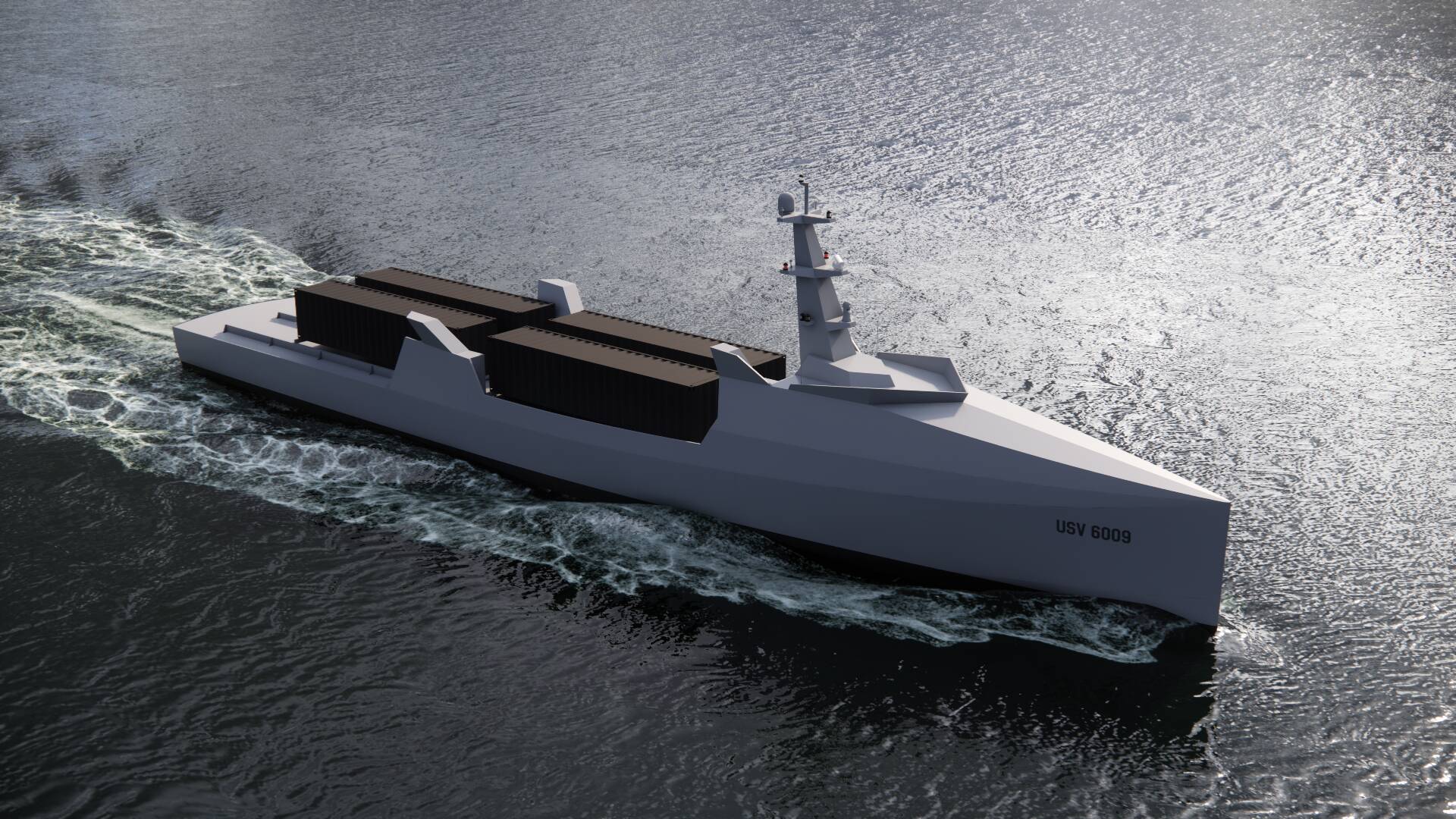
The Louisiana facility serves as the prototyping and production hub for Marauder, Saronic’s autonomous ship that progressed from initial design to full vessel development in just six months. The platform has since been enhanced to an 180-foot design delivering greater payload capacity and extended operational range.
“We approached the Navy with a proven capability and found a partner committed to testing, adopting, and procuring new technologies at scale,” the company stated. “Because we have invested heavily in our own production infrastructure and capacity, we can deliver these new capabilities at the speed and quantity the mission requires.”
The contract represents a broader shift in defense procurement policy, with Saronic commending the Department of War for opening acquisition pathways to non-traditional defense companies and prioritizing commercial solutions that deliver quickly.
The expansion of domestic shipbuilding capacity comes as defense officials emphasize that acquisition reform must be matched by investment in the production base. The Louisiana shipyard expansion is positioned to strengthen the Gulf Coast’s role in American maritime innovation while accelerating delivery timelines for advanced maritime capabilities.
Saronic indicated it is already advancing the next wave of autonomous capabilities to meet evolving threats, signaling continued partnership with the Navy as operational requirements develop.
Editorial Standards · Corrections · About gCaptain

 Join The Club