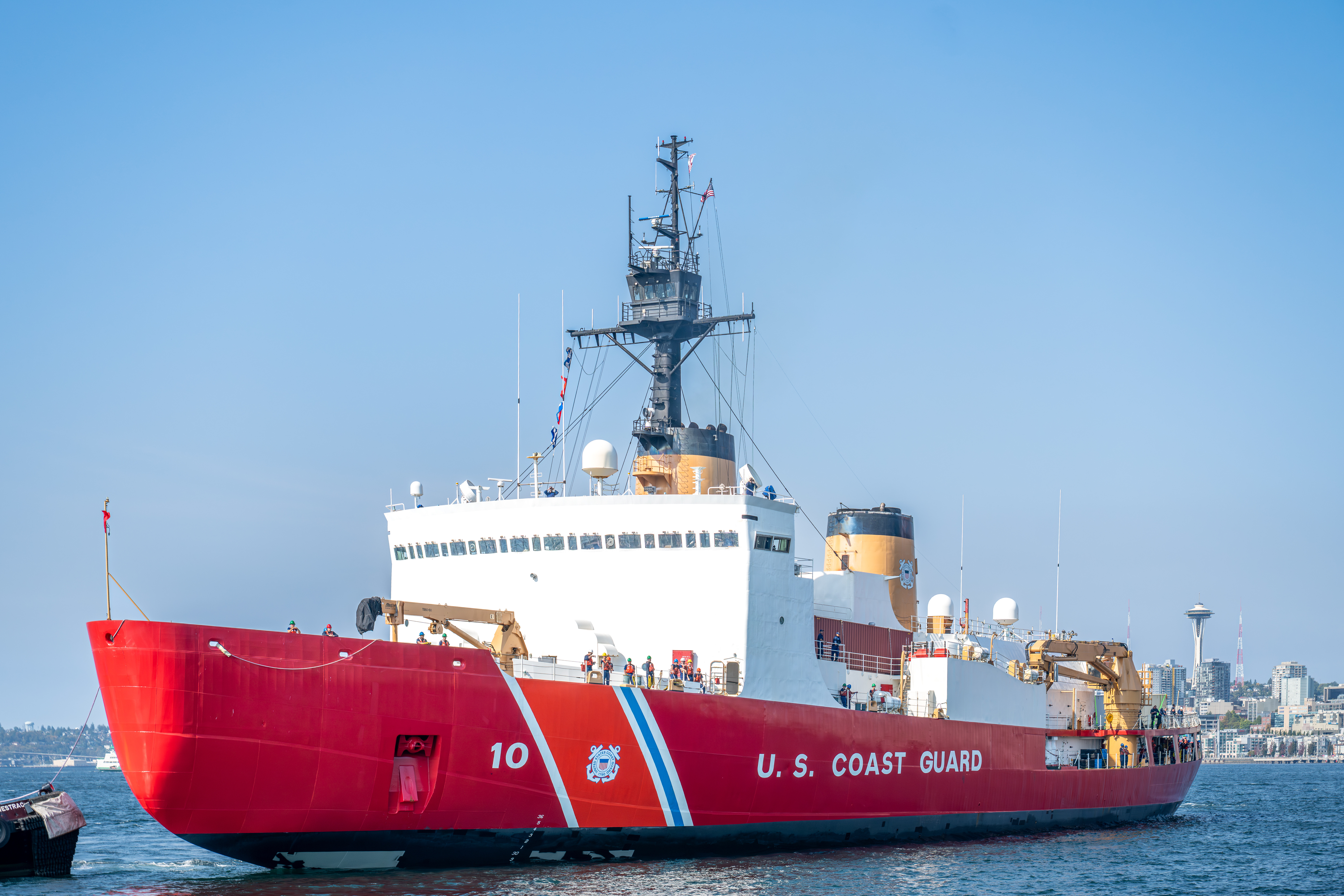
The 49-year-old U.S. Coast Guard Cutter Polar Star (WAGB 10) has returned to its Seattle home port after 308 days away.
Polar Star completed its annual Antarctic deployment for Operation Deep Freeze (ODF) earlier this year before heading to Mare Island Dry Dock in Vallejo, California in April to complete the final phase of its comprehensive five-year Service Life Extension Program (SLEP). This maintenance initiative is a vital investment in preserving America’s limited icebreaking capabilities.
“Much has been asked of this ship over the past five decades,” said Captain Jeff Rasnake, Polar Star’s commanding officer. “The completion of this extensive five-year maintenance and recapitalization project is a major milestone in enabling Polar Star’s operations into the future.”
The SLEP focused on recapitalizing integral systems including propulsion, communication, and machinery control systems. The final phase, which began in March 2024 and took 175 days to complete, represented a $12.7 million investment. Key work included gyro repeater recapitalization, ancillary pumps and motors replacement, and HVAC system refurbishments.
Additional major maintenance included removing the centerline shaft for servicing and inspection, exchanging all three propellers, and renewing both forward and aft main deck surfaces.
The vessel’s return comes at a critical time as strategic competition in the Arctic region escalates, particularly with increased Chinese presence in waters off Alaska’s northern coast and Russia’s increasing activity in the region.
“This is a tremendous ship, and it is in better shape today than it was ten years ago,” Rasnake added. “That’s a testament to the unrelenting efforts of the crew, the enduring support of our mission partners, and the renewed enthusiasm and investment in our nation’s polar icebreaking capabilities.”
The refurbishment of Polar Star comes as the United States faces growing challenges in the Arctic. Earlier this month, the Coast Guard responded to two Chinese research vessels operating in waters off Alaska’s northern coast, approximately 265 and 230 miles northwest of Utqiagvik respectively. These vessels were part of a group of five Chinese vessels recently active in Arctic waters.
The Coast Guard Arctic District deployed the USCGC Healy (WAGB-20) to monitor and query the vessels, with additional aerial support from aircraft from Air Station Kodiak.
“This operation highlights the value of our ice-capable fleet,” said Rear Adm. Bob Little, commander of the U.S. Coast Guard Arctic District. “The U.S. Coast Guard is controlling, securing, and defending the northern U.S. border and maritime approaches in the Arctic to protect U.S. sovereignty, and Healy’s operations demonstrate the critical need for more Coast Guard icebreakers to achieve that.”
The U.S. Coast Guard currently operates three oceangoing icebreakers: the heavy icebreaker Polar Star, which supports Antarctic operations, and two medium icebreakers, USCGC Healy, which supports Arctic research, and the newly commissioned USCGC Storis. The addition of Storis has allowed multiple icebreakers to operate simultaneously in Arctic waters for the first time in years.
Commissioned in 1976, Polar Star remains the world’s most powerful non-nuclear icebreaker with the ability to produce up to 75,000 shaft horsepower despite approaching 50 years of service. The vessel plays a critical role in the annual Operation Deep Freeze mission, which supports the U.S. Antarctic Program by facilitating the transport of personnel, equipment and supplies to maintain America’s strategic presence in Antarctica.
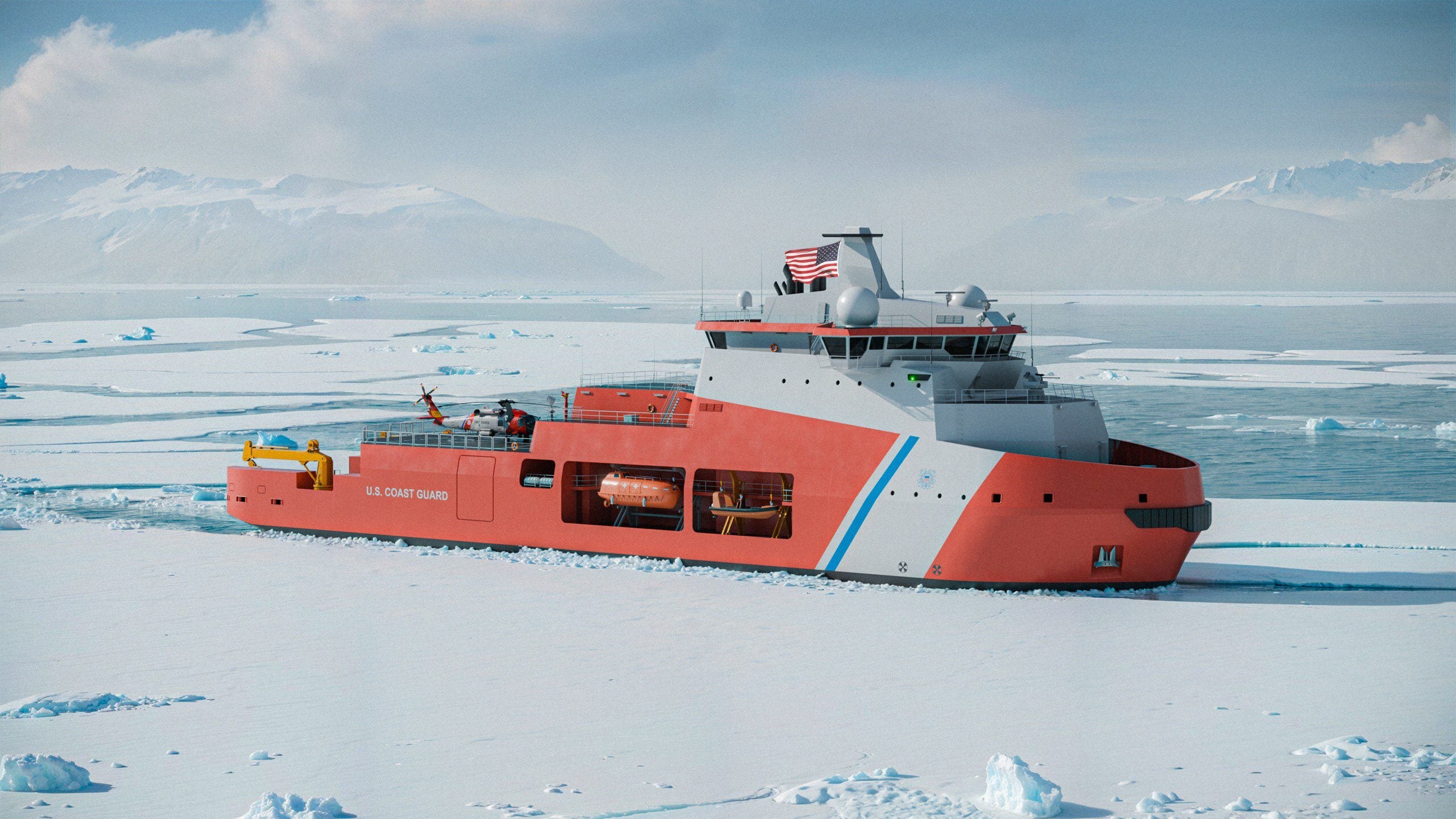
Looking ahead, the first Polar Security Cutter, under construction in Mississippi, is at least five years from entering service. A medium-size Arctic Security Cutter could potentially be ready within three years with assistance from international shipyards.
The completion of Polar Star’s SLEP and its return to service highlight both the Coast Guard’s commitment to maintaining polar capabilities and the challenges faced by America’s aging icebreaker fleet as strategic competition in the Arctic intensifies.
Editorial Standards · Corrections · About gCaptain

 Join The Club