President Donald Trump has removed Kristi Noem as Secretary of the U.S. Department of Homeland Security, ending a tenure that reshaped several key maritime policies—from historic funding for Coast Guard modernization and Arctic icebreakers to aggressive tanker seizures tied to Venezuelan sanctions enforcement.
The White House said Trump plans to nominate Markwayne Mullin to lead DHS, which oversees the U.S. Coast Guard and plays a central role in maritime security, sanctions enforcement, and counter-drug operations.
Noem’s time at the department saw a mix of sweeping modernization initiatives and controversial shipbuilding decisions that rippled through the U.S. maritime industrial base.
One of the most consequential maritime developments during Noem’s tenure was the passage of the administration’s sweeping reconciliation legislation known as the “One Big Beautiful Bill,” which delivered roughly $25 billion for Coast Guard modernization, the largest single investment in the service’s history. The funding package aims to rebuild the Coast Guard’s aging fleet and aviation assets while strengthening missions ranging from Arctic operations and maritime security to drug interdiction and border enforcement.
A centerpiece of the modernization effort is a dramatic expansion of America’s icebreaker fleet, a capability increasingly viewed in Washington as critical to national security and Arctic competition.
The Coast Guard currently operates just two polar-capable vessels: the heavy icebreaker USCGC Polar Star and the medium icebreaker USCGC Healy.
During Noem’s tenure, DHS backed expanded procurement under both the Polar Security Cutter and Arctic Security Cutter programs. Funding provided through the modernization package allocates billions toward these vessels and could enable the Coast Guard to field a significantly larger fleet of polar-capable ships in the coming decades.
The expansion comes as the United States seeks to counter Russia’s dominant icebreaker fleet and respond to growing Chinese interest in Arctic shipping routes and infrastructure.
Coast Guard leaders have argued that rebuilding the icebreaker fleet is essential for maintaining year-round access to polar regions, supporting scientific missions, safeguarding emerging shipping lanes, and projecting U.S. presence in the Arctic.
Shipbuilding Program Shakeups
While overseeing a historic modernization funding package, Noem also presided over several controversial shipbuilding decisions affecting Coast Guard acquisition programs.
DHS canceled the planned 11th Legend-class National Security Cutter, which had been under contract with Huntington Ingalls Industries. The department said the move would save roughly $260 million while redirecting funds toward maintaining and supporting the existing fleet.
The department also partially terminated portions of the Coast Guard’s Offshore Patrol Cutter program, affecting work at Eastern Shipbuilding Group amid rising costs and schedule delays.
Venezuelan Tanker Seizures and Maritime Enforcement
Beyond shipbuilding policy, Noem oversaw a more aggressive maritime enforcement posture tied to sanctions and counter-narcotics operations targeting Venezuela’s oil trade.
In December, U.S. authorities seized a tanker identified in reporting as the VLCC Skipper, which was allegedly transporting Venezuelan crude using deceptive shipping practices and false flag registration. The vessel was reportedly carrying roughly 1.8 million barrels of crude oil when it was intercepted. The case later expanded into a civil forfeiture action pursued by the U.S. Department of Justice seeking to seize both the tanker and its cargo.
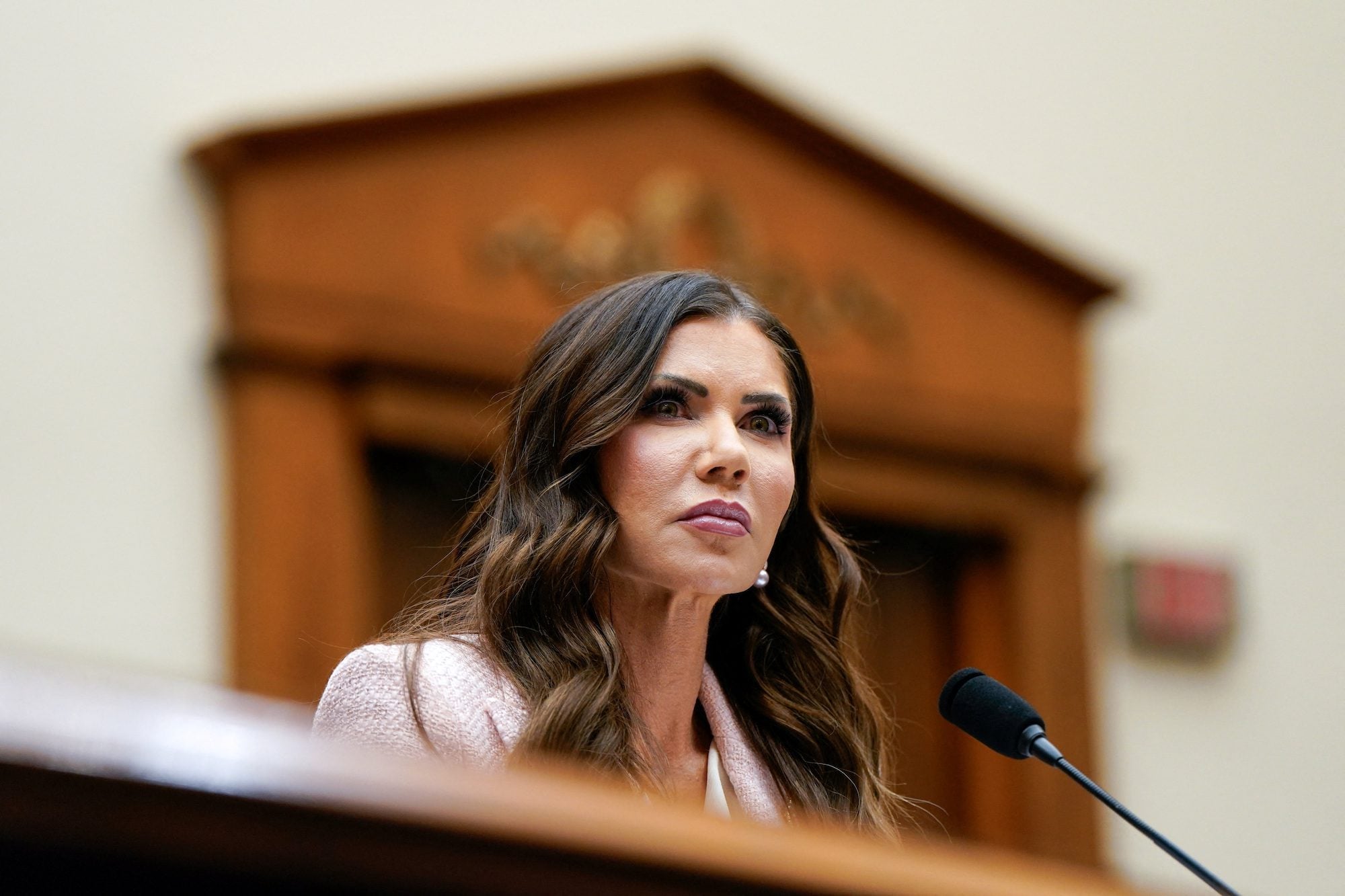
During congressional testimony at the time, Noem framed the seizure as part of a wider strategy to disrupt criminal networks tied to both sanctions evasion and narcotics trafficking.
“We’re not going to sit back and allow regimes that are flooding our country with drugs to profit from black-market oil shipments,” she told lawmakers, linking the tanker seizure to broader counter-drug efforts.
Additional tanker interdictions followed as part of a broader maritime enforcement campaign targeting vessels suspected of transporting Venezuelan oil using tactics such as identity changes, false registries, and AIS manipulation.
Drug Interdictions at Sea
Noem also highlighted major maritime drug seizures during her tenure, with the Coast Guard intercepting large quantities of cocaine and other narcotics along trafficking routes in the Eastern Pacific and Caribbean.
The interdictions, valued at hundreds of millions of dollars, underscored the Coast Guard’s role as a front-line force in combating transnational criminal organizations operating at sea.
Noem’s departure comes at a moment of rising global maritime tension, including the escalating conflict in the Middle East and increasing strategic competition in the Arctic. The leadership transition also arrives as the Coast Guard faces expanding responsibilities—from counter-drug missions and sanctions enforcement to Arctic security and the protection of emerging polar shipping routes.
During his decade in the U.S. House (2013–2023), Mullin served as a member of the House Transportation and Infrastructure Committee and supported legislation related to shipping emissions and maritime industry modernization. With billions now flowing into new cutters, aircraft, and icebreakers, if confirmed as the next DHS secretary he will inherit one of the most ambitious Coast Guard recapitalization efforts in decades while navigating a rapidly evolving maritime security landscape.
Editorial Standards · Corrections · About gCaptain

 Join The Club