By Olga Yagova and Gleb Gorodyankin MOSCOW, March 12 (Reuters) – Saudi Arabia has stepped up efforts to squeeze Russia’s Urals oil grade out of its main markets by offering its own cheap barrels instead after their long-standing deal to support global oil prices fell apart, seven oil sources said.
Cooperation between Moscow and Riyadh dramatically collapsed last week after Russia refused to support deeper oil output cuts desired by Saudi Arabia to fight falling oil demand as a result of the spread of the coronavirus outbreak.
Market sources told Reuters that state-controlled Saudi Aramco is trying to replace Urals in refiners’ feedstock around the world, from Europe to India.
“They (the Saudis) knock on all doors offering a lot and cheaply…” a source with a Western oil major told Reuters.
Saudi’s national shipping firm, Bahri, provisionally chartered up to 19 supertankers this week, with six of them set to take about 12 million barrels of Saudi crude to the United States, according to data and sources.
Saudi Aramco is in talks with European refiners, including big buyers of Urals oil like Finland’s Neste Oil, Sweden’s Preem, France’s Total, BP, Azerbaijan’s SOCAR, Italy’s Eni, the sources said.
The tactic has already started to pay off, with refiners ordering extra volumes of its crude for loading in April at “very attractive prices,” the sources added.
Saudi Aramco, Neste Oil, Total, BP, Preem, Eni and SOCAR did not immediately respond to requests for comment.
Saudi Arabia will open the taps beginning on April 1, releasing 12 million barrels of oil per day (bpd) into the markets. Russia’s maximum production capacity is 11.80 million bpd, with Asia and Europe being key export markets.
Russian Energy Minister Alexander Novak said on Wednesday that Saudi plans to raise output was “not the best option.” Novak is meeting Russian oil companies on Thursday in Moscow.
“Riyadh is really mad at Moscow for their move in (the) OPEC meeting, so they target (the) Urals markets first,” a source at a European trading firm involved in Urals trading said.
Market sources said that Saudi Aramco is trying to replace Urals in refiners’ feedstock in an attempt to punish Moscow and get the Russians back to the negotiation table.
On Saturday, the day after the landmark deal between the group known as OPEC+ fell apart, Riyadh slashed prices for its crude to customers worldwide.
Saudi Aramco may send an extra 1.5 million bpd to Europe in April alone, said the third source, who does calculations for a global trading house, said.
‘WONDERFUL PRICES’
Oil wars between Russia and Saudi Arabia are not new: both were at a standoff before the OPEC+ deal three years ago. But now Riyadh is ready to go to as far as Belarus.
Russia and its ex-soviet neighbor failed to reach a new oil supply deal in January, meaning that Minsk started to look for Urals replacement.
“We’ve been working with Saudi Arabia since last year, there was a meeting in London last week… The prices are just wonderful,” a source at a Belarus oil trader told Reuters.
Belarus said it would keep importing alternative crude oil even if supplies from Moscow are fully restored.
Saudi Arabia is also seeking to replace Urals crude in more unusual markets for the Russian grade such as India and the United States, traders said. “There were phone calls over the weekend from Aramco to CEOs of majors and big independents about taking an increase in Saudi oil. My understanding is that this would be oil loading in April – reaching U.S. in May and June,” a U.S. market source said.
Indian refiners that had been increasing Russian oil purchases in recent months have also ordered extra Saudi oil.
Azeri state firm SOCAR ordered 3 million barrels from Saudi Arabia for loading in April for its STAR refinery in Turkey, which so far was processing mainly Urals, two sources said.
And France’s Total, one of the top Urals buyers, is in talks with Saudi Aramco to boost intake of Arabian barrels by some 600,000-700,000 bpd next month, another source familiar with the company’s plan said.
Neste Oil, Eni and Preem may also receive extra barrels from Riyadh, ranging from a one to three-four cargoes, traders said.
Russia’s Urals differentials to dated Brent sank after the Saudi move, but are still not at historical lows. (additional reporting by Jonathan Saul in LONDON and Devika Krishna Kumar in NEW YORK Editing by Katya Golubkova, Alexander Smith and Marguerita Choy)
New company takes on four Arc4 LNG carriers as Seoul looks to expand Busan’s role in Arctic shipping. A newly established South Korean ship manager is emerging as a potential new player in Arctic LNG shipping, taking control of four ice-class LNG carriers while planning a rapid expansion into the specialized fleet needed to transport gas along Russia’s Northern Sea Route.
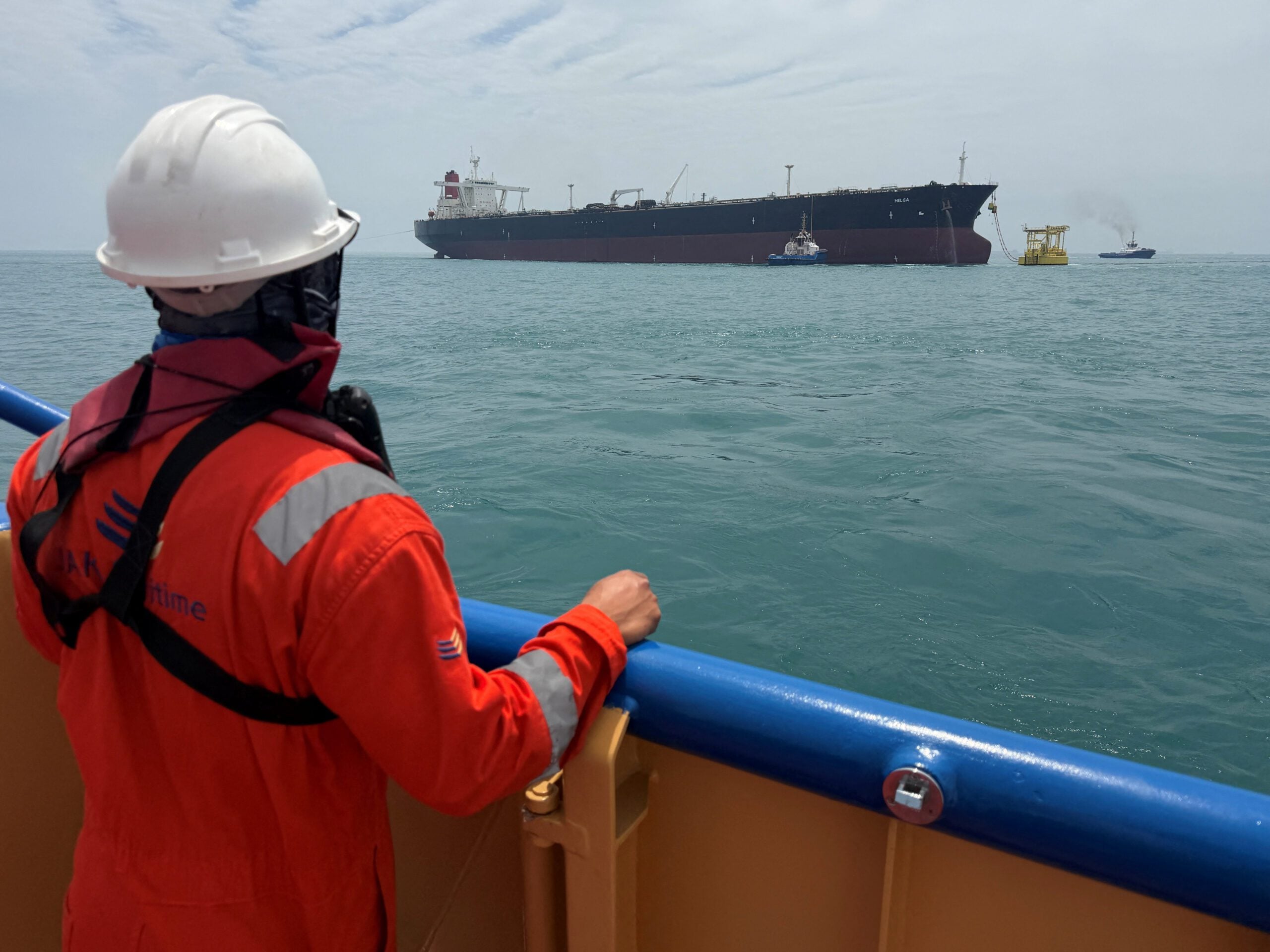
Gulf oil exporters topped pre-war levels for about half of September, shipping data showed on Monday, though attacks on tankers and logistical constraints cloud the outlook for sustained higher flows.
(Bloomberg) — Turkey and the United Nations have set up fresh talks in Russia and Ukraine to discuss a Black Sea ceasefire, trying to coalesce scattered efforts to protect grain...
October 1, 2026
Total Views: 522
Get The Industry’s Go-To News
Subscribe to gCaptain Daily and stay informed with the latest global maritime and offshore news
— just like 107,064 professionals
Secure Your Spot
on the gCaptain Crew
Stay informed with the latest maritime and offshore news, delivered daily straight to your inbox
— trusted by our 107,064 members
Your Gateway to the Maritime World!
Essential news coupled with the finest maritime content sourced from across the globe.

 Join The Club