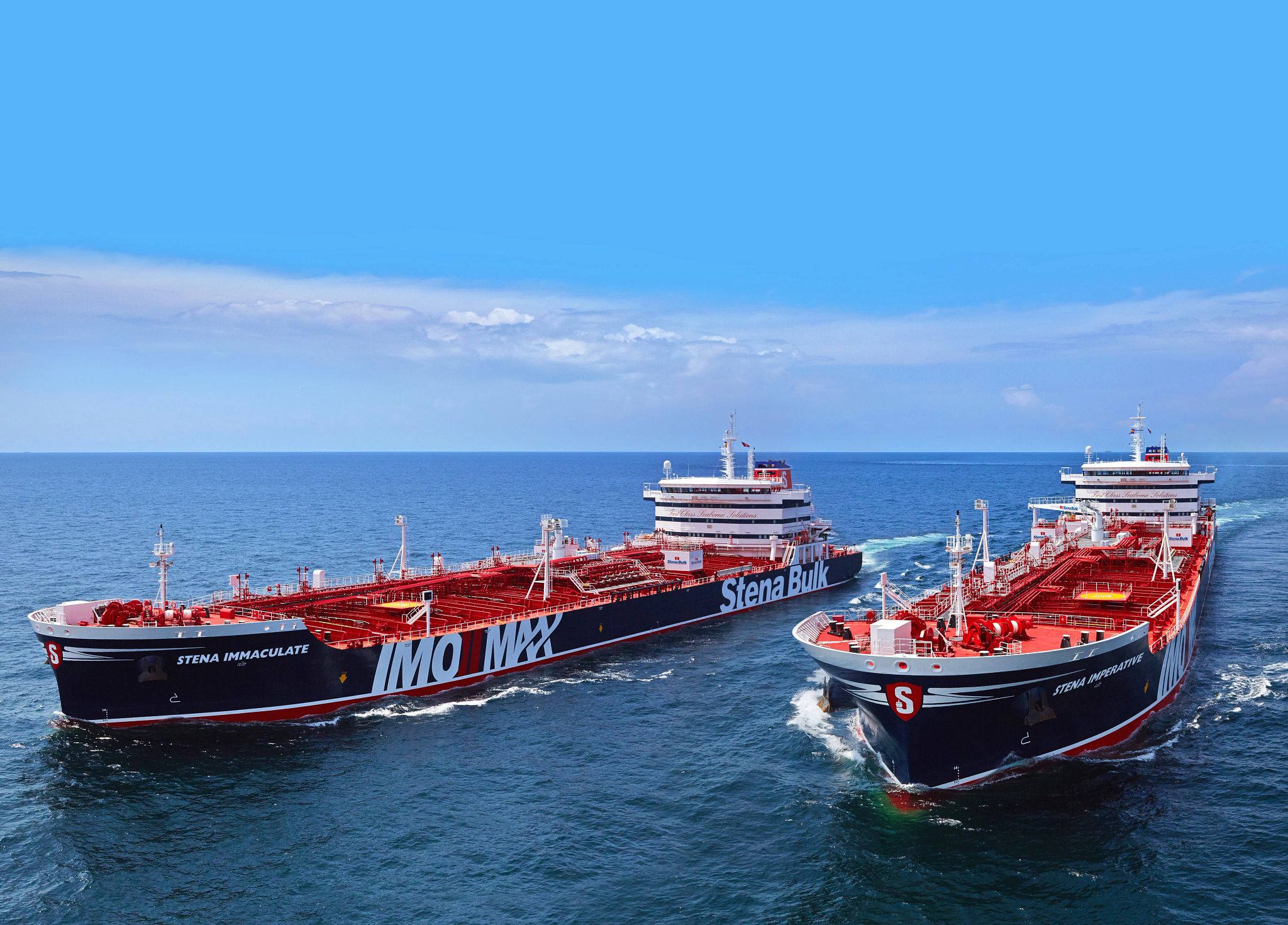
The Stena Imperative encounter is a textbook example of maritime brinkmanship in the world’s most sensitive chokepoint.
By Paul Morgan (gCaptain) – The confrontation involving the US-flagged tanker Stena Imperative in the Strait of Hormuz this week has become one of the clearest illustrations yet of how quickly routine commercial transits through the world’s most sensitive maritime choke point can escalate into strategic flashpoints, even when no shots are fired and no vessel is seized.
According to verified reporting from maritime security sources, US officials and international media, the incident unfolded when several fast-moving Iranian Revolutionary Guard Corps craft approached the tanker as it transited international waters close to the traffic separation scheme north of Oman. The small boats reportedly hailed the vessel over VHF radio and ordered it to slow or prepare to be boarded. Rather than comply, the tanker maintained course and increased speed while reporting the approach through established security channels.
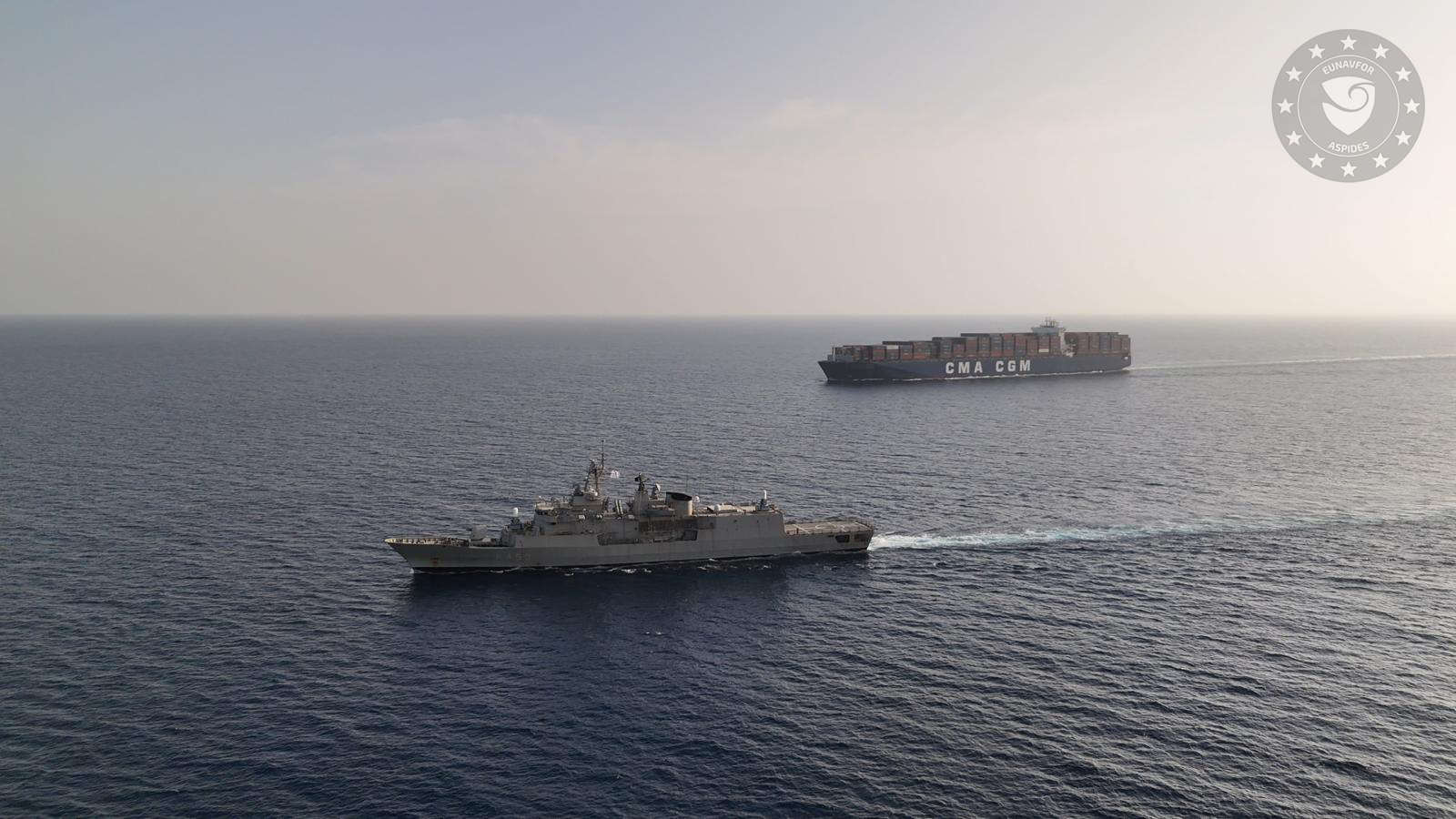
Within a short period, a US Navy destroyer operating in the region moved to the tanker’s vicinity and provided an armed escort, supported by air assets. US Central Command later confirmed that Iranian vessels and an unmanned aerial vehicle had closed the tanker at speed and that US forces intervened to deter what was described as a credible threat of seizure. The situation de-escalated without physical contact, damage, or injury, and the tanker continued its voyage.
For maritime security analysts, the episode was notable not only for the presence of multiple Iranian surface units but also for the involvement of an aerial drone, a combination that underscores the increasingly multi-domain nature of encounters in the Strait. As Charlie Brown, senior advisor at UANI observed, the incident “underscores how Tehran’s coercive tactics are now once again extending into international waters,” with Iranian forces willing to press up against the boundaries of accepted behaviour well beyond their territorial seas.
In isolation, such an encounter might have been dismissed as another example of the maritime brinkmanship that has characterised the Strait of Hormuz for more than a decade. US-flagged and US-associated vessels have long been subjected to challenges, shadowing and radio demands by Iranian units operating just short of the threshold that would trigger a direct military response. What makes this incident more consequential is its timing, its target, and its proximity to other military events unfolding in the same 24-hour period.
Stena Imperative is not merely another commercial tanker transiting the Gulf. It forms part of the United States Maritime Administration’s Tanker Security Program, a fleet designed to ensure assured access to tanker capacity for US defence and logistics needs in times of crisis. That status gives the vessel symbolic and strategic weight, making it an attractive focus for signalling by Iranian forces seeking to demonstrate reach and resolve without provoking open conflict. In Brown’s assessment, the encounter reflects a broader pattern in which Iran is “willing to challenge freedom of navigation and U.S. force posture simultaneously, risking miscalculation in a strategically vital maritime chokepoint.”
The episode also took place against a backdrop of heightened military tension in the region. On the same day, US forces confirmed the shoot-down of an Iranian drone that had approached a US aircraft carrier operating nearby. While the drone incident and the tanker encounter were not officially linked, their coincidence underscored how crowded and volatile the operating environment has become. The arrival of the USS Abraham Lincoln carrier strike group, deployed amid concerns over Iran’s internal repression and regional destabilisation, has further sharpened the sense that multiple strands of confrontation are converging at sea.
For ship operators and insurers, one of the most contentious aspects of the Stena Imperative episode has been the perception that the vessel was not under close naval escort at the time of the initial approach, despite other commercial ships reportedly receiving heightened protection during recent periods of tension. Verified reporting makes clear that a US warship did intervene rapidly and provided escort and protection once the situation developed. What remains less transparent, and is likely to remain so, is whether a dedicated pre-planned escort had been assigned prior to the transit or whether the response followed established on-call protection protocols that rely on naval forces operating nearby rather than permanently attached to individual vessels.
This distinction matters because it highlights the balance naval planners continue to strike between deterrence and resource management. The Strait of Hormuz sees dozens of large merchant ships pass through each day. Permanent close escort for every US-linked vessel would be operationally unsustainable and politically escalatory. Instead, the prevailing model has relied on rapid response, visible presence and the clear signalling that any attempt at seizure will be met with force. As Brown noted, however, “as usual, it is shipping and seafarers that are on the front lines of this dangerous situation that they can neither control nor easily avoid.”
Recent history reinforces this point. In July 2023, Iranian forces attempted to seize multiple tankers in the Gulf of Oman, including the Richmond Voyager, only to be deterred by the rapid arrival of US naval assets. That episode marked the most serious series of attempted interdictions in several years and prompted renewed warnings from maritime security organisations about the risk of escalation. The re-emergence of similar patterns now, even without shots fired, will not be lost on bridge teams transiting the region.
Adding further complexity is the broader geopolitical signalling underway beyond the Strait itself. Iran, Russia and China are preparing for another round of joint naval exercises in the northern Indian Ocean, while separate multinational drills involving the same actors are taking place further afield. Although these exercises are not centred on the Strait of Hormuz, their timing contributes to an atmosphere in which maritime encounters are more likely to be interpreted through a strategic lens rather than as isolated tactical events.
For the shipping industry, the immediate practical implications are clear. There has been no closure of the Strait, no sustained disruption to traffic flows, and no indication that Iran is seeking a broader confrontation at sea. Energy markets reacted cautiously rather than sharply, reflecting the assessment that this was a controlled encounter rather than the start of a campaign. Nevertheless, risk premiums are likely to remain elevated, and underwriters will continue to scrutinise voyage planning, security reporting and compliance with naval coordination procedures.
Yet the deeper concern lies in the cumulative effect of such incidents. As Brown pointedly observed, “illicit dark fleet tankers continue to export Iranian oil to buyers in China on a daily basis, despite US sanctions, with near total impunity, on the very same sea lanes that Iran challenges.” The contrast between aggressive enforcement against selected vessels and tolerance of sanctioned trade elsewhere underscores the political complexity facing those tasked with keeping the Strait open.
The Stena Imperative episode ultimately ended as many similar encounters have ended in recent years: with naval forces asserting control, commercial shipping proceeding, and all parties stepping back from the brink. It nonetheless serves as a reminder that stability in the Strait of Hormuz is being maintained not by the absence of confrontation, but by constant, careful management of it. As regional tensions persist and military activity intensifies, the risk facing merchant shipping is less about dramatic seizures than about the possibility that one day, a familiar script will not play out as expected.

 Join The Club