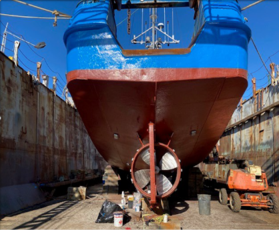
For many vessel owners, a problem below the waterline used to mean one answer: get the ship out of the water. This time intensive process consisted of booking a drydock slot, repositioning the vessel and waiting for a full assessment. In the case of underwater infrastructure, the tooling lacked the technological advances available today and many fixes were complex and time consuming.
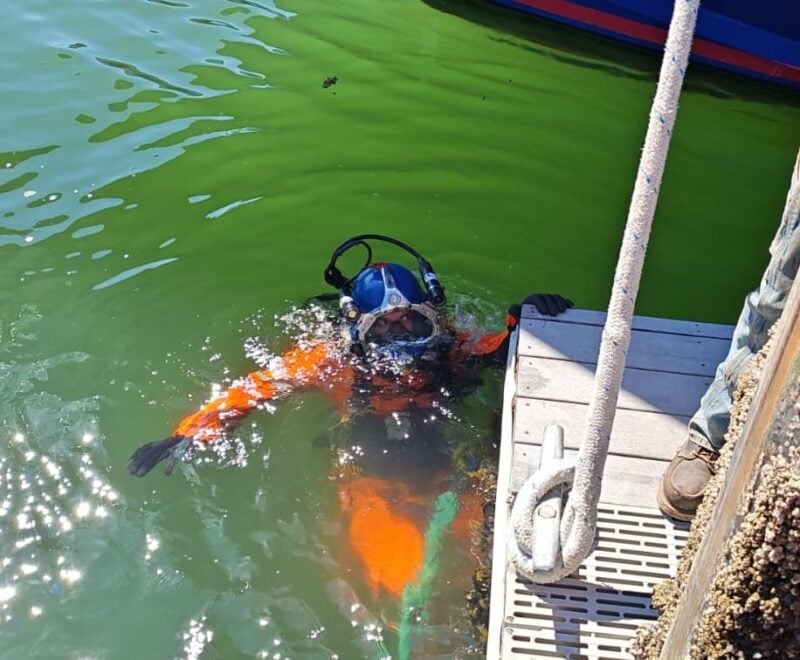
Now, a growing share of the inspection, maintenance and repair that once required a dry hull can be done in-water by commercial divers. Often it is done faster, at lower cost, and with less risk to the schedule.
Better tools, harder jobs
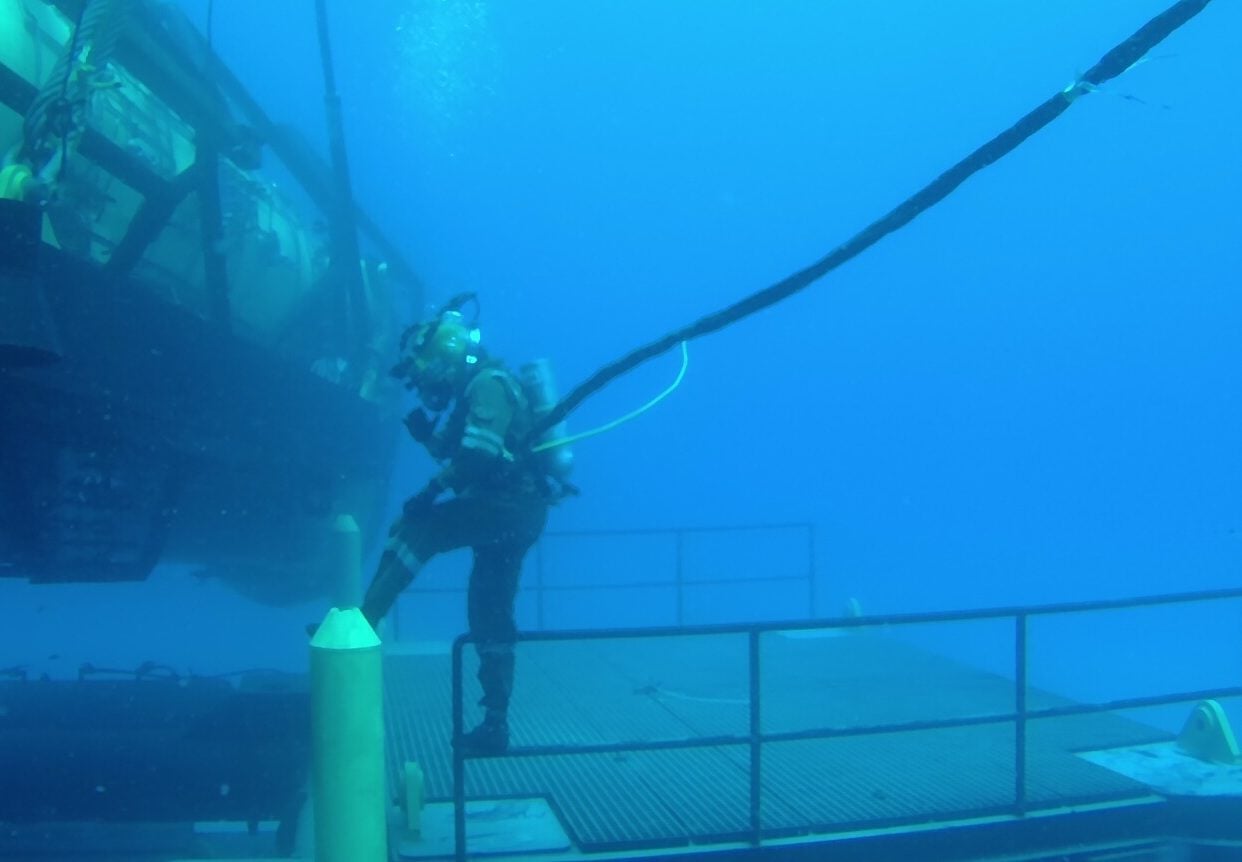
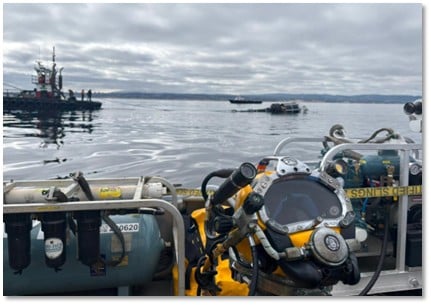
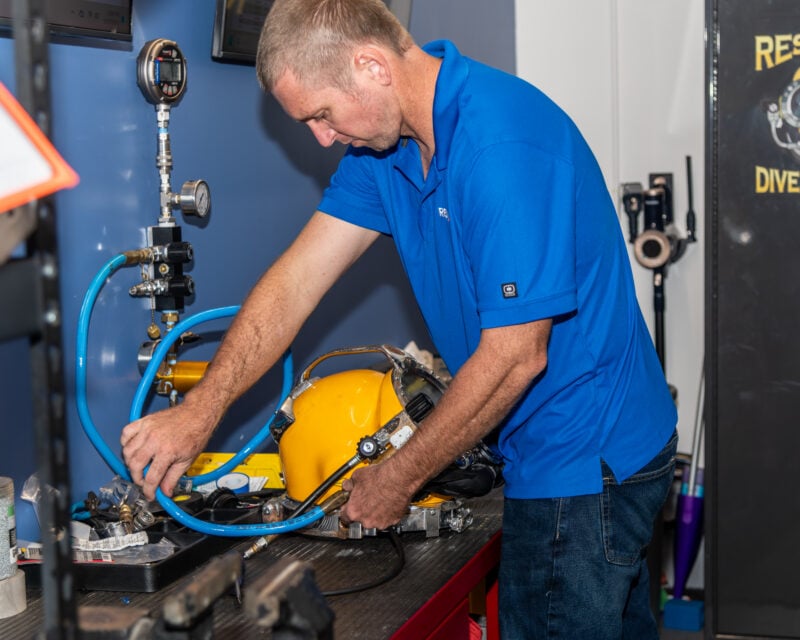
The list of tasks divers can now handle in-water is more comprehensive than many owners realize. Much of this progress comes down to tooling. Hydraulic and pneumatic tools have transformed what a diver can accomplish in a single shift. Grinders, drills, impact wrenches, bolt tensioners, cutters and hull-cleaning brush carts deliver real torque and precision at depth. Work that once took days of manual effort, or simply could not be done, is now routine.
Underwater cutting has advanced in parallel. Oxy-arc and ultra-thermic cutting systems allow divers to sever steel plate, piles and structural members quickly and cleanly. That matters for both repair and removal work, and for emergency response when speed counts.
Underwater welding has evolved as well. Wet welding, where the welder-diver works directly in the water with no barrier between the arc and the sea, was once viewed as a temporary fix. Today it is governed by AWS D3.6M, the industry’s underwater welding code. Its Class A welds are intended to perform comparably to surface welds, while Class B covers less critical applications. With qualified procedures and the classification society’s acceptance, some jobs that were once “patch it now, fix it in drydock” can now be permanent.
Diving for marine infrastructure
The same advances are reshaping work on the infrastructure vessels depend on. Piers, bulkheads, mooring dolphins, pipelines, bridge foundations and offshore structures all sit in the water, and all need inspecting, maintaining and, eventually, replacing.
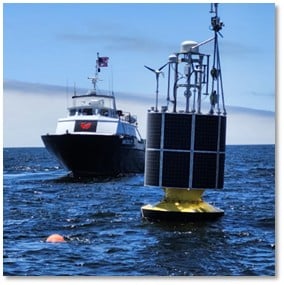
Commercial divers now handle sophisticated construction and repair these assets in water. They cut and remove piles and pile caps, take down and reinstall mooring dolphins and catwalks, and seal and internally plug pipelines. They drill into the seabed, install piles and foundations, place underwater grout and concrete, and make the subsea connections that allow heavy-lift cranes to set structures in place. Paired with sonar surveys and ROV support, a dive team can assess scour, corrosion and structural damage, then carry out the repair, often in one mobilization. For port authorities, terminal operators and energy companies, that means less downtime for assets that cannot afford to sit idle.
Establishing a full digital picture
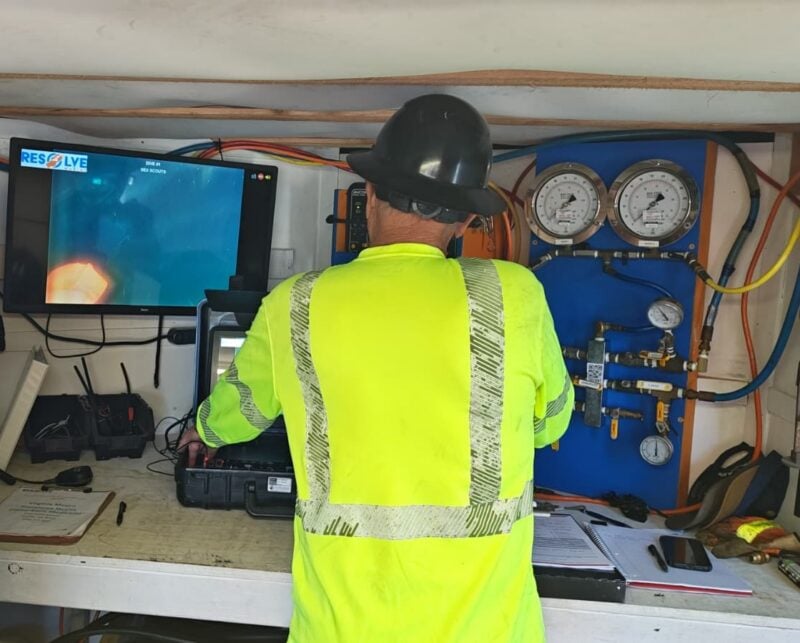
If tooling expanded what divers can fix, inspection technology expanded what they can find. And finding the problem early is where most of the value lies. Because high-definition video and still photography are now standard, they quickly produce a clear record for class, insurers and internal review.
Non-destructive testing has followed divers into the water. Ultrasonic thickness gauging maps plate wastage across the hull. Other NDT methods help detect cracks and weld defects before they grow into failures. The result is data an engineer can act on, not just a description. Acoustic tools add another layer. Multibeam and side-scan sonar can survey a hull, a berth or a wreck site in poor visibility, where no camera would help. Remotely operated vehicles (ROVs) carry cameras and sensors beyond the depth limits of surface-supplied diving, and can monitor diver operations for added safety.
The real payoff: time, cost and schedule
The financial case for in-water work starts with what a drydock visit really costs. For a vessel on a tight trading pattern, one unplanned week out of service can cost far more than the repair itself.
In-water work addresses each of those costs. A dive team can often mobilize to the vessel’s berth or anchorage. Many jobs can be completed during a scheduled port call, alongside cargo operations, or between voyages. The vessel keeps working, and the schedule holds.
Speed of diagnosis matters just as much. When a crew reports vibration, a leak, a loss of thruster performance or suspected grounding damage, the worst outcome is uncertainty. Owners are left choosing between sailing with an unknown problem and pulling the vessel out of service “just in case.” A prompt underwater inspection replaces that guess with facts. Sometimes the answer is a quick in-water fix. Sometimes it confirms that drydock is needed, but now the yard can be booked with a clear scope, the right parts and an accurate estimate. In either scenario, the business interruption is smaller.
Not every dive contractor is equal
The capabilities described here are real, but they are not evenly spread across the industry. Owners should stay aware of how far in-water technology has come, and of where any given contractor sits on that curve.
Before engaging a vendor, it pays to ask a few direct questions:
Track record: What comparable jobs has the contractor completed, on what vessel types, and with what results? Can they share case histories or references?
Standards and qualifications: Do they work to recognized standards such as the ADCI consensus standards, OSHA’s commercial diving rules and U.S. Coast Guard regulations? Are their welder-divers qualified to AWS D3.6M, and have their procedures been accepted by class?
In-house capability: Is the diving team their own, or subcontracted? Who maintains the dive equipment, and to what standard?
Technology: Can they deliver live video, NDT, sonar and ROV support, or only a diver and a camera?
Support behind the divers: Do they have engineers, naval architects and project managers who can interpret findings, plan repairs and coordinate with class and insurers?
Response: How fast can they mobilize, and from where?
A contractor with modern tools but thin engineering support, or a long history but outdated methods, may not deliver the speed and certainty owners are paying for. The right partner combines both.
Rethinking the default
Modern tooling, proven underwater welding standards and inspection technology that turns murky water into usable data, and commercial divers can diagnose faster, repair more, and keep vessels operating. For owners, the smartest first call when something goes wrong below the waterline may be to a dive team rather than a shipyard.
Resolve Marine provides in-house commercial diving and subsea services worldwide, from hull inspection, NDT and sonar survey to underwater welding, cutting, ROV operations and emergency salvage support. Its dive teams work to ADCI, OSHA and U.S. Coast Guard standards and are backed by salvage masters, naval architects and marine engineers. Learn more at resolvemarine.com.
A regulatory deadline is closing in on legacy firefighting foam. Here’s what operators should know about the shift away from PFAS-based AFFF and what to look for in a replacement....
July 20, 2026
Total Views: 2405
Get The Industry’s Go-To News
Subscribe to gCaptain Daily and stay informed with the latest global maritime and offshore news
— just like 106,135 professionals
Secure Your Spot
on the gCaptain Crew
Stay informed with the latest maritime and offshore news, delivered daily straight to your inbox
— trusted by our 106,135 members
Your Gateway to the Maritime World!
Essential news coupled with the finest maritime content sourced from across the globe.

 Join The Club