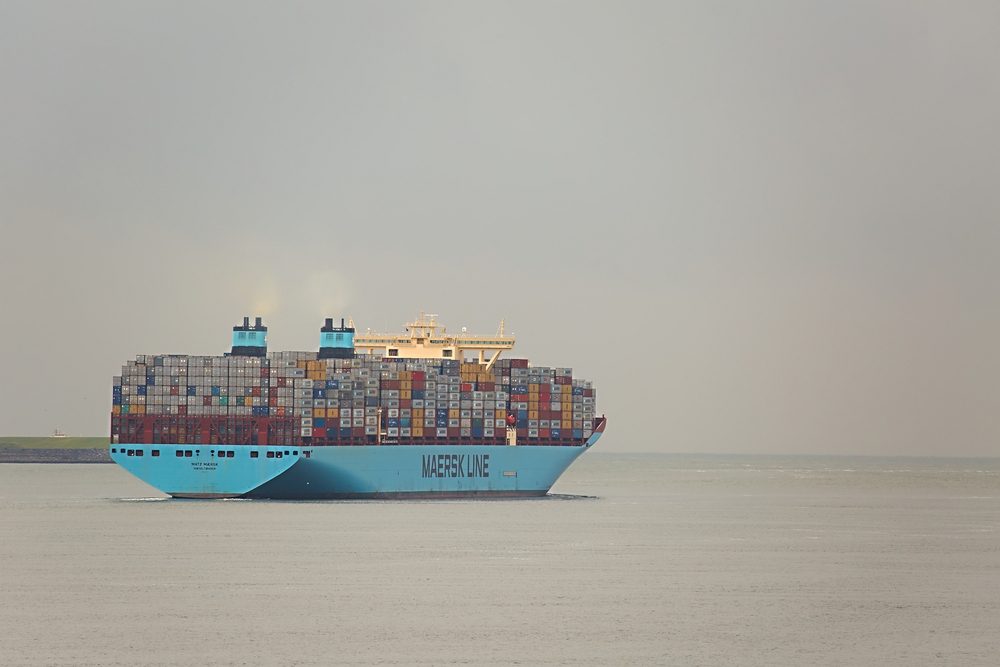
The global containership fleet is about to cross another major milestone, with capacity set to reach 34 million TEU after growing by 10 million TEU in just five and a half years, according to BIMCO.
At the beginning of September, global fleet capacity stood just 8,000 TEU short of the 34 million TEU mark, meaning only a handful of the 46 containerships scheduled for delivery this month will be needed to push the fleet past the threshold.
“When the world’s shipyards deliver just a few more container ships, the global fleet capacity will for the first time reach 34 million TEU,” said Niels Rasmussen, BIMCO’s chief shipping analyst. “At that time, the fleet will have grown by 10 million TEU — or 42% — in just five and a half years,” after taking more than 10 and a half years for the fleet to make its previous 10 million TEU jump, from 14 million to 24 million TEU.
BIMCO said the rapid gowth has been driven by a combination of record newbuild deliveries and unusually low levels of ship recycling. Less than 300,000 TEU of capacity has been scrapped over the past five and a half years, despite the fleet being roughly three times larger than the last time recycling remained this low over a comparable period.
The growth has also shifted the makeup of the fleet toward larger ships. Vessels above 12,000 TEU accounted for roughly two-thirds of the 10 million TEU added since early 2021. Their share of total fleet capacity has climbed from 30% to 40%, while the average containership size has increased 14%.
Liner operators have also taken greater control of their own tonnage. According to BIMCO, carriers accounted for 85% of the capacity added over the period and now control 65% of the global fleet, compared with 57% in early 2021.
At the same time, limited scrapping has left the industry with a growing pool of older vessels. Nearly 2,000 containerships totaling more than 5 million TEU are now at least 20 years old. Within five years, those vessels will have reached or surpassed the industry’s historical average recycling age of about 25 years, creating a sizable pool of potential demolition candidates.
Whether enough ships are actually scrapped could become increasingly important as another wave of newbuildings arrives.
The containership orderbook currently includes more than 14 million TEU of capacity scheduled for delivery through the end of 2030. BIMCO estimates the fleet could potentially add another 10 million TEU over the next five years, taking total capacity to around 44 million TEU.
“Even if every ship currently aged 20 years or more is recycled by then, supply growth will remain high,” Rasmussen said.
That supply picture could become even more challenging if containerships eventually return to normal routings through the Suez Canal. Diversions around the Cape of Good Hope have absorbed significant amounts of vessel capacity by lengthening voyages, helping cushion the impact of the industry’s huge newbuilding program.
A return to shorter Suez routings would release that capacity back into the market just as shipyards continue delivering a historically large orderbook.

 Join The Club