By Mark Bergen
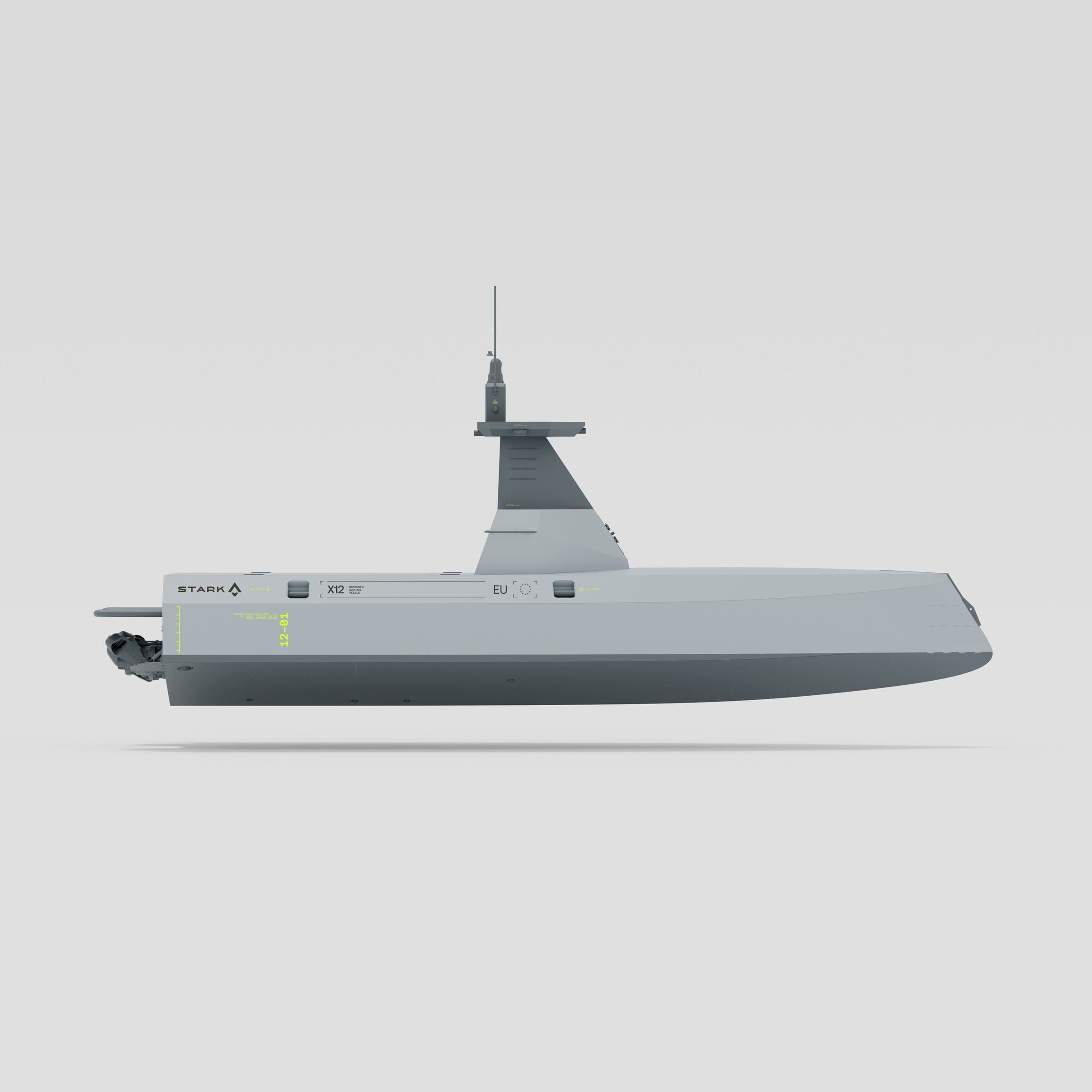
Nov 3, 2026 (Bloomberg) –German startup Stark Defence plans to launch a 24-meter uncrewed surface vessel next year, marking an expansion beyond small drones to more closely resemble an established defense contractor.
The Berlin-based company’s new ship is designed to guard undersea cables and track Russia’s shadow fleet in European waters, Stark’s Chief Executive Officer Uwe Horstmann announced at Bloomberg Tech London on Tuesday.
“Those are systems that cost a thousandth of the price of a manned frigate, which takes years to produce,” Horstmann said. Stark’s maritime vessel “can be deployed within months, so there is a big speed element.”
The Vanta 24 can carry up to 50 metric tons, including weapons like missiles and cannons, and travel more than 40 miles per hour (64 kph) without a crew onboard, according to the company. The announcement comes as more European navies look to uncrewed platforms to save money and manpower, and as Russia steps up submarine activity in the continent’s waters.
Stark, which formed in 2024 to make strike drones, has already designed two smaller vessels. The Vanta 24 makes it one of several defense tech newcomers angling to become one of the so-called “neo-primes” — venture-capital backed startups, like Anduril Industries Inc., that offer a range of military products centered around the latest software and technology.
For Stark, moving beyond drones was “always the ambition,” Horstmann said in an earlier interview. “We need a new kind of defense company that is technology-first, software-first and believes in rapid innovation.”
European officials are increasingly sounding alarms about Russia’s campaign of hybrid warfare after a deluge of cyberattacks, drone incursions and suspected sabotage of key infrastructure. For northern Europe, concern has focused on hundreds of ocean vessels tied to Moscow. Nordic nations have devoted more attention to naval deterrence. British forces boarded a sanctioned oil tanker this summer and the Dutch government recently proposed new methods to intercept Russian vessels.
Read More: Europe’s Top Five Defense Powers to Call Russia Biggest Threat
Horstmann said Stark’s offerings are built to address this “new potential battleground” in the Baltic and North seas, which are fraught with steep waves and freezing temperatures.
The startup is also developing an electronic warfare sensor that it says can detect transmitters and radars up to 100 kilometers (62 miles) away. And the company touts its software platform that’s tailored to let unmanned drones and vessels communicate, as well as potentially link with weapons made by competing suppliers.
Stark plans to develop the Vanta 24 in the UK and Germany, and hired Stephen Brian, a former nuclear submarine commander for the British Royal Navy, to run the company’s naval operations. He described Vanta 24 as a versatile vessel designed to escort warships or surveil on its own, replacing the labor-intensive work of monitoring coastlines and subsea cables.
“We’re trying to move the sailor from the dull and the dangerous,” he said.
Although the continent is hungry for European-made defense hardware, building vessels is more complicated and costly than making small drones, and it has posed problems for companies with roots in software rather than shipbuilding, said Nicholas Nelson, a senior fellow at the Center for European Policy Analysis.
“If you’ve not properly bent metal before, it’s a really tough environment,” said Nelson, who is also an investor in Kraken, a British startup working on autonomous vessels.
Nelson added that European defense tech startups face further issues replicating the scale of Anduril — now in talks for a $90 billion valuation — scale given the continent’s fragmented market and shallower capital pools. Still, Stark has attracted some blue-chip investors and raised significant capital quickly. In June, it reached a valuation of €3.2 billion ($3.6 billion) and has grown to more than 700 employees.
Some competitors already specialize in unmanned boats, like Texas startup Saronic, while Anduril and Helsing, a German drone developer and Stark rival, have expanded into the maritime sector.
Luciana Lixandru, a partner with Sequoia Capital, said the Silicon Valley investor backed Stark because it believes the company will be one of Europe’s few defense newcomers to compete with prime contractors.
“It’s likely my first and last defense investment,” she said. “We like to make these moonshot investments, where the sky is the limit. And we think that about Stark.”
Lixandru said Sequoia has participated in all three of Stark’s funding rounds and is the startup’s largest outside shareholder. Peter Thiel’s Founders Fund, an Anduril investor, co-led Stark’s €500 million round in June with Sequoia. The ownership stake of the controversial billionaire has faced political criticism in Germany.
Horstmann said concerns about Thiel have not posed hurdles to military customers in Europe. This month, the German army is set to begin training on attack drones from Stark and Helsing after awarding both companies contracts worth about €270 million each.
Stark has drone contracts with four other NATO countries, Horstmann said. He declined to name them, citing customers’ security restrictions. Stark would not share revenue figures or pricing for its new vessel.
To contact the author of this story:
Mark Bergen in London at [email protected]
© 2026 Bloomberg L.P.

 Join The Club