Container shipping’s return to the Suez Canal is gathering pace, even as fighting around the southern entrance to the Red Sea is moving in the opposite direction.
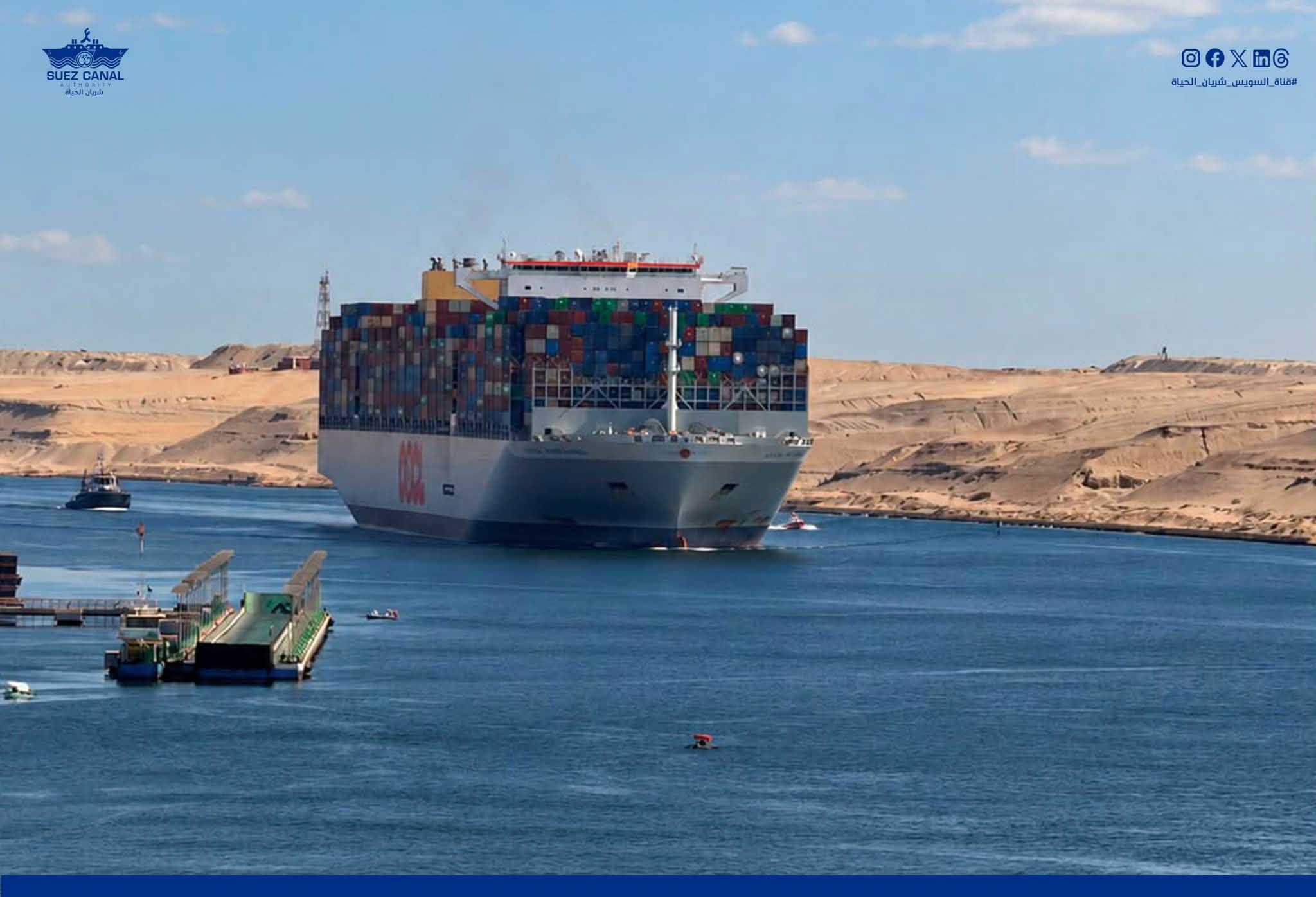
The 24,188-TEU OOCL Portugal transited the Suez Canal on Wednesday on a voyage from Belgium to China, marking what the Suez Canal Authority described as COSCO SHIPPING Lines’ first southbound passage through the canal since the Red Sea security crisis began.
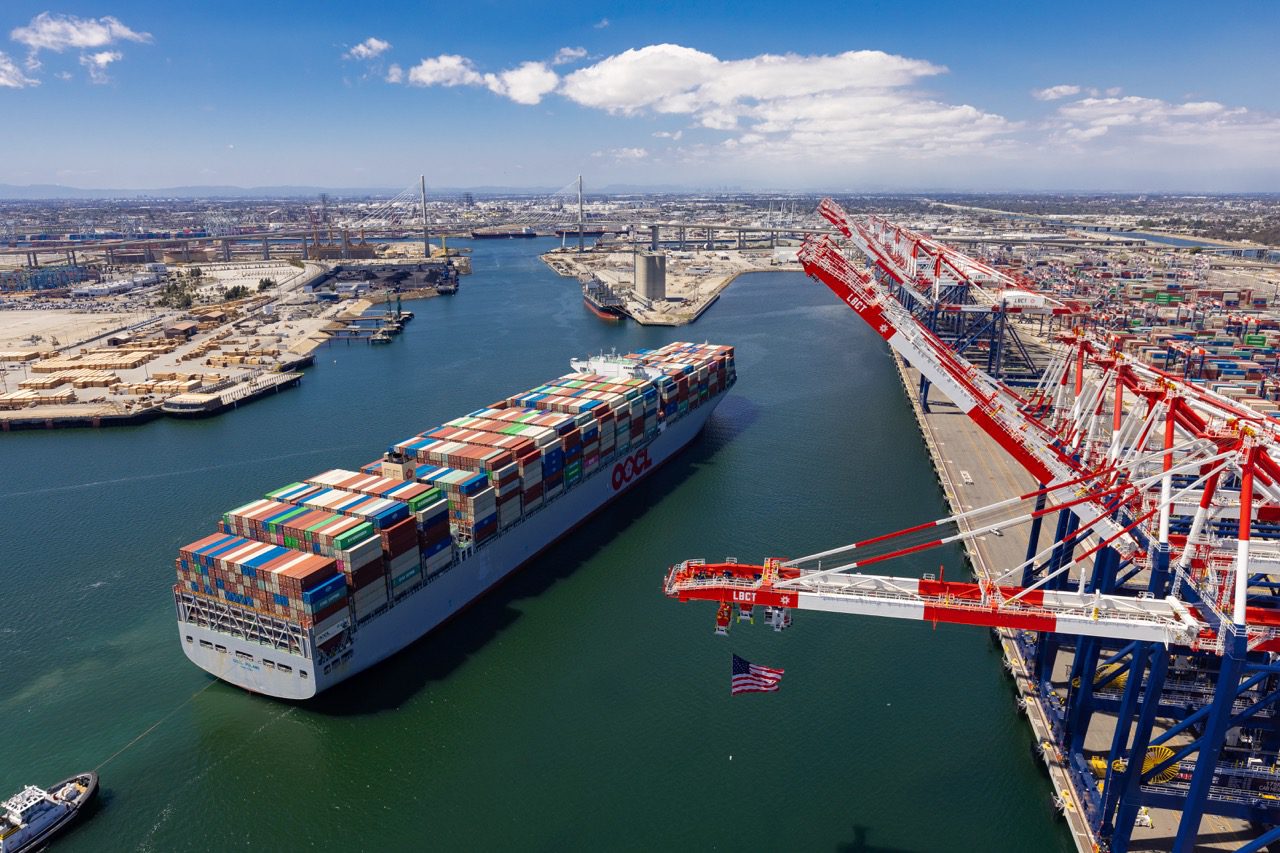
The nearly 400-meter vessel operates on Ocean Alliance’s NEU2 service connecting the Far East and Northwest Europe.
For Egypt, the passage is another sign that the container sector is beginning to rebuild its presence on the Suez route after years of diversions around the Cape of Good Hope.
The Suez Canal Authority said container ship net tonnage through the canal reached 72.1 million tons during the first eight months of 2026, up 54.2% from 46.7 million tons during the same period last year. The authority said services operated by CMA CGM, Maersk, MSC, Hapag-Lloyd and COSCO have all returned to the canal to varying degrees.
That recovery further accelerated this week. Maersk and Hapag-Lloyd announced Monday that four additional Gemini Cooperation services — AE5, AE11, AE12 and ME2 — will shift from the Cape of Good Hope back to the Suez Canal. They join the AE15 and AE19 services already operating through Suez, substantially expanding Gemini’s exposure to the Red Sea corridor.
Sailing through Suez removes thousands of miles from Asia-Europe voyages compared with routing around southern Africa, cutting transit times, fuel consumption and vessel requirements. But the return is happening against an increasingly complicated security backdrop.
Bab el-Mandeb Risk Is Moving the Other Way
Iran-aligned Houthi forces have made rapid gains along Yemen’s Red Sea coast this month, capturing Mocha and moving onto islands around the Bab el-Mandeb Strait, the narrow southern gateway that every ship using the Red Sea-Suez route must pass.
The Houthis have so far limited their declared naval blockade to Saudi vessels, while reports indicate the group intends to continue honoring its earlier ceasefire agreement with the United States. Houthi representatives told U.S. officials during recent talks in Oman that they would not target American or Israeli vessels, while reserving the right to attack Saudi shipping.
That distinction matters for container carriers weighing a Suez return, but it does not remove the broader risk of operating through the region.
Maersk and Hapag-Lloyd have already left themselves room to reverse course. In announcing their latest Suez changes, the carriers said future routing remains dependent on stability in the Red Sea and the absence of further escalation.
“The safety of the crew, the vessels, and customers’ cargo remains the highest priority,” Maersk said.
For the Suez Canal, however, the trend is finally moving in the right direction. Wednesday’s OOCL Portugal passage came as 39 ships carrying a combined 2.3 million net tons transited the canal, according to the Suez Canal Authority.

 Join The Club