A Bahrain-led group backed by 80 countries has called for the immediate reopening of the Strait of Hormuz, demanding safe and unimpeded passage for commercial ships without tolls, conditions or other charges.
The joint statement, delivered at the United Nations, also condemned continued Iranian actions affecting shipping through the strait and renewed Houthi attacks around the Red Sea and Bab al-Mandab, warning that disruption at both chokepoints threatens maritime security, energy supplies and global trade.
“We reiterate our call for the urgent and full re-opening of the Strait of Hormuz and the safe, secure and unimpeded transit of all vessels,” the statement said, calling for passage “without the imposition of tolls, conditions or illegal charges.”
The countries reaffirmed their support for UN Security Council Resolution 2817, adopted March 11. The resolution condemned Iranian strikes against Bahrain, Kuwait, Oman, Qatar, Saudi Arabia, the United Arab Emirates and Jordan, as well as actions or threats aimed at closing or obstructing international navigation through the Strait of Hormuz. It passed with 13 votes in favor and abstentions from China and Russia.
The latest statement comes as commercial shipping continues to operate under severe constraints in and around Hormuz after months of conflict.
The coalition also condemned renewed Houthi hostilities in Yemen, strikes against Saudi Arabia and attacks in the Red Sea, saying the group’s advance around Bab al-Mandab was adding to risks for ships moving through another critical trade corridor.
The statement placed particular emphasis on the impact on merchant shipping and crews.
“Commercial shipping and seafarers must never be used as leverage,” it said, paying tribute to seafarers continuing to operate in the region despite the security risks.
That language echoes repeated warnings from the International Maritime Organization. IMO Secretary-General Arsenio Dominguez has repeatedly called for an end to attacks on merchant ships and for the restoration of safe navigation without discriminatory tolls or fees.
The IMO has confirmed at least 84 incidents involving merchant shipping in the Strait of Hormuz and the wider Middle East since the conflict began on February 28, with 23 seafarers killed.
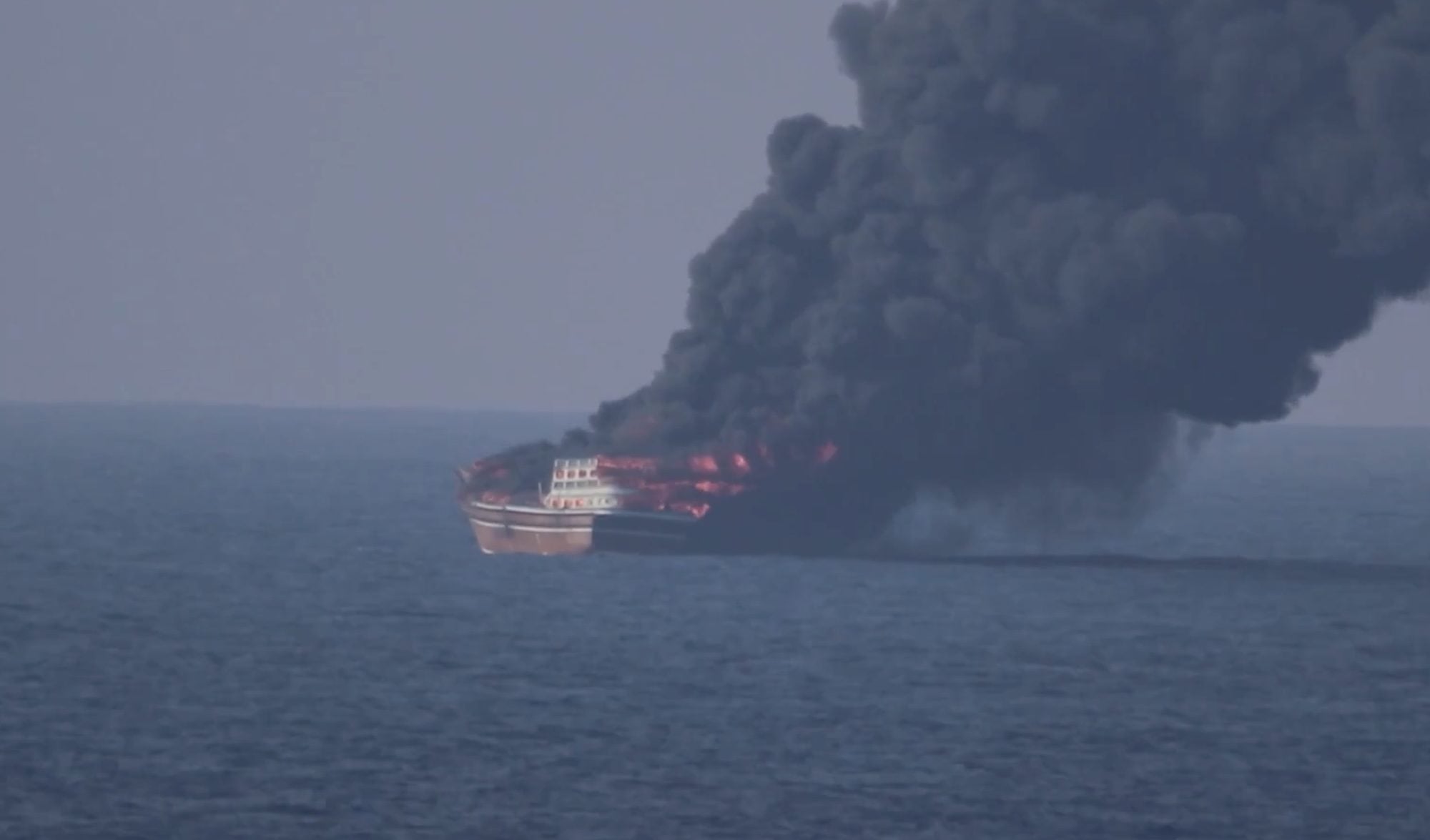
But the pace of incidents has picked up sharply in recent days. UKMTO reported three attacks or security incidents between September 16 and 18, followed by two separate tanker incidents on September 21 and the September 23 attack on the Cape Dao, which killed an Indian seafarer.
Across the wider region, UKMTO issued seven consecutive attack or security warnings between September 17 and 23, including an attempted interception east of Aden.
The Bahrain-led statement also pointed to the broader economic consequences of disrupted maritime trade.
UN Secretary-General António Guterres warned in August that simultaneous disruptions around Hormuz, Bab al-Mandab and the Black Sea were “choking arteries of global trade” and driving up the cost of energy, fertilizer and food. At the time, he said traffic through Hormuz had fallen to near a standstill and called for the full restoration of navigational rights and freedoms.
The countries said they supported the IMO and regional partners working to restore safe navigation and would continue engaging with the shipping industry so normal operations can resume when security conditions permit.
“We call for the full restoration of free transit in accordance with navigational rights and freedoms, without delay,” the statement said.

 Join The Club