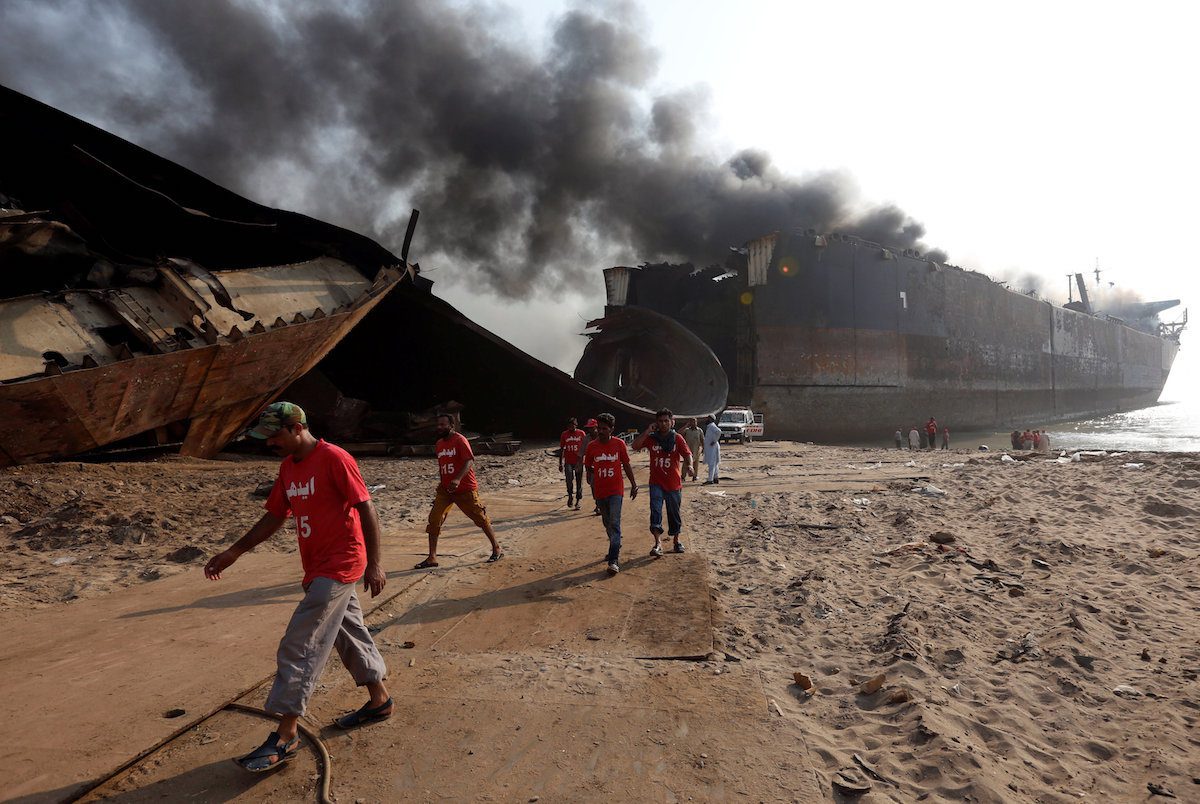
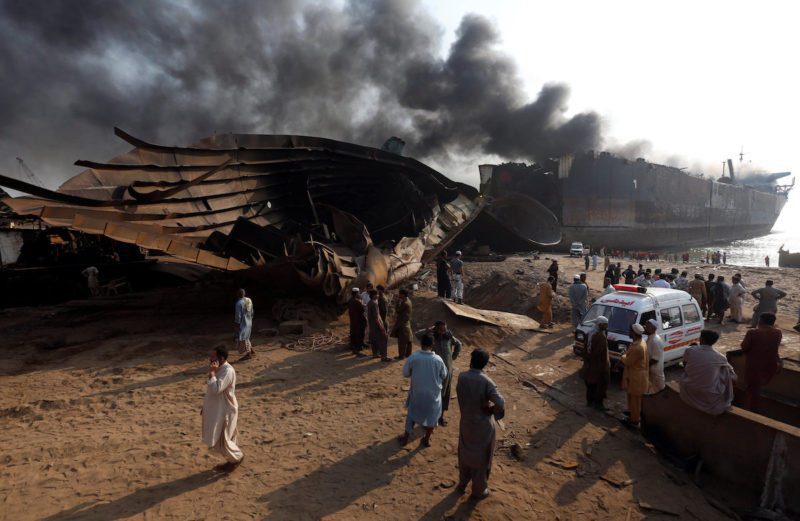
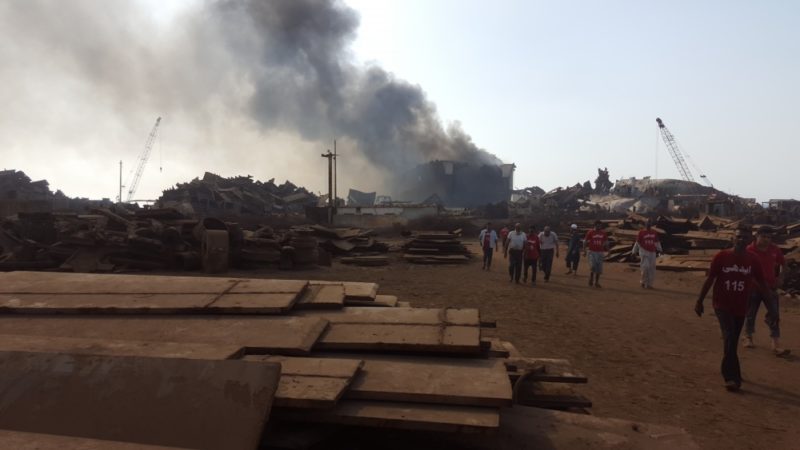
Rescue workers gather near the burning oil tanker at the ship-breaking yard in Gaddani, Pakistan, November 2, 2016. REUTERS/Akhtar Soomro
At least 17 people have died and many more are still missing 24 hours after a series of explosions ripped through a beached oil tanker at a shipbreaking yard in Gaddani, Pakistan on Tuesday.
The initial blast reportedly occurred during welding work inside a former floating oil production tanker where dozens of workers are believed to have been working to dismantling the vessel.
At least 58 people were injured, and according to reports as many as 25 people may still be missing as the fire continued to burn inside the vessel a day after the first explosion.
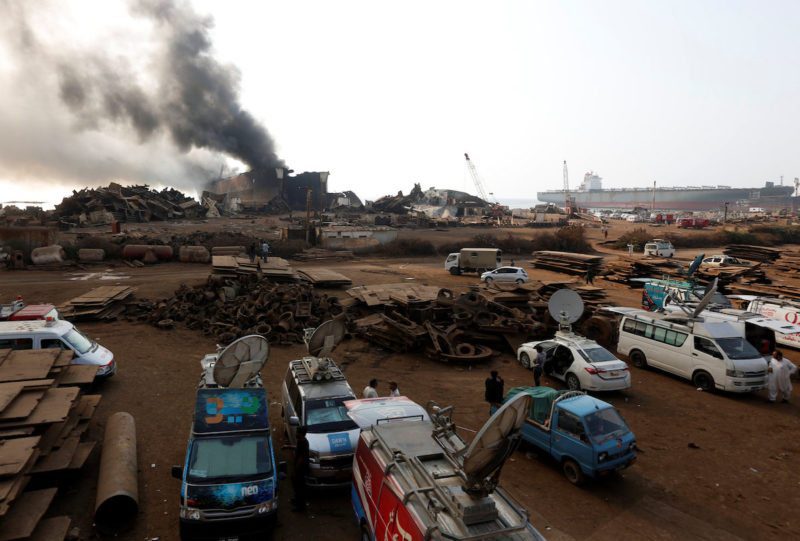
Smoke rises from the burning oil tanker as media vehicles are stationed at the ship-breaking yard in Gaddani, Pakistan, November 2, 2016. REUTERS/Akhtar Soomro
The incident comes as environmental and human rights labor groups are calling on the shipping industry to stop sending end-of-life vessels to southeast Asian shipbreaking yards where working conditions are poor and the controversial practice of beaching is still used to dismantle ships within the tidal zone.
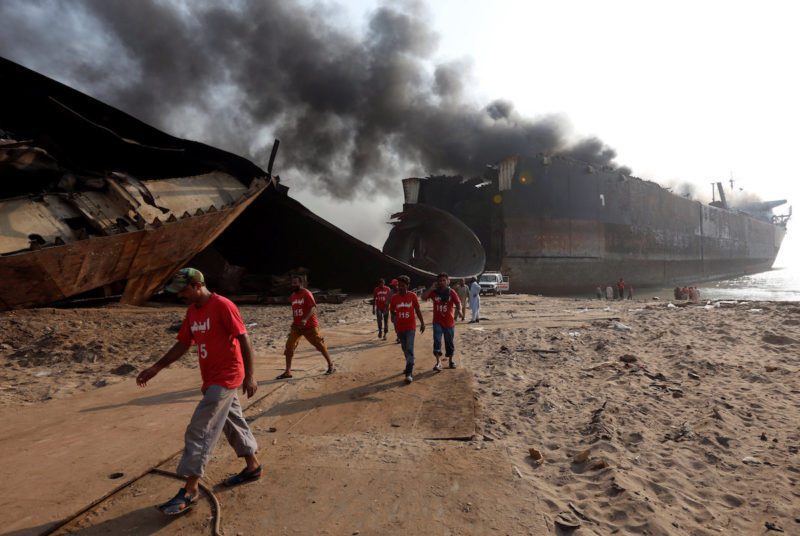
Rescue workers walk near the burning oil tanker at the ship-breaking yard in Gaddani, Pakistan, November 2, 2016. REUTERS/Akhtar Soomro
While many shipowners have shifted to more modern shipbreaking yards in Turkey and China, today it is estimated that over 70% of end-of-life vessels end up being sold to facilities on beaches in India, Pakistan and Bangladesh lacking proper safety equipment, environmental protection practices, and emergency services.
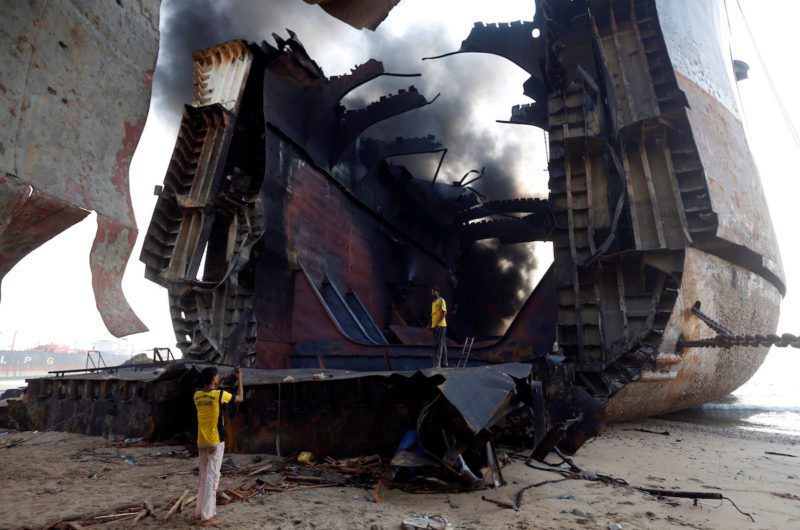
A man takes photo of his colleague with a mobile phone on the burning oil tanker at the ship-breaking yard in Gaddani, Pakistan, November 2, 2016. REUTERS/Akhtar SoomroRescue workers and family members of missing labourers gather and wait near the burning oil tanker at the Gaddani ship-breaking yard, 45 km (28 miles) of Karachi, Pakistan, November 2, 2016. REUTERS/Akhtar SoomroPhoto: NGO Shipbreaking Platform
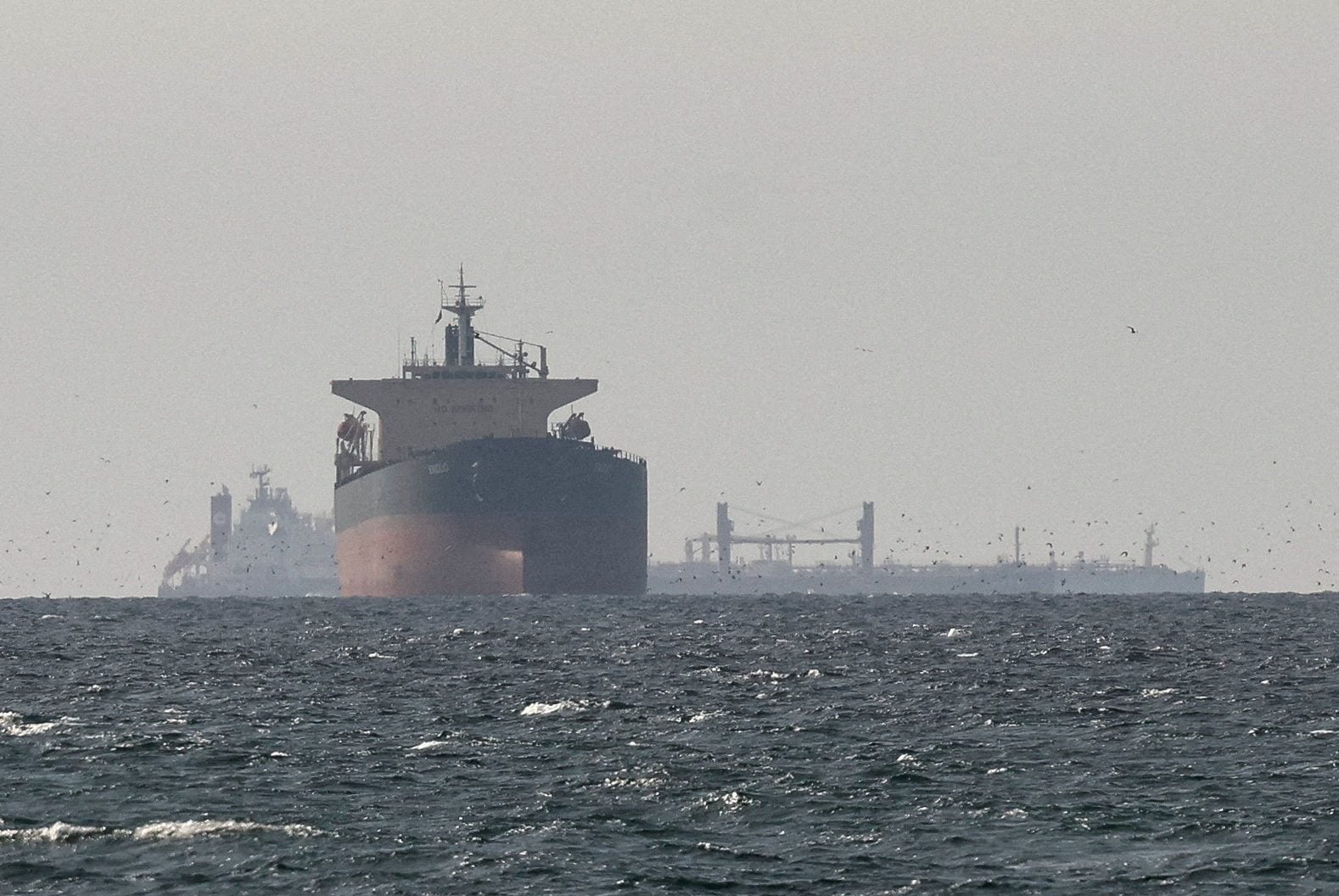
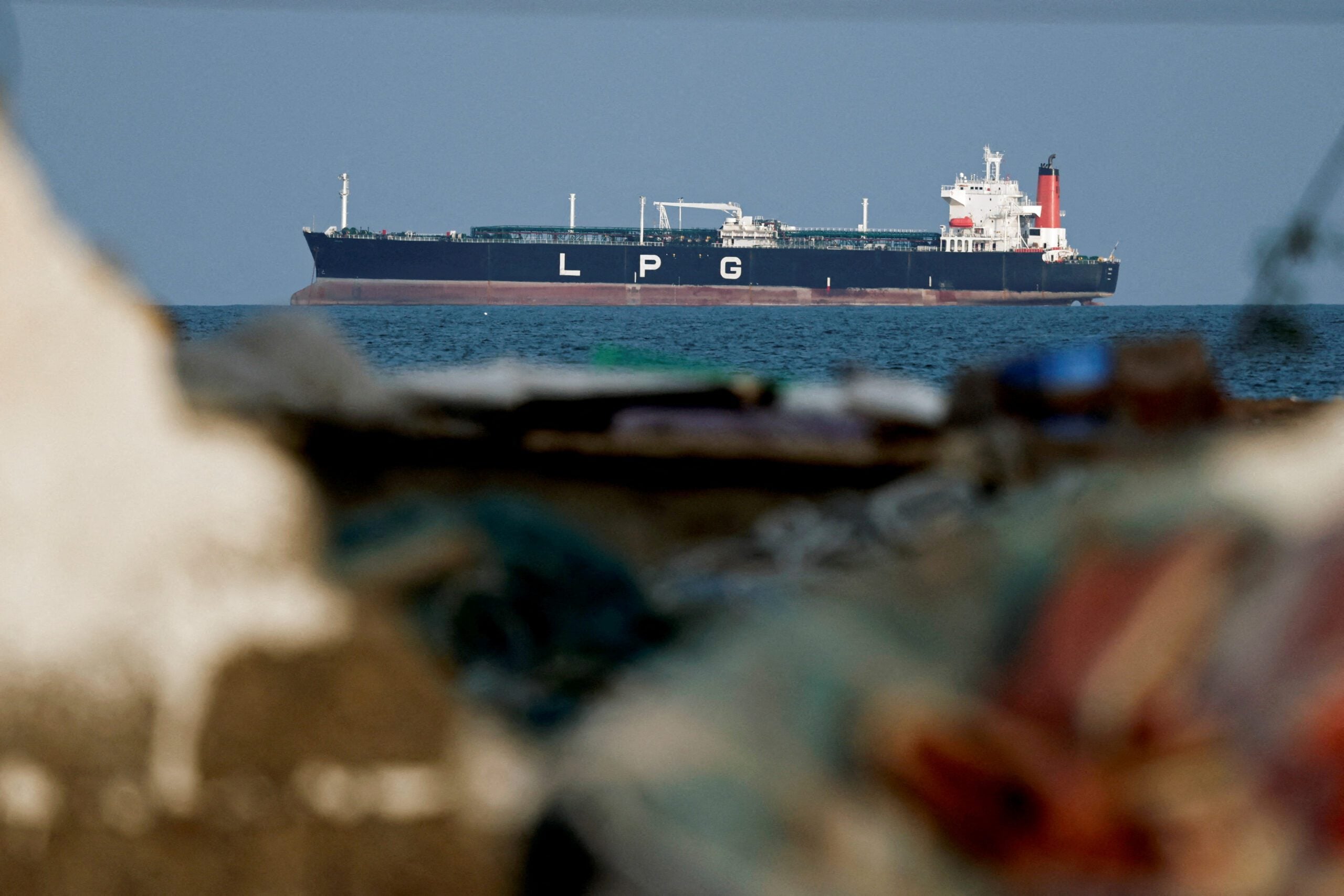
A small number of merchant vessels have begun edging back through the Strait of Hormuz, offering the first visible signs of movement after weeks of disruption. But far from signalling recovery, these carefully managed transits are exposing a deeper and more unsettling shift: one of the world’s most critical shipping lanes is no longer operating under normal commercial rules.
Recent U.S. intelligence reports warn that Iran is unlikely to open the Strait of Hormuz any time soon because its grip on the world’s most vital oil artery provides the only real leverage it has over the United States, according to three sources familiar with the matter.
The Trump administration has doubled its maritime insurance backstop to $40 billion, expanding a flagship effort to restart commercial shipping through the Strait of Hormuz—even as shipowners continue to largely stay away.
April 4, 2026
Total Views: 11395
Get The Industry’s Go-To News
Subscribe to gCaptain Daily and stay informed with the latest global maritime and offshore news
— just like 107,350 professionals
Secure Your Spot
on the gCaptain Crew
Stay informed with the latest maritime and offshore news, delivered daily straight to your inbox
— trusted by our 107,350 members
Your Gateway to the Maritime World!
Essential news coupled with the finest maritime content sourced from across the globe.

 Join The Club