DAILY BLOG. About ships.

gCaptain.com

A Blog About Ships


Guide to Tanker Sizes

July 31st, 2008 · Comments

Tanker Moscow

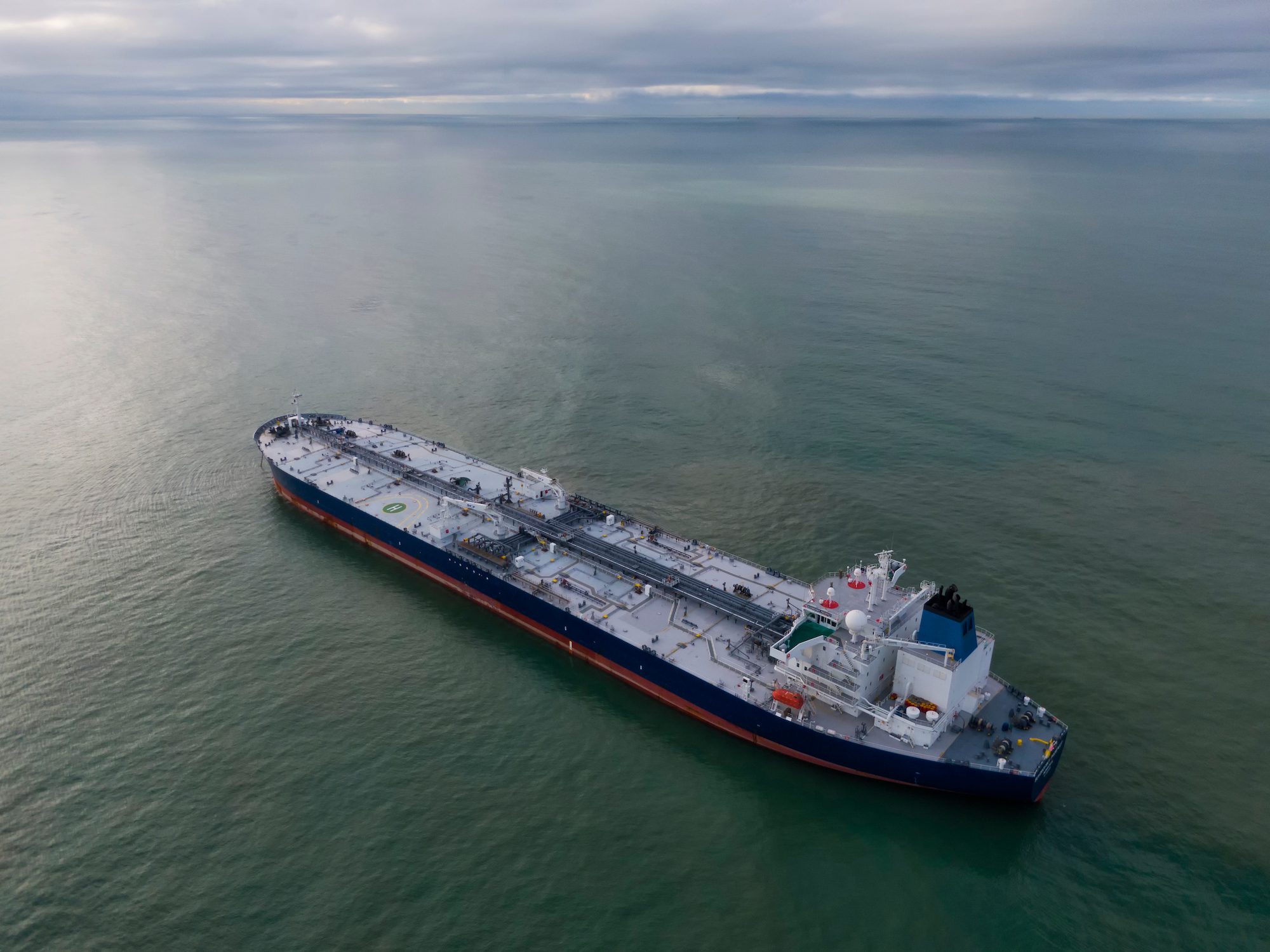
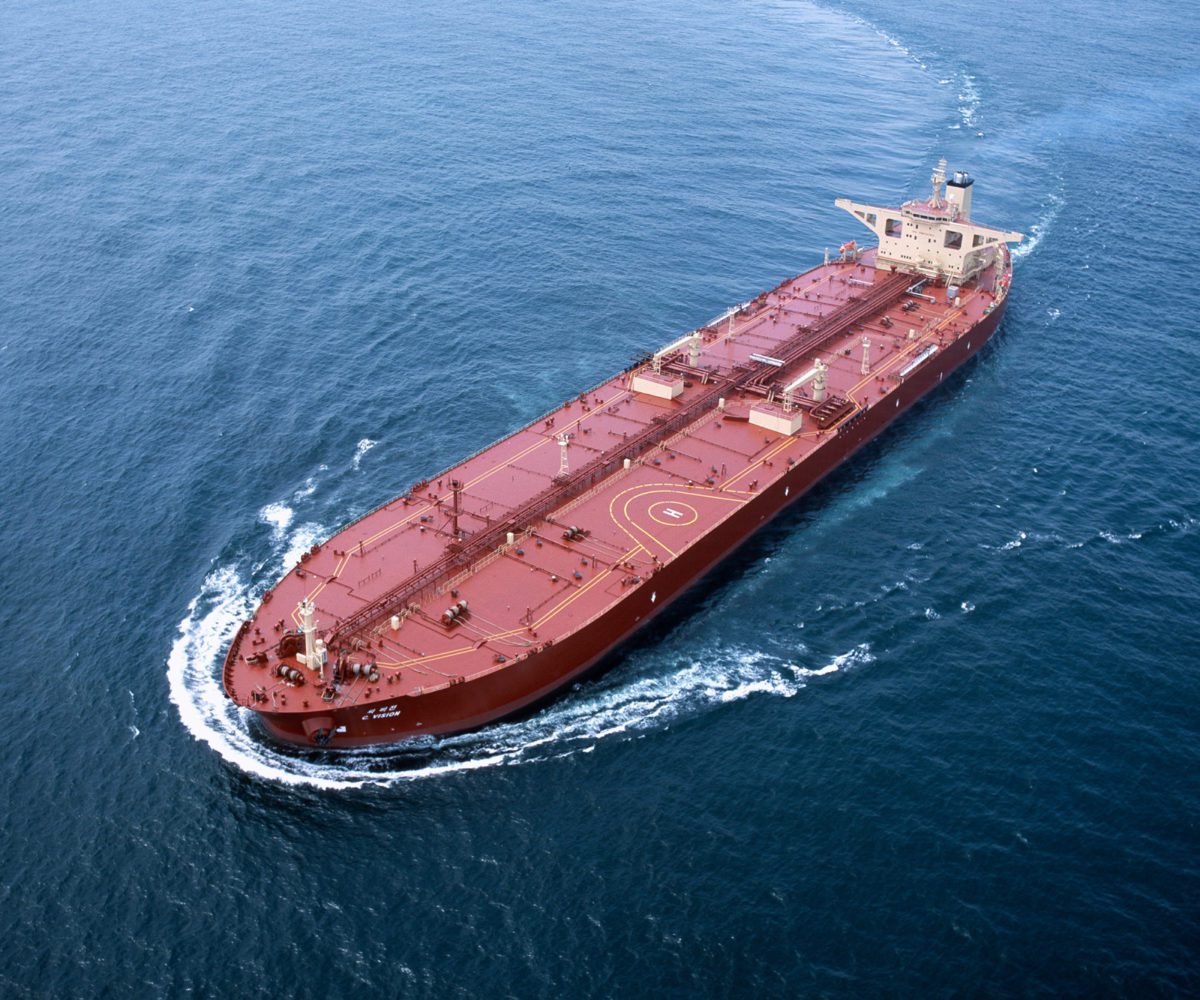
Head over to IMC Broker’s blog to find a really good guide to tanker sizes. From Handy to ULCC this guide has pictures, descriptions and dead weight tonnages to help you visualize the different sizes. An example:

Capesize: Refers to a rather ill-defined standard which have the common characteristic of being incapable of using the Panama or Suez canals, not necessarily because of their tonnage, but because of their size. These ships serve deepwater terminals handling raw materials, such as iron ore and coal. As a result, “Capesize” vessels transit via Cape Horn (South America) or the Cape of Good Hope (South Africa).

LINK : IMC’s Tanker Sizes Guide

If your not a professional mariner you might also want to take a look at their Shipboard Chain of Command Guide.

CommentsTags: · ,

Birth Of A Giant - Supertanker Construction Video

May 3rd, 2008 · Comments

This video show the 1975 construction of the tanker M/V Batillus in St. Nazaire, France. she has since been scrapped.

CommentsTags: · , , , ,

Ballast Free Ships

March 29th, 2008 · Comments

University of Michigan researchers are investigating a radical new design for cargo ships that would eliminate ballast tanks, the water-filled compartments that enable non-native creatures to sneak into the Great Lakes from overseas.

PhysOrg.com is reporting that an alternative to current and proposed tank cleaning methods.

Here’s an excerpt:

“In some ways, it’s more like a submarine than a surface ship,” Parsons said. “We’re opening part of the hull to the sea, creating a very slow flow through the trunks from bow to stern.

“You’re continuously sweeping water through the ship and out,” he said. “So you’re always filled with local sea water, not hauling water from one part of the world to the other.”

The U-M ballast-free ship concept was conceived in 2001 and patented in 2004. It is intended for new-vessel construction only.

The full PhysOrg.com post is here.

(Ed. note: My guess is that this system could be used for cooling as well. A special thanks to BitterEnd reader Cherei in San Antonio for point me to this post.)

___________________________

This post was written by Richard Rodriguez, Rescue Tug Captain, and US Coast Guard approved instructor for License Training. You can read more of his articles at the BitterEnd of the net.

CommentsTags: · , , , ,

History’s 10 Most Famous Oil Spills

March 26th, 2008 · Comments

Use the links below to learn more about ten of the world’s largest oil spills.

Amoco Cadiz
The Amoco Cadiz encountered stormy weather and ran aground off the coast of Brittany, France on March 16, 1978. Its entire cargo of 68.7 million gallons of oil spilled into the sea, polluting about 200 miles of Brittany’s coastline.
Arabian Gulf Spills
Beginning in late January of the 1991 Gulf War, the Iraqi Army destroyed tankers, oil terminals, and oil wells in Kuwait, causing the release of about 900,000,000 barrels of oil. This was the largest oil spill in history.
Argo Merchant
On December 15, 1976, the Argo Merchant ran aground on Fishing Rip (Nantucket Shoals), 29 nautical miles southeast of Nantucket Island, Massachusetts in high winds and ten foot seas. Six days later, the vessel broke apart and spilled its entire cargo of 7.7 million gallons of No. 6 fuel oil.
Barge Bouchard 155
On August 10, 1993, three ships collided in Tampa Bay, Florida: the barge Bouchard 155, the freighter Balsa 37, and the barge Ocean 255. The Bouchard 155 spilled an estimated 336,000 gallons of No. 6 fuel oil into Tampa Bay.
Barge Cibro Savannah
On March 6, 1990, the Cibro Savannah exploded and caught fire while departing the pier at the Citgo facility in Linden, New Jersey. About 127,000 gallons of oil remained unaccounted for after the incident. No one knows how much oil burned and how much spilled into the environment.
Burmah Agate
On November 1, 1979, the Burmah Agate collided with the freighter Mimosa southeast of Galveston Entrance in the Gulf of Mexico. The collision caused an explosion and a fire on the Burmah Agate that burned until January 8, 1980. An estimated 2.6 million gallons of oil were released into the environment, and another 7.8 million gallons were consumed by the fire.
Exxon Valdez
On March 24, 1989, the Exxon Valdez ran aground on Bligh Reef in Prince William Sound, Alaska. The tanker was traveling outside the normal shipping lanes in an attempt to avoid ice. It spilled 10.8 million gallons of oil (out of a total cargo of 53 million gallons) into the marine environment, and impacted more than 1,100 miles of non-continuous Alaskan coastline. State and Federal agencies continue to monitor the effects of this spill, which was the largest oil spill in U.S. history.
Ixtoc I
The 2-mile-deep exploratory well, Ixtoc I, blew out on June 3, 1979 in the Bay of Campeche off Ciudad del Carmen, Mexico. By the time the well was brought under control in March, 1980, an estimated 140 million gallons of oil had spilled into the bay. The Ixtoc I spill is currently #2 on the all-time list of largest oil spills of all time.
Jupiter
On September 16, 1990, the tank vessel Jupiter was offloading gasoline at a refinery on the Saginaw River near Bay City, Michigan, when a fire started on board and the vessel exploded.
Megaborg
The Megaborg released 5.1 million gallons of oil as the result of a lightering accident and subsequent fire. The incident occurred 60 nautical miles south-southeast of Galveston, Texas on June 8, 1990.

Source: NOAA Incident News

CommentsTags: · , ,

Supertanker and Mariner Training Choke Points

January 7th, 2008 · Comments

MAREX brings us Choke Points effecting the world’s oil supply.

Supertanker Choke Points Chart

They write:

In 2007, total world oil production amounted to approximately 85 million barrels per day (bbl/d), and around one-half, or over 43 million bbl/d of oil was moved by tankers on fixed maritime routes. The international energy market is dependent upon reliable transport. The blockage of a chokepoint, even temporarily, can lead to substantial increases in total energy costs. In addition, chokepoints leave oil tankers vulnerable to theft from pirates, terrorist attacks, and political unrest in the form of wars or hostilities and shipping accidents which can lead to disastrous oil spills.

In case that’s not enough to sustain high oil prices Fred Fry points us to this ABC nightline story on the world mariner shortage, a problem we at gCaptain can testify as real and already creating problems. They write:

The Warsash Maritime Academy trains 200 pilots and skippers a year to man an ever-expanding global fleet of super tankers.

They’ll take the helm of some of the 6,000 new oil tankers and container ships will hit the water in the next five years. Why so many? Because of our continued reliance on oil, China’s manufacturing boom and because, well, no one has come up with a better idea.

“It takes a long, long time to train somebody to be in charge of it,” said Sadler. Shipping is booming, ships are getting bigger and harder to handle, and there aren’t enough men and women to take charge of the ships.

“There is now a gap in qualified personnel,” Sadler said.

Continue Reading…

Both these articles lead to one question: Could a ship with crew lacking experience shut down a harbor, or worse a choke point?

CommentsTags: · , , , ,

Dream Tanker - Painted by Kids

January 4th, 2008 · Comments

What happens when you let a comedian and elementary students paint a ship? No, the answer isn’t the Norwiegan Gem, it’s the Dream Tanker. Pink Tentacle tells us;

The Dream Tanker, one of the largest liquified natural gas (LNG) tankers in the world, now travels in style. Comedian-turned-painter Jimmy Onishi and 40 elementary school students have designed monster-sized psychedelic murals for the ship’s spherical tanks. The total area covered by the murals is large enough to cover 100 buses.

The 120,000-ton Dream Tanker, owned by an affiliate of Osaka Gas, measures 289.5 meters (950 feet) long and 49 meters (160 feet) wide. With 4 independent spherical tanks measuring 43 meters (140 feet) in diameter, the tanker can hold up to 67,000 tons of LNG.

Osaka Gas decided to decorate the tanker with graphics in celebration of the company’s 100th anniversary. The company asked Kansai-area elementary school students to draw pictures, which Jimmy Onishi then incorporated into his giant images of a fish, crab, shrimp and turtle. Sumitomo 3M Ltd. then used computers to process the images and printed them onto a special adhesive film, which was attached to the tanks. Read More…

Photos from her commissioning in 2006 can be found HERE.

CommentsTags: · , , , , , , , , , , , , , ,

A Video Tour Of Basic Tanker Ops

December 15th, 2007 · Comments

Video look at some of the jobs on bard Oil Tankers

CommentsTags: · , , , , , ,

South Korea Tanker Incident - Video

December 8th, 2007 · Comments

.

Video of the Oil Spill In South Korea.

Video not working in your browser? Try the direct link.

CommentsTags: · , , , , , , , , , , , ,

South Korea Tanker Incident - 81,000 barrel oil spill

December 7th, 2007 · Comments

Oil Tanker Hebei Spirit
Click Photo For Details

Bloomberg News tells us:

South Korea - Tanker SpillSouth Korea’s coast guard sent boats to contain the country’s biggest oil spill in more than a decade after a Hong Kong-registered supertanker collided with a barge.

About 81,000 barrels of crude oil was spilt after a crane on the barge crashed into the Hebei Spirit at 7:15 a.m. local time, Jeong Seon Mun, deputy director of the maritime safety information center at South Korea’s Ministry of Maritime Affairs & Fisheries, said. The ship was anchored 5 miles (8 kilometers) northwest of the Taean peninsula at the time.

The leak is almost a third of the 37,000 tons spilled into Prince William Sound, Alaska, by the Exxon Valdez in 1989, according to data on the International Tanker Owners Pollution Federation’s Web site. The Taean Coast Guard deployed 12 patrol boats and 3 accident control vessels, Jeong said today.

“Oil is still spilling,” Jeong said by telephone in Seoul. “The police face difficulty in carrying out the operation because high waves make it hard to contain the spill.” Continue Reading…

CommentsTags: · , , , , , , , , , , , ,

Ship Types 101 - San Francisco Bay Bridge Oil Tanker Collision

November 12th, 2007 · Comments

I have been amazed lately by the number of errors in both media reports and political commentary related to the the container ship Cosco Busan that allided with San Francisco’s Bay Bridge. We first reported on the confusion between the words allision and collision but that debate is mostly semantic. The errors have grown as the debate has reached a national audience.

The most troubling mistake is reports that infer or flatly state the vessel is a tanker. This mistake has been made numerous times as can be seen by doing a simple google news search for the incorrect term but most seriously in USA Today’s, America’s most widely distributed newspaper, headline (page A6 of November 12th’s edition): “Coast Guard: Tanker crew tested for substances.”

The media is not the only “informed” party making this mistake. The San Francisco Chronicle reports on a statement by San Francisc’s mayor:

Newsom saw the disaster as an even larger statement on the weakness of America’s dependence on oil.

“We can do better than large oil tankers coming in and out of the bay of San Francisco, and move to a more energy independent future,” he said at Crissy Field. “We’ll continue to have these kinds of disasters inevitably if we continue to have more tankers come in and out to feed our addiction.”

So for those in the media or with a passing interest here is a picture of an Oil Tanker and the Cosco Busan:

Tanker

Oil Tanker

Container Ship

Container Ship Cosco Busan

The major difference between the two is: a tanker transports liquids and a container ship transports containers filled with solids (i.e. toys, home furnishings, industrial supplies…). So before the flood of emails arrive… if the ship that hit the San Francisco Bay Bridge was not transporting any liquids why did it have 58,000 gallons aboard? The answer is… for the same reason your car carries 24 gallons of gasoline.

The fuel spilled in the bay was all to be used by the ship’s enormous engines during the long transit back to China. Had this ship been an oil tanker the spill could have been as large as the one caused by the oil tanker Exxon Valdez… then again probably not since the oil in those ships are now required to be protected by a double hull.

CommentsTags: · , , , , , , , , , , , , , , ,