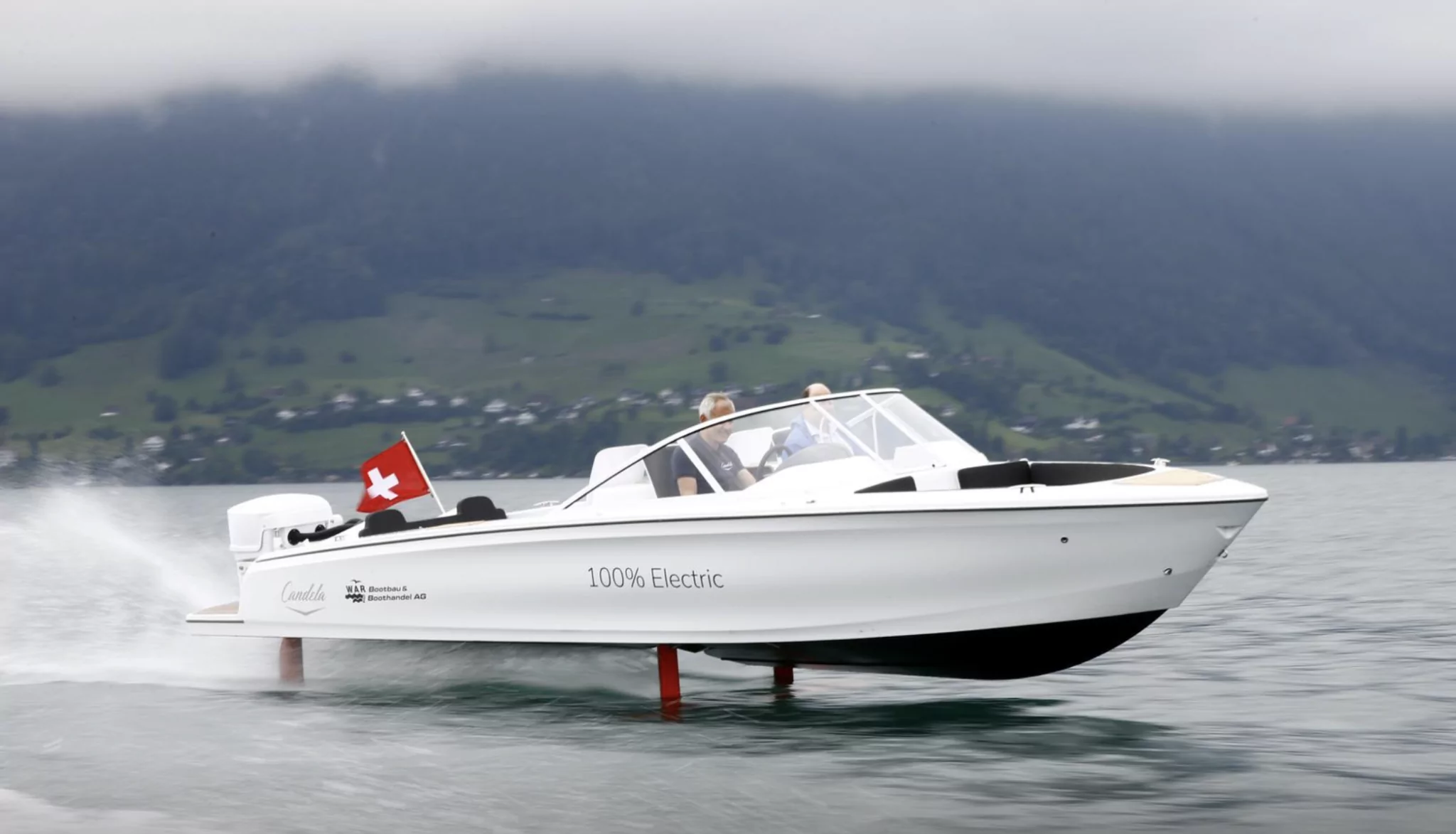
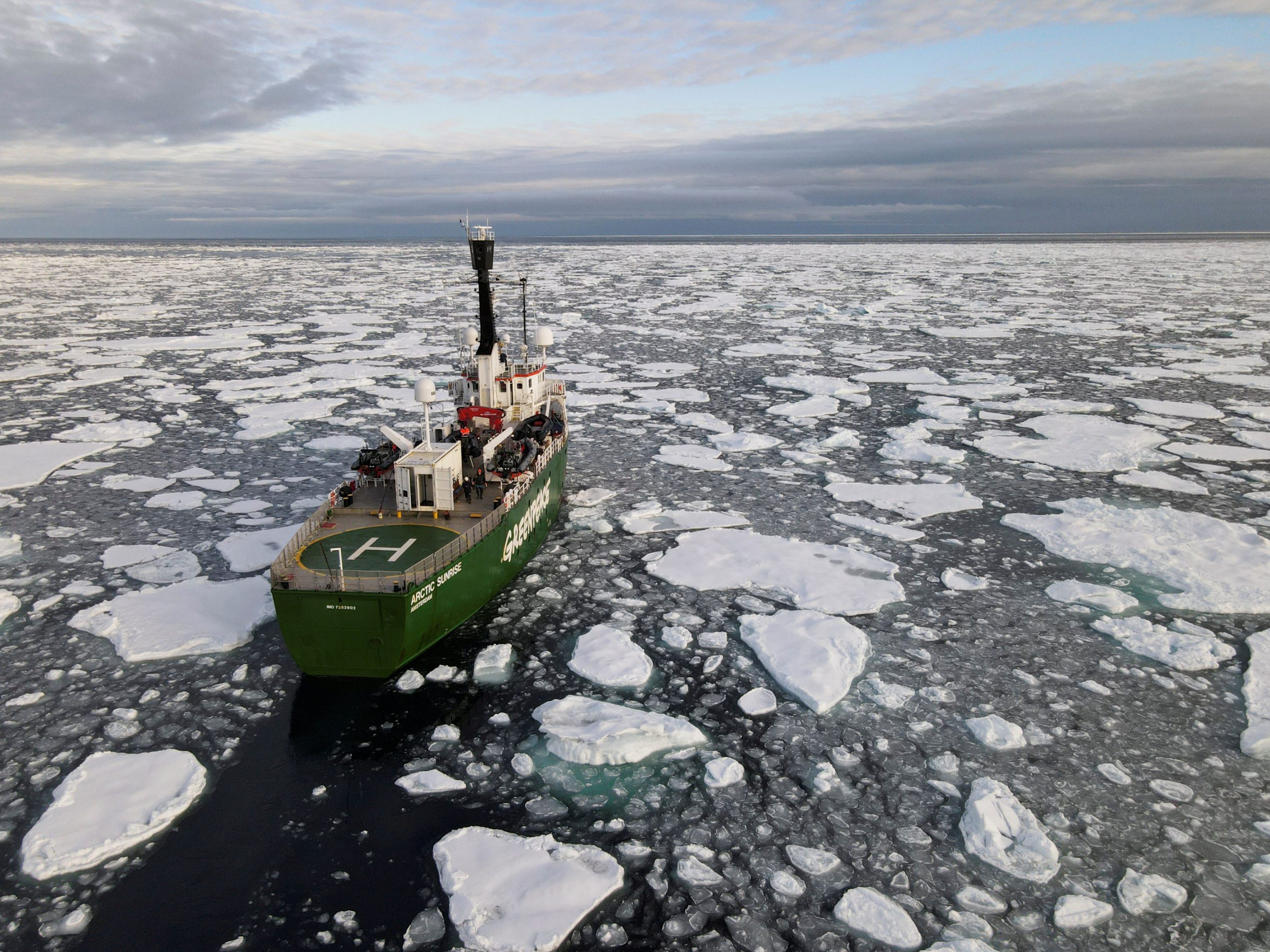
While much larger initiatives are needed to make shipping more environmentally sound, the little things add up. Don’t believe me? Ask any Engineer who has played the efficiency contest, a game where each on duty engineer goes around the ship turning off lights to increase the vessel’s fuel efficiency during his watch. The object of the game is to obtain better efficiency figures than the last watchstander.
Or was the game just intended to confuse the Deckies? (We really need an Engineer blogger here at gCaptain… any takers?).
Panbo brings us a small improvement in energy conservation that, if deployed on ships worldwide, may have a lasting improvement. They write:
Last winter, thanks to Lee Guite of East Boothbay, I tried some LED bulbs Lee used to replace the incandescent ones in the Aqua Signal nav lights aboard his Dulcinea. Lee got pretty carried away researching available replacement bulbs and the ones he finally chose were “flux” models from the LED Shop in Australia. In the photo above I was trying to get a camera comparison of his steaming light versus an OGM combo LED running light. They both seemed fairly effective, but now the LED Shop has more powerful SMT bulbs, and Orca Green Marine has dropped the multi-LED models altogether in favor of single LED lights. I don’t know much about LEDs, but they do seem to be in a state of rapid technological change, which means that one LED may perform quite differently than another, and none of them may be what we’ll be using a few years hence.
It might soon be time for a revision of Pilot Charts. NatGeo tells us:
Europe and North America may soon experience chillier temperatures, thanks to natural North Atlantic variations that could temporarily mask the effects of human-driven, or anthropogenic, climate change.
“We believe that ocean currents and systems could, in the short term, change global warming patterns and even mean temperatures,” said Noel Keenlyside of the Leibniz Institute of Marine Sciences in Kiel, Germany.
Keenlyside explained that since record keeping began in the 19th century, the North Atlantic climate has changed in natural cycles that last a decade or more.
These shifts are likely associated, at least in part, with natural variations in ocean currents.
(Ed. note: Thanks to colleague and regular gCaptain commenter, Capt. Jack Richards pointing me to information on Argo.)
Brief History of Argo
The name Argo was chosen to emphasize the strong complementary relationship of the global float array with the Jason satellite altimeter mission. In Greek mythology Jason sailed in a ship called “Argo” to capture the golden fleece.
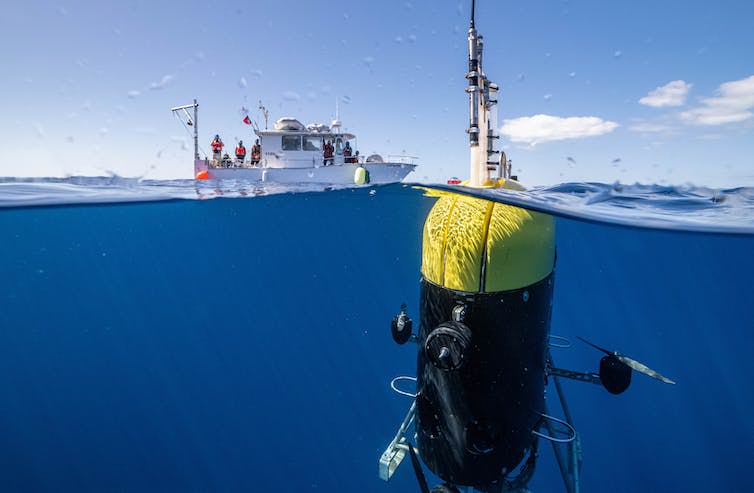
An Argo float being deployed from a research ship.
Together the Argo and Jason data sets will be assimilated into computer models developed by project GODAE (Global Ocean Data Assimilation Experiment) that will allow a test of our ability to forecast ocean climate. For the first time, the physical state of the upper ocean is being systematically measured and the data assimilated in near real-time into computer models. Argo builds on other upper-ocean ocean observing networks, extending their coverage in space an time, their depth range and accuracy, and enhancing them through the addition of salinity and velocity measurements. Argo is not confined to major shipping routes which can vary with season as the other upper-ocean observing networks are. Instead, the global array of 3,000 floats will be distributed roughly every 3 degrees (300km).
Comprised of three subsystems:
Hydraulics: control buoyancy adjustment via an inflatable external bladder, so the float can surface and dive.
Microprocessors: deal with function control and scheduling.
Data transmission system: controls communication with satellite.
The three float models in use are the PROVOR built by MARTEC in France in close collaboration with IFREMER, the APEX float produced by Webb Research Corporation, USA and the SOLO float designed and built by Scripps Institution of Oceanography, USA.
You can find more details at Argo’s website, here.
This post was written by Richard Rodriguez, Rescue Tug Captain, and US Coast Guard approved instructor for License Training. You can read more of his articles at the BitterEnd of the net.
University of Michigan researchers are investigating a radical new design for cargo ships that would eliminate ballast tanks, the water-filled compartments that enable non-native creatures to sneak into the Great Lakes from overseas.
PhysOrg.com is reporting that an alternative to current and proposed tank cleaning methods.
Here’s an excerpt:
“In some ways, it’s more like a submarine than a surface ship,” Parsons said. “We’re opening part of the hull to the sea, creating a very slow flow through the trunks from bow to stern.
“You’re continuously sweeping water through the ship and out,” he said. “So you’re always filled with local sea water, not hauling water from one part of the world to the other.”
The U-M ballast-free ship concept was conceived in 2001 and patented in 2004. It is intended for new-vessel construction only.
(Ed. note: My guess is that this system could be used for cooling as well. A special thanks to BitterEnd reader Cherei in San Antonio for point me to this post.)
___________________________
This post was written by Richard Rodriguez, Rescue Tug Captain, and US Coast Guard approved instructor for License Training. You can read more of his articles at the BitterEnd of the net.
IMC has a very complete post on alternative energy ideas for harnessing power from our oceans. They tell us;
Wave power refers to the energy of ocean surface waves and the capture of that energy to do useful work - including electricity generation, desalination, and the pumping of water (into reservoirs). Wave power is a form of renewable energy. Though often co-mingled, wave power is distinct from the diurnal flux of tidal power and the steady gyre of ocean currents. Wave power generation is not a widely employed technology, and no commercial wave farm has yet been established (although development for the first commercial wind farm in the Orkneys are well under way).
Discoverer user mateMB has pointed us to news of Beluga shippings Skysails project to cross the atlantic with the use of a kite. In yesterday’s press release Beluga Group tells us;
M/V Beluga SkySails has successfully completed her maiden voyage on Thursday, 13th of March 2008, when finishing a double transatlantic passage after an about 12,000 sea miles long journey. With 8,000 tonnes of general cargo loaded on board, MV ÒBeluga SkySailsÓ safely reached her port of destination in Mo-I-Rana (Norway), having crossed several areas of adverse weather with winds of up to twelve Beaufort beforehand. In the first phase the vessel had shipped modules for a chipboard plant to Venezuela.
During the premiere of commercial operation that started in Bremen on 22nd of January and via Guanta (Venezuela) and Davant (USA) finally led close to the arctic circle, the 160 square meters large towing kite has been released as often as possible to fly for periods of between a few minutes and up to eight consecutive hours. ÒWe can once again actually sail with cargo ships, thus opening a new chapter in the history of commercial shippingÓ, said Lutz Heldt, master of MV Beluga SkySails
Stay tuned for more information from California based kite sails developer KiteShip. In the meantime be sure to take a second look at our previous post:
Today, the U.S. Environmental Protection Agency issued a federal complaint against Global Shipping and Global Marketing Systems, Inc. for distribution in commerce and export of materials containing PCBs on the old cruise liner MV Oceanic, formerly the SS Independence.
The ship is being sent by Global to be scrapped overseas, the EPA declared. The MV Pacific Hickory is towing the MV Oceanic to its final destination.
Fines against these two companies may be assessed up to $32,500 per violation per day.
“Federal law prohibits companies from exporting PCBs, including those in ships, that are sent overseas to be scrapped,” said Rich Vaille, associate director for waste program enforcement in the EPA’s Pacific Southwest region. “When companies illegally export PCB waste, they are circumventing U.S. requirements for proper disposal. PCB waste must be properly disposed to protect public health and the environment.”
“The EPA was not informed by Global of their intention to export the ship for disposal. The previous owners, Norwegian Cruise Lines, bought the ship through a wholly owned subsidiary with the intent to put it into service in the United States. The paperwork showing that Norwegian Cruise Lines had sold the vessel to Global was not submitted to the Maritime Administration until the ship had already sailed,” the EPA said.
The Basel Action Network, a global toxic trade watchdog organization based in the United States, in February alerted the EPA to the “quiet departure” of the Oceanic from San Francisco Bay on February 8 for the stated destination of Singapore.
Export of PCB materials from the United States is a violation of EPA’s Toxic Substances Control Act, said Vaille. Vessels such as the MV Oceanic, which was built in the early 1950s, were commonly constructed with PCB-containing materials including cables, electrical equipment such as capacitors and transformers, watertight seal material, and painted surfaces. Continue Reading…
gCaptain and others have chronicled the ongoing Whaling – Conservation controversy between environmental groups and Japanese whalers. The Independent/UK is reporting that secret plans are underway to allow Japan to continue whaling. Here’s an excerpt:
The plans would permit the world’s main whaling nation to carry out a limited hunt in waters close to its shores. In return, Japan would have to stop exploiting a loophole in international law, through which it kills hundreds of whales around Antarctica each year under the guise of “scientific research”.
The plans - drawn up at another unpublicised meeting in Tokyo last month - were presented by the governments of Argentina and the Netherlands to a closed three-day session of the International Whaling Commission (IWC) at the Renaissance Hotel near Heathrow airport, which ended yesterday (March 8, 2008.)
The compromise aims to end decades of deadlock by allowing this coastal hunt while stopping “scientific whaling”. Proponents argue this would sharply reduce the slaughter, while allowing Japan to claim victory. Opponents say it would be unenforceable and fail to provide a lasting solution.
The International Whaling Commission (IWC) was set up under the International Convention for the Regulation of Whaling which was signed in Washington DC on 2nd December 1946 (Click HERE to view full text). The purpose of the Convention is to provide for the proper conservation of whale stocks and thus make possible the orderly development of the whaling industry.
Membership of the IWC is open to any country in the world that formally adheres to the 1946 Convention. Each member country is represented by a Commissioner, who is assisted by experts and advisers. The Chair and Vice-Chair are elected from among the Commissioners and usually serve for three years. Click HERE to view the full Membership list or click HERE to download a PDF of the Status of the Convention, which details all current members, past members and country-specific notes. The present Chair is Dr. William Hogarth from the USA and the Vice-Chair is Mr. Minoru Morimoto from Japan.
Scientific Permits
A major area of discussion in recent years has been the issuing of permits by member states for the killing of whales for scientific purposes. The use of such permits is not new. The right to issue them is enshrined in Article VIII of the 1946 Convention. Whilst member nations must submit proposals for review, in accordance with the Convention, it is the member nation that ultimately decides whether or not to issue a permit, and this right overrides any other Commission regulations including the moratorium and sanctuaries. Article VIII also requires that the animals be utilised once the scientific data have been collected.
Research
At the 2000 Annual Meeting, the Government of Japan submitted an extensive new proposal entitled ‘Research Plan For Cetacean Studies In The Western North Pacific Under Special Permit (JARPN II) - Feasibility Study Plan For 2000 And 2001’. It was envisioned that 100 common minke whales, 50 Bryde’s whales and 10 sperm whales would be sampled in each year. The stated goal of the programme was to obtain information to contribute to the conservation and sustainable use of marine living resources (including whales) in the western North Pacific. It includes sub-projects on:
feeding ecology (including prey consumption and preferences of cetaceans and ecosystem modelling);
stock structure;
environmental effects on cetaceans and the marine ecosystem.
In 2002, after completion of the feasibility study, Japan put forward a proposal for a full long-term research programme primarily aimed at feeding ecology in the context of contributing to the ‘conservation and sustainable use of marine living resources in the western North Pacific, especially within Japan’s Exclusive Economic Zone’ The 2005 programme proposes the taking of 220 minke whales, 50 Bryde’s whales, 100 sei whales and 10 sperm whales in the western North Pacific.
The most recent population estimate for common minke whales in the western North Pacific and Okhotsk Sea is about 25,000 (95% CI 12,800- 48,600). A preliminary estimate of abundance for western North Pacific Bryde’s whales is about 22,000 (95% CI 15,000 – 32,600). There are no IWC agreed abundance estimates for North Pacific sei or sperm whales.
The report of the Committee’s discussions of first the feasibility study and second the full programme (available from the IWC office) were published in the supplements to the Journal of Cetacean Research and Management in June 2001 and April 2003. There was considerable disagreement within the Committee over most aspects of this research programme, including objectives, methodology, likelihood of success and effect on stocks. (Click HERE for more details on these discussions).
__________________
This post was written by Richard Rodriguez, Rescue Tug Captain, and US Coast Guard approved instructor for License Training. You can read more of his articles at the BitterEnd of the net.
A prominent US politician has introduced a legislative proposal aiming to protect the numbers of endangered whales.
Senator John Kerry has proposed speed limits for specific vessels that pass across the migratory paths of the critically endangered North Atlantic right whale.
While the rule was first proposed in February 2007, Mr Kerry has called for immediate action to be taken to protect the whales’ population.
“The Bush administration needs to stop dragging their feet, follow the best available scientific evidence, and take immediate action to protect endangered right whales,” he said. Continue Reading…
Three years ago at the World Expo in Aichi Japan SkySails promised a revolutionary design with the ability to reduce fuel consumption aboard ship by up to 24%. Last week the dream became reality. BBC News tells us:
There is something rather magical about being up on deck of a giant cargo ship as it pushes its way out to sea. Ten thousand tonnes of metal heaving through the water, the ship’s giant masts glistening in the winter sun. But there is something even more magical about being aboard MS Beluga SkySails. On the face of it, this vessel - which is carrying parts of a timber production line to Venezuela - looks like any other cargo ship.
MS Beluga SkySails believes its fuel bill will be cut by £800 ($1,560) a day. “We can demonstrate that you can combine economy and ecology,” Verena Frank of Beluga Shipping explains. “Economy, because you can reduce fuel consumption and fuel costs, and on the ecological side of things, we reduce emissions.”
The kite is controlled by computers. One computer helps it to fly in figures of eight in the sky - maximising the power it produces. Another computer adjusts the kite’s direction. If the project is successful, expect to see even bigger kites soon - some up to 5,000sq m (53,820sq ft) in size pulling ships across the seas and oceans. Read More…
In 2001 skysails started with the development of
the world‘s first practicable towing kite propulsion
system for commercial shipping and luxury yachts.
then after five years of intense developmental work,
the basic research and engineering was completed
near the end of 2005. In early 2006 the final
development phase prior to the market launch of the
skysails-system began on board the approximately
55-meter buoy-laying vessel ms “Beaufort“.
The first skysails-systems are being installed on pi-
lot customer cargo ships in 2007.
Partnership
The MS Beluga SkySails, will carry the first parts of a complete particle board factory from Bemen to Venezuela on behalf of DHL Global Forwarding, the ocean and air freight carrier of the Deutsche Post World Net Group. The multipurpose vessel will set sail early next week. What makes it so special is a new wind propulsion system with a huge towing kite that provides additional thrust for the ship at sea - a sustainable solution for reducing fuel consumption, costs and emissions.
Why
The economic force driving the resurgence of interest in wind power is the rising cost of fuel oil, which has topped $100 a barrel in futures markets. A freighter’s fuel consumption can be cut by 10 percent to 15 percent if a kite is used to pull the ship.
In addition to fuel costs, ship emissions is an important environmental topic for the shipping industry. In a 2007 report published by The Environmental Science and Technology Journal 60,000 deaths per year worldwide were attributed to vessel emissions. The following map charts the annual increase in sulfur emissions in the world’s shipping lanes.
SkySails is not the only company looking to provide alternative energy solutions to power commercial ships. From solar sails to wing kites various companies worldwide are looking for solutions that will benefit the environment and cut down on high fuel costs. Lets take a look at some of the technology currently being developed.
KiteShip
KiteShip - 2006 was been a good year for the California-based company KiteShip, which makes “very large free-flying sails”— basically, giant traction kites that harness the wind to pull very large free-floating objects. If you’ve ever gone to the beach and seen someone kite-surfing — standing on a board while being pulled by a kite — then you’ve seen a traction kite in action. KiteShip currently sells the Outleader, which helps increase yacht speeds. And it is working to improve the range and the speed of fast ferries and oceangoing research vessels without burning more fuel. Dave Culp, the engineer who helped found KiteShip, calls the three-person operation a “micromultinational.” Read More…
M/V Orcelle
M/V Orcelle - At 820 feet long ‘Orcelle’ is shorter than the Queen Mary 2 (1,132ft) and the QE2 (963ft). The ship is called the E/S Orcelle after the Orcelle Dolphin - the French word for Irrawaddy dolphin, one of the world’s most critically endangered species. The E/S stands for “environmentally sound ship”. The vessel will include a cargo deck the size of 14 football pitches. Wave energy is to be harnessed by 12 dolphin like fins an the ships hull. While, sun and wind energy is collected by three giant rigid wingsails, also covered in solar panels. Read More at SolarNavigator…
M/V Solar Navigator Swath - the Solar Navigator started out as a SWATH design, first exhibited at Earls Court in 1995. Since that time various wave piercing models have been developed and tested, the aim being to improve performance and reduce build costs. Both teams estimate similar travel times. One day it may be possible to travel around the world on solar power, in under 80 days. Jules Verne would have loved this. See also, the Swiss Transatlantic Sun 21 attempt using the almanac below. Read More…
Magenn Air Generator - While designed for shore based power stations, not ships, could they one day be repurposed? ”
Magenn’s system is a lighter-than-air wind turbine capable of powering a rural village - the 30 metre wide, helium-filled “Air Rotor System” contains a turbine that spins around a horizontal axis and can produce 10 kilowatts of energy as it floats above the ground while attached to a copper tether. Larger models — ones that might power a skyscraper — are also reportedly in the works. The company claims the governments of India and Pakistan have expressed interest in the first version. Magenn is planning to launch a 1kw prototype (costing around C$1 million) into the air above Ottawa this (northern) spring.” Read More…
AquaSailor - The concept involves a series of supertankers specially designed and constructed for the carriage of potable water. The water is transported onto land through small, offshore facilities known as Single Point Moorings (SPMs). Using unique Solar Wing sails with solar cell array technology reduces fuel consumption and emissions by nearly 50% on the voyages compared to the conventional tanker of this size and hydrodynamic characteristics.
LNG As Propulsion
LNG Propelled Cruise Ship - As part of its development work, Wärtsilä has developed a new coastal cruise ferry using liquefied natural gas (LNG) as fuel. LNG is an efficient way to cut emissions. All SOX emissions are eliminated and the NOX and CO2 emissions are reduced by about 80% and 20% respectively (see figure 1). LNG is not only an environmentally sound solution, but also economically interesting at today’s oil prices.
The new ferry is designed for cruising along the Norwegian coast between small coastal communities. As this still represents a relatively untouched natural landscape, an environmentally friendly ship solution is required. The same ship and machinery concept could also be applied easily to other passengership operations, such as short-route ferries and expedition cruise vessels. Read More…
Increasing Efficiencies
Floating On Bubbles Of Air
Bubbling Ship - One promising solution derives from the work of Yoshiaki Kodama, director of the Advanced Maritime Transport Technology Department at Japan’s National Maritime Research Institute (NMRI) in Tokyo. Kodama’s team proposes to shoot a layer of bubbles from slots near the bow of the ship. The bubbles will travel along the hull of the ship, with enough bubbles trapped under the ship’s surfaces so that the constant replenishment is sufficient to maintain the blanket of bubbles. Read More…
Shark Skin Coatings
SharkSkin Coatings - To find a way to persuade algae to move on rather than killing them scientists at the University of Florida turned to nature. Sharks don’t have algae or barnacle problems despite being underwater all their lives. Shark skin is made up of tiny rectangular scales topped with even smaller spines or bristles. This makes shark skin rough to the touch. This irregular surface makes it difficult for plant spores to get a good grip and grow into algae or other plants. Read More…
Boats
Much of the technology being developed for shipping companies with big budgets and fuel costs will trickle down to our smaller coastal friends. Here’s a look at green initiatives for boaters.
Solar Sailor
Solar Sailor - Hybrid marine power combines electric drives with the power and range of hydrocarbon and/or alternative fuels. Solar panels charge the electric engines to offer better acceleration, quicker emergency stopping and easier handling. Although useful for applications such as tourism, recreation and fishing, they also under scrutiny for duty as urban ferries, where they would use 50% less fuel, generating a correspondingly 50% less emissions. Passengers also experience less noise, vibration and fumes. But the solar wings are not passive. They can be adjusted, so as to act like real cloth sales, … … with boat speeds of 8-10 knots having been achieved, cutting fuel consumption even further. If wind speed hit 35 knots, a computer lowers the sails into the roof where they offer zero windage. A 140 passenger craft, with speeds of 20 knots has more recently been developed. Read More…
Windmill Turbine Boats - While small dingy’s have been tested using windmill turbine design, the inventor hopes this to be a technology used on future vessels of all sizes. His estimated date for first launch? 2028
SkySails SuperYacht - Humphreys Yacht Design, together with SkySails, will be exhibiting the concept for a high-performance hybrid super yacht at this year’s Monaco Yacht Show. Powered by SkySails, this 40-meter trimaran can reach speeds of up to 18 knots without the help of its main engine, and up to 30 knots with the main engine. Naturally the two power sources can be used in combination to conserve fuel. With SkySails a shaft-driven generator can be activated, which charges batteries that can supply the main diesel-electric propulsion as needed. This way, with suitable wind conditions, the hybrid yacht can be powered without having to depend on oil. Yacht owners can now sail in a way that is ecologically responsible, without having to sacrifice the comfort they’ve come to enjoy. And, this type of propulsion provides owners a high degree of security and independence in times of crisis. Read More…