Pilotage Paradox – A Look Into The Cosco Busan Allision

Pilotage Paradox

by Paul Drouin

The Cosco Busan accident, as with many others that have the same root cause, can be categorized into what I call the pilotage paradox. For on the one hand, we wish to confide the safety and con of the vessel to the pilot, yet on the other insist it is the crew and captain that are ultimately responsible and accountable for the safe conduct of the vessel.

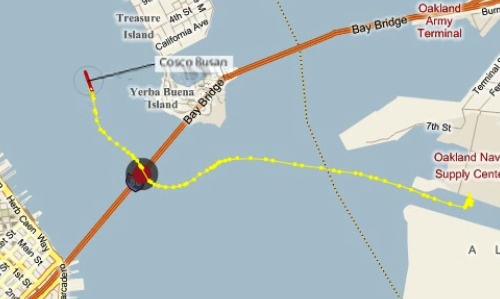
In the seven minute interval between leaving the inner harbour and striking the bridge pylon, the pilot gave 13 helm orders without the slightest indication on the bridge of the Cosco Busan that anything was amiss. We know this because the National Transportation Safety Board (NTSB) has left an amazing amount of information on their public docket website, including transcripts of the bridge voice recordings.

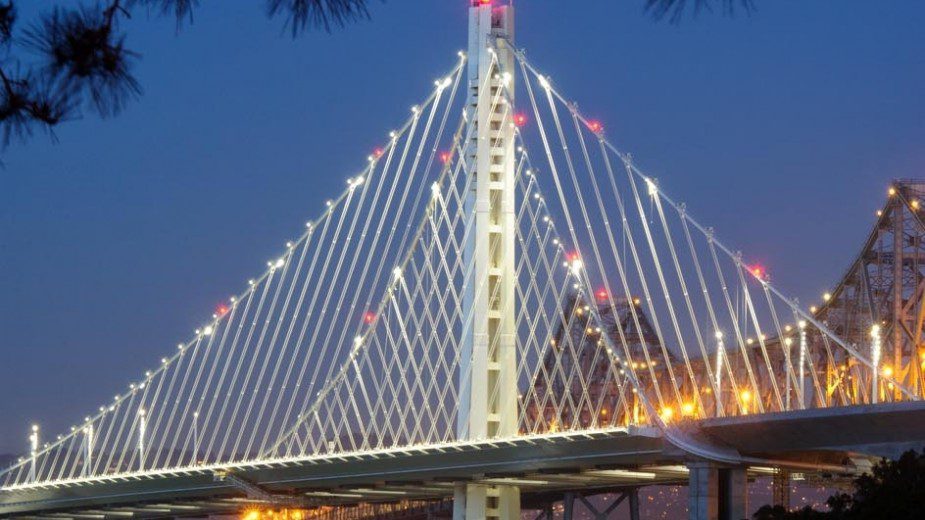
Leaving berth 56 (Port of Oakland) and passing under the San Francisco-Oakland Bay Bridge is a relatively simple matter, even under blind pilotage conditions, as only two course changes bring you through the span. The Delta-Echo span of the bridge is wide, with a horizontal clearance of 673 meters, and is equipped with a RACON dead center of the span. For the Cosco Busan, winds were light and the vessel would be stemming the flood current as it passed under the bridge. This maneuver should not give an experienced 3rd Mate cause to sweat, much less an experienced pilot.

Under keel clearance was not great for the Cosco Busan, however, and as a consequence hydrodynamic forces on the hull caused by the flood tide would have been strong as the vessel’s sidebody came to obstruct the flow, which was setting at approximately 130° (T) near the bridge and anywhere up to 168° (T) further from the bridge. [Continue Reading →]

Related Posts:

Tags: · , , , , , , , , , , , , ,


Cosco Busan Pilot’s Medical Records Questioned

Cosco Busan DamageCosco Busan Photo by Noah Berger/Associated PressOctober 15th 2003 the Staten Island ferry crashed into a concrete pier killing eleven people and leaving 71 injured. It was later determined that the captain lost consciousness while at the ship’s controls. He had taken the painkillers Tramadol and Tylenol PM, both of which can cause drowsiness as a side effect. Since that time the United States Coast Guard has put increased scrutiny on the medical records of all licensed mariners, a review process that could get more stringent as details emerge regarding medication taken by the Cosco Busan’s pilot.The Associated Press tells us:

The ship pilot who was at the helm when a freighter spilled 58,000 gallons of fuel into San Francisco Bay in November suffers from a sleep disorder and was on prescription medication to ward off drowsiness, people close to the investigation told The Associated Press.Investigators want to know whether the disorder — or even the medication itself — contributed to the accident.Federal officials and others, speaking on condition of anonymity, said John Cota has sleep apnea, a breathing condition that can disrupt sleep all night long and leave sufferers severely fatigued during the day. Sleep apnea is blamed for countless auto accidents every year in which drivers nodded off at the wheel.Cota, 59, was also said to be taking a sleep-apnea drug whose known side effects include impaired judgment.Prescription drugs are “certainly a part of our investigation,” said G. Ross Wheatley, chief of investigations for the Coast Guard’s San Francisco sector.The disclosure has raised questions among members of Congress about the Coast Guard’s licensing practices and whether Cota should have been deemed fit for a job in which he was responsible for guiding giant cargo ships in and out of port and through the dangerous waters of the bay.Under Coast Guard policy, a sleep disorder can be grounds for disqualification, but is not automatically so. Continue Reading…

Those with medical concerns at sea should also check Global Rescue’s Medical Extraction Insurance for Mariners

Related Posts:

Tags: · , , , , , , , , , ,