Updated: November 18, 2020 (Originally published July 4, 2014)
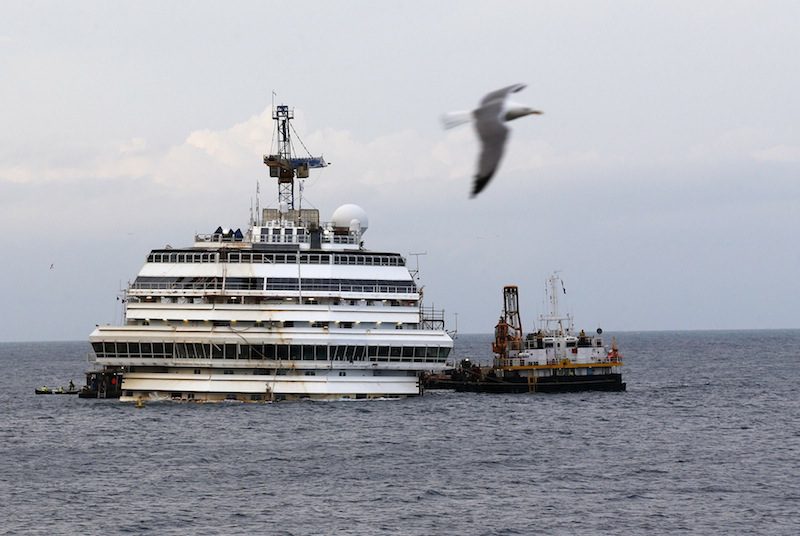
The cruise liner Costa Concordia is seen outside Giglio harbour February 26, 2014. REUTERS/Alessandro Bianchi
With the green light from the Italian government, the destination port set and the last of the hardware now installed, the countdown to the Costa Concordia’s refloating and removal from Giglio Island has begun.
The first phase of the refloating operation could begin as soon as July 13, according to a statement by the project’s website. Assuming all goes as planned, the wreck will be off Giglio no later than July 20.
“Following installation of the last sponson, we can start the countdown to refloating and final departure of the wreck from Giglio Island,” said Costa Crociere CEO Michael Thamm. “Now all our energies are focused on the successful conclusion of this unprecedented engineering challenge to respect a precise commitment: remove the Concordia wreck as soon as possible, in compliance with the highest environmental and safety standards.”
Technicians at Giglio Island this week positioned the last of 30 sponsons onto the wreck. The sponsons, which are large steel boxes currently filled with water, will be de-ballasted by way of a pneumatic system until the wreck reaches a draft 18.5 meters. You can read more about the refloating phase here.
After stabilizing, the wreck will be towed accompanied by a flotilla of vessels to San Giorgio del Porto in Genoa, Italy where it will be dismantled by a consortium led by the Italian company Saipem. The tow is expected to take five days.
The Italian Council of Ministers last Monday gave its final approval for the removal of the vessel to Genoa, ruling out the port of Piombino citing the need to remove the shipwreck within the planned timeline and without further delays. The final phases are still subject to approval from the Monitoring Observatory.
The wreck was uprighted during a successful parbuckling operation in September 2013 that was watched live millions of people across the globe.
A successful refloating, removal and dismantling of the Costa Concordia shipwreck will conclude the largest maritime salvage job in history estimated to cost in excess of $800 million. The salvage has been led by a consortium made up of Titan Salvage, which is a subsidiary of Jacksonville, Florida-based Crowley Maritime Corporation, and Italy’s Micoperi.
The Costa Concordia shipwrecked on the small island off the coast of Tuscany on the night of January 13, 2012, killing 32 people and sparking a call for improved safety standards within the cruise ship industry. The industry was quick to voluntarily adopt a number of new operational safety improvements and best practices regarding passenger safety and protection in wake of the disaster.
Here’s some video from the Costa Concordia wreck site on June 16, 2014:
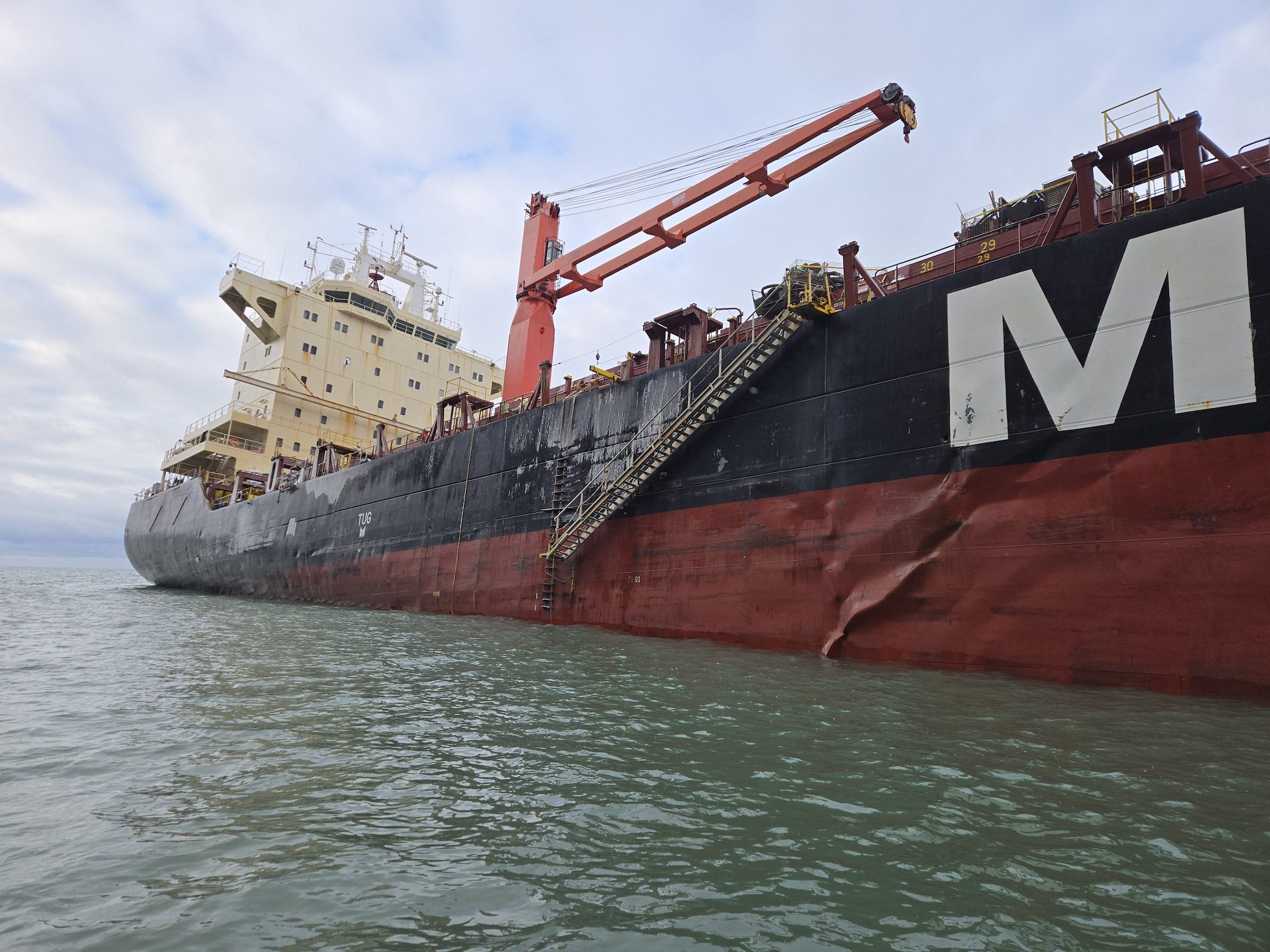
Nearly a year after running aground on Newfoundland’s west coast, the container ship MSC Baltic III remains at the mercy of North Atlantic winter storms as salvage teams struggle to stabilize the...
Salvage crews have successfully removed approximately 85% of the heavy fuel from the grounded containership MSC Baltic III, according to the latest update from the Canadian Coast Guard released today. The...
The International Salvage Union (ISU) has released its annual statistics for 2024, revealing a modest recovery in the salvage industry compared to past years with gross revenue for ISU members...
June 26, 2025
Total Views: 970
Get The Industry’s Go-To News
Subscribe to gCaptain Daily and stay informed with the latest global maritime and offshore news
— just like 107,154 professionals
Secure Your Spot
on the gCaptain Crew
Stay informed with the latest maritime and offshore news, delivered daily straight to your inbox
— trusted by our 107,154 members
Your Gateway to the Maritime World!
Essential news coupled with the finest maritime content sourced from across the globe.

 Join The Club